


Medicine Blister Market Outlook
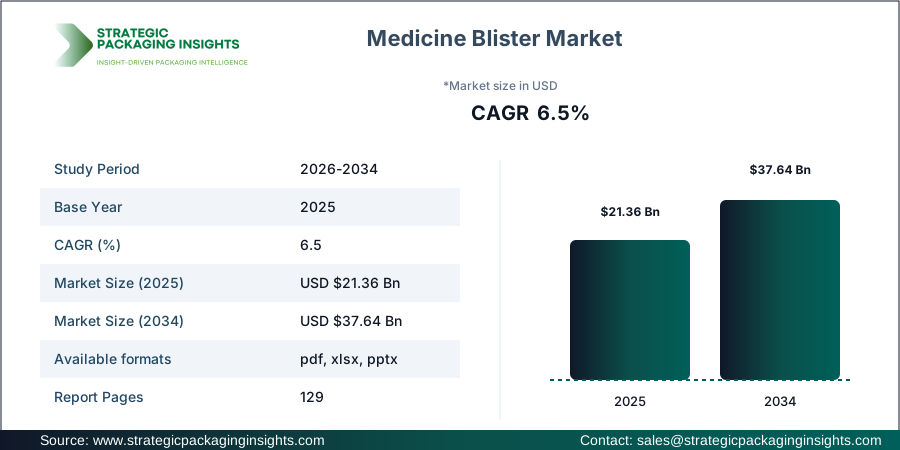
The Medicine Blister market size was valued at USD 21.36 billion in 2025 and is anticipated to reach USD 37.64 billion by 2034, growing at a CAGR of 6.5% during the forecast period according to Strategic Packaging Insights. The market is witnessing significant growth due to the increasing demand for convenient and safe packaging solutions in the pharmaceutical industry. Companies like Amcor and Constantia Flexibles are leading the charge by innovating in blister packaging technologies that enhance product safety and extend shelf life. The rise in chronic diseases and the growing elderly population are further driving the demand for medicine blister packaging, as these demographics require more frequent medication, which in turn boosts the need for reliable packaging solutions.
One of the most impactful drivers of the Medicine Blister market is the stringent regulatory requirements for pharmaceutical packaging. Governments worldwide are enforcing regulations to ensure the safety and efficacy of pharmaceutical products, which has led to an increased adoption of blister packaging. This type of packaging not only protects the medicine from environmental factors but also provides tamper evidence, which is crucial for maintaining drug integrity. Companies like UFlex and TekniPlex are investing heavily in R&D to develop innovative blister packaging solutions that comply with these regulations, thereby gaining a competitive edge in the market.
Report Scope
| Attributes | Details |
| Report Title | Medicine Blister Market Size, Future Growth and Forecast 2034 |
| Material Type | PVC, PVDC, Aluminum, Cold Form Foil |
| Product Type | Thermoform Blisters, Cold Form Blisters, Unit-Dose Blisters |
| Application | Tablets, Capsules, OTC Drugs, Prescription Drugs |
| End Use | Pharmaceutical Companies, CDMOs, Hospitals, Retail Pharmacies |
| Region | Asia Pacific, North America, Latin America, Europe, Middle East & Africa |
| Base Year | 2025 |
| Historic Period | 2018-2024 |
| Forecast Period | 2026-2034 |
| Number of Pages | 129 |
| Customization Available | Yes* |
Sustainability & Circular Economy Analysis
Sustainability initiatives are increasingly shaping the Medicine Blister market, as companies strive to reduce their environmental impact. The use of recyclable materials and eco-friendly innovations in blister packaging is becoming more prevalent. For instance, the shift towards using PVC-free materials and biodegradable options is gaining traction. This trend is driven by consumer preferences for sustainable products and the need to comply with environmental regulations. Companies are also adopting lightweight packaging strategies to minimize material usage and reduce carbon footprints, which not only benefits the environment but also reduces costs.
The circular economy is influencing packaging design and manufacturing processes in the Medicine Blister market. Companies are focusing on creating packaging that can be easily recycled or reused, thereby closing the loop in the product lifecycle. Extended Producer Responsibility (EPR) is another key factor, as it holds manufacturers accountable for the entire lifecycle of their products, including disposal. This has led to increased investment in sustainable packaging solutions and innovations that align with circular economy principles. As a result, companies like ACG Pharmapack and Bilcare are gaining a competitive advantage by offering sustainable packaging solutions that meet regulatory requirements and consumer expectations.
These sustainability trends are also impacting supply chain strategies and investment decisions in the Medicine Blister market. Companies are prioritizing partnerships with suppliers who adhere to sustainable practices and are investing in technologies that enhance supply chain efficiency. This focus on sustainability is not only driven by regulatory compliance but also by the growing consumer demand for eco-friendly products. As a result, companies that embrace sustainability are likely to achieve long-term market competitiveness and strengthen their brand reputation.
Packaging Value Chain & Supply Chain Analysis
The packaging value chain in the Medicine Blister market is complex, involving multiple stakeholders from raw material suppliers to end-users. Raw material sourcing is a critical component, as the availability and cost of materials like PVC, aluminum, and cold form foil directly impact production capabilities and pricing strategies. Packaging converters and manufacturers play a pivotal role in transforming these materials into finished products, with companies like Sonoco and WestRock leading the way in innovative packaging solutions. Efficient logistics and distribution channels are essential for ensuring timely delivery and maintaining product integrity throughout the supply chain.
Supply chain efficiency is a key determinant of market performance in the Medicine Blister sector. Companies are increasingly focusing on optimizing their procurement strategies and inventory management to enhance supply chain resilience. Localization of supply chains is becoming more prevalent, as companies seek to mitigate risks associated with global sourcing and transportation disruptions. Strategic partnerships with logistics providers and distributors are also crucial for ensuring seamless operations and meeting customer demands. As a result, companies that invest in robust supply chain strategies are better positioned to capitalize on market opportunities and maintain a competitive edge.
Recycling networks are an integral part of the packaging value chain, as they facilitate the recovery and reuse of materials, thereby supporting sustainability goals. Companies are collaborating with recycling partners to develop closed-loop systems that minimize waste and reduce environmental impact. This focus on sustainability is not only driven by regulatory compliance but also by the growing consumer demand for eco-friendly products. As a result, companies that embrace sustainability are likely to achieve long-term market competitiveness and strengthen their brand reputation.
Opportunities & Threats
The Medicine Blister market presents numerous opportunities for growth, driven by the increasing demand for innovative packaging solutions. The rise in chronic diseases and the aging population are key factors contributing to the growing demand for blister packaging, as these demographics require more frequent medication. Additionally, the trend towards self-medication and over-the-counter (OTC) drugs is boosting the demand for unit-dose blister packaging, which offers convenience and safety for consumers. Companies that invest in R&D to develop advanced blister packaging technologies are well-positioned to capitalize on these opportunities and gain a competitive edge in the market.
Another significant opportunity lies in the expansion of the pharmaceutical industry in emerging markets. As healthcare infrastructure improves and access to medicines increases, the demand for blister packaging is expected to rise. Companies that establish a strong presence in these regions can benefit from the growing market potential and tap into new revenue streams. Furthermore, the increasing focus on sustainability and eco-friendly packaging solutions presents an opportunity for companies to differentiate themselves and meet the evolving needs of environmentally conscious consumers.
However, the Medicine Blister market also faces several threats that could hinder growth. One of the primary challenges is the volatility in raw material prices, which can impact production costs and profit margins. Additionally, stringent regulatory requirements and compliance standards pose a significant barrier to entry for new players in the market. Companies must invest in R&D and quality assurance to ensure their products meet these standards, which can be costly and time-consuming. Furthermore, the increasing competition from alternative packaging solutions, such as flexible packaging, poses a threat to the growth of the blister packaging market.
Drivers & Challenges
The Medicine Blister market is driven by several key factors, including the increasing demand for safe and convenient packaging solutions in the pharmaceutical industry. The rise in chronic diseases and the aging population are significant drivers, as these demographics require more frequent medication, which in turn boosts the demand for reliable packaging solutions. Additionally, the trend towards self-medication and over-the-counter (OTC) drugs is driving the demand for unit-dose blister packaging, which offers convenience and safety for consumers. Companies that invest in R&D to develop advanced blister packaging technologies are well-positioned to capitalize on these opportunities and gain a competitive edge in the market.
Another major driver of the Medicine Blister market is the stringent regulatory requirements for pharmaceutical packaging. Governments worldwide are enforcing regulations to ensure the safety and efficacy of pharmaceutical products, which has led to an increased adoption of blister packaging. This type of packaging not only protects the medicine from environmental factors but also provides tamper evidence, which is crucial for maintaining drug integrity. Companies like UFlex and TekniPlex are investing heavily in R&D to develop innovative blister packaging solutions that comply with these regulations, thereby gaining a competitive edge in the market.
Despite the positive growth drivers, the Medicine Blister market faces several challenges that could hinder its expansion. One of the primary challenges is the volatility in raw material prices, which can impact production costs and profit margins. Additionally, stringent regulatory requirements and compliance standards pose a significant barrier to entry for new players in the market. Companies must invest in R&D and quality assurance to ensure their products meet these standards, which can be costly and time-consuming. Furthermore, the increasing competition from alternative packaging solutions, such as flexible packaging, poses a threat to the growth of the blister packaging market.
Market Share Analysis
The Medicine Blister market is characterized by intense competition, with several key players dominating the landscape. Companies like Amcor, Constantia Flexibles, and UFlex hold significant market shares due to their extensive product portfolios and strong global presence. These companies are continuously investing in R&D to develop innovative packaging solutions that meet the evolving needs of the pharmaceutical industry. Their focus on sustainability and eco-friendly packaging options further strengthens their market position and enhances their brand reputation.
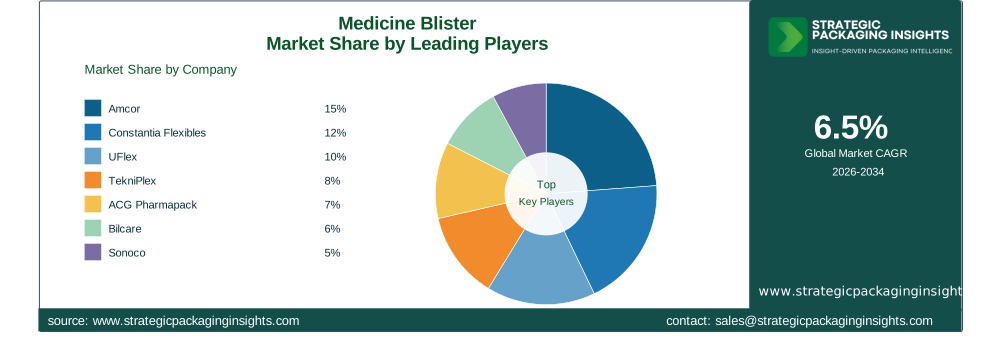
Amcor is a leading player in the Medicine Blister market, known for its innovative packaging solutions and commitment to sustainability. The company offers a wide range of blister packaging options, including PVC-free and recyclable materials, which cater to the growing demand for eco-friendly products. Constantia Flexibles is another major player, renowned for its high-quality packaging solutions and strong focus on customer satisfaction. The company's extensive product portfolio and global reach make it a preferred choice for pharmaceutical companies worldwide.
UFlex is a prominent player in the Medicine Blister market, offering a diverse range of packaging solutions that cater to various pharmaceutical applications. The company's focus on innovation and sustainability has helped it gain a competitive edge in the market. TekniPlex is another key player, known for its advanced blister packaging technologies and commitment to quality. The company's strong R&D capabilities and strategic partnerships with leading pharmaceutical companies have contributed to its success in the market.
Other notable players in the Medicine Blister market include ACG Pharmapack, Bilcare, Sonoco, WestRock, Huhtamaki, and Klöckner Pentaplast. These companies are continuously expanding their product offerings and investing in new technologies to enhance their market presence. Their focus on sustainability and compliance with regulatory standards further strengthens their competitive position and enables them to meet the evolving needs of the pharmaceutical industry.
Key Highlights
- Market Size: The Medicine Blister market was valued at USD 21.36 billion in 2025 and is projected to reach USD 37.64 billion by 2034.
- Growth Rate: The market is expected to grow at a CAGR of 6.5% during the forecast period.
- Leading Companies: Key players include Amcor, Constantia Flexibles, UFlex, and TekniPlex.
- Material Type: PVC, PVDC, Aluminum, and Cold Form Foil are the primary materials used in blister packaging.
- Product Type: Thermoform Blisters, Cold Form Blisters, and Unit-Dose Blisters are the main product types.
- Application: Tablets, Capsules, OTC Drugs, and Prescription Drugs are the primary applications.
- End Use: Pharmaceutical Companies, CDMOs, Hospitals, and Retail Pharmacies are the key end-users.
- Regional Insights: Asia Pacific, North America, and Europe are the leading regions in the market.
Medicine Blister Market Segments Insights

Material Type Analysis
The Medicine Blister market is segmented by material type, with PVC, PVDC, Aluminum, and Cold Form Foil being the primary materials used in blister packaging. PVC is widely used due to its cost-effectiveness and versatility, making it a popular choice for pharmaceutical packaging. However, the growing focus on sustainability and environmental concerns is driving the demand for PVC-free alternatives, such as PVDC and aluminum. These materials offer superior barrier properties and are more environmentally friendly, making them ideal for pharmaceutical applications. Companies like Amcor and Constantia Flexibles are investing in R&D to develop innovative materials that meet the evolving needs of the market.
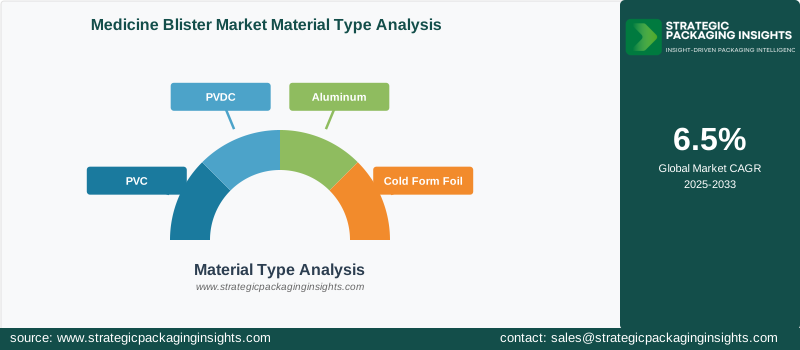
Aluminum is another key material used in blister packaging, known for its excellent barrier properties and ability to protect medicines from moisture, light, and oxygen. Cold Form Foil is gaining popularity due to its superior protection and tamper-evident features, making it ideal for high-value pharmaceutical products. The demand for these materials is driven by the increasing need for safe and reliable packaging solutions in the pharmaceutical industry. Companies that offer a diverse range of materials and innovative solutions are well-positioned to capitalize on the growing demand for blister packaging.
Product Type Analysis
The Medicine Blister market is segmented by product type, with Thermoform Blisters, Cold Form Blisters, and Unit-Dose Blisters being the main categories. Thermoform Blisters are widely used due to their cost-effectiveness and versatility, making them a popular choice for pharmaceutical packaging. Cold Form Blisters offer superior protection and tamper-evident features, making them ideal for high-value pharmaceutical products. The demand for these products is driven by the increasing need for safe and reliable packaging solutions in the pharmaceutical industry.
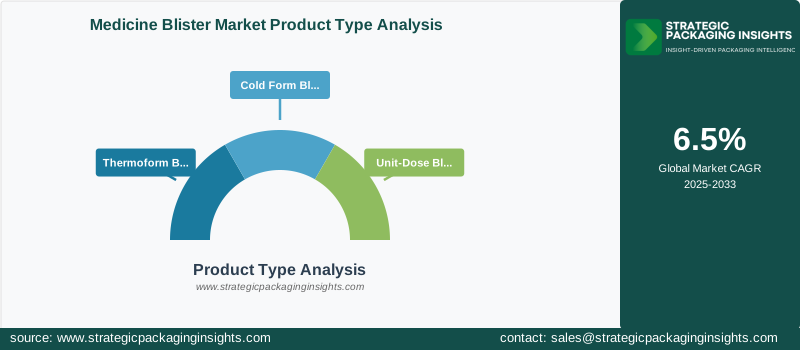
Unit-Dose Blisters are gaining popularity due to their convenience and safety features, making them ideal for over-the-counter (OTC) drugs and self-medication. The trend towards self-medication and the growing demand for OTC drugs are driving the demand for unit-dose blister packaging. Companies that offer a diverse range of product types and innovative solutions are well-positioned to capitalize on the growing demand for blister packaging. The focus on sustainability and eco-friendly packaging solutions is also driving the demand for innovative product types that meet the evolving needs of the market.
Application Analysis
The Medicine Blister market is segmented by application, with Tablets, Capsules, OTC Drugs, and Prescription Drugs being the primary categories. Tablets and Capsules are the most common applications for blister packaging, as they require protection from environmental factors such as moisture, light, and oxygen. The demand for blister packaging in these applications is driven by the increasing need for safe and reliable packaging solutions in the pharmaceutical industry.
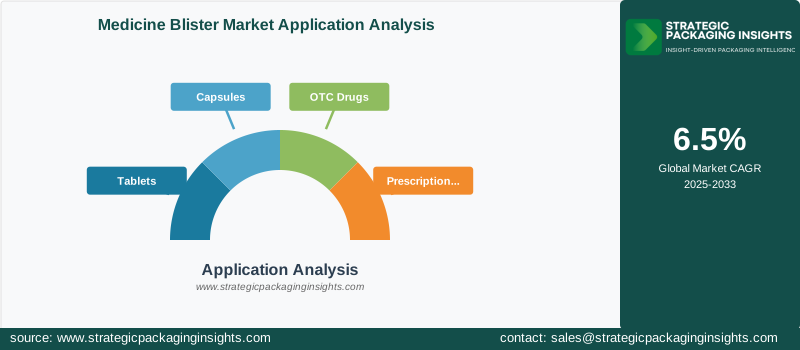
OTC Drugs and Prescription Drugs are also significant applications for blister packaging, as they require tamper-evident features and protection from environmental factors. The trend towards self-medication and the growing demand for OTC drugs are driving the demand for blister packaging in these applications. Companies that offer a diverse range of applications and innovative solutions are well-positioned to capitalize on the growing demand for blister packaging. The focus on sustainability and eco-friendly packaging solutions is also driving the demand for innovative applications that meet the evolving needs of the market.
End Use Analysis
The Medicine Blister market is segmented by end use, with Pharmaceutical Companies, CDMOs, Hospitals, and Retail Pharmacies being the key categories. Pharmaceutical Companies are the primary end-users of blister packaging, as they require safe and reliable packaging solutions for their products. The demand for blister packaging in this segment is driven by the increasing need for compliance with regulatory standards and the growing focus on sustainability.
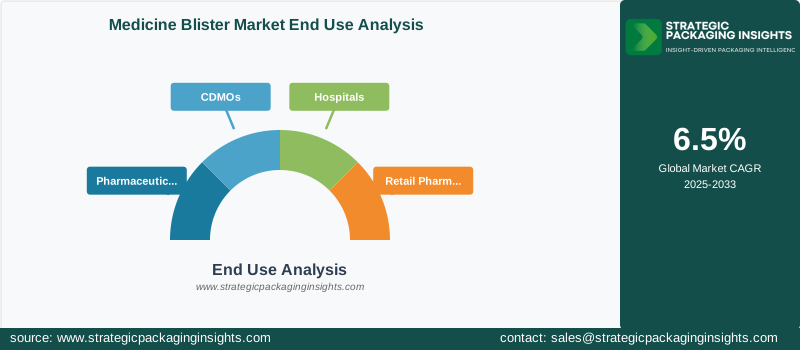
CDMOs (Contract Development and Manufacturing Organizations) are also significant end-users of blister packaging, as they provide packaging solutions for pharmaceutical companies. The demand for blister packaging in this segment is driven by the increasing outsourcing of packaging operations by pharmaceutical companies. Hospitals and Retail Pharmacies are also key end-users of blister packaging, as they require safe and reliable packaging solutions for their products. Companies that offer a diverse range of end-use solutions and innovative packaging options are well-positioned to capitalize on the growing demand for blister packaging.
Medicine Blister Market Segments
The Medicine Blister market has been segmented on the basis ofMaterial Type
- PVC
- PVDC
- Aluminum
- Cold Form Foil
Product Type
- Thermoform Blisters
- Cold Form Blisters
- Unit-Dose Blisters
Application
- Tablets
- Capsules
- OTC Drugs
- Prescription Drugs
End Use
- Pharmaceutical Companies
- CDMOs
- Hospitals
- Retail Pharmacies
Region
- Asia Pacific
- North America
- Latin America
- Europe
- Middle East & Africa




