


Low Emissivity Film Market Outlook
The Low Emissivity Film market was valued at $1.28 billion in 2025 and is projected to reach $2.68 billion by 2034, growing at a CAGR of 8.5% during the forecast period 2026-2034. This market is driven by the increasing demand for energy-efficient solutions in both residential and commercial buildings. The growing awareness about energy conservation and the need to reduce carbon footprints are significant factors contributing to the market's growth. Additionally, advancements in film technology, which enhance the performance and durability of low emissivity films, are expected to further propel market demand. The construction and automotive sectors are major end-users, leveraging these films to improve energy efficiency and reduce energy costs.
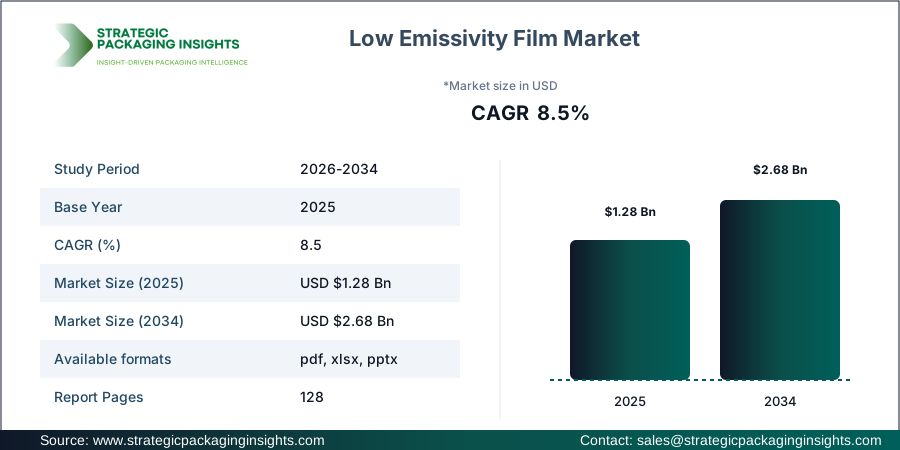
Despite the promising growth prospects, the Low Emissivity Film market faces certain challenges. Regulatory constraints and the high initial cost of installation can act as barriers to market expansion. However, the long-term benefits of energy savings and the increasing adoption of green building standards are expected to mitigate these challenges. The market also presents significant growth potential in emerging economies, where rapid urbanization and industrialization are driving the demand for energy-efficient building materials. As a result, the market is poised for substantial growth, with opportunities for innovation and expansion in various applications and regions.
Report Scope
| Attributes | Details |
| Report Title | Low Emissivity Film Market Size, Future Growth and Forecast 2034 |
| Product Type | Solar Control Films, Thermal Insulation Films, Coated Films |
| Material Type | PET, Metalized Film, Ceramic Film |
| Application | Building Windows, Automotive Glass, Cold Chain, Industrial |
| End Use | Construction, Automotive, Energy, Packaging |
| Region | Asia Pacific, North America, Latin America, Europe, Middle East & Africa |
| Base Year | 2025 |
| Historic Period | 2018-2024 |
| Forecast Period | 2026-2034 |
| Number of Pages | 128 |
| Customization Available | Yes* |
Opportunities & Threats
The Low Emissivity Film market offers numerous opportunities, particularly in the construction and automotive industries. As global awareness of energy efficiency and sustainability increases, the demand for low emissivity films in building and automotive applications is expected to rise. These films play a crucial role in reducing energy consumption by minimizing heat transfer through windows, thereby enhancing the energy efficiency of buildings and vehicles. The growing trend of smart cities and green buildings further amplifies the demand for these films, as they align with the objectives of reducing carbon emissions and promoting sustainable development. Additionally, technological advancements in film manufacturing, such as the development of multi-layered films with enhanced performance characteristics, present significant opportunities for market players to innovate and capture a larger market share.
Another opportunity lies in the expansion of the market in emerging economies. Rapid urbanization and industrialization in countries like China, India, and Brazil are driving the demand for energy-efficient building materials, including low emissivity films. Government initiatives promoting energy conservation and the adoption of green building standards are further boosting the market in these regions. Moreover, the increasing focus on reducing energy costs in commercial and residential buildings is expected to drive the adoption of low emissivity films, creating lucrative opportunities for market players to expand their presence in these high-growth markets.
However, the market also faces certain threats that could hinder its growth. One of the primary challenges is the high initial cost of low emissivity films, which can deter potential customers, particularly in price-sensitive markets. Additionally, the market is subject to stringent regulatory standards and certifications, which can pose challenges for manufacturers in terms of compliance and product development. The presence of alternative energy-efficient solutions, such as smart glass and advanced window coatings, also poses a threat to the market, as these alternatives may offer similar benefits at competitive prices. To overcome these threats, market players need to focus on innovation, cost reduction, and strategic partnerships to enhance their competitive position and capitalize on the growing demand for energy-efficient solutions.
Drivers & Challenges
The primary drivers of the Low Emissivity Film market include the increasing demand for energy-efficient solutions and the growing awareness of environmental sustainability. As energy costs continue to rise, both consumers and businesses are seeking ways to reduce their energy consumption and minimize their carbon footprint. Low emissivity films offer an effective solution by reducing heat transfer through windows, thereby enhancing the energy efficiency of buildings and vehicles. The adoption of green building standards and the increasing focus on sustainable development are further driving the demand for these films, as they align with the objectives of reducing carbon emissions and promoting energy conservation.
Technological advancements in film manufacturing are also driving the market. The development of multi-layered films with enhanced performance characteristics, such as improved thermal insulation and UV protection, is attracting a growing number of customers. These advancements are enabling manufacturers to offer a wider range of products tailored to specific applications and customer needs, thereby expanding their market reach. Additionally, the increasing adoption of low emissivity films in the automotive industry, driven by the need to improve fuel efficiency and reduce greenhouse gas emissions, is further contributing to market growth.
Despite the positive growth drivers, the Low Emissivity Film market faces several challenges. One of the primary challenges is the high initial cost of installation, which can deter potential customers, particularly in price-sensitive markets. Additionally, the market is subject to stringent regulatory standards and certifications, which can pose challenges for manufacturers in terms of compliance and product development. The presence of alternative energy-efficient solutions, such as smart glass and advanced window coatings, also poses a challenge to the market, as these alternatives may offer similar benefits at competitive prices. To overcome these challenges, market players need to focus on innovation, cost reduction, and strategic partnerships to enhance their competitive position and capitalize on the growing demand for energy-efficient solutions.
Market Share Analysis
The competitive landscape of the Low Emissivity Film market is characterized by the presence of several key players, each striving to capture a significant share of the market. Companies such as 3M, Eastman Chemical, and Saint-Gobain are leading the market with their extensive product portfolios and strong distribution networks. These companies are focusing on innovation and product development to enhance their competitive position and meet the evolving needs of customers. Additionally, strategic partnerships and collaborations are playing a crucial role in expanding their market reach and strengthening their presence in key regions.
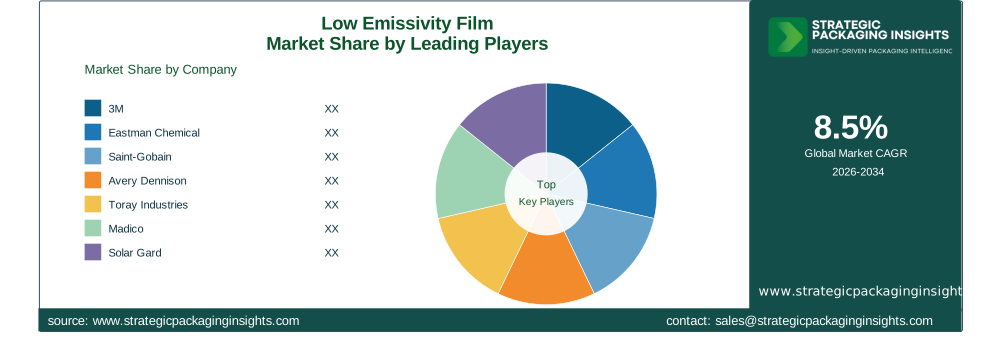
3M is a prominent player in the Low Emissivity Film market, known for its innovative solutions and commitment to sustainability. The company offers a wide range of low emissivity films designed to improve energy efficiency and reduce energy costs in buildings and vehicles. Eastman Chemical is another key player, leveraging its expertise in film manufacturing to offer high-performance products that meet the stringent requirements of the market. The company's focus on research and development and its strong customer relationships are key factors contributing to its success in the market.
Saint-Gobain is a leading provider of low emissivity films, offering a comprehensive range of products for various applications. The company's commitment to sustainability and its focus on innovation have enabled it to capture a significant share of the market. Avery Dennison, Toray Industries, and Madico are also key players in the market, each offering unique solutions and leveraging their expertise in film manufacturing to meet the diverse needs of customers. These companies are focusing on expanding their product portfolios and enhancing their distribution networks to strengthen their competitive position and capture a larger share of the market.
Other notable players in the market include Solar Gard, Johnson Window Films, Garware Hi-Tech Films, and Hanita Coatings. These companies are focusing on innovation and product development to enhance their competitive position and meet the evolving needs of customers. Strategic partnerships and collaborations are also playing a crucial role in expanding their market reach and strengthening their presence in key regions. Overall, the competitive landscape of the Low Emissivity Film market is dynamic, with companies continuously striving to innovate and capture a larger share of the market.
Key Highlights
- The Low Emissivity Film market is projected to grow at a CAGR of 8.5% from 2026 to 2034.
- Key drivers include increasing demand for energy-efficient solutions and growing awareness of environmental sustainability.
- Technological advancements in film manufacturing are enhancing product performance and expanding market reach.
- The construction and automotive sectors are major end-users of low emissivity films.
- Emerging economies present significant growth opportunities due to rapid urbanization and industrialization.
- Regulatory constraints and high initial costs are key challenges facing the market.
- Key players include 3M, Eastman Chemical, Saint-Gobain, Avery Dennison, and Toray Industries.
Top Countries Insights
In the Low Emissivity Film market, the United States stands out as a key player, with a market size of approximately $500 million and a CAGR of 7%. The country's focus on energy efficiency and sustainability, coupled with stringent building codes and regulations, drives the demand for low emissivity films. The adoption of green building standards and the increasing emphasis on reducing energy costs in commercial and residential buildings are significant growth drivers in the U.S. market.
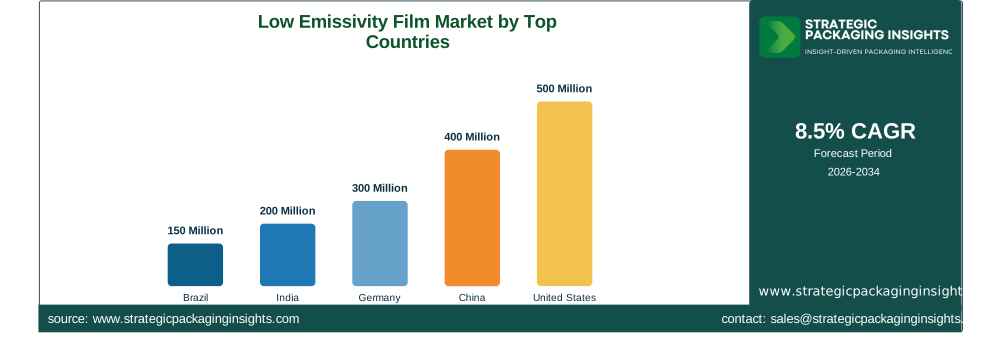
China is another major market for low emissivity films, with a market size of around $400 million and a CAGR of 10%. The country's rapid urbanization and industrialization, along with government initiatives promoting energy conservation, are driving the demand for energy-efficient building materials. The increasing focus on reducing carbon emissions and the adoption of green building standards are further boosting the market in China.
Germany, with a market size of approximately $300 million and a CAGR of 8%, is a key market in Europe. The country's commitment to sustainability and energy efficiency, along with stringent building regulations, drives the demand for low emissivity films. The adoption of advanced building technologies and the increasing focus on reducing energy costs are significant growth drivers in the German market.
India, with a market size of around $200 million and a CAGR of 12%, presents significant growth opportunities for the Low Emissivity Film market. The country's rapid urbanization and industrialization, coupled with government initiatives promoting energy conservation, are driving the demand for energy-efficient building materials. The increasing focus on reducing energy costs in commercial and residential buildings is further boosting the market in India.
Brazil, with a market size of approximately $150 million and a CAGR of 9%, is a key market in Latin America. The country's focus on energy efficiency and sustainability, along with government initiatives promoting energy conservation, drives the demand for low emissivity films. The adoption of green building standards and the increasing emphasis on reducing energy costs in commercial and residential buildings are significant growth drivers in the Brazilian market.
Low Emissivity Film Market Segments Insights

Product Type Analysis
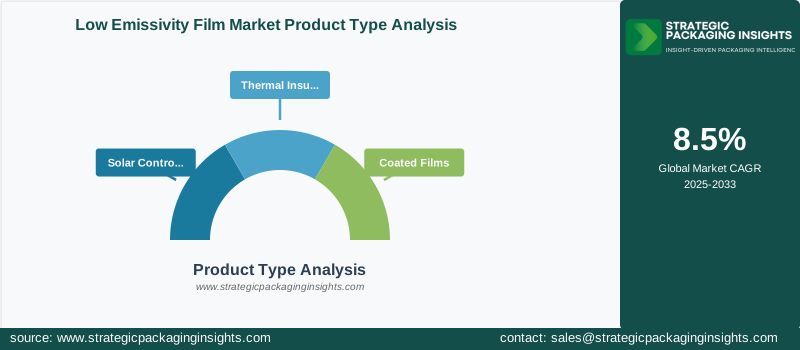
The Low Emissivity Film market is segmented by product type into solar control films, thermal insulation films, and coated films. Solar control films are gaining traction due to their ability to reduce heat gain in buildings and vehicles, thereby enhancing energy efficiency. These films are particularly popular in regions with high solar exposure, where they help in reducing cooling costs and improving indoor comfort. Thermal insulation films, on the other hand, are designed to minimize heat loss, making them ideal for colder climates. The demand for these films is driven by the need to improve energy efficiency in buildings and reduce heating costs. Coated films, which offer a combination of solar control and thermal insulation properties, are also witnessing increased adoption due to their versatility and enhanced performance characteristics.
The growing awareness of energy conservation and the need to reduce carbon footprints are significant factors driving the demand for low emissivity films across all product types. Technological advancements in film manufacturing, such as the development of multi-layered films with enhanced performance characteristics, are further propelling market growth. These advancements are enabling manufacturers to offer a wider range of products tailored to specific applications and customer needs, thereby expanding their market reach. Additionally, the increasing adoption of low emissivity films in the automotive industry, driven by the need to improve fuel efficiency and reduce greenhouse gas emissions, is further contributing to market growth.
Material Type Analysis
The Low Emissivity Film market is segmented by material type into PET, metalized film, and ceramic film. PET films are widely used due to their excellent optical clarity, durability, and cost-effectiveness. These films are ideal for applications where transparency and aesthetics are important, such as in building windows and automotive glass. Metalized films, which are coated with a thin layer of metal, offer superior solar control and thermal insulation properties, making them suitable for a wide range of applications. The demand for metalized films is driven by their ability to reduce heat gain and improve energy efficiency in buildings and vehicles.
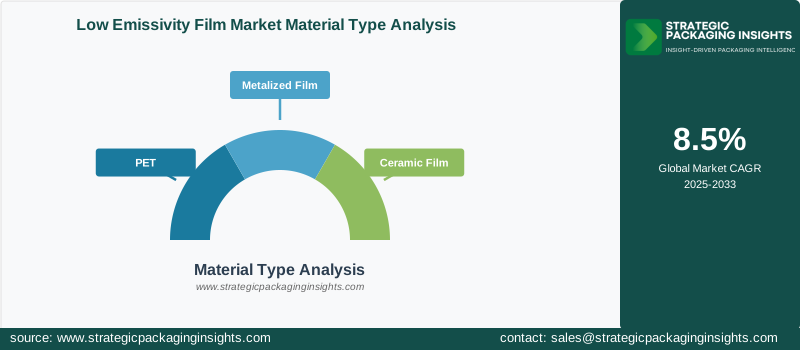
Ceramic films, which are made from advanced ceramic materials, offer excellent heat rejection and UV protection, making them ideal for high-performance applications. These films are particularly popular in the automotive industry, where they are used to improve fuel efficiency and reduce greenhouse gas emissions. The growing demand for energy-efficient solutions and the increasing focus on sustainability are significant factors driving the demand for low emissivity films across all material types. Technological advancements in film manufacturing, such as the development of multi-layered films with enhanced performance characteristics, are further propelling market growth.
Application Analysis
The Low Emissivity Film market is segmented by application into building windows, automotive glass, cold chain, and industrial. Building windows are the largest application segment, driven by the increasing demand for energy-efficient solutions in residential and commercial buildings. Low emissivity films are used to reduce heat transfer through windows, thereby enhancing energy efficiency and reducing energy costs. The adoption of green building standards and the increasing focus on sustainable development are further driving the demand for these films in the building sector.
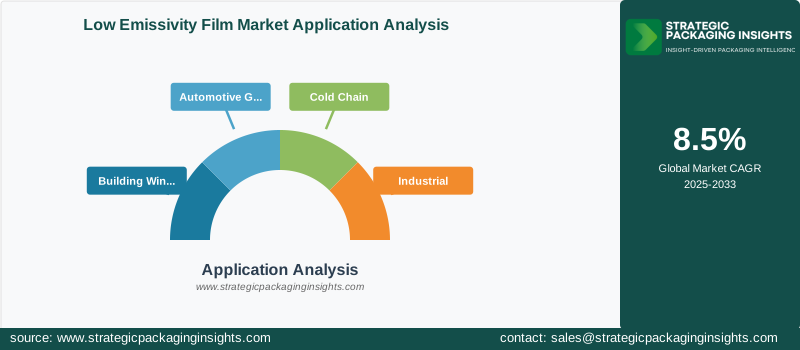
Automotive glass is another significant application segment, driven by the need to improve fuel efficiency and reduce greenhouse gas emissions. Low emissivity films are used to reduce heat gain in vehicles, thereby improving fuel efficiency and enhancing passenger comfort. The cold chain and industrial segments are also witnessing increased adoption of low emissivity films, driven by the need to improve energy efficiency and reduce energy costs. The growing awareness of energy conservation and the need to reduce carbon footprints are significant factors driving the demand for low emissivity films across all application segments.
End Use Analysis
The Low Emissivity Film market is segmented by end use into construction, automotive, energy, and packaging. The construction sector is the largest end-use segment, driven by the increasing demand for energy-efficient building materials. Low emissivity films are used to reduce heat transfer through windows, thereby enhancing energy efficiency and reducing energy costs. The adoption of green building standards and the increasing focus on sustainable development are further driving the demand for these films in the construction sector.
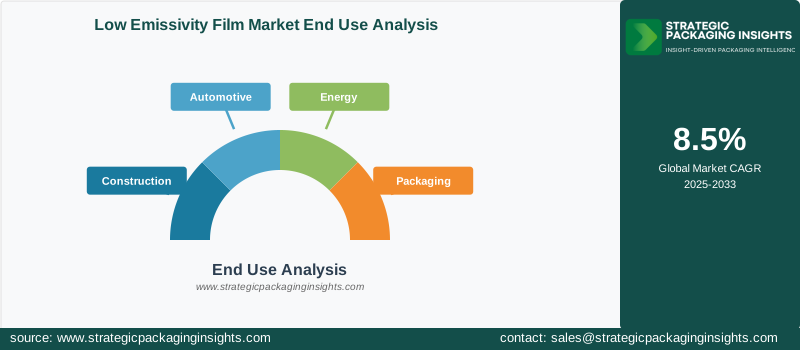
The automotive sector is another significant end-use segment, driven by the need to improve fuel efficiency and reduce greenhouse gas emissions. Low emissivity films are used to reduce heat gain in vehicles, thereby improving fuel efficiency and enhancing passenger comfort. The energy and packaging sectors are also witnessing increased adoption of low emissivity films, driven by the need to improve energy efficiency and reduce energy costs. The growing awareness of energy conservation and the need to reduce carbon footprints are significant factors driving the demand for low emissivity films across all end-use segments.
Low Emissivity Film Market Segments
The Low Emissivity Film market has been segmented on the basis ofProduct Type
- Solar Control Films
- Thermal Insulation Films
- Coated Films
Material Type
- PET
- Metalized Film
- Ceramic Film
Application
- Building Windows
- Automotive Glass
- Cold Chain
- Industrial
End Use
- Construction
- Automotive
- Energy
- Packaging
Region
- Asia Pacific
- North America
- Latin America
- Europe
- Middle East & Africa




