


Insulation Films Market Outlook
The insulation films market was valued at $12.78 billion in 2025 and is projected to reach $23.90 billion by 2034, growing at a CAGR of 7.2% during the forecast period 2026-2034. This growth is driven by increasing demand for energy-efficient solutions across various industries, including construction, packaging, and industrial applications. The rising awareness about energy conservation and the need for sustainable building materials are significant factors propelling the market forward. Additionally, advancements in material science have led to the development of high-performance insulation films that offer superior thermal resistance and durability, further boosting their adoption in diverse applications.
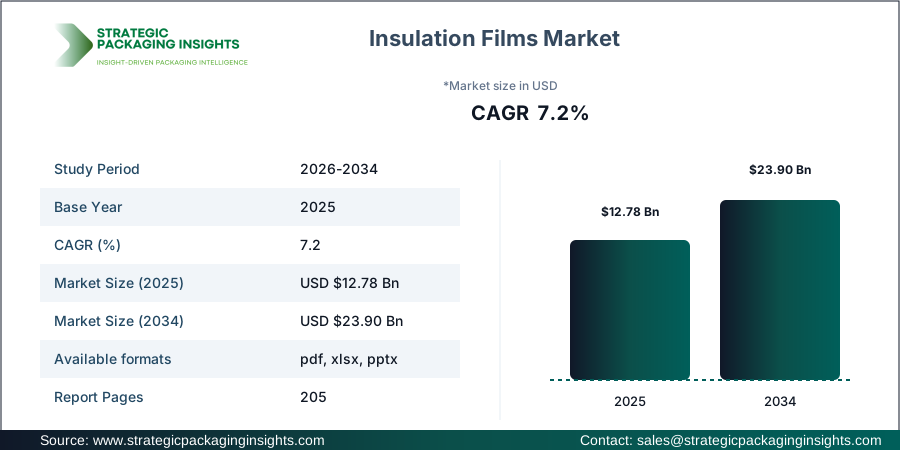
However, the market faces certain restraints, such as stringent environmental regulations regarding the use of plastic-based materials, which could hinder growth. The fluctuating prices of raw materials, particularly petroleum-based products, also pose a challenge to market expansion. Despite these challenges, the insulation films market holds significant growth potential, driven by technological innovations and the increasing trend towards green building practices. The development of bio-based insulation films and the integration of smart technologies in building materials are expected to create new opportunities for market players in the coming years.
Report Scope
| Attributes | Details |
| Report Title | Insulation Films Market Size, Future Growth and Forecast 2034 |
| By Material Type | PE insulation films, PET insulation films, aluminum laminated films |
| By Application | building insulation, HVAC, cold chain, industrial |
| By Film Type | reflective, barrier, thermal |
| By End Use | construction, packaging, energy, industrial |
| Region | Asia Pacific, North America, Latin America, Europe, Middle East & Africa |
| Base Year | 2025 |
| Historic Period | 2018-2024 |
| Forecast Period | 2026-2034 |
| Number of Pages | 205 |
| Customization Available | Yes* |
Opportunities & Threats
The insulation films market presents numerous opportunities, particularly in the realm of sustainable construction and energy-efficient building solutions. As governments worldwide implement stricter energy efficiency regulations, the demand for high-performance insulation materials is expected to rise. This trend is particularly evident in the construction sector, where insulation films are increasingly used to enhance the thermal performance of buildings, reduce energy consumption, and lower carbon footprints. Additionally, the growing popularity of green building certifications, such as LEED and BREEAM, is driving the adoption of eco-friendly insulation solutions, providing a lucrative opportunity for market players to innovate and expand their product offerings.
Another significant opportunity lies in the industrial sector, where insulation films are used to improve the energy efficiency of various processes and equipment. The increasing focus on reducing operational costs and minimizing environmental impact is encouraging industries to invest in advanced insulation technologies. Moreover, the rise of smart cities and the integration of IoT in building management systems are expected to further boost the demand for insulation films, as they play a crucial role in maintaining optimal indoor environments and enhancing energy efficiency.
Despite these opportunities, the insulation films market faces certain threats that could impede its growth. One of the primary challenges is the environmental impact of plastic-based insulation films, which has led to increased scrutiny and regulatory pressure. The industry is under constant pressure to develop sustainable alternatives that do not compromise on performance. Additionally, the volatility in raw material prices, particularly for petroleum-based products, poses a significant threat to market stability. Companies need to invest in research and development to create cost-effective and environmentally friendly solutions to mitigate these risks.
Drivers & Challenges
The insulation films market is primarily driven by the increasing demand for energy-efficient solutions across various industries. The construction sector, in particular, is witnessing a surge in demand for insulation films due to the growing emphasis on sustainable building practices and energy conservation. The need to reduce energy consumption and carbon emissions is prompting builders and architects to incorporate advanced insulation materials into their designs. Additionally, the rising awareness about the benefits of insulation films, such as improved thermal performance and reduced energy costs, is further fueling market growth.
Technological advancements in material science have also played a crucial role in driving the insulation films market. The development of high-performance insulation films with enhanced thermal resistance and durability has expanded their application scope across different industries. Innovations in manufacturing processes have led to the production of thinner, lighter, and more efficient insulation films, making them an attractive choice for various applications. Furthermore, the increasing trend towards smart buildings and the integration of IoT in building management systems are expected to drive the demand for insulation films, as they contribute to maintaining optimal indoor environments and enhancing energy efficiency.
However, the market faces several challenges that could hinder its growth. One of the primary challenges is the stringent environmental regulations regarding the use of plastic-based materials. The industry is under constant pressure to develop sustainable alternatives that do not compromise on performance. Additionally, the fluctuating prices of raw materials, particularly petroleum-based products, pose a significant challenge to market stability. Companies need to invest in research and development to create cost-effective and environmentally friendly solutions to mitigate these risks. Moreover, the lack of awareness about the benefits of insulation films in certain regions could also impede market growth.
Market Share Analysis
The insulation films market is characterized by a highly competitive landscape, with several key players vying for market share. Companies such as 3M, Saint-Gobain, Berry Global, DuPont, Toray Industries, Nitto Denko, Mitsubishi Chemical, Avery Dennison, Kingspan, and Armacell are some of the prominent players in the market. These companies are focusing on strategic initiatives such as mergers and acquisitions, partnerships, and product innovations to strengthen their market position and expand their product portfolios. The competitive rivalry in the market is intense, with players constantly striving to gain a competitive edge through technological advancements and cost-effective solutions.
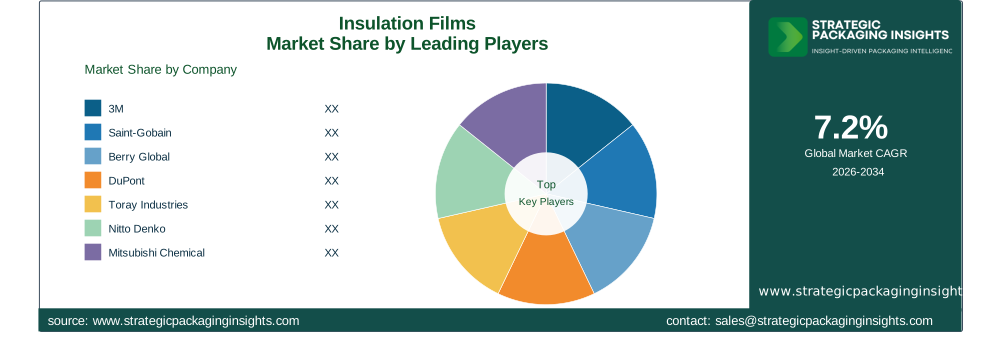
3M, a leading player in the insulation films market, is known for its innovative product offerings and strong focus on research and development. The company has a significant market share and is continuously investing in new technologies to enhance its product portfolio. Saint-Gobain, another major player, is renowned for its sustainable building solutions and has a strong presence in the global market. The company is actively involved in developing eco-friendly insulation films to meet the growing demand for green building materials.
Berry Global, a prominent player in the packaging industry, has also made significant strides in the insulation films market. The company's extensive product range and focus on sustainability have helped it capture a substantial market share. DuPont, a global leader in material science, is known for its high-performance insulation films that offer superior thermal resistance and durability. The company's strong focus on innovation and sustainability has enabled it to maintain a competitive edge in the market.
Toray Industries and Nitto Denko are key players in the Asian market, with a strong focus on technological advancements and product innovations. These companies are investing heavily in research and development to create advanced insulation films that cater to the evolving needs of various industries. Mitsubishi Chemical, Avery Dennison, Kingspan, and Armacell are also significant players in the market, each with a unique product offering and strategic focus. These companies are leveraging their expertise in material science and manufacturing to develop high-performance insulation films that meet the growing demand for energy-efficient solutions.
Key Highlights
- The insulation films market is projected to grow at a CAGR of 7.2% from 2026 to 2034.
- Increasing demand for energy-efficient solutions is driving market growth.
- Technological advancements in material science are expanding application scope.
- Stringent environmental regulations pose a challenge to market expansion.
- Key players are focusing on product innovations and strategic partnerships.
- The construction sector is a major driver of demand for insulation films.
- Growing popularity of green building certifications is boosting market adoption.
- Fluctuating raw material prices present a significant challenge.
- Development of bio-based insulation films offers new growth opportunities.
- Integration of IoT in building management systems is expected to drive demand.
Top Countries Insights
In the insulation films market, the United States stands out as a key player, with a market size of approximately $3.5 billion and a CAGR of 6%. The country's focus on energy efficiency and sustainable building practices is a major growth driver. Government initiatives promoting green buildings and energy conservation are further boosting demand for insulation films. However, the market faces challenges such as stringent environmental regulations and fluctuating raw material prices.
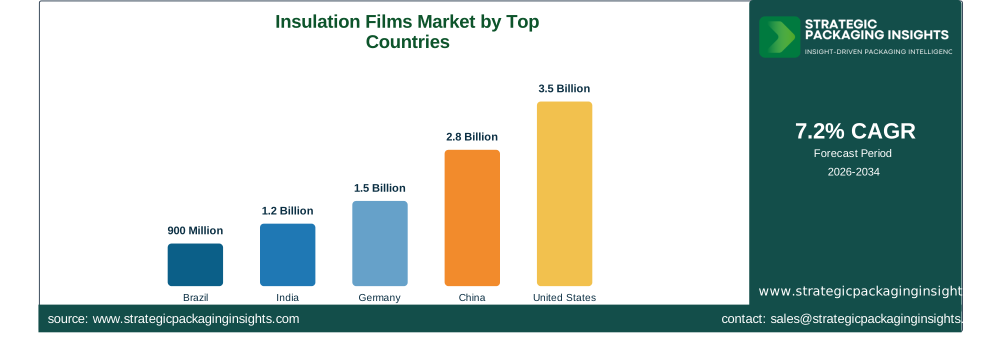
China, with a market size of around $2.8 billion and a CAGR of 8%, is another significant player in the insulation films market. The country's rapid industrialization and urbanization are driving demand for energy-efficient building materials. The government's focus on reducing carbon emissions and promoting sustainable construction practices is also contributing to market growth. However, the market faces challenges such as environmental concerns and the need for sustainable alternatives to plastic-based insulation films.
Germany, with a market size of approximately $1.5 billion and a CAGR of 5%, is a key player in the European insulation films market. The country's strong focus on energy efficiency and sustainable building practices is driving demand for high-performance insulation films. Government initiatives promoting green buildings and energy conservation are further boosting market growth. However, the market faces challenges such as stringent environmental regulations and fluctuating raw material prices.
India, with a market size of around $1.2 billion and a CAGR of 9%, is an emerging player in the insulation films market. The country's rapid urbanization and industrialization are driving demand for energy-efficient building materials. The government's focus on reducing carbon emissions and promoting sustainable construction practices is also contributing to market growth. However, the market faces challenges such as environmental concerns and the need for sustainable alternatives to plastic-based insulation films.
Brazil, with a market size of approximately $900 million and a CAGR of 7%, is a significant player in the Latin American insulation films market. The country's focus on energy efficiency and sustainable building practices is driving demand for high-performance insulation films. Government initiatives promoting green buildings and energy conservation are further boosting market growth. However, the market faces challenges such as stringent environmental regulations and fluctuating raw material prices.
Insulation Films Market Segments Insights

By Material Type Analysis
The insulation films market is segmented by material type into PE insulation films, PET insulation films, and aluminum laminated films. PE insulation films are widely used due to their excellent thermal resistance and cost-effectiveness. They are particularly popular in the construction and packaging industries, where they provide effective insulation and protection against environmental factors. PET insulation films, on the other hand, are known for their superior mechanical properties and durability, making them ideal for industrial applications. Aluminum laminated films offer excellent barrier properties and are commonly used in the energy sector to enhance thermal performance and reduce energy consumption.
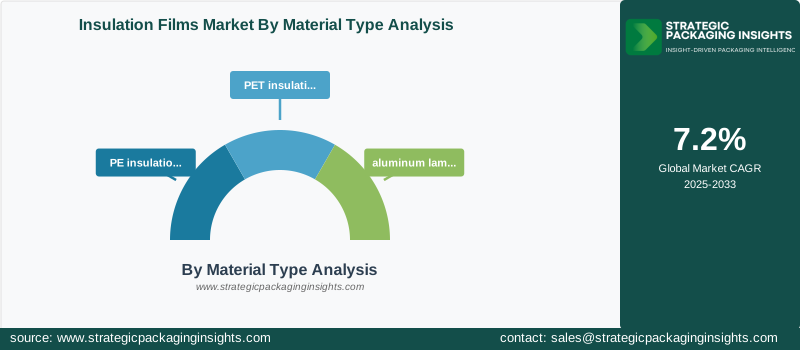
The demand for PE insulation films is driven by their affordability and versatility, making them a preferred choice for various applications. However, the market for PET insulation films is expected to grow at a faster rate due to their superior performance characteristics and increasing adoption in high-end applications. Aluminum laminated films are also gaining traction, particularly in the energy sector, where their excellent barrier properties and thermal performance are highly valued. The development of bio-based insulation films is expected to create new growth opportunities in this segment, as companies strive to meet the growing demand for sustainable and eco-friendly solutions.
By Application Analysis
The insulation films market is segmented by application into building insulation, HVAC, cold chain, and industrial applications. Building insulation is the largest application segment, driven by the increasing demand for energy-efficient building materials and the growing trend towards sustainable construction practices. Insulation films are widely used in residential and commercial buildings to enhance thermal performance, reduce energy consumption, and lower carbon footprints. The HVAC segment is also witnessing significant growth, as insulation films are used to improve the energy efficiency of heating, ventilation, and air conditioning systems.
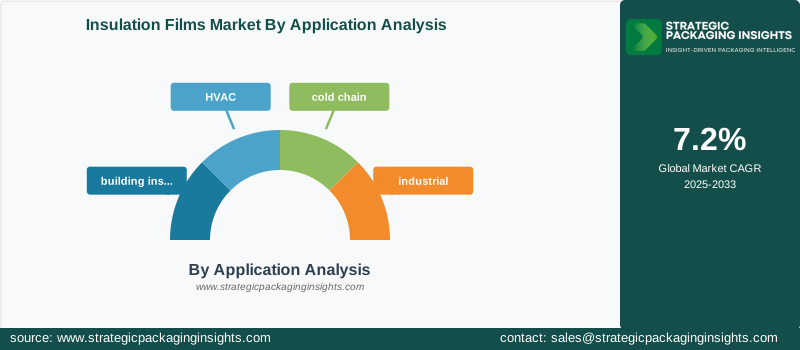
The cold chain segment is another key application area, where insulation films are used to maintain optimal temperatures and prevent heat transfer in refrigerated storage and transportation. The industrial segment is also experiencing growth, driven by the increasing focus on energy efficiency and cost reduction in various industrial processes. The integration of IoT in building management systems is expected to further boost demand for insulation films in these applications, as they play a crucial role in maintaining optimal indoor environments and enhancing energy efficiency.
By Film Type Analysis
The insulation films market is segmented by film type into reflective, barrier, and thermal films. Reflective films are widely used in the construction and packaging industries, where they provide effective insulation and protection against environmental factors. These films are designed to reflect radiant heat, thereby reducing heat transfer and improving energy efficiency. Barrier films, on the other hand, offer excellent protection against moisture, gases, and other environmental factors, making them ideal for packaging and industrial applications.
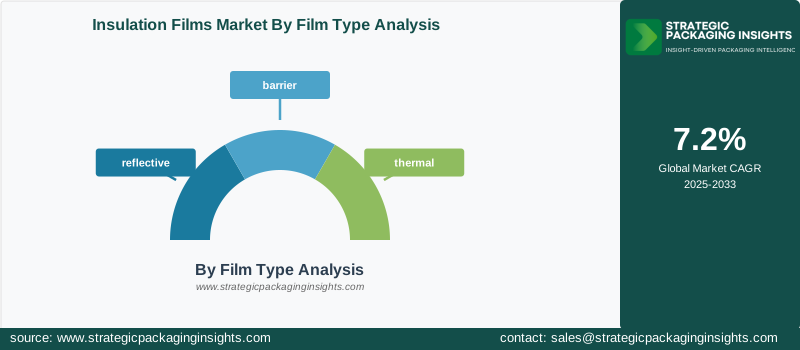
Thermal films are known for their superior thermal resistance and are commonly used in the energy sector to enhance thermal performance and reduce energy consumption. The demand for reflective films is driven by their affordability and versatility, making them a preferred choice for various applications. However, the market for barrier films is expected to grow at a faster rate due to their superior performance characteristics and increasing adoption in high-end applications. Thermal films are also gaining traction, particularly in the energy sector, where their excellent thermal performance is highly valued.
By End Use Analysis
The insulation films market is segmented by end use into construction, packaging, energy, and industrial applications. The construction sector is the largest end-use segment, driven by the increasing demand for energy-efficient building materials and the growing trend towards sustainable construction practices. Insulation films are widely used in residential and commercial buildings to enhance thermal performance, reduce energy consumption, and lower carbon footprints. The packaging sector is also witnessing significant growth, as insulation films are used to improve the energy efficiency of packaging materials and reduce environmental impact.
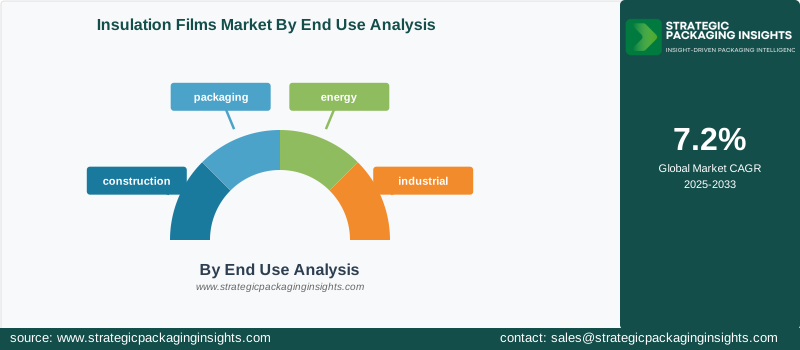
The energy sector is another key end-use area, where insulation films are used to enhance thermal performance and reduce energy consumption in various applications. The industrial sector is also experiencing growth, driven by the increasing focus on energy efficiency and cost reduction in various industrial processes. The integration of IoT in building management systems is expected to further boost demand for insulation films in these applications, as they play a crucial role in maintaining optimal indoor environments and enhancing energy efficiency.
Insulation Films Market Segments
The Insulation Films market has been segmented on the basis ofBy Material Type
- PE insulation films
- PET insulation films
- aluminum laminated films
By Application
- building insulation
- HVAC
- cold chain
- industrial
By Film Type
- reflective
- barrier
- thermal
By End Use
- construction
- packaging
- energy
- industrial
Region
- Asia Pacific
- North America
- Latin America
- Europe
- Middle East & Africa




