


Liquid Masking Film Market Outlook
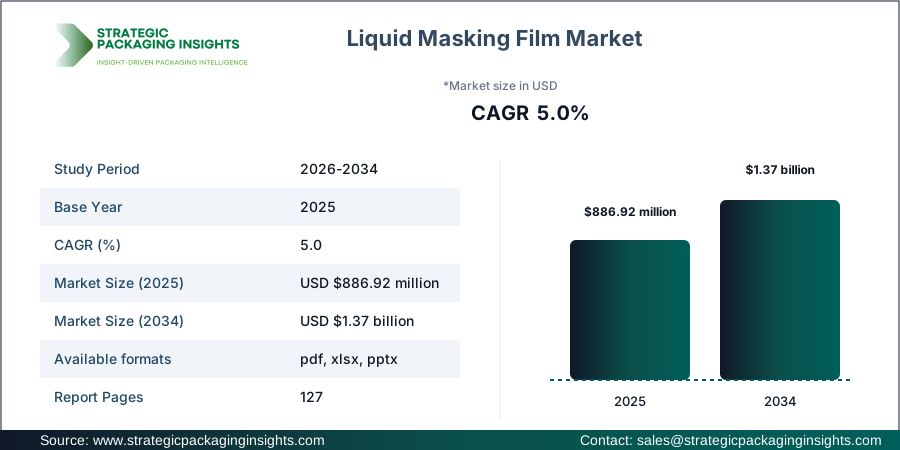
The Liquid Masking Film market was valued at $886.92 million in 2025 and is projected to reach $1.37 billion by 2034, growing at a CAGR of 5.0% during the forecast period 2026-2034. This growth is driven by the increasing demand for efficient and cost-effective masking solutions across various industries. The automotive sector, in particular, is a significant contributor to this market, as liquid masking films are extensively used in automotive painting applications to ensure precision and reduce paint wastage. Additionally, the construction industry is adopting these films for glass protection and surface coating applications, further propelling market growth. The rise in DIY activities and the need for protective coatings in manufacturing processes are also expected to fuel demand for liquid masking films.
Despite the promising growth prospects, the Liquid Masking Film market faces certain challenges. Regulatory constraints related to the use of certain chemicals in film production could pose a threat to market expansion. Moreover, the availability of alternative masking solutions, such as tapes and paper, might limit the adoption of liquid masking films. However, advancements in film technology, such as the development of eco-friendly and biodegradable films, present significant growth opportunities. The market is also witnessing increased investments in research and development to enhance product performance and expand application areas, which could mitigate some of the existing restraints and drive future growth.
Report Scope
| Attributes | Details |
| Report Title | Liquid Masking Film Market Size, Future Growth and Forecast 2034 |
| Material Type | Water-Based Film, Solvent-Based Film, Peelable Film, UV-Resistant Film |
| Application | Automotive Painting, Construction, Glass Protection, Industrial Coating |
| End Use | Automotive, Construction, Manufacturing, DIY |
| Sales Channel | Direct Sales, Distributors, Online |
| Region | Asia Pacific, North America, Latin America, Europe, Middle East & Africa |
| Base Year | 2025 |
| Historic Period | 2018-2024 |
| Forecast Period | 2026-2034 |
| Number of Pages | 127 |
| Customization Available | Yes* |
Opportunities & Threats
The Liquid Masking Film market presents numerous opportunities for growth, particularly in emerging economies where industrialization is on the rise. The increasing demand for automobiles in countries like China and India is expected to drive the need for advanced masking solutions, thereby boosting market growth. Additionally, the construction boom in these regions offers significant opportunities for the application of liquid masking films in glass protection and surface coating. The trend towards eco-friendly products is also opening new avenues for market players to develop sustainable masking solutions that comply with stringent environmental regulations.
Another opportunity lies in the expansion of the DIY market, where consumers are increasingly undertaking home improvement projects. Liquid masking films offer an easy-to-use and effective solution for protecting surfaces during painting and renovation activities. The growing popularity of online sales channels is also facilitating market expansion by providing consumers with easy access to a wide range of products. Companies can leverage digital platforms to reach a broader audience and enhance their market presence.
However, the market is not without its threats. The presence of alternative masking solutions, such as tapes and paper, poses a significant challenge to the adoption of liquid masking films. These alternatives are often perceived as more cost-effective, which could hinder market growth. Additionally, fluctuations in raw material prices and supply chain disruptions could impact production costs and profitability for manufacturers. Companies need to focus on innovation and cost optimization to remain competitive in this dynamic market environment.
Drivers & Challenges
The Liquid Masking Film market is primarily driven by the growing demand for efficient and precise masking solutions in the automotive industry. As vehicle production continues to rise globally, the need for high-quality paint finishes is becoming increasingly important. Liquid masking films provide an effective solution for achieving clean lines and reducing paint wastage, making them a preferred choice among automotive manufacturers. Additionally, the construction industry's growth is contributing to market expansion, as these films are used for protecting glass surfaces and ensuring smooth finishes in building projects.
Technological advancements in film production are also driving market growth. The development of UV-resistant and peelable films has expanded the application areas for liquid masking films, making them suitable for a wider range of industries. The increasing focus on sustainability is encouraging manufacturers to develop eco-friendly films that meet environmental standards, further boosting market demand. The rise in DIY activities and home improvement projects is another factor driving the market, as consumers seek easy-to-use solutions for protecting surfaces during painting and renovation tasks.
Despite these drivers, the Liquid Masking Film market faces several challenges. Regulatory constraints related to the use of certain chemicals in film production could limit market growth. Manufacturers need to comply with stringent environmental regulations, which may increase production costs and impact profitability. Additionally, the availability of alternative masking solutions, such as tapes and paper, poses a threat to the adoption of liquid masking films. Companies need to focus on innovation and product differentiation to overcome these challenges and maintain their competitive edge in the market.
Market Share Analysis
The Liquid Masking Film market is characterized by a competitive landscape with several key players vying for market share. Companies such as 3M, PPG Industries, Sherwin-Williams, AkzoNobel, and Henkel are prominent players in this market, leveraging their extensive product portfolios and strong distribution networks to maintain their competitive positions. These companies are focusing on product innovation and strategic partnerships to expand their market presence and cater to the evolving needs of consumers.
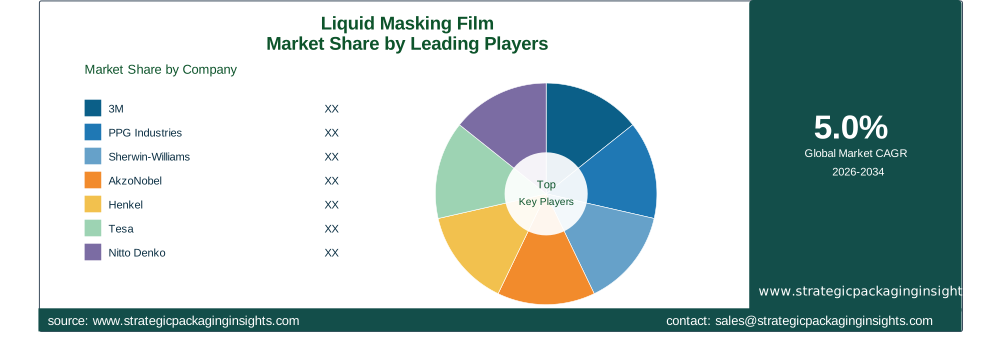
3M is a leading player in the Liquid Masking Film market, known for its innovative solutions and strong brand reputation. The company offers a wide range of masking films for various applications, including automotive painting and industrial coating. PPG Industries is another major player, with a focus on developing high-performance films that meet the stringent requirements of the automotive and construction industries. The company's extensive research and development efforts have enabled it to introduce advanced products that cater to the specific needs of its customers.
Sherwin-Williams and AkzoNobel are also key players in the market, offering a diverse range of masking films for different applications. These companies are investing in research and development to enhance product performance and expand their application areas. Henkel, known for its adhesive technologies, is leveraging its expertise to develop innovative masking solutions that offer superior adhesion and protection. The company's strong focus on sustainability and eco-friendly products is helping it gain a competitive edge in the market.
Other notable players in the Liquid Masking Film market include Tesa, Nitto Denko, Saint-Gobain, Intertape Polymer Group, and Scapa. These companies are focusing on expanding their product portfolios and strengthening their distribution networks to enhance their market presence. Strategic collaborations and partnerships are also playing a crucial role in helping these companies expand their reach and cater to a broader customer base. The competitive landscape of the Liquid Masking Film market is expected to remain dynamic, with companies focusing on innovation and strategic initiatives to maintain their market positions.
Key Highlights
- The Liquid Masking Film market is projected to grow from $886.92 million in 2025 to $1.37 billion by 2034, at a CAGR of 5.0%.
- Key growth drivers include the rising demand for efficient masking solutions in the automotive and construction industries.
- Technological advancements in film production, such as UV-resistant and peelable films, are expanding application areas.
- The trend towards eco-friendly products is encouraging manufacturers to develop sustainable masking solutions.
- The DIY market presents significant growth opportunities, with consumers increasingly undertaking home improvement projects.
- Online sales channels are facilitating market expansion by providing easy access to a wide range of products.
- Regulatory constraints and the availability of alternative masking solutions pose challenges to market growth.
Top Countries Insights
In the Liquid Masking Film market, the United States stands out as a key player, with a market size of approximately $250 million and a CAGR of 4%. The country's robust automotive and construction industries drive demand for masking films, with a focus on high-quality finishes and surface protection. Government regulations promoting eco-friendly products further support market growth, encouraging manufacturers to develop sustainable solutions.
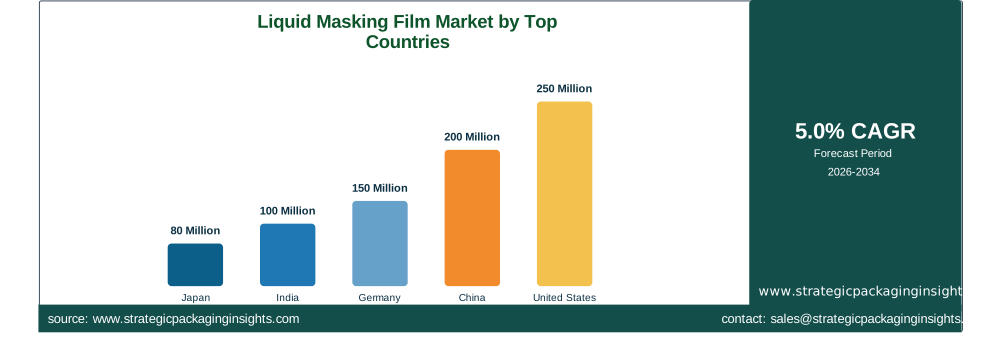
China is another significant market, with a market size of around $200 million and a CAGR of 6%. The country's rapid industrialization and growing automotive sector are major growth drivers. The construction boom in urban areas also contributes to the demand for masking films, particularly for glass protection and surface coating applications. However, regulatory challenges related to environmental standards may pose hurdles for market players.
Germany, with a market size of $150 million and a CAGR of 5%, is a key market in Europe. The country's strong automotive industry and focus on innovation drive demand for advanced masking solutions. The trend towards eco-friendly products is also prominent, with manufacturers investing in research and development to meet stringent environmental regulations.
India, with a market size of $100 million and a CAGR of 7%, presents significant growth opportunities. The country's expanding automotive and construction industries are key drivers, with increasing demand for efficient and cost-effective masking solutions. The government's focus on infrastructure development further supports market growth, although regulatory challenges may impact market expansion.
Japan, with a market size of $80 million and a CAGR of 3%, is a mature market with a focus on high-quality and innovative masking solutions. The country's advanced manufacturing sector drives demand for precision masking films, while the trend towards sustainability encourages the development of eco-friendly products. However, market growth may be limited by the availability of alternative masking solutions.
Liquid Masking Film Market Segments Insights

Material Type Analysis
The Liquid Masking Film market is segmented by material type into Water-Based Film, Solvent-Based Film, Peelable Film, and UV-Resistant Film. Water-based films are gaining popularity due to their eco-friendly nature and compliance with environmental regulations. These films are preferred in applications where minimal environmental impact is a priority, such as in the automotive and construction industries. Solvent-based films, on the other hand, offer superior adhesion and durability, making them suitable for industrial coating applications where performance is critical.
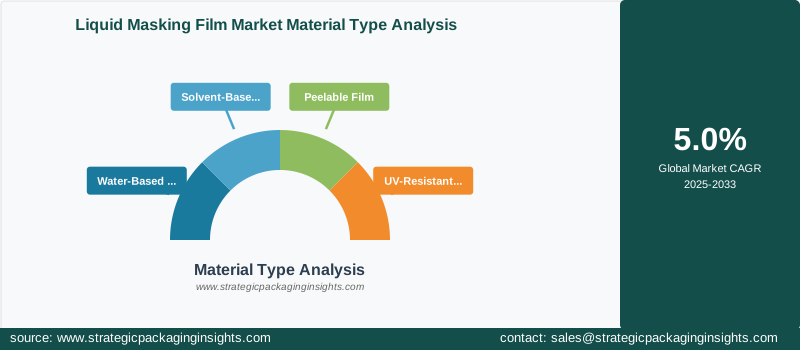
Peelable films are increasingly being used in applications that require easy removal without leaving residue, such as in glass protection and automotive painting. These films provide a convenient solution for temporary surface protection, catering to the needs of industries that require frequent changes in surface coatings. UV-resistant films are designed to withstand harsh environmental conditions, making them ideal for outdoor applications where exposure to sunlight is a concern. The demand for these films is driven by the need for long-lasting protection in construction and automotive applications.
Application Analysis
The application segment of the Liquid Masking Film market includes Automotive Painting, Construction, Glass Protection, and Industrial Coating. Automotive painting is a major application area, with liquid masking films being used to achieve precise paint finishes and reduce wastage. The construction industry also presents significant opportunities, with films being used for glass protection and surface coating applications. The demand for masking films in construction is driven by the need for efficient and cost-effective solutions for protecting surfaces during building projects.
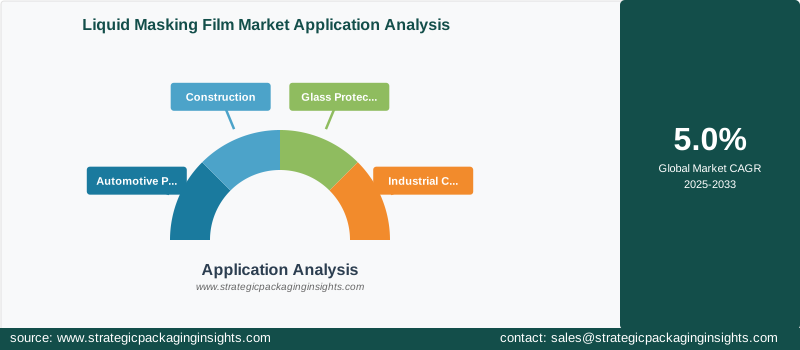
Glass protection is another key application area, with films being used to prevent damage during transportation and installation. The industrial coating segment is witnessing growth due to the increasing demand for protective coatings in manufacturing processes. Liquid masking films offer an effective solution for protecting surfaces during coating applications, ensuring a smooth and even finish. The versatility of these films makes them suitable for a wide range of applications, catering to the diverse needs of different industries.
End Use Analysis
The Liquid Masking Film market is segmented by end use into Automotive, Construction, Manufacturing, and DIY. The automotive sector is a major end user, with films being used extensively in painting and surface protection applications. The construction industry is also a significant end user, with films being used for glass protection and surface coating applications. The demand for masking films in construction is driven by the need for efficient and cost-effective solutions for protecting surfaces during building projects.
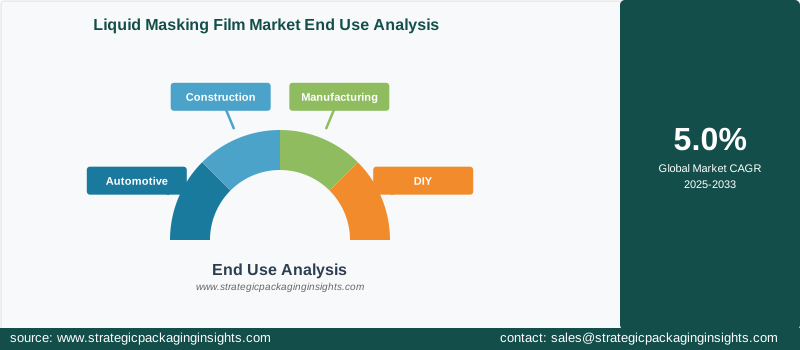
The manufacturing sector is witnessing growth due to the increasing demand for protective coatings in production processes. Liquid masking films offer an effective solution for protecting surfaces during manufacturing, ensuring a smooth and even finish. The DIY segment presents significant growth opportunities, with consumers increasingly undertaking home improvement projects. Liquid masking films offer an easy-to-use and effective solution for protecting surfaces during painting and renovation activities, catering to the needs of DIY enthusiasts.
Sales Channel Analysis
The sales channel segment of the Liquid Masking Film market includes Direct Sales, Distributors, and Online. Direct sales are a major channel, with companies leveraging their strong distribution networks to reach a wide range of customers. Distributors play a crucial role in expanding market reach, providing companies with access to new markets and customer segments. The online sales channel is witnessing growth, with consumers increasingly turning to digital platforms for purchasing masking films.
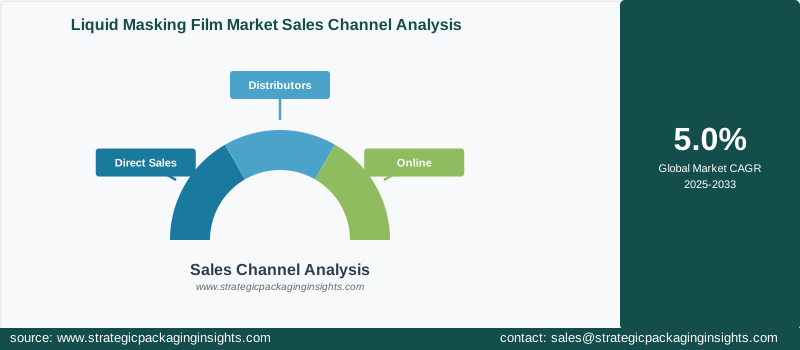
Online sales offer several advantages, including convenience, a wide range of product options, and competitive pricing. Companies are leveraging digital platforms to enhance their market presence and reach a broader audience. The growing popularity of e-commerce is facilitating market expansion, providing consumers with easy access to a wide range of products. The sales channel segment is expected to witness significant growth, driven by the increasing adoption of digital platforms and the expansion of distribution networks.
Liquid Masking Film Market Segments
The Liquid Masking Film market has been segmented on the basis ofMaterial Type
- Water-Based Film
- Solvent-Based Film
- Peelable Film
- UV-Resistant Film
Application
- Automotive Painting
- Construction
- Glass Protection
- Industrial Coating
End Use
- Automotive
- Construction
- Manufacturing
- DIY
Sales Channel
- Direct Sales
- Distributors
- Online
Region
- Asia Pacific
- North America
- Latin America
- Europe
- Middle East & Africa




