


Label Applicators Market Outlook
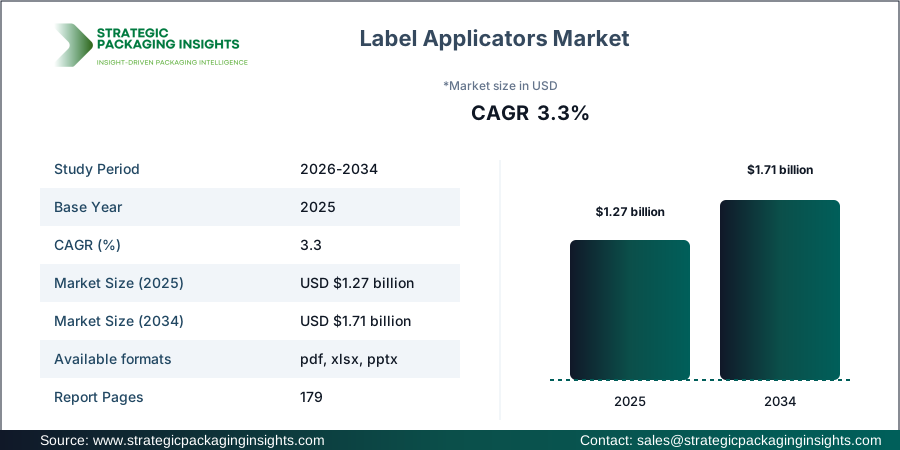
The Label Applicators market was valued at $1.27 billion in 2025 and is projected to reach $1.71 billion by 2034, growing at a CAGR of 3.3% during the forecast period 2026-2034. This growth is driven by the increasing demand for efficient labeling solutions across various industries such as food, pharmaceuticals, and logistics. The need for automation in packaging processes to enhance productivity and reduce manual errors is a significant factor propelling the market. Additionally, the rise in e-commerce and the subsequent demand for logistics and warehousing solutions are further boosting the adoption of label applicators. The market is also witnessing technological advancements, such as the integration of IoT and AI in labeling systems, which are expected to offer lucrative opportunities for market players.
However, the market faces certain restraints, including the high initial investment required for advanced labeling systems and the complexity involved in integrating these systems with existing production lines. Regulatory challenges related to labeling standards and environmental concerns regarding the use of non-biodegradable materials in labels also pose significant challenges. Despite these hurdles, the market holds substantial growth potential, driven by the increasing focus on sustainable packaging solutions and the development of eco-friendly labeling materials. The ongoing trend towards digitalization and smart packaging is expected to further fuel market growth, offering new avenues for innovation and expansion.
Report Scope
| Attributes | Details |
| Report Title | Label Applicators Market Size, Future Growth and Forecast 2034 |
| Machine Type | Automatic Applicators, Semi-Automatic Applicators, Print-and-Apply Systems |
| Label Type | Pressure-Sensitive, Wrap-Around, Shrink Sleeve |
| Application | Food, Pharma, Logistics, Cosmetics |
| End Use | Manufacturers, Warehouses, Contract Packers |
| Region | Asia Pacific, North America, Latin America, Europe, Middle East & Africa |
| Base Year | 2025 |
| Historic Period | 2018-2024 |
| Forecast Period | 2026-2034 |
| Number of Pages | 179 |
| Customization Available | Yes* |
Opportunities & Threats
The label applicators market presents numerous opportunities, particularly with the growing trend towards automation in the packaging industry. As companies strive to improve efficiency and reduce labor costs, the demand for automated labeling solutions is on the rise. This shift is particularly evident in sectors such as food and pharmaceuticals, where precision and speed are critical. The integration of advanced technologies like IoT and AI into labeling systems offers further opportunities for innovation, enabling real-time monitoring and control of labeling processes. Additionally, the increasing focus on sustainability is driving the development of eco-friendly labeling materials, opening up new markets for biodegradable and recyclable labels.
Another significant opportunity lies in the expansion of e-commerce and the consequent growth in logistics and warehousing sectors. As online retail continues to flourish, the need for efficient labeling solutions to manage inventory and streamline supply chain operations becomes paramount. This trend is particularly pronounced in emerging markets, where rapid urbanization and increasing consumer spending are driving demand for packaged goods. Furthermore, the rise of smart packaging, which incorporates digital technologies to enhance product interaction and traceability, presents a promising avenue for growth in the label applicators market.
Despite these opportunities, the market faces several threats that could hinder its growth. One of the primary challenges is the high cost associated with the implementation of advanced labeling systems, which can be prohibitive for small and medium-sized enterprises. Additionally, the complexity of integrating these systems with existing production lines can pose significant operational challenges. Regulatory issues related to labeling standards and environmental concerns regarding the use of non-biodegradable materials in labels also present significant hurdles. Companies must navigate these challenges carefully to capitalize on the growth opportunities in the market.
Drivers & Challenges
The label applicators market is driven by several key factors, including the increasing demand for automation in packaging processes. As industries strive to enhance productivity and reduce manual errors, the adoption of automated labeling solutions is gaining momentum. This trend is particularly evident in sectors such as food and pharmaceuticals, where precision and speed are critical. The integration of advanced technologies like IoT and AI into labeling systems is further driving market growth, enabling real-time monitoring and control of labeling processes. Additionally, the rise of e-commerce and the consequent growth in logistics and warehousing sectors are boosting the demand for efficient labeling solutions.
Another significant driver is the increasing focus on sustainability in packaging. As environmental concerns continue to rise, companies are seeking eco-friendly labeling solutions to reduce their carbon footprint. This trend is driving the development of biodegradable and recyclable labels, which are gaining popularity across various industries. The ongoing trend towards digitalization and smart packaging is also contributing to market growth, offering new avenues for innovation and expansion. As companies look to enhance product interaction and traceability, the demand for smart labeling solutions is expected to increase, further propelling the market.
Despite these drivers, the label applicators market faces several challenges that could hinder its growth. One of the primary challenges is the high cost associated with the implementation of advanced labeling systems, which can be prohibitive for small and medium-sized enterprises. Additionally, the complexity of integrating these systems with existing production lines can pose significant operational challenges. Regulatory issues related to labeling standards and environmental concerns regarding the use of non-biodegradable materials in labels also present significant hurdles. Companies must navigate these challenges carefully to capitalize on the growth opportunities in the market.
Market Share Analysis
The competitive landscape of the label applicators market is characterized by the presence of several key players, each vying for a significant share of the market. Companies such as ProMach, HERMA, Videojet Technologies, Markem-Imaje, and Weber Packaging are among the leading players in the market, known for their innovative solutions and extensive product portfolios. These companies are focusing on strategic partnerships, mergers, and acquisitions to expand their market presence and enhance their product offerings. Additionally, they are investing in research and development to introduce advanced labeling technologies and cater to the evolving needs of their customers.
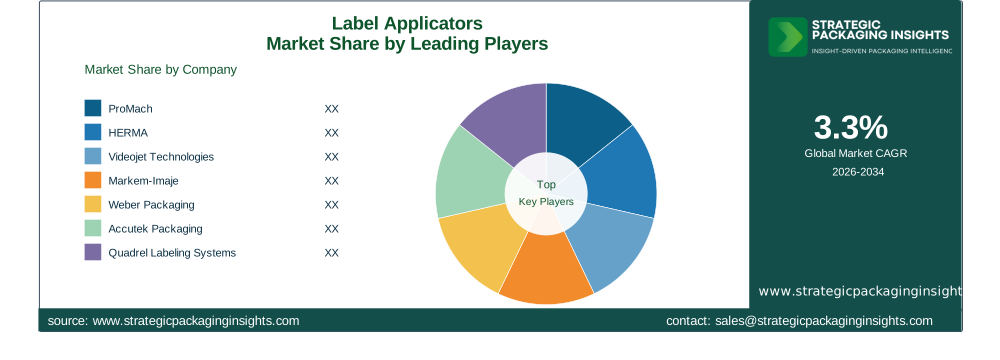
ProMach is a prominent player in the label applicators market, known for its comprehensive range of labeling solutions that cater to various industries. The company has a strong focus on innovation and customer satisfaction, which has helped it maintain a competitive edge in the market. HERMA, another leading player, is renowned for its high-quality labeling systems and commitment to sustainability. The company is actively involved in developing eco-friendly labeling solutions to meet the growing demand for sustainable packaging.
Videojet Technologies is a key player in the market, offering a wide range of coding and marking solutions, including label applicators. The company's focus on technological advancements and customer-centric solutions has enabled it to establish a strong foothold in the market. Markem-Imaje, a subsidiary of Dover Corporation, is known for its innovative labeling and coding solutions that cater to various industries, including food, pharmaceuticals, and logistics. The company's commitment to quality and innovation has helped it maintain a strong market position.
Weber Packaging is another significant player in the label applicators market, offering a diverse range of labeling solutions that cater to different industries. The company's focus on customer satisfaction and continuous improvement has enabled it to build a loyal customer base and maintain a competitive edge in the market. Other notable players in the market include Accutek Packaging, Quadrel Labeling Systems, Label-Aire, Krones, and Sidel, each contributing to the market's growth through their innovative solutions and strategic initiatives.
Key Highlights
- The label applicators market is projected to grow from $1.27 billion in 2025 to $1.71 billion by 2034, at a CAGR of 3.3%.
- Automation in packaging processes is a significant driver of market growth, particularly in the food and pharmaceutical sectors.
- The integration of IoT and AI in labeling systems is enabling real-time monitoring and control, offering new opportunities for innovation.
- The rise of e-commerce is boosting demand for efficient labeling solutions in logistics and warehousing sectors.
- Environmental concerns are driving the development of eco-friendly labeling materials, opening up new markets for biodegradable and recyclable labels.
- High initial investment and complexity in system integration are significant challenges for market growth.
- Key players in the market include ProMach, HERMA, Videojet Technologies, Markem-Imaje, and Weber Packaging.
- The market is witnessing a trend towards digitalization and smart packaging, enhancing product interaction and traceability.
- Regulatory challenges related to labeling standards and environmental concerns pose significant hurdles for market players.
- Strategic partnerships, mergers, and acquisitions are common strategies among key players to expand market presence.
Top Countries Insights
In the label applicators market, the United States stands out as a leading country, with a market size of approximately $450 million and a CAGR of 4%. The growth in this region is driven by the strong presence of key market players and the high demand for automated labeling solutions in the food and pharmaceutical industries. The country's advanced technological infrastructure and focus on innovation further contribute to market growth. However, regulatory challenges related to labeling standards and environmental concerns remain significant hurdles.
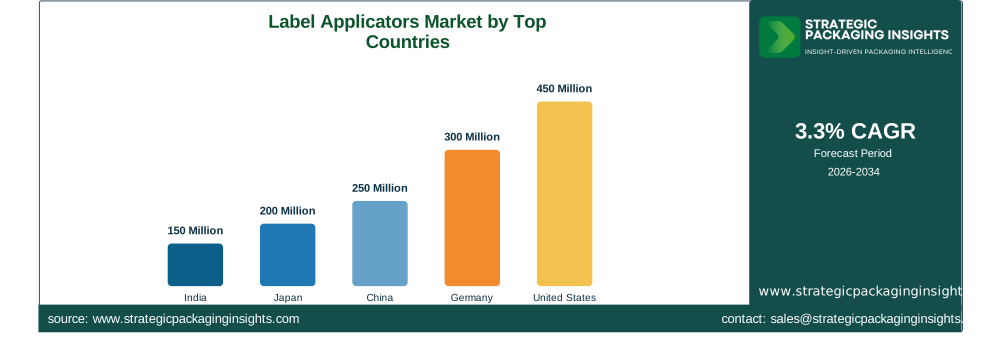
Germany is another prominent player in the label applicators market, with a market size of around $300 million and a CAGR of 3%. The country's strong manufacturing sector and emphasis on automation are key drivers of market growth. Additionally, Germany's commitment to sustainability and the development of eco-friendly labeling materials are opening up new opportunities for market players. However, the high cost of advanced labeling systems and complexity in integration pose challenges for market growth.
China is rapidly emerging as a significant market for label applicators, with a market size of approximately $250 million and a CAGR of 5%. The country's booming e-commerce sector and increasing demand for efficient logistics solutions are driving market growth. Additionally, the government's focus on industrial automation and smart manufacturing is creating new opportunities for market players. However, regulatory challenges and environmental concerns related to labeling materials remain significant hurdles.
Japan, with a market size of around $200 million and a CAGR of 2%, is another key player in the label applicators market. The country's advanced technological infrastructure and focus on innovation are driving market growth. Additionally, Japan's emphasis on sustainability and the development of eco-friendly labeling materials are opening up new opportunities for market players. However, the high cost of advanced labeling systems and complexity in integration pose challenges for market growth.
India is also emerging as a significant market for label applicators, with a market size of approximately $150 million and a CAGR of 6%. The country's rapidly growing manufacturing sector and increasing demand for efficient packaging solutions are driving market growth. Additionally, the government's focus on industrial automation and smart manufacturing is creating new opportunities for market players. However, regulatory challenges and environmental concerns related to labeling materials remain significant hurdles.
Label Applicators Market Segments Insights

Machine Type Analysis
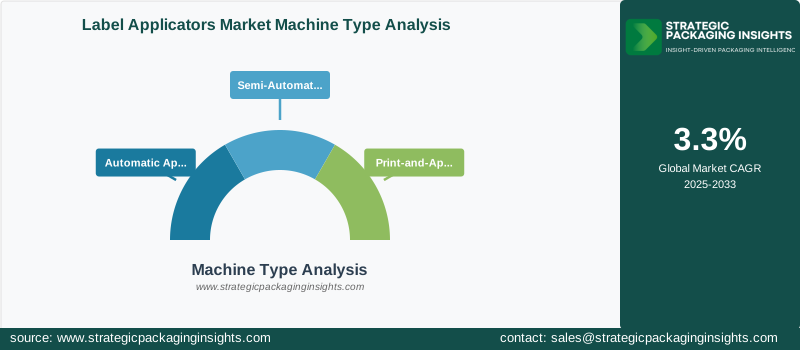
The machine type segment of the label applicators market is categorized into automatic applicators, semi-automatic applicators, and print-and-apply systems. Automatic applicators are gaining significant traction due to their ability to enhance productivity and reduce manual errors. These systems are particularly popular in industries such as food and pharmaceuticals, where precision and speed are critical. The integration of advanced technologies like IoT and AI into automatic applicators is further driving their adoption, enabling real-time monitoring and control of labeling processes. Semi-automatic applicators, on the other hand, are preferred by small and medium-sized enterprises due to their cost-effectiveness and ease of use. Print-and-apply systems are also witnessing increased demand, particularly in logistics and warehousing sectors, where they offer efficient solutions for inventory management and supply chain operations.
The growing trend towards automation in packaging processes is a significant driver of growth in the machine type segment. As companies strive to improve efficiency and reduce labor costs, the demand for automated labeling solutions is on the rise. This trend is particularly evident in emerging markets, where rapid urbanization and increasing consumer spending are driving demand for packaged goods. Additionally, the rise of e-commerce and the consequent growth in logistics and warehousing sectors are boosting the demand for efficient labeling solutions. However, the high cost associated with the implementation of advanced labeling systems and the complexity involved in integrating these systems with existing production lines pose significant challenges for market growth.
Label Type Analysis
The label type segment of the label applicators market is divided into pressure-sensitive, wrap-around, and shrink sleeve labels. Pressure-sensitive labels are the most widely used type, owing to their versatility and ease of application. These labels are suitable for a wide range of surfaces and are popular in industries such as food, pharmaceuticals, and cosmetics. The demand for pressure-sensitive labels is driven by the increasing focus on sustainability, as they are available in eco-friendly materials that reduce environmental impact. Wrap-around labels are also gaining popularity, particularly in the beverage industry, where they offer a cost-effective solution for labeling cylindrical containers. Shrink sleeve labels, known for their 360-degree coverage and vibrant graphics, are witnessing increased demand in the cosmetics and personal care sectors.
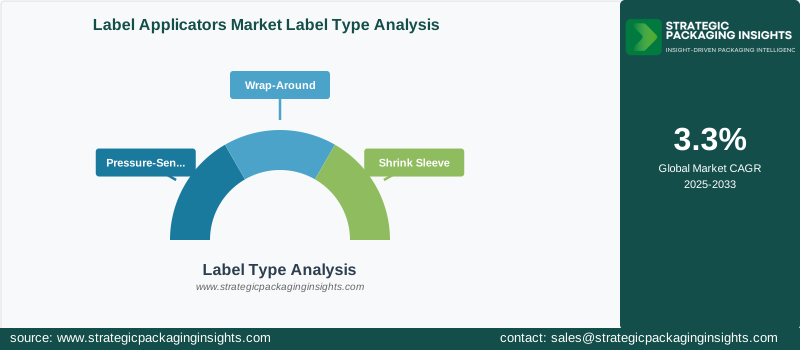
The growing trend towards sustainable packaging is a significant driver of growth in the label type segment. As environmental concerns continue to rise, companies are seeking eco-friendly labeling solutions to reduce their carbon footprint. This trend is driving the development of biodegradable and recyclable labels, which are gaining popularity across various industries. Additionally, the ongoing trend towards digitalization and smart packaging is contributing to market growth, offering new avenues for innovation and expansion. However, regulatory challenges related to labeling standards and environmental concerns regarding the use of non-biodegradable materials in labels pose significant hurdles for market players.
Application Analysis
The application segment of the label applicators market includes food, pharma, logistics, and cosmetics. The food industry is one of the largest consumers of label applicators, driven by the need for efficient labeling solutions to ensure product safety and compliance with regulatory standards. The demand for label applicators in the pharmaceutical industry is also on the rise, as companies strive to enhance product traceability and prevent counterfeiting. The logistics sector is witnessing increased demand for label applicators, driven by the growth of e-commerce and the need for efficient inventory management and supply chain operations. The cosmetics industry is also a significant consumer of label applicators, as companies seek to enhance product presentation and brand visibility.
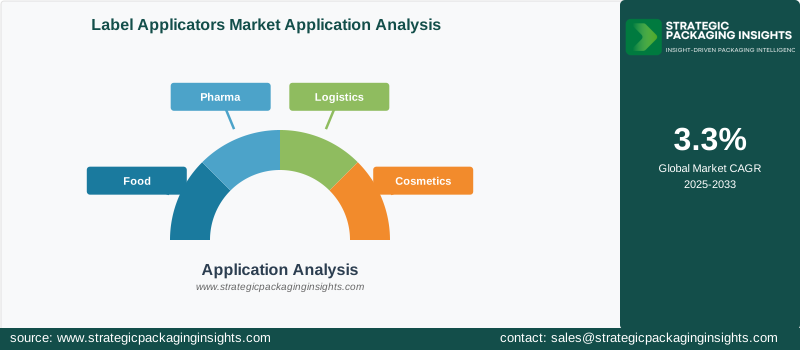
The increasing demand for automation in packaging processes is a significant driver of growth in the application segment. As industries strive to enhance productivity and reduce manual errors, the adoption of automated labeling solutions is gaining momentum. This trend is particularly evident in sectors such as food and pharmaceuticals, where precision and speed are critical. Additionally, the rise of e-commerce and the consequent growth in logistics and warehousing sectors are boosting the demand for efficient labeling solutions. However, the high cost associated with the implementation of advanced labeling systems and the complexity involved in integrating these systems with existing production lines pose significant challenges for market growth.
End Use Analysis
The end-use segment of the label applicators market is categorized into manufacturers, warehouses, and contract packers. Manufacturers are the largest consumers of label applicators, driven by the need for efficient labeling solutions to enhance productivity and reduce manual errors. The demand for label applicators in warehouses is also on the rise, as companies strive to improve inventory management and streamline supply chain operations. Contract packers, who provide packaging services to various industries, are also significant consumers of label applicators, as they seek to enhance product presentation and brand visibility.
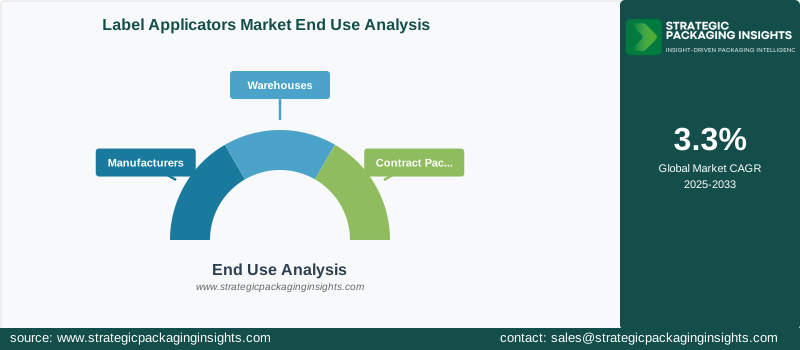
The growing trend towards automation in packaging processes is a significant driver of growth in the end-use segment. As companies strive to improve efficiency and reduce labor costs, the demand for automated labeling solutions is on the rise. This trend is particularly evident in emerging markets, where rapid urbanization and increasing consumer spending are driving demand for packaged goods. Additionally, the rise of e-commerce and the consequent growth in logistics and warehousing sectors are boosting the demand for efficient labeling solutions. However, the high cost associated with the implementation of advanced labeling systems and the complexity involved in integrating these systems with existing production lines pose significant challenges for market growth.
Label Applicators Market Segments
The Label Applicators market has been segmented on the basis ofMachine Type
- Automatic Applicators
- Semi-Automatic Applicators
- Print-and-Apply Systems
Label Type
- Pressure-Sensitive
- Wrap-Around
- Shrink Sleeve
Application
- Food
- Pharma
- Logistics
- Cosmetics
End Use
- Manufacturers
- Warehouses
- Contract Packers
Region
- Asia Pacific
- North America
- Latin America
- Europe
- Middle East & Africa




