


Hydrapulper Market Outlook
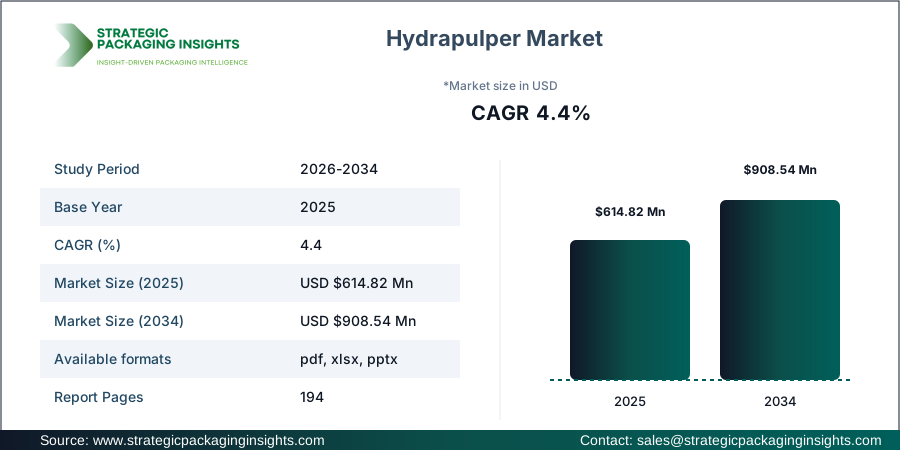
The Hydrapulper market was valued at $614.82 million in 2025 and is projected to reach $908.54 million by 2034, growing at a CAGR of 4.4% during the forecast period 2026-2034. This growth is driven by the increasing demand for efficient recycling processes in the paper industry, coupled with advancements in hydrapulper technology that enhance operational efficiency and reduce energy consumption. The market is witnessing a surge in demand from emerging economies where paper consumption is on the rise, driven by urbanization and industrialization. Additionally, the shift towards sustainable and eco-friendly packaging solutions is further propelling the demand for hydrapulpers, as they play a crucial role in recycling waste paper into reusable pulp.
Despite the promising growth prospects, the Hydrapulper market faces certain challenges that could impede its expansion. Regulatory constraints related to environmental standards and waste management practices pose significant hurdles for market players. Moreover, the high initial investment required for setting up hydrapulper systems can be a deterrent for small and medium-sized enterprises. However, the market holds substantial growth potential, particularly in regions like Asia Pacific and Latin America, where the paper and packaging industries are rapidly expanding. The increasing focus on circular economy practices and government initiatives promoting recycling and waste reduction are expected to create lucrative opportunities for market participants.
Report Scope
| Attributes | Details |
| Report Title | Hydrapulper Market Size, Future Growth and Forecast 2034 |
| By Machine Type | Batch Hydrapulpers, Continuous Hydrapulpers, Drum Hydrapulpers, High-Consistency Hydrapulpers |
| By Application | Waste Paper Pulping, Virgin Pulp Processing, Packaging Paper Production, Tissue Paper Production |
| By End Use | Paper Mills, Packaging Manufacturers, Recycling Plants, Tissue Producers |
| By Capacity | Low Capacity, Medium Capacity, High Capacity |
| Region | Asia Pacific, North America, Latin America, Europe, Middle East & Africa |
| Base Year | 2025 |
| Historic Period | 2018-2024 |
| Forecast Period | 2026-2034 |
| Number of Pages | 194 |
| Customization Available | Yes* |
Opportunities & Threats
The Hydrapulper market presents numerous opportunities, particularly in the realm of technological advancements and innovation. The development of energy-efficient and high-capacity hydrapulpers is a significant opportunity for manufacturers to cater to the growing demand for sustainable paper production processes. Additionally, the increasing adoption of automation and digitalization in the paper industry is creating avenues for the integration of smart technologies in hydrapulper systems, enhancing their operational efficiency and reducing downtime. The rising awareness about environmental sustainability and the need for efficient waste management solutions are further driving the demand for advanced hydrapulper systems, offering substantial growth opportunities for market players.
Another opportunity lies in the expanding applications of hydrapulpers beyond traditional paper production. The growing demand for recycled packaging materials and tissue paper is creating new avenues for market expansion. As more industries adopt sustainable practices, the demand for recycled paper products is expected to rise, thereby boosting the demand for hydrapulpers. Furthermore, the increasing investments in research and development activities aimed at improving the efficiency and performance of hydrapulper systems are likely to open up new growth prospects for the market.
However, the Hydrapulper market is not without its threats. One of the primary challenges is the stringent environmental regulations governing waste management and recycling processes. Compliance with these regulations can be costly and time-consuming, posing a significant threat to market growth. Additionally, the volatility in raw material prices and the availability of alternative recycling technologies could pose challenges to the market. The high cost of hydrapulper systems and the need for regular maintenance and upgrades can also act as barriers to market entry for new players, limiting the overall market growth.
Drivers & Challenges
The Hydrapulper market is primarily driven by the increasing demand for recycled paper products and the growing emphasis on sustainable and eco-friendly packaging solutions. The rising awareness about environmental conservation and the need to reduce carbon footprints are encouraging industries to adopt recycling practices, thereby boosting the demand for hydrapulpers. Additionally, the advancements in hydrapulper technology, such as the development of high-efficiency and energy-saving systems, are further propelling market growth. The integration of automation and digitalization in hydrapulper systems is enhancing their operational efficiency, reducing downtime, and minimizing operational costs, thereby driving market expansion.
Another significant driver is the growing demand for paper and packaging products in emerging economies. The rapid urbanization and industrialization in regions like Asia Pacific and Latin America are leading to an increase in paper consumption, thereby driving the demand for hydrapulpers. The increasing investments in infrastructure development and the expansion of the e-commerce sector are further contributing to the growth of the paper and packaging industries, creating a favorable environment for the Hydrapulper market. Moreover, the government initiatives promoting recycling and waste reduction are expected to boost the demand for hydrapulpers, providing a significant impetus to market growth.
Despite the positive growth drivers, the Hydrapulper market faces several challenges that could hinder its expansion. One of the primary challenges is the high initial investment required for setting up hydrapulper systems. The cost of purchasing and installing these systems can be prohibitive for small and medium-sized enterprises, limiting their adoption. Additionally, the maintenance and operational costs associated with hydrapulper systems can be significant, posing a challenge for market players. The availability of alternative recycling technologies and the volatility in raw material prices are other challenges that could impact market growth. Furthermore, the stringent environmental regulations governing waste management and recycling processes can pose compliance challenges for market participants, affecting their operational efficiency and profitability.
Market Share Analysis
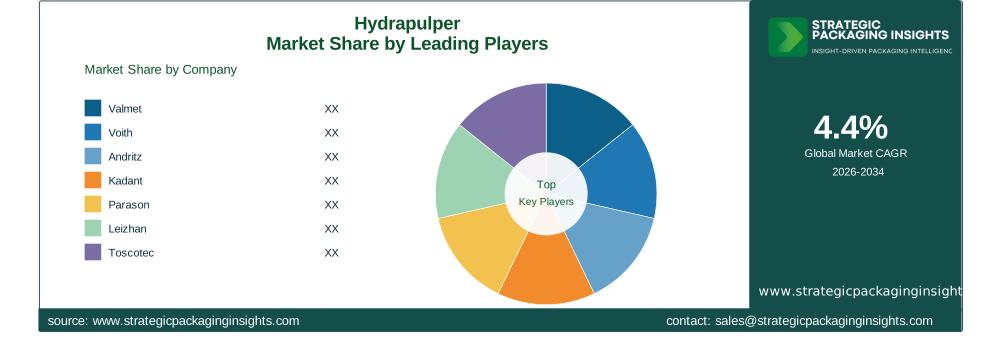
The Hydrapulper market is characterized by a competitive landscape with several key players vying for market share. The market is dominated by a few major companies, including Valmet, Voith, Andritz, Kadant, Parason, Leizhan, Toscotec, Bellmer, A.Celli Paper, and GL&V. These companies hold a significant share of the market, driven by their extensive product portfolios, strong distribution networks, and continuous focus on innovation and technological advancements. The competitive landscape is further intensified by the presence of several regional and local players who are striving to expand their market presence through strategic partnerships, mergers, and acquisitions.
Valmet is one of the leading players in the Hydrapulper market, known for its innovative solutions and advanced technology offerings. The company has a strong global presence and is focused on expanding its product portfolio to cater to the growing demand for sustainable and efficient hydrapulper systems. Voith, another major player, is renowned for its high-quality products and customer-centric approach. The company is committed to enhancing its technological capabilities and expanding its market reach through strategic collaborations and partnerships.
Andritz is a key player in the Hydrapulper market, offering a wide range of products and solutions for the paper and pulp industry. The company is focused on innovation and sustainability, aiming to provide energy-efficient and environmentally friendly solutions to its customers. Kadant is another prominent player, known for its comprehensive product offerings and strong customer relationships. The company is focused on expanding its market presence through strategic acquisitions and partnerships, aiming to strengthen its position in the global Hydrapulper market.
Parason, Leizhan, and Toscotec are other notable players in the market, known for their innovative solutions and strong market presence. These companies are focused on enhancing their product offerings and expanding their market reach through strategic collaborations and partnerships. Bellmer, A.Celli Paper, and GL&V are also key players in the market, known for their high-quality products and customer-centric approach. These companies are committed to providing innovative and sustainable solutions to their customers, aiming to strengthen their position in the global Hydrapulper market.
Key Highlights
- The Hydrapulper market is projected to grow at a CAGR of 4.4% from 2026 to 2034.
- Valmet, Voith, and Andritz are the leading players in the market, holding significant market shares.
- Technological advancements and innovation are key drivers of market growth.
- The increasing demand for recycled paper products is boosting the demand for hydrapulpers.
- Asia Pacific and Latin America are the fastest-growing regions in the Hydrapulper market.
- Stringent environmental regulations pose challenges to market growth.
- The high initial investment required for hydrapulper systems is a barrier to market entry for new players.
- The integration of automation and digitalization in hydrapulper systems is enhancing operational efficiency.
- The growing emphasis on sustainable and eco-friendly packaging solutions is driving market demand.
- Government initiatives promoting recycling and waste reduction are expected to boost market growth.
Top Countries Insights
In the Hydrapulper market, the United States stands out as a key player, with a market size of approximately $150 million and a CAGR of 3%. The country's robust paper and packaging industry, coupled with the increasing demand for recycled paper products, is driving market growth. The government's focus on sustainable practices and waste reduction initiatives is further boosting the demand for hydrapulpers. However, stringent environmental regulations and high operational costs pose challenges to market growth in the region.
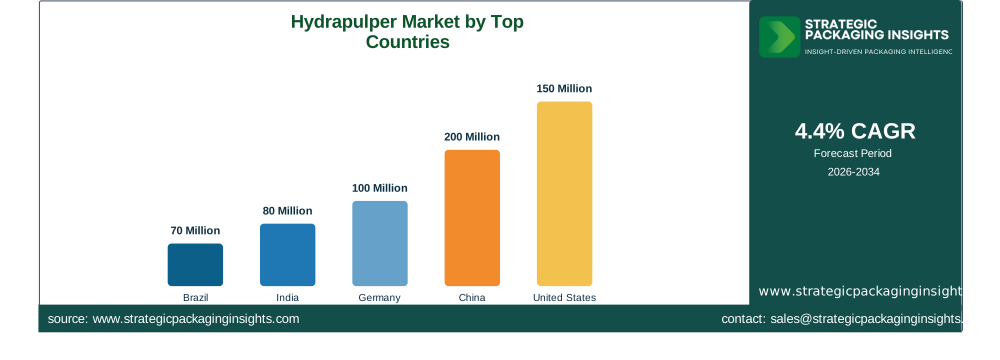
China is another significant market for hydrapulpers, with a market size of around $200 million and a CAGR of 6%. The rapid industrialization and urbanization in the country are leading to an increase in paper consumption, driving the demand for hydrapulpers. The government's emphasis on environmental sustainability and the promotion of recycling practices are further contributing to market growth. However, the volatility in raw material prices and the availability of alternative recycling technologies pose challenges to market expansion.
Germany is a key market in Europe, with a market size of approximately $100 million and a CAGR of 4%. The country's strong paper and packaging industry, coupled with the increasing demand for sustainable and eco-friendly packaging solutions, is driving market growth. The government's focus on circular economy practices and waste reduction initiatives is further boosting the demand for hydrapulpers. However, the high cost of hydrapulper systems and the stringent environmental regulations pose challenges to market growth in the region.
India is an emerging market for hydrapulpers, with a market size of around $80 million and a CAGR of 7%. The rapid urbanization and industrialization in the country are leading to an increase in paper consumption, driving the demand for hydrapulpers. The government's emphasis on sustainable practices and the promotion of recycling initiatives are further contributing to market growth. However, the high initial investment required for hydrapulper systems and the availability of alternative recycling technologies pose challenges to market expansion.
Brazil is a significant market in Latin America, with a market size of approximately $70 million and a CAGR of 5%. The country's growing paper and packaging industry, coupled with the increasing demand for recycled paper products, is driving market growth. The government's focus on environmental sustainability and waste reduction initiatives is further boosting the demand for hydrapulpers. However, the volatility in raw material prices and the high operational costs pose challenges to market growth in the region.
Hydrapulper Market Segments Insights

Machine Type Analysis
The Hydrapulper market is segmented by machine type into Batch Hydrapulpers, Continuous Hydrapulpers, Drum Hydrapulpers, and High-Consistency Hydrapulpers. Batch Hydrapulpers are widely used due to their versatility and ability to handle various types of raw materials. They are particularly popular in small to medium-sized paper mills where flexibility and cost-effectiveness are crucial. Continuous Hydrapulpers, on the other hand, are favored in large-scale operations due to their efficiency and ability to process large volumes of material continuously. Drum Hydrapulpers are known for their robust design and ability to handle high-consistency pulping, making them ideal for processing recycled paper. High-Consistency Hydrapulpers are gaining traction due to their energy efficiency and ability to produce high-quality pulp with minimal water usage, aligning with the industry's sustainability goals.
The demand for different types of hydrapulpers is influenced by factors such as the scale of operations, the type of raw materials used, and the desired quality of the end product. The increasing focus on energy efficiency and sustainability is driving the demand for High-Consistency Hydrapulpers, as they offer significant energy savings and reduced water consumption. The advancements in technology and the integration of automation in hydrapulper systems are further enhancing their operational efficiency and reducing downtime, making them more attractive to end-users. The competition among manufacturers is intense, with companies focusing on innovation and product differentiation to gain a competitive edge in the market.
Application Analysis
The Hydrapulper market is segmented by application into Waste Paper Pulping, Virgin Pulp Processing, Packaging Paper Production, and Tissue Paper Production. Waste Paper Pulping is the largest application segment, driven by the increasing demand for recycled paper products and the growing emphasis on sustainable and eco-friendly packaging solutions. The advancements in hydrapulper technology, such as the development of high-efficiency and energy-saving systems, are further propelling the demand for waste paper pulping applications. Virgin Pulp Processing is another significant application segment, driven by the demand for high-quality pulp for premium paper products.
Packaging Paper Production is witnessing significant growth, driven by the increasing demand for sustainable packaging solutions and the expansion of the e-commerce sector. The growing emphasis on reducing plastic waste and the shift towards paper-based packaging solutions are further boosting the demand for hydrapulpers in this application segment. Tissue Paper Production is also experiencing growth, driven by the increasing demand for hygiene products and the growing awareness about personal hygiene and sanitation. The advancements in hydrapulper technology and the integration of automation in production processes are enhancing the efficiency and quality of tissue paper production, driving the demand for hydrapulpers in this application segment.
End Use Analysis
The Hydrapulper market is segmented by end use into Paper Mills, Packaging Manufacturers, Recycling Plants, and Tissue Producers. Paper Mills are the largest end-use segment, driven by the increasing demand for recycled paper products and the growing emphasis on sustainable and eco-friendly packaging solutions. The advancements in hydrapulper technology, such as the development of high-efficiency and energy-saving systems, are further propelling the demand for hydrapulpers in paper mills. Packaging Manufacturers are another significant end-use segment, driven by the increasing demand for sustainable packaging solutions and the expansion of the e-commerce sector.
Recycling Plants are witnessing significant growth, driven by the increasing focus on circular economy practices and the need for efficient waste management solutions. The growing emphasis on reducing plastic waste and the shift towards paper-based packaging solutions are further boosting the demand for hydrapulpers in recycling plants. Tissue Producers are also experiencing growth, driven by the increasing demand for hygiene products and the growing awareness about personal hygiene and sanitation. The advancements in hydrapulper technology and the integration of automation in production processes are enhancing the efficiency and quality of tissue production, driving the demand for hydrapulpers in this end-use segment.
Capacity Analysis
The Hydrapulper market is segmented by capacity into Low Capacity, Medium Capacity, and High Capacity. Low Capacity hydrapulpers are widely used in small to medium-sized operations where flexibility and cost-effectiveness are crucial. They are particularly popular in small paper mills and recycling plants where the volume of material processed is relatively low. Medium Capacity hydrapulpers are favored in medium to large-scale operations due to their ability to process larger volumes of material efficiently. They are commonly used in packaging manufacturers and tissue producers where the demand for high-quality pulp is significant.
High Capacity hydrapulpers are gaining traction in large-scale operations where efficiency and productivity are paramount. They are particularly popular in large paper mills and recycling plants where the volume of material processed is substantial. The demand for different capacities of hydrapulpers is influenced by factors such as the scale of operations, the type of raw materials used, and the desired quality of the end product. The increasing focus on energy efficiency and sustainability is driving the demand for high-capacity hydrapulpers, as they offer significant energy savings and reduced water consumption. The advancements in technology and the integration of automation in hydrapulper systems are further enhancing their operational efficiency and reducing downtime, making them more attractive to end-users.
Hydrapulper Market Segments
The Hydrapulper market has been segmented on the basis ofBy Machine Type
- Batch Hydrapulpers
- Continuous Hydrapulpers
- Drum Hydrapulpers
- High-Consistency Hydrapulpers
By Application
- Waste Paper Pulping
- Virgin Pulp Processing
- Packaging Paper Production
- Tissue Paper Production
By End Use
- Paper Mills
- Packaging Manufacturers
- Recycling Plants
- Tissue Producers
By Capacity
- Low Capacity
- Medium Capacity
- High Capacity
Region
- Asia Pacific
- North America
- Latin America
- Europe
- Middle East & Africa




