


Hermetic Food Grain Storage Market Outlook
The Hermetic Food Grain Storage market was valued at $1.61 billion in 2025 and is projected to reach $3.10 billion by 2034, growing at a CAGR of 7.5% during the forecast period 2026-2034. This market is witnessing significant growth due to the increasing demand for effective grain storage solutions that prevent post-harvest losses. The rising global population and the subsequent need for food security are driving the adoption of hermetic storage solutions. These solutions are particularly beneficial in regions with high humidity and pest prevalence, as they provide an airtight environment that protects grains from spoilage and infestation. The market is also benefiting from technological advancements in storage materials and designs, which enhance the durability and efficiency of storage solutions.
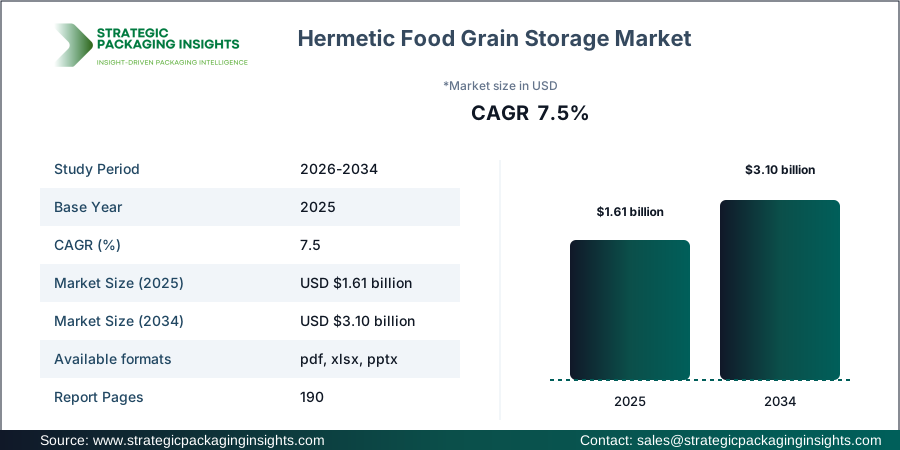
However, the market faces challenges such as the high initial cost of hermetic storage solutions, which can be a barrier for small-scale farmers and traders. Additionally, there is a lack of awareness about the benefits of hermetic storage in some regions, which limits market penetration. Despite these challenges, the market holds significant growth potential, driven by increasing investments in agricultural infrastructure and government initiatives to reduce food wastage. The regulatory landscape is also evolving, with governments promoting sustainable storage practices to ensure food safety and security. As a result, the Hermetic Food Grain Storage market is poised for robust growth in the coming years.
Report Scope
| Attributes | Details |
| Report Title | Hermetic Food Grain Storage Market Size, Future Growth and Forecast 2034 |
| By Product Type | hermetic bags, storage silos, sealed drums |
| By Material Type | multilayer plastic, metal, woven polymer |
| By Application | rice, maize, wheat, pulses |
| By End Use | farmers, grain traders, cooperatives, food processors |
| Region | Asia Pacific, North America, Latin America, Europe, Middle East & Africa |
| Base Year | 2025 |
| Historic Period | 2018-2024 |
| Forecast Period | 2026-2034 |
| Number of Pages | 190 |
| Customization Available | Yes* |
Opportunities & Threats
The Hermetic Food Grain Storage market presents numerous opportunities, particularly in emerging economies where agricultural practices are evolving rapidly. The increasing focus on reducing post-harvest losses and improving food security is driving demand for advanced storage solutions. Governments and international organizations are investing in agricultural infrastructure, providing subsidies and incentives for adopting hermetic storage technologies. This creates a favorable environment for market growth, as more farmers and traders are encouraged to adopt these solutions. Additionally, the growing awareness of the environmental benefits of hermetic storage, such as reduced pesticide use and lower carbon emissions, is attracting environmentally conscious consumers and businesses.
Another significant opportunity lies in the development of innovative storage materials and designs. Companies are investing in research and development to create more efficient and cost-effective storage solutions. For instance, advancements in multilayer plastic and woven polymer materials are enhancing the durability and effectiveness of hermetic storage products. These innovations not only improve the quality of stored grains but also extend the shelf life, providing a competitive edge to market players. Furthermore, the integration of digital technologies, such as IoT and sensors, into storage solutions is opening new avenues for market expansion by enabling real-time monitoring and management of storage conditions.
Despite the promising opportunities, the market faces certain threats that could hinder its growth. One of the primary challenges is the high cost of hermetic storage solutions, which can be prohibitive for small-scale farmers and traders. This limits the market's reach, particularly in developing regions where financial resources are constrained. Additionally, there is a lack of awareness and understanding of the benefits of hermetic storage among potential users, which can impede market adoption. To overcome these challenges, companies need to focus on educating consumers and providing affordable solutions that cater to the needs of small-scale users.
Drivers & Challenges
The Hermetic Food Grain Storage market is driven by several key factors, including the increasing demand for food security and the need to reduce post-harvest losses. As the global population continues to grow, the pressure on food supply chains intensifies, necessitating efficient storage solutions that preserve grain quality and prevent spoilage. Hermetic storage solutions offer a reliable and sustainable method for achieving these goals, as they provide an airtight environment that protects grains from pests, moisture, and other environmental factors. Additionally, the rising awareness of the environmental benefits of hermetic storage, such as reduced pesticide use and lower carbon emissions, is driving market growth.
Technological advancements in storage materials and designs are also playing a crucial role in driving the market. Companies are investing in research and development to create more efficient and cost-effective storage solutions. Innovations in multilayer plastic and woven polymer materials are enhancing the durability and effectiveness of hermetic storage products, making them more appealing to consumers. Furthermore, the integration of digital technologies, such as IoT and sensors, into storage solutions is enabling real-time monitoring and management of storage conditions, providing additional value to users and driving market adoption.
Despite the positive drivers, the market faces several challenges that could impede its growth. One of the primary challenges is the high cost of hermetic storage solutions, which can be prohibitive for small-scale farmers and traders. This limits the market's reach, particularly in developing regions where financial resources are constrained. Additionally, there is a lack of awareness and understanding of the benefits of hermetic storage among potential users, which can impede market adoption. To overcome these challenges, companies need to focus on educating consumers and providing affordable solutions that cater to the needs of small-scale users.
Market Share Analysis
The Hermetic Food Grain Storage market is characterized by a competitive landscape with several key players vying for market share. Companies such as GrainPro, PICS Bags, and Ecotact are leading the market with their innovative storage solutions and strong distribution networks. These companies have established themselves as leaders by offering a wide range of products that cater to different storage needs and preferences. Their focus on research and development has enabled them to introduce advanced storage materials and designs that enhance the durability and effectiveness of their products.
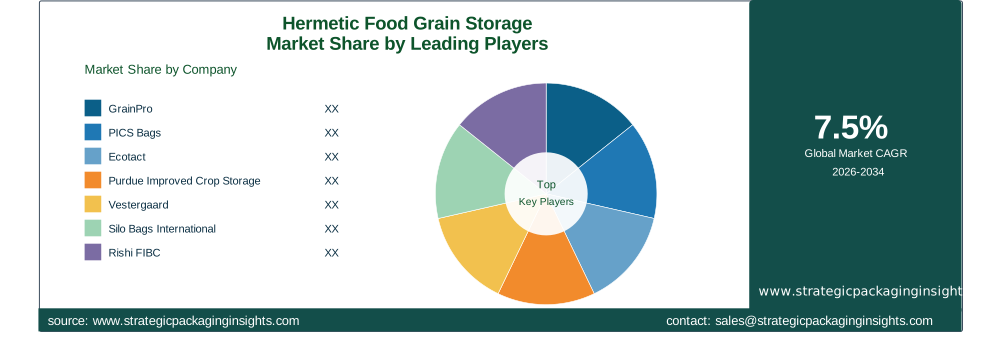
GrainPro is a prominent player in the market, known for its high-quality hermetic storage solutions that are widely used by farmers and traders worldwide. The company's strong focus on innovation and sustainability has helped it maintain a competitive edge in the market. PICS Bags, another key player, is renowned for its affordable and effective storage solutions that cater to small-scale farmers. The company's commitment to providing cost-effective solutions has made it a popular choice among budget-conscious consumers.
Ecotact is also a significant player in the market, offering a range of hermetic storage solutions that are designed to meet the diverse needs of its customers. The company's emphasis on quality and customer satisfaction has helped it build a loyal customer base. Other notable players in the market include Purdue Improved Crop Storage, Vestergaard, and Silo Bags International, each of which has carved out a niche in the market with their unique offerings and strong market presence.
Rishi FIBC, LC Packaging, Greif, and Berry Global are also key players in the market, known for their innovative storage solutions and strong distribution networks. These companies have established themselves as leaders by offering a wide range of products that cater to different storage needs and preferences. Their focus on research and development has enabled them to introduce advanced storage materials and designs that enhance the durability and effectiveness of their products.
Key Highlights
- The Hermetic Food Grain Storage market is projected to grow at a CAGR of 7.5% from 2026 to 2034.
- Increasing demand for food security and reduction of post-harvest losses are key market drivers.
- Technological advancements in storage materials and designs are enhancing product effectiveness.
- High initial costs and lack of awareness are major challenges for market growth.
- Emerging economies present significant growth opportunities due to evolving agricultural practices.
- Government initiatives and subsidies are promoting the adoption of hermetic storage solutions.
- Integration of digital technologies is enabling real-time monitoring of storage conditions.
- Environmental benefits of hermetic storage are attracting environmentally conscious consumers.
- Key players include GrainPro, PICS Bags, Ecotact, and Purdue Improved Crop Storage.
Top Countries Insights
In the Hermetic Food Grain Storage market, the United States stands out with a market size of approximately $500 million and a CAGR of 6%. The country's strong agricultural sector and focus on reducing post-harvest losses drive demand for advanced storage solutions. Government policies promoting sustainable agricultural practices further support market growth. However, high initial costs remain a challenge for widespread adoption among small-scale farmers.
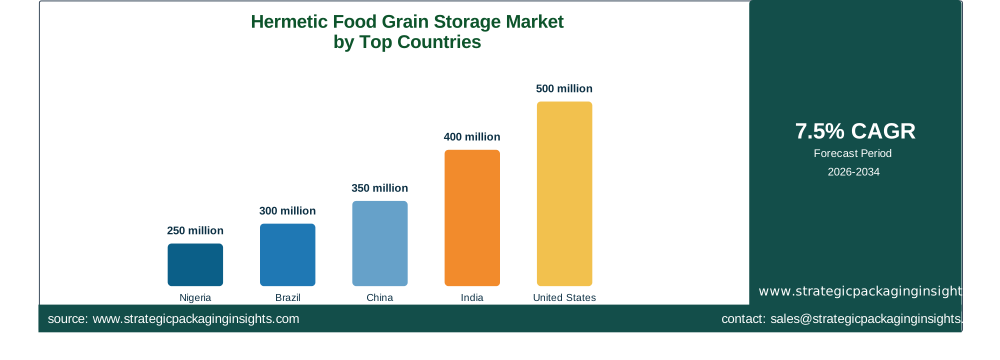
India, with a market size of around $400 million and a CAGR of 8%, is a key player in the market. The country's large agricultural base and increasing focus on food security drive demand for hermetic storage solutions. Government initiatives and subsidies for adopting advanced storage technologies are significant growth drivers. However, the lack of awareness and financial constraints among small-scale farmers pose challenges.
China, with a market size of approximately $350 million and a CAGR of 7%, is another major market for hermetic food grain storage. The country's emphasis on reducing food wastage and improving food security drives demand for efficient storage solutions. Technological advancements and government support for sustainable agricultural practices further boost market growth. However, high costs and limited awareness among farmers remain challenges.
Brazil, with a market size of around $300 million and a CAGR of 7%, is a significant market for hermetic storage solutions. The country's large agricultural sector and focus on reducing post-harvest losses drive demand for advanced storage technologies. Government policies promoting sustainable agricultural practices and investments in agricultural infrastructure support market growth. However, financial constraints and lack of awareness among small-scale farmers pose challenges.
In Africa, Nigeria is a key market with a size of approximately $250 million and a CAGR of 9%. The country's focus on improving food security and reducing post-harvest losses drives demand for hermetic storage solutions. Government initiatives and international support for adopting advanced storage technologies are significant growth drivers. However, financial constraints and limited awareness among farmers remain challenges.
Hermetic Food Grain Storage Market Segments Insights

Product Type Analysis
The Hermetic Food Grain Storage market is segmented by product type into hermetic bags, storage silos, and sealed drums. Hermetic bags are the most popular segment due to their affordability and ease of use. These bags provide an airtight environment that protects grains from pests and moisture, making them ideal for small-scale farmers and traders. Storage silos, on the other hand, are preferred by large-scale operations due to their capacity to store large quantities of grain. Sealed drums are used for specialized storage needs, offering enhanced protection for high-value grains.
The demand for hermetic bags is driven by their cost-effectiveness and versatility. They are widely used in regions with high humidity and pest prevalence, where traditional storage methods are ineffective. Storage silos are gaining popularity in developed regions, where large-scale agricultural operations require efficient storage solutions. Sealed drums are used in niche markets, where the focus is on preserving the quality of high-value grains. The competition in this segment is intense, with companies investing in research and development to create more efficient and durable storage solutions.
Material Type Analysis
The market is also segmented by material type into multilayer plastic, metal, and woven polymer. Multilayer plastic is the most widely used material due to its durability and cost-effectiveness. It provides an airtight seal that protects grains from environmental factors, making it ideal for hermetic storage solutions. Metal is used in storage silos and sealed drums, offering enhanced protection and durability. Woven polymer is used in specialized storage solutions, providing a balance between cost and effectiveness.
The demand for multilayer plastic is driven by its affordability and versatility. It is widely used in hermetic bags and storage silos, where cost-effectiveness is a key consideration. Metal is preferred in developed regions, where large-scale operations require durable and long-lasting storage solutions. Woven polymer is used in niche markets, where the focus is on providing a balance between cost and effectiveness. The competition in this segment is intense, with companies investing in research and development to create more efficient and durable storage materials.
Application Analysis
The Hermetic Food Grain Storage market is segmented by application into rice, maize, wheat, and pulses. Rice is the most widely stored grain, accounting for a significant share of the market. The demand for hermetic storage solutions for rice is driven by the need to reduce post-harvest losses and improve food security. Maize and wheat are also significant segments, with demand driven by their importance as staple foods in many regions. Pulses are a niche segment, with demand driven by their high nutritional value and increasing popularity as a protein source.
The demand for hermetic storage solutions for rice is driven by the need to reduce post-harvest losses and improve food security. Maize and wheat are also significant segments, with demand driven by their importance as staple foods in many regions. Pulses are a niche segment, with demand driven by their high nutritional value and increasing popularity as a protein source. The competition in this segment is intense, with companies investing in research and development to create more efficient and durable storage solutions.
End Use Analysis
The market is also segmented by end use into farmers, grain traders, cooperatives, and food processors. Farmers are the largest segment, accounting for a significant share of the market. The demand for hermetic storage solutions among farmers is driven by the need to reduce post-harvest losses and improve food security. Grain traders and cooperatives are also significant segments, with demand driven by their role in the supply chain. Food processors are a niche segment, with demand driven by their need to preserve the quality of grains for processing.
The demand for hermetic storage solutions among farmers is driven by the need to reduce post-harvest losses and improve food security. Grain traders and cooperatives are also significant segments, with demand driven by their role in the supply chain. Food processors are a niche segment, with demand driven by their need to preserve the quality of grains for processing. The competition in this segment is intense, with companies investing in research and development to create more efficient and durable storage solutions.
Hermetic Food Grain Storage Market Segments
The Hermetic Food Grain Storage market has been segmented on the basis ofBy Product Type
- hermetic bags
- storage silos
- sealed drums
By Material Type
- multilayer plastic
- metal
- woven polymer
By Application
- rice
- maize
- wheat
- pulses
By End Use
- farmers
- grain traders
- cooperatives
- food processors
Region
- Asia Pacific
- North America
- Latin America
- Europe
- Middle East & Africa




