


Healthcare & Laboratory Labels Market Outlook
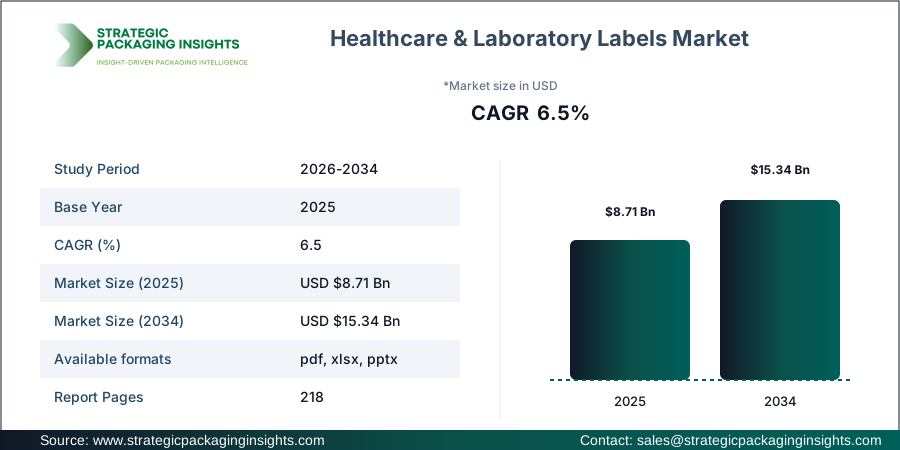
The Healthcare & Laboratory Labels market size was valued at USD 8.71 billion in 2025 and is anticipated to reach USD 15.34 billion by 2034, growing at a CAGR of 6.5% during the forecast period according to Strategic Packaging Insights. Avery Dennison and CCL Industries are among the key players driving this growth, leveraging their extensive product portfolios and innovative labeling solutions to meet the increasing demand for precise and reliable labeling in healthcare settings. The market's expansion is fueled by the rising need for accurate patient identification, efficient sample tracking, and compliance with stringent regulatory standards, which necessitate high-quality labeling solutions.
One of the most impactful drivers of the Healthcare & Laboratory Labels market is the growing emphasis on patient safety and error reduction in medical environments. According to healthcare industry reports, labeling errors can lead to significant risks, including misdiagnosis and incorrect treatment. This has prompted healthcare facilities to adopt advanced labeling technologies that ensure accuracy and reliability. Companies like Brady Corporation and Zebra Technologies are at the forefront of developing innovative labeling solutions that enhance patient safety and streamline laboratory processes. The integration of barcode and RFID technologies in labels is also gaining traction, further boosting market growth by improving traceability and inventory management in healthcare settings.
Report Scope
| Attributes | Details |
| Report Title | Healthcare & Laboratory Labels Market Size, Future Growth and Forecast 2034 |
| Label Type | Cryogenic Labels, Barcode Labels, Specimen Labels, Sterilization Labels |
| Material Type | Paper, Polyester, Polypropylene, Synthetic Labels |
| Application | Sample Tracking, Patient Identification, Lab Reagents, Medical Devices |
| End Use | Hospitals, Laboratories, Pharma Companies, Diagnostic Centers |
| Region | Asia Pacific, North America, Latin America, Europe, Middle East & Africa |
| Base Year | 2025 |
| Historic Period | 2018-2024 |
| Forecast Period | 2026-2034 |
| Number of Pages | 218 |
| Customization Available | Yes* |
Sustainability & Circular Economy Analysis
Sustainability initiatives are increasingly shaping the Healthcare & Laboratory Labels market, with a strong focus on reducing environmental impact through the use of recyclable materials and eco-friendly innovations. Companies are investing in the development of labels made from biodegradable and renewable resources, aligning with global efforts to minimize waste and carbon footprints. The adoption of lightweight packaging solutions is also gaining momentum, as it reduces material usage and transportation emissions, contributing to a more sustainable supply chain.
Extended Producer Responsibility (EPR) regulations are driving manufacturers to take accountability for the entire lifecycle of their products, including disposal and recycling. This has led to the implementation of waste reduction strategies and the design of labels that facilitate easy recycling. As consumer preferences shift towards sustainable products, companies are prioritizing ESG initiatives to enhance their brand image and meet regulatory compliance. This trend is influencing packaging design and manufacturing processes, encouraging investments in sustainable technologies and materials.
The circular economy model is gaining traction in the packaging industry, promoting the reuse and recycling of materials to create a closed-loop system. This approach not only reduces waste but also enhances resource efficiency and cost-effectiveness. Companies like UPM Raflatac and Lintec are leading the way in developing circular labeling solutions that support long-term market competitiveness. By integrating sustainability into their business strategies, these companies are positioning themselves as leaders in the transition towards a more sustainable and resilient packaging industry.
Packaging Value Chain & Supply Chain Analysis
The packaging value chain for Healthcare & Laboratory Labels involves a complex ecosystem of raw material suppliers, converters, manufacturers, and logistics providers. Efficient raw material sourcing is crucial for maintaining production capabilities and meeting the growing demand for high-quality labels. Companies like Avery Dennison and CCL Industries have established strategic partnerships with suppliers to ensure a steady supply of materials, enhancing their competitive edge in the market.
Packaging converters and manufacturers play a pivotal role in transforming raw materials into finished products that meet the specific requirements of healthcare applications. The integration of advanced packaging machinery and automation technologies is enhancing production efficiency and reducing lead times. Logistics and distribution channels are also critical components of the supply chain, ensuring timely delivery of labels to healthcare facilities and laboratories worldwide.
Supply chain resilience is a key focus for companies in the Healthcare & Laboratory Labels market, as disruptions can significantly impact business operations. Strategies such as localization and global sourcing are being employed to mitigate risks and enhance supply chain agility. Inventory management and procurement strategies are also being optimized to ensure cost-effectiveness and responsiveness to market demands. By strengthening their supply chain networks, companies are better positioned to capitalize on growth opportunities and maintain their market leadership.
Opportunities & Threats
The Healthcare & Laboratory Labels market presents significant opportunities for growth, driven by advancements in labeling technologies and the increasing adoption of digital solutions. The integration of smart labels with RFID and NFC technologies is revolutionizing the industry, enabling real-time tracking and data management. This innovation is particularly beneficial for sample tracking and patient identification, where accuracy and efficiency are paramount. Companies that invest in these technologies are likely to gain a competitive advantage and capture a larger market share.
Another opportunity lies in the expanding healthcare infrastructure in emerging markets, where the demand for reliable labeling solutions is on the rise. As healthcare facilities in regions like Asia Pacific and Latin America modernize their operations, there is a growing need for advanced labeling systems that enhance operational efficiency and patient safety. Companies that establish a strong presence in these regions can tap into new revenue streams and strengthen their global market position.
However, the market also faces threats from stringent regulatory requirements and the high cost of advanced labeling technologies. Compliance with regulations such as the FDA's Unique Device Identification (UDI) system can be challenging for manufacturers, requiring significant investments in technology and process upgrades. Additionally, the high cost of implementing RFID and smart labeling solutions may deter smaller companies from adopting these technologies, limiting their market participation. To overcome these challenges, companies must focus on innovation and cost-effective solutions that meet regulatory standards while delivering value to customers.
Drivers & Challenges
The primary drivers of the Healthcare & Laboratory Labels market include the increasing demand for accurate and reliable labeling solutions in healthcare settings. The need for precise patient identification and efficient sample tracking is driving the adoption of advanced labeling technologies, such as barcode and RFID systems. These technologies enhance traceability and reduce the risk of errors, improving patient safety and operational efficiency. Companies like Zebra Technologies and Brady Corporation are leading the way in developing innovative labeling solutions that address these critical needs.
Another significant driver is the growing emphasis on regulatory compliance and quality assurance in the healthcare industry. Labels play a crucial role in ensuring compliance with regulations such as the FDA's UDI system, which mandates the use of unique identifiers for medical devices. This has led to increased demand for high-quality labeling solutions that meet stringent regulatory standards. Companies that offer compliant and reliable labeling products are well-positioned to capitalize on this demand and expand their market presence.
Despite these drivers, the market faces challenges related to the high cost of advanced labeling technologies and the complexity of regulatory compliance. Implementing RFID and smart labeling solutions can be expensive, particularly for small and medium-sized enterprises. Additionally, navigating the complex regulatory landscape requires significant resources and expertise, posing a barrier to entry for new market players. To overcome these challenges, companies must focus on innovation and cost-effective solutions that meet regulatory requirements while delivering value to customers.
Market Share Analysis
The competitive landscape of the Healthcare & Laboratory Labels market is characterized by the presence of several key players, each striving to enhance their market share through innovation and strategic partnerships. Avery Dennison and CCL Industries are among the leading companies, leveraging their extensive product portfolios and global reach to maintain a strong market position. These companies are focused on developing advanced labeling solutions that meet the evolving needs of healthcare facilities and laboratories.
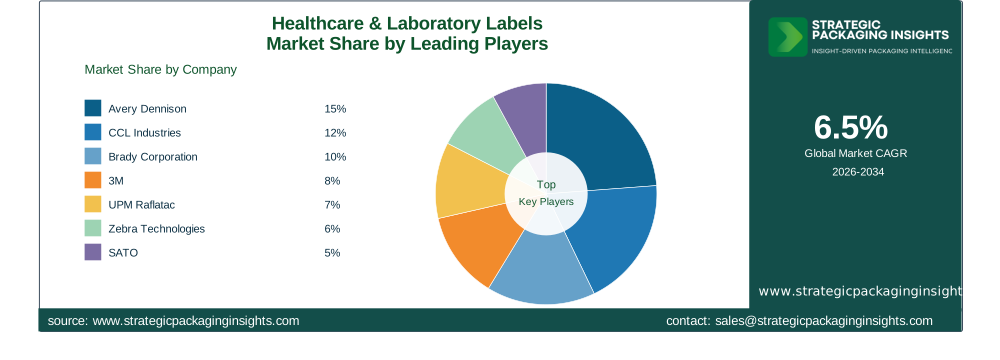
Brady Corporation and Zebra Technologies are also prominent players in the market, known for their innovative labeling technologies and commitment to quality. These companies have established themselves as leaders in the development of barcode and RFID labeling solutions, which are increasingly being adopted in healthcare settings for their accuracy and efficiency. By investing in research and development, these companies are continuously enhancing their product offerings and expanding their market presence.
UPM Raflatac and SATO are other notable players in the market, recognized for their sustainable labeling solutions and commitment to environmental responsibility. These companies are at the forefront of developing eco-friendly labels that align with global sustainability initiatives. By prioritizing sustainability, they are not only meeting regulatory requirements but also appealing to environmentally conscious consumers and healthcare providers.
HERMA, Lintec, and Resource Label Group are also key contributors to the market, offering a wide range of labeling solutions for various healthcare applications. These companies are focused on expanding their product lines and enhancing their distribution networks to reach a broader customer base. Through strategic collaborations and acquisitions, they are strengthening their market position and driving growth in the Healthcare & Laboratory Labels market.
Key Highlights
- Market Size: The Healthcare & Laboratory Labels market was valued at USD 8.71 billion in 2025 and is projected to reach USD 15.34 billion by 2034.
- Growth Rate: The market is expected to grow at a CAGR of 6.5% during the forecast period.
- Leading Companies: Key players include Avery Dennison, CCL Industries, Brady Corporation, and Zebra Technologies.
- Technological Advancements: The integration of RFID and smart labeling technologies is driving market growth.
- Regulatory Compliance: Compliance with FDA's UDI system is a significant driver for labeling solutions.
- Sustainability Initiatives: Companies are focusing on eco-friendly and recyclable labeling solutions.
- Regional Insights: Asia Pacific and North America are key regions for market expansion.
Healthcare & Laboratory Labels Market Segments Insights

Label Type Analysis
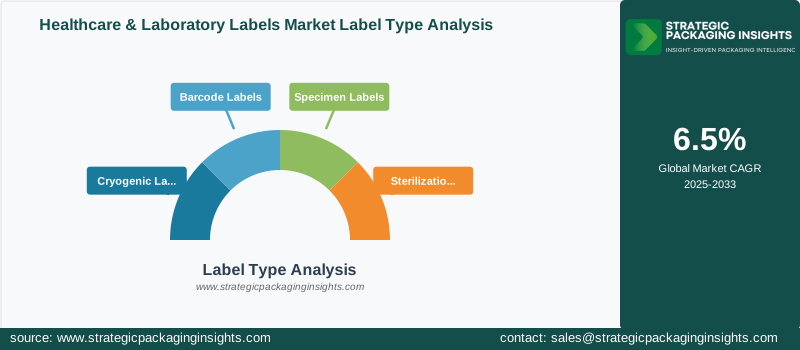
The Healthcare & Laboratory Labels market is segmented by label type, including Cryogenic Labels, Barcode Labels, Specimen Labels, and Sterilization Labels. Cryogenic labels are essential for maintaining the integrity of samples stored at extremely low temperatures, making them indispensable in laboratories and research facilities. Barcode labels are widely used for patient identification and sample tracking, offering accuracy and efficiency in healthcare settings. Specimen labels are crucial for ensuring the correct identification and handling of biological samples, reducing the risk of errors and contamination. Sterilization labels are used to indicate the sterilization status of medical instruments and devices, ensuring compliance with hygiene standards.
The demand for advanced labeling solutions is driven by the need for accuracy and reliability in healthcare applications. Companies are investing in the development of innovative labeling technologies that enhance traceability and reduce the risk of errors. The integration of RFID and smart labeling solutions is gaining traction, offering real-time tracking and data management capabilities. As healthcare facilities prioritize patient safety and regulatory compliance, the demand for high-quality labeling solutions is expected to grow, driving market expansion.
Material Type Analysis
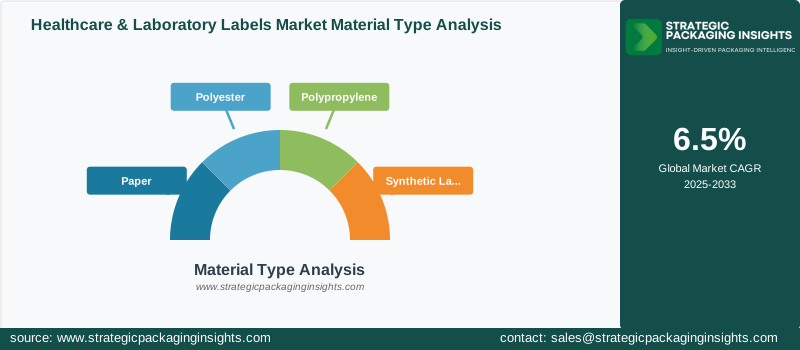
The market is also segmented by material type, including Paper, Polyester, Polypropylene, and Synthetic Labels. Paper labels are widely used due to their cost-effectiveness and versatility, making them suitable for a range of healthcare applications. Polyester labels offer durability and resistance to harsh conditions, making them ideal for use in laboratories and medical environments. Polypropylene labels are known for their flexibility and chemical resistance, making them suitable for labeling medical devices and lab reagents. Synthetic labels offer high performance and reliability, ensuring accurate identification and tracking of samples and patients.
The choice of material is influenced by factors such as durability, resistance to chemicals and temperature, and regulatory compliance. Companies are focusing on developing eco-friendly materials that align with sustainability initiatives and reduce environmental impact. The demand for recyclable and biodegradable materials is increasing, driven by consumer preferences and regulatory requirements. As companies prioritize sustainability, the development of innovative materials is expected to drive market growth and enhance competitiveness.
Application Analysis
The Healthcare & Laboratory Labels market is segmented by application, including Sample Tracking, Patient Identification, Lab Reagents, and Medical Devices. Sample tracking is a critical application, ensuring the accurate identification and handling of biological samples in laboratories and research facilities. Patient identification is essential for ensuring accurate diagnosis and treatment, reducing the risk of errors and improving patient safety. Labeling of lab reagents is crucial for ensuring compliance with regulatory standards and maintaining the integrity of research and diagnostic processes. Medical device labeling is essential for ensuring compliance with regulations such as the FDA's UDI system, enhancing traceability and safety.
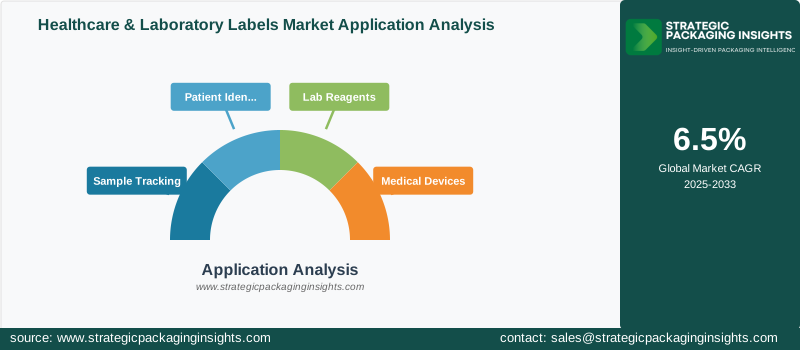
The demand for labeling solutions is driven by the need for accuracy and reliability in healthcare applications. Companies are investing in the development of advanced labeling technologies that enhance traceability and reduce the risk of errors. The integration of RFID and smart labeling solutions is gaining traction, offering real-time tracking and data management capabilities. As healthcare facilities prioritize patient safety and regulatory compliance, the demand for high-quality labeling solutions is expected to grow, driving market expansion.
End Use Analysis
The market is segmented by end use, including Hospitals, Laboratories, Pharma Companies, and Diagnostic Centers. Hospitals are major consumers of labeling solutions, requiring accurate patient identification and sample tracking to ensure patient safety and compliance with regulatory standards. Laboratories rely on labeling solutions for the accurate identification and handling of biological samples, reducing the risk of errors and contamination. Pharma companies require labeling solutions for the accurate identification and tracking of lab reagents and medical devices, ensuring compliance with regulatory standards and maintaining the integrity of research and diagnostic processes.
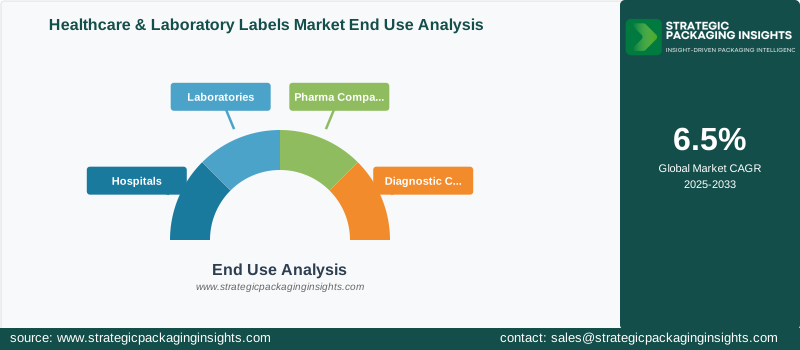
Diagnostic centers are also significant consumers of labeling solutions, requiring accurate patient identification and sample tracking to ensure accurate diagnosis and treatment. The demand for labeling solutions is driven by the need for accuracy and reliability in healthcare applications. Companies are investing in the development of advanced labeling technologies that enhance traceability and reduce the risk of errors. The integration of RFID and smart labeling solutions is gaining traction, offering real-time tracking and data management capabilities. As healthcare facilities prioritize patient safety and regulatory compliance, the demand for high-quality labeling solutions is expected to grow, driving market expansion.
Healthcare & Laboratory Labels Market Segments
The Healthcare & Laboratory Labels market has been segmented on the basis ofLabel Type
- Cryogenic Labels
- Barcode Labels
- Specimen Labels
- Sterilization Labels
Material Type
- Paper
- Polyester
- Polypropylene
- Synthetic Labels
Application
- Sample Tracking
- Patient Identification
- Lab Reagents
- Medical Devices
End Use
- Hospitals
- Laboratories
- Pharma Companies
- Diagnostic Centers
Region
- Asia Pacific
- North America
- Latin America
- Europe
- Middle East & Africa




