


HDPE Crate Market Outlook
The HDPE Crate market was valued at $1.54 billion in 2025 and is projected to reach $2.13 billion by 2034, growing at a CAGR of 3.6% during the forecast period 2026-2034. This growth is driven by the increasing demand for sustainable and durable packaging solutions across various industries. The versatility of HDPE crates, which offer benefits such as reusability, lightweight, and resistance to harsh environmental conditions, makes them a preferred choice in sectors like food distribution, retail logistics, and industrial handling. The market is also witnessing a shift towards more eco-friendly packaging solutions, further propelling the demand for HDPE crates.
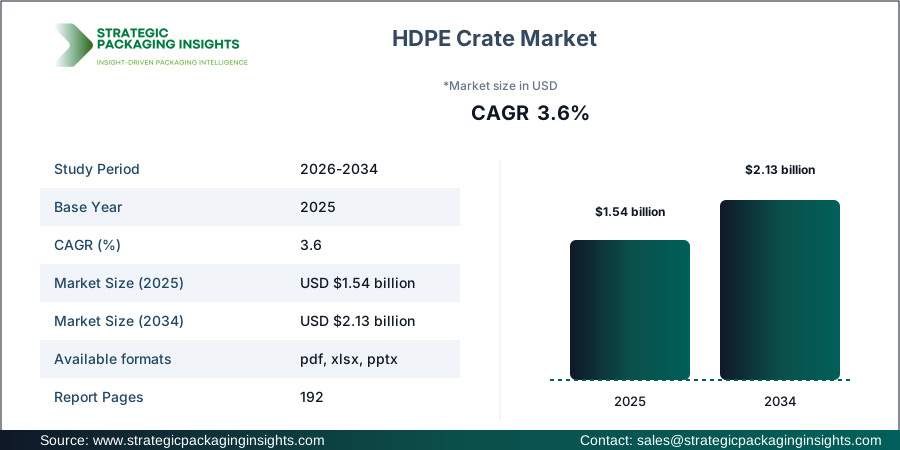
Despite the promising growth trajectory, the HDPE Crate market faces certain challenges. Regulatory constraints related to plastic usage and environmental concerns pose significant hurdles. However, advancements in recycling technologies and the development of biodegradable HDPE materials present potential growth opportunities. The market's expansion is also supported by the increasing adoption of automation in logistics and supply chain operations, which necessitates efficient and durable packaging solutions like HDPE crates.
Report Scope
| Attributes | Details |
| Report Title | HDPE Crate Market Size, Future Growth and Forecast 2034 |
| Product Type | Stackable Crates, Nestable Crates, Collapsible Crates |
| Application | Food Distribution, Retail Logistics, Agriculture, Industrial Handling |
| Capacity | Low-Capacity, Medium-Capacity, Heavy-Duty |
| End Use | Retailers, Logistics Providers, Food Processors, Manufacturers |
| Region | Asia Pacific, North America, Latin America, Europe, Middle East & Africa |
| Base Year | 2025 |
| Historic Period | 2018-2024 |
| Forecast Period | 2026-2034 |
| Number of Pages | 192 |
| Customization Available | Yes* |
Opportunities & Threats
The HDPE Crate market presents numerous opportunities, particularly in the realm of sustainability. As global awareness regarding environmental conservation grows, industries are increasingly seeking packaging solutions that minimize ecological impact. HDPE crates, known for their durability and recyclability, align well with these sustainability goals. Additionally, the rise of e-commerce and the subsequent demand for efficient logistics solutions create a fertile ground for the expansion of the HDPE Crate market. The ability of these crates to withstand rigorous handling and transportation processes makes them ideal for the fast-paced e-commerce sector.
Another significant opportunity lies in the technological advancements in material science. Innovations in HDPE manufacturing processes are leading to the development of lighter yet stronger crates, enhancing their appeal across various applications. The integration of smart technologies, such as RFID tags for tracking and inventory management, further enhances the utility of HDPE crates in modern supply chains. These technological advancements not only improve operational efficiency but also provide a competitive edge to manufacturers in the HDPE Crate market.
However, the market is not without its threats. The increasing regulatory scrutiny on plastic products poses a significant challenge. Governments worldwide are implementing stringent regulations to curb plastic waste, which could impact the production and usage of HDPE crates. Additionally, the volatility in raw material prices, particularly petroleum-based products, can affect the cost structure of HDPE crate manufacturing. These factors necessitate strategic planning and innovation to mitigate potential risks and capitalize on emerging opportunities.
Drivers & Challenges
The primary drivers of the HDPE Crate market include the growing demand for efficient and sustainable packaging solutions. The versatility and durability of HDPE crates make them suitable for a wide range of applications, from food distribution to industrial handling. The increasing focus on reducing carbon footprints and enhancing supply chain efficiency further fuels the demand for HDPE crates. Additionally, the rise of the e-commerce sector and the need for robust logistics solutions contribute significantly to market growth.
Another key driver is the technological advancements in HDPE manufacturing. Innovations in material science are leading to the development of lighter, stronger, and more durable crates, enhancing their appeal across various industries. The integration of smart technologies, such as RFID and IoT, into HDPE crates is revolutionizing inventory management and logistics operations, providing a significant boost to market growth. These advancements not only improve operational efficiency but also offer a competitive advantage to manufacturers in the HDPE Crate market.
Despite these drivers, the market faces several challenges. Regulatory constraints related to plastic usage and environmental concerns pose significant hurdles. The increasing scrutiny on plastic products and the push for sustainable alternatives could impact the production and usage of HDPE crates. Additionally, the volatility in raw material prices, particularly petroleum-based products, can affect the cost structure of HDPE crate manufacturing. These challenges necessitate strategic planning and innovation to mitigate potential risks and capitalize on emerging opportunities.
Market Share Analysis
The competitive landscape of the HDPE Crate market is characterized by the presence of several key players, each striving to enhance their market share through strategic initiatives and innovations. Companies like Schoeller Allibert, ORBIS Corporation, and Rehrig Pacific are at the forefront, leveraging their extensive industry experience and technological expertise to offer innovative and sustainable HDPE crate solutions. These companies are focusing on expanding their product portfolios and enhancing their production capabilities to meet the growing demand for HDPE crates across various industries.
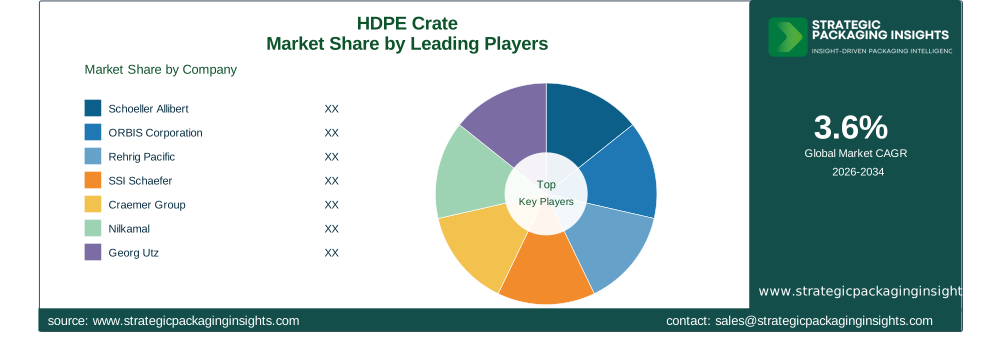
Schoeller Allibert, a leading player in the HDPE Crate market, holds a significant market share due to its extensive product range and strong distribution network. The company is known for its innovative solutions and commitment to sustainability, which have helped it maintain a competitive edge in the market. Similarly, ORBIS Corporation is recognized for its high-quality HDPE crates and strong customer relationships, contributing to its substantial market share.
Rehrig Pacific, another major player, is renowned for its focus on innovation and customer-centric approach. The company's emphasis on developing customized solutions to meet specific customer needs has bolstered its market position. SSI Schaefer and Craemer Group are also prominent players, known for their robust product offerings and strong market presence. These companies are continuously investing in research and development to enhance their product offerings and cater to the evolving needs of their customers.
Other notable companies in the HDPE Crate market include Nilkamal, Georg Utz, IPL Plastics, Monoflo International, and Myers Industries. These companies are actively engaged in strategic collaborations and partnerships to expand their market reach and strengthen their competitive position. The focus on sustainability and innovation remains a key strategy for these players, as they strive to meet the growing demand for eco-friendly and efficient packaging solutions.
Key Highlights
- The HDPE Crate market is projected to grow from $1.54 billion in 2025 to $2.13 billion by 2034, at a CAGR of 3.6%.
- Key drivers include the demand for sustainable packaging solutions and technological advancements in HDPE manufacturing.
- Regulatory constraints and raw material price volatility pose significant challenges to market growth.
- Technological innovations, such as RFID integration, are enhancing the utility of HDPE crates in modern supply chains.
- Major players include Schoeller Allibert, ORBIS Corporation, and Rehrig Pacific, among others.
- The market is witnessing a shift towards eco-friendly packaging solutions, driven by environmental concerns.
- Strategic collaborations and partnerships are key strategies for market players to expand their reach.
Top Countries Insights
In the HDPE Crate market, the United States stands out as a key player, with a market size of approximately $500 million and a CAGR of 4%. The country's robust logistics and supply chain infrastructure, coupled with the growing demand for sustainable packaging solutions, drive market growth. Government initiatives promoting recycling and sustainable practices further bolster the market.
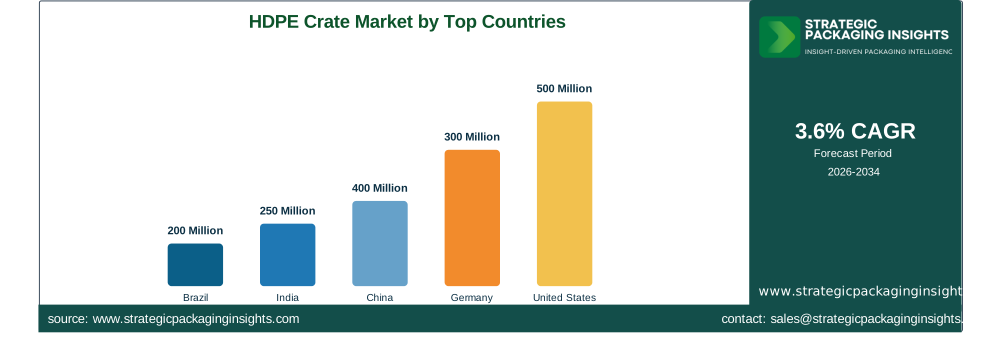
Germany, with a market size of around $300 million and a CAGR of 3%, is another significant player in the HDPE Crate market. The country's strong industrial base and emphasis on sustainability drive the demand for HDPE crates. Innovations in material science and the integration of smart technologies in logistics operations are key growth drivers in Germany.
China, with a market size of approximately $400 million and a CAGR of 5%, is a rapidly growing market for HDPE crates. The country's booming e-commerce sector and the increasing focus on efficient logistics solutions fuel market growth. Government policies promoting sustainable packaging solutions further enhance the market's prospects.
India, with a market size of around $250 million and a CAGR of 6%, is witnessing significant growth in the HDPE Crate market. The country's expanding retail and logistics sectors, coupled with the increasing demand for durable and eco-friendly packaging solutions, drive market growth. Government initiatives promoting sustainable practices further support the market.
Brazil, with a market size of approximately $200 million and a CAGR of 4%, is a key market for HDPE crates in Latin America. The country's growing agricultural sector and the need for efficient logistics solutions drive the demand for HDPE crates. Government policies promoting recycling and sustainable practices further bolster the market.
HDPE Crate Market Segments Insights

Product Type Analysis
The HDPE Crate market is segmented by product type into stackable crates, nestable crates, and collapsible crates. Stackable crates are highly favored due to their space-saving design and ease of handling, making them ideal for industries with limited storage space. The demand for nestable crates is also on the rise, driven by their ability to reduce transportation costs and optimize storage efficiency. Collapsible crates, known for their versatility and convenience, are gaining traction in sectors that require flexible packaging solutions.
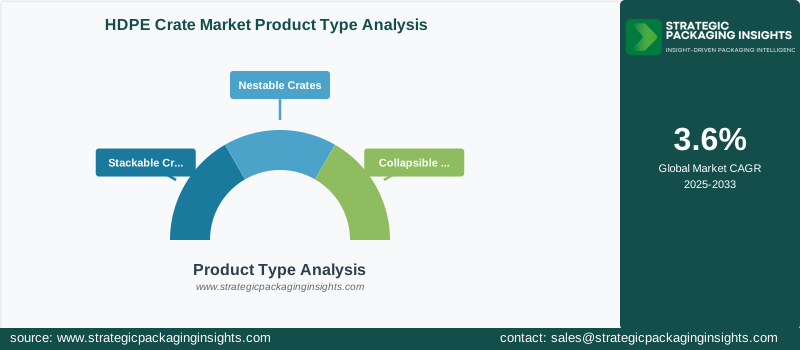
Stackable crates dominate the market due to their widespread application in food distribution and retail logistics. Their robust design and ability to withstand heavy loads make them a preferred choice for transporting perishable goods. Nestable crates, on the other hand, are increasingly used in agriculture and industrial handling, where efficient space utilization is crucial. The collapsible crates segment is witnessing growth in the e-commerce sector, where the need for flexible and reusable packaging solutions is paramount.
Application Analysis
The application segment of the HDPE Crate market includes food distribution, retail logistics, agriculture, and industrial handling. The food distribution sector holds a significant share of the market, driven by the need for hygienic and durable packaging solutions. HDPE crates are widely used for transporting fresh produce, dairy products, and other perishable goods, owing to their ability to maintain product integrity during transit.
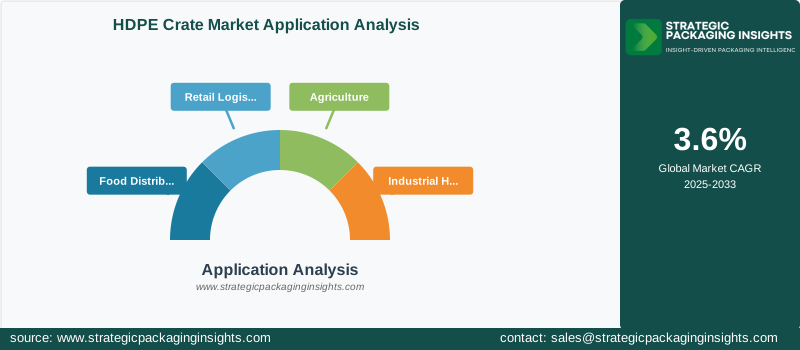
Retail logistics is another major application area, where the demand for efficient and sustainable packaging solutions is on the rise. The growth of the e-commerce sector has further fueled the demand for HDPE crates, as they offer the durability and flexibility required for handling a wide range of products. In agriculture, HDPE crates are used for transporting fruits, vegetables, and other agricultural produce, providing protection against damage and spoilage. The industrial handling segment is also witnessing growth, driven by the need for robust and reusable packaging solutions in manufacturing and logistics operations.
Capacity Analysis
The HDPE Crate market is segmented by capacity into low-capacity, medium-capacity, and heavy-duty crates. Low-capacity crates are primarily used in applications where lightweight and easy handling are essential, such as in retail and small-scale logistics operations. Medium-capacity crates are widely used in food distribution and agriculture, where a balance between load capacity and ease of handling is required.
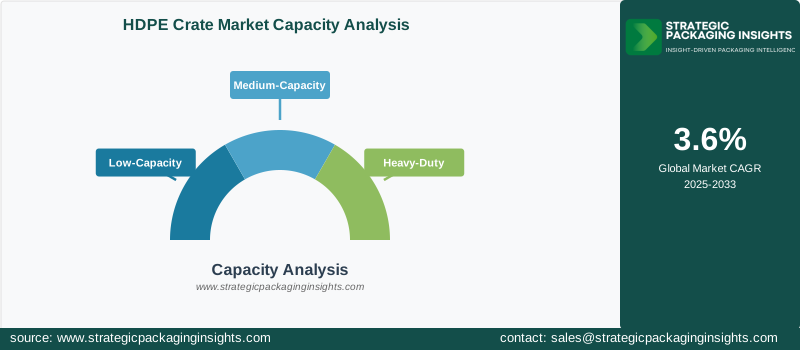
Heavy-duty crates, known for their robustness and durability, are gaining popularity in industrial handling and large-scale logistics operations. These crates are designed to withstand heavy loads and harsh environmental conditions, making them ideal for transporting industrial goods and machinery. The demand for heavy-duty crates is also driven by the increasing focus on reducing packaging waste and enhancing supply chain efficiency.
End Use Analysis
The end-use segment of the HDPE Crate market includes retailers, logistics providers, food processors, and manufacturers. Retailers are a major end-user group, driven by the need for efficient and sustainable packaging solutions to enhance supply chain operations. HDPE crates are widely used in retail logistics for transporting a wide range of products, from fresh produce to consumer goods.
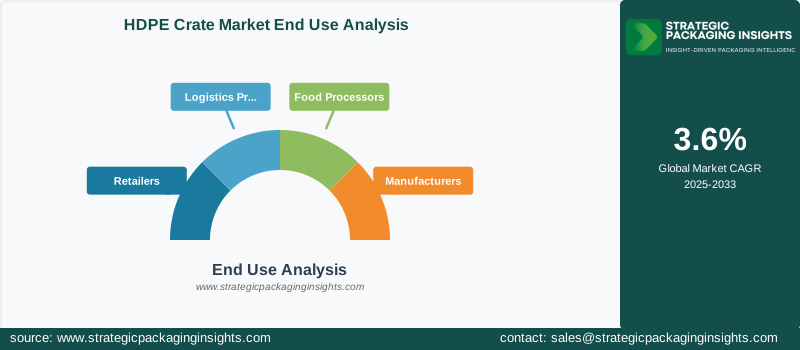
Logistics providers are another key end-user group, where the demand for durable and reusable packaging solutions is on the rise. The growth of the e-commerce sector has further fueled the demand for HDPE crates, as they offer the flexibility and durability required for handling a diverse range of products. Food processors are also significant end-users, using HDPE crates for transporting raw materials and finished products in a hygienic and efficient manner. Manufacturers, particularly in the automotive and electronics sectors, are increasingly adopting HDPE crates for transporting components and finished goods, driven by the need for robust and reusable packaging solutions.
HDPE Crate Market Segments
The HDPE Crate market has been segmented on the basis ofProduct Type
- Stackable Crates
- Nestable Crates
- Collapsible Crates
Application
- Food Distribution
- Retail Logistics
- Agriculture
- Industrial Handling
Capacity
- Low-Capacity
- Medium-Capacity
- Heavy-Duty
End Use
- Retailers
- Logistics Providers
- Food Processors
- Manufacturers
Region
- Asia Pacific
- North America
- Latin America
- Europe
- Middle East & Africa




