


Frustration-Free Pack Market Outlook
The Frustration-Free Pack market was valued at $1.54 billion in 2025 and is projected to reach $2.98 billion by 2034, growing at a CAGR of 7.6% during the forecast period 2026-2034. This market is driven by the increasing demand for sustainable and user-friendly packaging solutions, particularly in the e-commerce and retail sectors. As consumers become more environmentally conscious, the need for packaging that reduces waste and is easy to open without additional tools is becoming more pronounced. The market is also benefiting from technological advancements in packaging materials and design, which are making it easier for companies to adopt frustration-free packaging solutions.
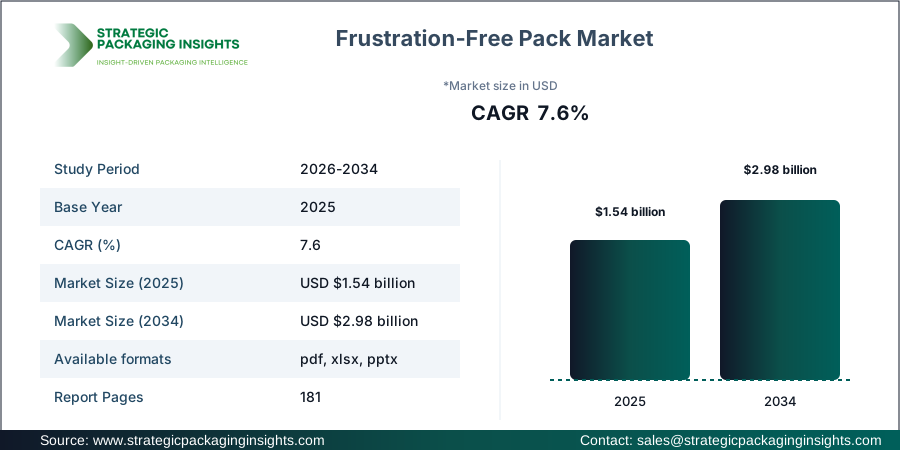
Despite the promising growth, the Frustration-Free Pack market faces several challenges. Regulatory constraints regarding packaging waste and recycling are becoming more stringent, which could impact the cost and design of packaging solutions. Additionally, the initial investment required for transitioning to frustration-free packaging can be significant, particularly for small and medium-sized enterprises. However, the long-term benefits, such as reduced shipping costs and improved customer satisfaction, are expected to outweigh these initial hurdles. The market also presents significant growth potential as more industries recognize the value of frustration-free packaging in enhancing the consumer experience and reducing environmental impact.
Report Scope
| Attributes | Details |
| Report Title | Frustration-Free Pack Market Size, Future Growth and Forecast 2034 |
| Material | Paper, Mixed |
| Application | E-commerce, Retail |
| End Use | Consumer Electronics, Clothing |
| Region | Asia Pacific, North America, Latin America, Europe, Middle East & Africa |
| Base Year | 2025 |
| Historic Period | 2018-2024 |
| Forecast Period | 2026-2034 |
| Number of Pages | 181 |
| Customization Available | Yes* |
Opportunities & Threats
The Frustration-Free Pack market presents numerous opportunities, particularly in the realm of e-commerce. As online shopping continues to grow, the demand for packaging that is easy to open and environmentally friendly is increasing. Companies that can offer innovative packaging solutions that meet these needs are likely to see significant growth. Additionally, there is an opportunity for companies to differentiate themselves by offering customized packaging solutions that enhance the unboxing experience for consumers. This can lead to increased brand loyalty and repeat purchases.
Another opportunity lies in the development of new materials and technologies that can further enhance the sustainability and functionality of frustration-free packaging. For example, biodegradable materials and smart packaging technologies that provide additional information or functionality could become key differentiators in the market. Companies that invest in research and development to create these innovative solutions are likely to gain a competitive edge.
However, the market also faces threats, particularly from regulatory changes and increasing competition. As governments around the world implement stricter regulations on packaging waste and recycling, companies may face increased costs and complexity in complying with these regulations. Additionally, as more companies enter the market, competition is likely to increase, which could put pressure on prices and margins. Companies will need to continuously innovate and improve their offerings to stay ahead of the competition.
Drivers & Challenges
One of the primary drivers of the Frustration-Free Pack market is the growing consumer demand for sustainable and convenient packaging solutions. As consumers become more aware of the environmental impact of packaging waste, they are increasingly seeking out products that are packaged in a way that minimizes waste and is easy to open. This trend is particularly pronounced in the e-commerce sector, where consumers often receive multiple packages and are looking for ways to reduce the amount of packaging waste they generate.
Another key driver is the increasing focus on customer experience. Companies are recognizing that the packaging of their products can have a significant impact on the overall customer experience, and are therefore investing in packaging solutions that enhance this experience. Frustration-free packaging, which is easy to open and reduces the risk of damage to the product during shipping, can lead to higher customer satisfaction and increased brand loyalty.
Despite these drivers, the market faces several challenges. One of the main challenges is the cost of transitioning to frustration-free packaging. For many companies, particularly small and medium-sized enterprises, the initial investment required to switch to new packaging materials and designs can be prohibitive. Additionally, there is a lack of standardization in the market, which can make it difficult for companies to implement frustration-free packaging solutions consistently across their product lines. Companies will need to work closely with packaging suppliers and invest in research and development to overcome these challenges.
Market Share Analysis
The Frustration-Free Pack market is characterized by a competitive landscape with several key players vying for market share. Among the leading companies in this market are Amazon, ProAmpac, Smurfit Kappa, Sealed Air, Amcor, Berry Global, WestRock, Tetra Pak, DS Smith, and Mondi. These companies are leveraging their extensive experience in packaging solutions and their strong distribution networks to maintain their competitive positions.
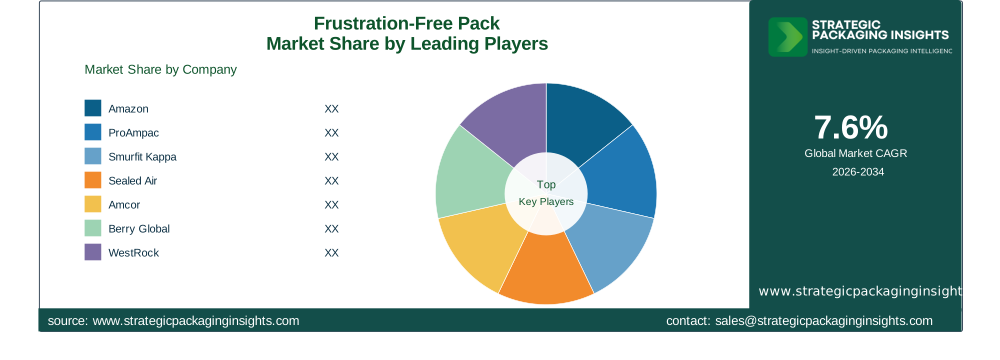
Amazon, a pioneer in frustration-free packaging, continues to lead the market with its innovative solutions and strong focus on customer experience. The company's frustration-free packaging initiative has set a benchmark in the industry, encouraging other companies to adopt similar practices. ProAmpac and Smurfit Kappa are also significant players, known for their sustainable packaging solutions and commitment to reducing environmental impact.
Sealed Air and Amcor are leveraging their expertise in packaging materials to offer innovative solutions that meet the needs of both consumers and businesses. Berry Global and WestRock are focusing on expanding their product portfolios and enhancing their production capabilities to capture a larger share of the market. Tetra Pak, DS Smith, and Mondi are also key players, known for their strong focus on sustainability and innovation in packaging design.
Overall, the competitive landscape of the Frustration-Free Pack market is dynamic, with companies continuously striving to innovate and improve their offerings. The market is expected to see increased consolidation as companies seek to strengthen their positions and expand their reach. Strategic partnerships and collaborations are likely to play a key role in driving growth and innovation in the market.
Key Highlights
- The Frustration-Free Pack market is projected to grow at a CAGR of 7.6% from 2026 to 2034.
- Amazon is a leading player in the market, known for its innovative packaging solutions.
- Increasing consumer demand for sustainable packaging is driving market growth.
- Regulatory changes regarding packaging waste are a significant challenge for the market.
- Technological advancements in packaging materials are creating new opportunities.
- The e-commerce sector is a major driver of demand for frustration-free packaging.
- Companies are focusing on enhancing the customer experience through innovative packaging.
- There is a growing trend towards the use of biodegradable materials in packaging.
- Strategic partnerships and collaborations are key to driving growth in the market.
- The market is characterized by a competitive landscape with several key players.
Top Countries Insights
In the Frustration-Free Pack market, the United States is a leading country, with a market size of approximately $500 million and a CAGR of 6%. The growth in the U.S. is driven by the strong presence of e-commerce giants like Amazon, which are setting industry standards for packaging. Additionally, consumer awareness regarding sustainable packaging is high, further fueling demand.
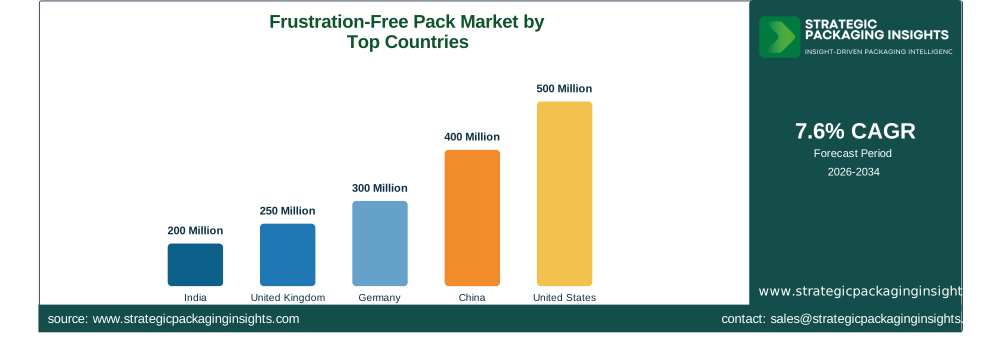
China is another significant market, with a market size of around $400 million and a CAGR of 8%. The rapid growth of e-commerce in China, coupled with government initiatives to reduce packaging waste, is driving the demand for frustration-free packaging. The country's large manufacturing base also supports the production of innovative packaging solutions.
Germany, with a market size of $300 million and a CAGR of 5%, is a key player in the European market. The country's strong focus on sustainability and recycling, along with stringent regulations on packaging waste, is driving the adoption of frustration-free packaging solutions.
The United Kingdom, with a market size of $250 million and a CAGR of 4%, is also a significant market. The growth in the UK is driven by the increasing demand for sustainable packaging solutions in the retail sector, as well as government initiatives to promote recycling and reduce packaging waste.
India, with a market size of $200 million and a CAGR of 9%, is an emerging market with significant growth potential. The rapid expansion of the e-commerce sector, along with increasing consumer awareness of sustainable packaging, is driving demand in the country. Government policies aimed at reducing plastic waste are also supporting market growth.
Frustration-Free Pack Market Segments Insights

Material Analysis
The material segment of the Frustration-Free Pack market is primarily divided into paper and mixed materials. Paper-based packaging is gaining significant traction due to its recyclability and biodegradability, aligning with the growing consumer demand for sustainable packaging solutions. Companies are increasingly investing in research and development to enhance the strength and durability of paper packaging, making it a viable alternative to traditional materials. The mixed materials segment, which includes combinations of paper and other materials, is also seeing growth as companies seek to balance sustainability with functionality.
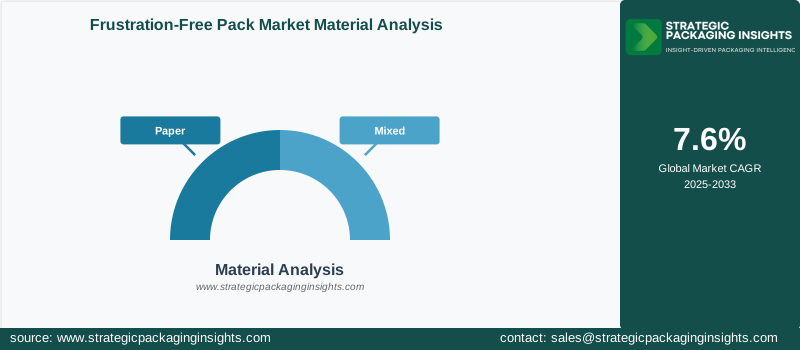
In the paper segment, the focus is on developing innovative solutions that can withstand the rigors of shipping while minimizing environmental impact. This includes the use of recycled paper and the development of new coatings that enhance the water resistance and strength of paper packaging. The mixed materials segment is benefiting from advancements in material science, which are enabling the creation of packaging solutions that offer the best of both worlds - the sustainability of paper and the durability of other materials.
Application Analysis
The application segment of the Frustration-Free Pack market is dominated by e-commerce and retail. The e-commerce sector is a major driver of demand for frustration-free packaging, as companies seek to enhance the customer experience and reduce the environmental impact of their packaging. Frustration-free packaging solutions that are easy to open and reduce the risk of product damage during shipping are particularly popular in this sector.
In the retail sector, the focus is on creating packaging solutions that enhance the in-store experience and reduce waste. Retailers are increasingly adopting frustration-free packaging to differentiate their products and improve customer satisfaction. This includes the use of innovative designs and materials that make it easy for consumers to open and dispose of packaging. The growing trend towards online shopping is also driving demand for frustration-free packaging in the retail sector, as retailers seek to provide a seamless shopping experience both online and offline.
End Use Analysis
The end-use segment of the Frustration-Free Pack market includes consumer electronics and clothing. In the consumer electronics sector, frustration-free packaging is becoming increasingly important as companies seek to enhance the unboxing experience and reduce the risk of product damage during shipping. This includes the use of innovative packaging designs and materials that provide adequate protection while being easy to open.
In the clothing sector, the focus is on creating packaging solutions that are both sustainable and functional. This includes the use of biodegradable materials and innovative designs that reduce waste and enhance the customer experience. As consumers become more environmentally conscious, the demand for sustainable packaging solutions in the clothing sector is expected to grow. Companies that can offer innovative and sustainable packaging solutions are likely to gain a competitive edge in this market.
Frustration-Free Pack Market Segments
The Frustration-Free Pack market has been segmented on the basis ofMaterial
- Paper
- Mixed
Application
- E-commerce
- Retail
End Use
- Consumer Electronics
- Clothing
Region
- Asia Pacific
- North America
- Latin America
- Europe
- Middle East & Africa




