


Friction Tape Market Outlook
The Friction Tape market was valued at $1.38 billion in 2025 and is projected to reach $2.07 billion by 2034, growing at a CAGR of 4.6% during the forecast period 2026-2034. This market is witnessing a steady growth trajectory driven by the increasing demand for durable and versatile adhesive solutions across various industries. The rise in construction activities, coupled with the growing electrical and electronics sector, is significantly contributing to the market expansion. Additionally, the sports industry is increasingly adopting friction tapes for athletic purposes, further propelling market growth. The market's robust growth is also supported by technological advancements in adhesive formulations, enhancing the performance and application range of friction tapes.
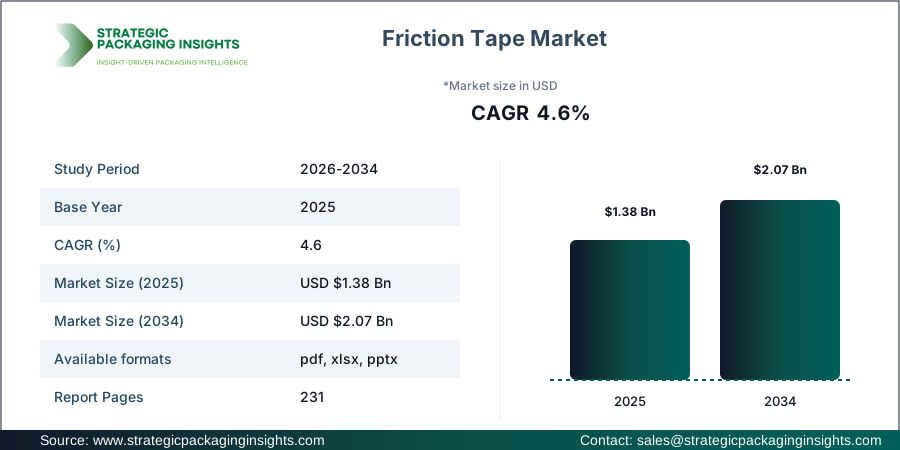
However, the market faces certain challenges that could potentially hinder its growth. Regulatory constraints related to the use of certain adhesive materials and environmental concerns regarding the disposal of adhesive products are notable restraints. Despite these challenges, the market holds substantial growth potential, particularly in emerging economies where industrialization and urbanization are on the rise. The increasing focus on sustainable and eco-friendly adhesive solutions presents lucrative opportunities for market players to innovate and expand their product offerings. As the market continues to evolve, strategic collaborations and investments in research and development are expected to play a crucial role in overcoming these challenges and unlocking new growth avenues.
Report Scope
| Attributes | Details |
| Report Title | Friction Tape Market Size, Future Growth and Forecast 2034 |
| Tape Type | Cloth, Insulating, Athletic |
| Application | Electrical, Grip, Bundling |
| End Use | Construction, Electrical, Sports |
| Adhesive | Rubber, Acrylic |
| Region | Asia Pacific, North America, Latin America, Europe, Middle East & Africa |
| Base Year | 2025 |
| Historic Period | 2018-2024 |
| Forecast Period | 2026-2034 |
| Number of Pages | 231 |
| Customization Available | Yes* |
Opportunities & Threats
The Friction Tape market is poised for significant opportunities driven by the increasing demand for high-performance adhesive solutions in various sectors. One of the primary opportunities lies in the construction industry, where friction tapes are extensively used for sealing, insulating, and protecting surfaces. The rapid urbanization and infrastructure development in emerging economies are expected to boost the demand for friction tapes, providing a lucrative growth avenue for market players. Additionally, the growing trend of DIY home improvement projects is further fueling the demand for friction tapes, as consumers seek easy-to-use and effective adhesive solutions for various applications.
Another promising opportunity is the rising adoption of friction tapes in the electrical and electronics industry. With the increasing complexity of electronic devices and the need for reliable insulation and protection, friction tapes are becoming an essential component in the manufacturing and maintenance of electronic products. The shift towards renewable energy sources, such as solar and wind power, also presents a significant opportunity for friction tape manufacturers, as these industries require durable and weather-resistant adhesive solutions for various applications.
Despite the promising opportunities, the Friction Tape market faces certain threats that could impact its growth trajectory. One of the primary threats is the stringent regulatory environment governing the use of adhesive materials, particularly those containing volatile organic compounds (VOCs). Compliance with these regulations can increase production costs and limit the availability of certain adhesive formulations. Additionally, the growing environmental concerns regarding the disposal of adhesive products pose a threat to market growth, as consumers and industries increasingly seek sustainable and eco-friendly alternatives.
Drivers & Challenges
The Friction Tape market is driven by several key factors that are contributing to its steady growth. One of the primary drivers is the increasing demand for durable and versatile adhesive solutions across various industries. The construction industry, in particular, is a major driver of market growth, as friction tapes are widely used for sealing, insulating, and protecting surfaces. The rise in construction activities, particularly in emerging economies, is expected to boost the demand for friction tapes, providing a significant growth impetus for the market.
Another key driver is the growing adoption of friction tapes in the electrical and electronics industry. With the increasing complexity of electronic devices and the need for reliable insulation and protection, friction tapes are becoming an essential component in the manufacturing and maintenance of electronic products. The shift towards renewable energy sources, such as solar and wind power, also presents a significant opportunity for friction tape manufacturers, as these industries require durable and weather-resistant adhesive solutions for various applications.
Despite the promising growth drivers, the Friction Tape market faces certain challenges that could impact its growth trajectory. One of the primary challenges is the stringent regulatory environment governing the use of adhesive materials, particularly those containing volatile organic compounds (VOCs). Compliance with these regulations can increase production costs and limit the availability of certain adhesive formulations. Additionally, the growing environmental concerns regarding the disposal of adhesive products pose a challenge to market growth, as consumers and industries increasingly seek sustainable and eco-friendly alternatives.
Market Share Analysis
The Friction Tape market is characterized by a competitive landscape with several key players vying for market share. Companies such as 3M, tesa, Shurtape, Nitto Denko, Intertape Polymer, Scapa, Nichiban, Avery Dennison, Duck, and Saint-Gobain are prominent players in this market. These companies are focusing on product innovation, strategic partnerships, and mergers and acquisitions to strengthen their market position and expand their product offerings. The competitive landscape is further intensified by the presence of regional players who are leveraging their local market knowledge and distribution networks to gain a competitive edge.
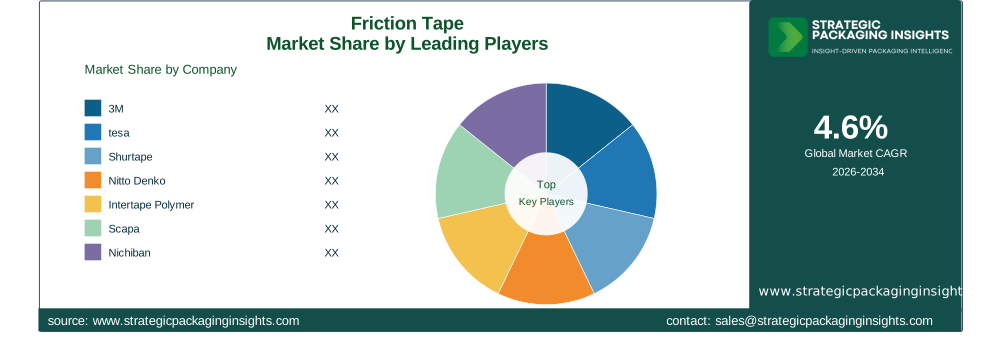
3M is a leading player in the Friction Tape market, known for its innovative adhesive solutions and strong brand presence. The company offers a wide range of friction tapes for various applications, including electrical insulation, sealing, and protection. tesa is another major player, renowned for its high-quality adhesive products and strong focus on research and development. The company is actively expanding its product portfolio to cater to the growing demand for friction tapes in various industries.
Shurtape and Nitto Denko are also significant players in the market, offering a diverse range of friction tapes for different applications. Shurtape is known for its durable and reliable adhesive solutions, while Nitto Denko is recognized for its advanced adhesive technologies and strong global presence. Intertape Polymer and Scapa are other notable players, focusing on product innovation and strategic partnerships to enhance their market position.
Nichiban, Avery Dennison, Duck, and Saint-Gobain are also key players in the Friction Tape market, each with its unique strengths and market strategies. Nichiban is known for its high-quality adhesive products and strong focus on customer satisfaction. Avery Dennison is a global leader in adhesive technologies, offering a wide range of friction tapes for various applications. Duck is renowned for its consumer-friendly adhesive solutions, while Saint-Gobain is recognized for its innovative and sustainable adhesive products.
Key Highlights
- The Friction Tape market is projected to grow from $1.38 billion in 2025 to $2.07 billion by 2034, at a CAGR of 4.6%.
- Key growth drivers include increasing demand in the construction and electrical industries.
- Regulatory constraints and environmental concerns pose challenges to market growth.
- Technological advancements in adhesive formulations are enhancing product performance.
- Emerging economies present significant growth opportunities due to rapid industrialization.
- Key players include 3M, tesa, Shurtape, Nitto Denko, and Intertape Polymer.
- Strategic partnerships and product innovation are crucial for market competitiveness.
- The market is witnessing a shift towards sustainable and eco-friendly adhesive solutions.
- DIY home improvement projects are driving demand for consumer-friendly friction tapes.
- The electrical and electronics industry is a major growth area for friction tapes.
Top Countries Insights
In the Friction Tape market, the United States stands out as a key player, with a market size of approximately $450 million and a CAGR of 5%. The country's robust construction and electrical industries are major growth drivers, supported by technological advancements and a strong focus on innovation. Government policies promoting infrastructure development and energy efficiency further bolster market growth. However, environmental regulations and the demand for sustainable adhesive solutions present challenges that companies must navigate.
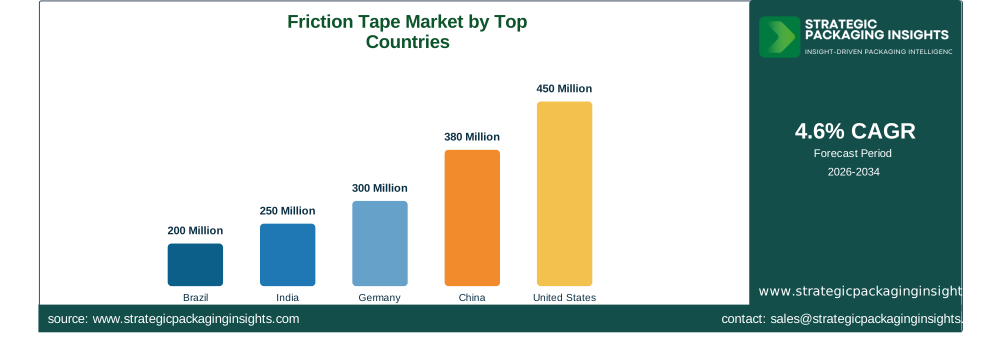
China is another significant market, with a market size of around $380 million and a CAGR of 6%. The country's rapid industrialization and urbanization are driving demand for friction tapes, particularly in the construction and electrical sectors. The government's focus on renewable energy and sustainable development is also contributing to market growth. However, the competitive landscape and regulatory environment pose challenges for market players.
Germany, with a market size of approximately $300 million and a CAGR of 4%, is a key market in Europe. The country's strong manufacturing sector and emphasis on quality and innovation are driving demand for high-performance friction tapes. Government initiatives promoting energy efficiency and sustainable construction practices are further supporting market growth. However, stringent environmental regulations and the need for sustainable adhesive solutions present challenges for companies operating in this market.
India, with a market size of around $250 million and a CAGR of 7%, is an emerging market with significant growth potential. The country's rapid urbanization and infrastructure development are driving demand for friction tapes, particularly in the construction and electrical sectors. Government initiatives promoting industrialization and energy efficiency are also contributing to market growth. However, the competitive landscape and regulatory environment pose challenges for market players.
Brazil, with a market size of approximately $200 million and a CAGR of 5%, is a key market in Latin America. The country's growing construction and electrical industries are driving demand for friction tapes, supported by government initiatives promoting infrastructure development and energy efficiency. However, economic volatility and regulatory challenges present obstacles for market growth.
Friction Tape Market Segments Insights

Tape Type Analysis
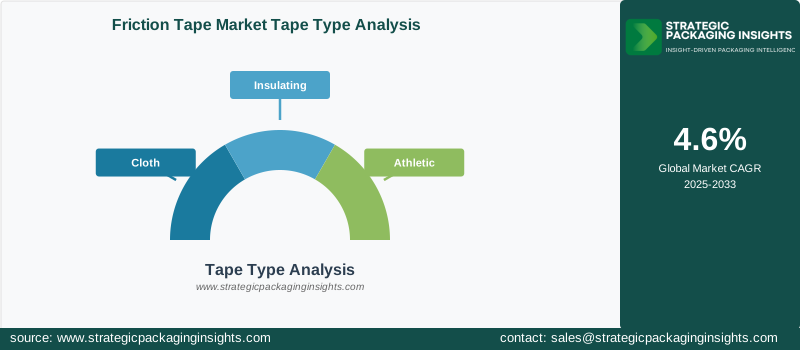
The Friction Tape market is segmented by tape type into cloth, insulating, and athletic tapes. Cloth tapes are widely used due to their durability and versatility, making them suitable for various applications, including electrical insulation and surface protection. The demand for cloth tapes is driven by the construction and electrical industries, where they are used for sealing, insulating, and protecting surfaces. Insulating tapes, on the other hand, are specifically designed for electrical applications, providing reliable insulation and protection for wires and cables. The growing complexity of electronic devices and the need for reliable insulation solutions are driving the demand for insulating tapes. Athletic tapes are used in the sports industry for injury prevention and support, with increasing adoption driven by the growing popularity of sports and fitness activities.
The competition in the tape type segment is intense, with key players focusing on product innovation and quality to gain a competitive edge. Companies are investing in research and development to enhance the performance and application range of their friction tapes, catering to the evolving needs of various industries. The shift towards sustainable and eco-friendly adhesive solutions is also influencing product development, with companies exploring new materials and formulations to meet consumer demand for environmentally friendly products.
Application Analysis
The Friction Tape market is segmented by application into electrical, grip, and bundling applications. Electrical applications are a major driver of market growth, with friction tapes used for insulating and protecting wires and cables in various electrical and electronic devices. The increasing complexity of electronic devices and the growing demand for reliable insulation solutions are driving the demand for friction tapes in this segment. Grip applications are also significant, with friction tapes used to enhance grip and prevent slipping in various tools and equipment. The growing trend of DIY home improvement projects and the increasing demand for consumer-friendly adhesive solutions are driving the demand for grip tapes.
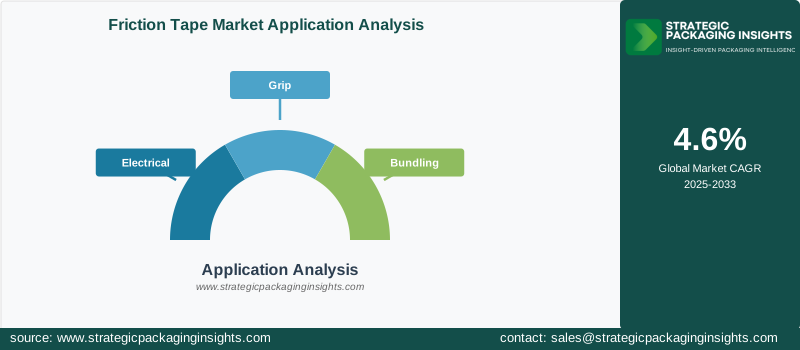
Bundling applications involve the use of friction tapes for securing and organizing wires, cables, and other materials. The demand for bundling tapes is driven by the construction and electrical industries, where they are used for organizing and securing materials during installation and maintenance. The competition in the application segment is intense, with key players focusing on product innovation and quality to gain a competitive edge. Companies are investing in research and development to enhance the performance and application range of their friction tapes, catering to the evolving needs of various industries.
End Use Analysis
The Friction Tape market is segmented by end use into construction, electrical, and sports applications. The construction industry is a major driver of market growth, with friction tapes used for sealing, insulating, and protecting surfaces in various construction projects. The rise in construction activities, particularly in emerging economies, is expected to boost the demand for friction tapes, providing a significant growth impetus for the market. The electrical industry is another key end-use segment, with friction tapes used for insulating and protecting wires and cables in various electrical and electronic devices.
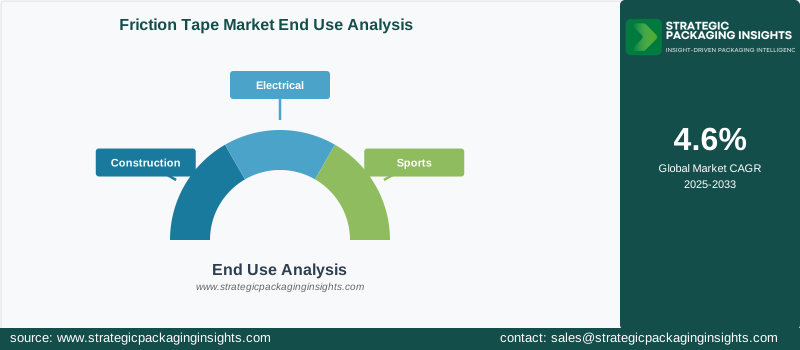
The sports industry is also a significant end-use segment, with friction tapes used for injury prevention and support in various sports and fitness activities. The growing popularity of sports and fitness activities is driving the demand for athletic tapes, providing a lucrative growth avenue for market players. The competition in the end-use segment is intense, with key players focusing on product innovation and quality to gain a competitive edge. Companies are investing in research and development to enhance the performance and application range of their friction tapes, catering to the evolving needs of various industries.
Adhesive Analysis
The Friction Tape market is segmented by adhesive type into rubber and acrylic adhesives. Rubber adhesives are widely used due to their strong bonding properties and versatility, making them suitable for various applications, including electrical insulation and surface protection. The demand for rubber adhesives is driven by the construction and electrical industries, where they are used for sealing, insulating, and protecting surfaces. Acrylic adhesives, on the other hand, are known for their durability and resistance to environmental factors, making them ideal for outdoor applications.
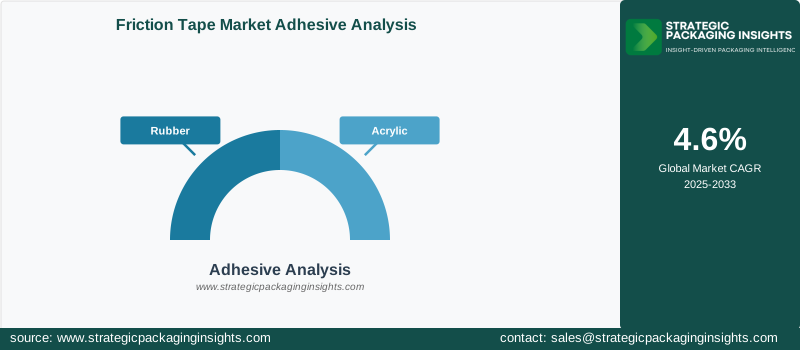
The competition in the adhesive segment is intense, with key players focusing on product innovation and quality to gain a competitive edge. Companies are investing in research and development to enhance the performance and application range of their friction tapes, catering to the evolving needs of various industries. The shift towards sustainable and eco-friendly adhesive solutions is also influencing product development, with companies exploring new materials and formulations to meet consumer demand for environmentally friendly products.
Friction Tape Market Segments
The Friction Tape market has been segmented on the basis ofTape Type
- Cloth
- Insulating
- Athletic
Application
- Electrical
- Grip
- Bundling
End Use
- Construction
- Electrical
- Sports
Adhesive
- Rubber
- Acrylic
Region
- Asia Pacific
- North America
- Latin America
- Europe
- Middle East & Africa




