


Freezer Label Market Outlook
The freezer label market was valued at $1.26 billion in 2025 and is projected to reach $2.28 billion by 2034, growing at a CAGR of 6.8% during the forecast period 2026-2034. This market is experiencing significant growth due to the increasing demand for reliable labeling solutions in cold storage environments. The rise in frozen food consumption, coupled with stringent regulatory requirements for labeling in the pharmaceutical and food industries, is driving the demand for freezer labels. Additionally, advancements in label materials that can withstand extreme temperatures without losing adhesion or readability are further propelling market growth. The market is also benefiting from the growing trend of automation in logistics and supply chain operations, where accurate labeling is crucial for inventory management and tracking.
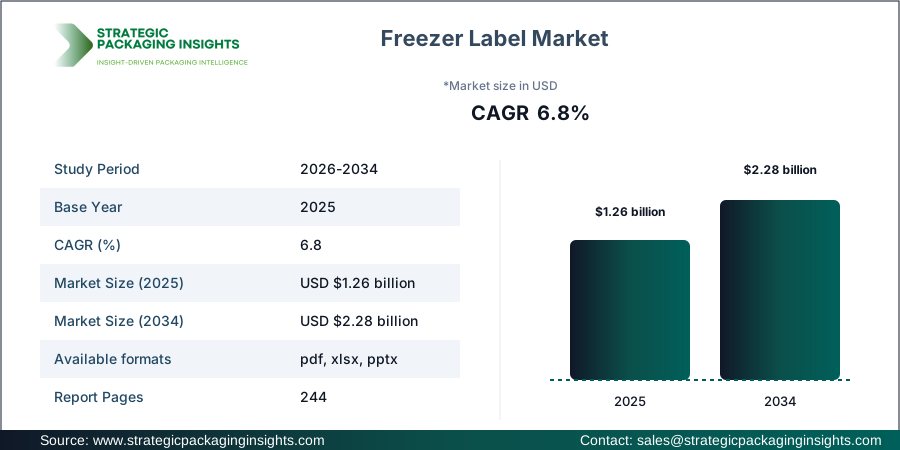
Despite the promising growth prospects, the freezer label market faces certain challenges. The high cost of raw materials used in the production of durable and temperature-resistant labels can act as a restraint on market growth. Moreover, the market is subject to stringent regulations regarding the use of certain chemicals in label adhesives and inks, which can increase production costs and limit the availability of certain materials. However, the market holds significant potential for growth, driven by the increasing adoption of smart labeling technologies and the expansion of cold chain logistics in emerging markets. As companies continue to innovate and develop eco-friendly and cost-effective labeling solutions, the freezer label market is expected to witness sustained growth over the forecast period.
Report Scope
| Attributes | Details |
| Report Title | Freezer Label Market Size, Future Growth and Forecast 2034 |
| Product Type | Cryogenic Freezer Labels, Food Freezer Labels, Laboratory Freezer Labels |
| Material Type | Polyester, Polypropylene, Paper, Synthetic Labels |
| Application | Frozen Food, Laboratory Samples, Pharma Storage, Logistics |
| End Use | Food Processors, Labs, Pharma, Cold Chain |
| Region | Asia Pacific, North America, Latin America, Europe, Middle East & Africa |
| Base Year | 2025 |
| Historic Period | 2018-2024 |
| Forecast Period | 2026-2034 |
| Number of Pages | 244 |
| Customization Available | Yes* |
Opportunities & Threats
The freezer label market presents numerous opportunities for growth, particularly in the realm of technological advancements. The integration of smart labeling technologies, such as RFID and QR codes, offers significant potential for enhancing traceability and inventory management in cold chain logistics. These technologies enable real-time tracking of products, ensuring that they are stored and transported under optimal conditions. Additionally, the growing demand for eco-friendly labeling solutions presents an opportunity for manufacturers to develop sustainable products that meet the increasing consumer preference for environmentally responsible options. As the global focus on sustainability intensifies, companies that can offer biodegradable and recyclable labeling solutions are likely to gain a competitive edge in the market.
Another opportunity lies in the expansion of the frozen food industry, which is driving the demand for reliable labeling solutions that can withstand extreme temperatures. As consumers increasingly opt for convenience foods, the need for accurate and durable labeling becomes paramount. This trend is particularly pronounced in emerging markets, where the frozen food sector is experiencing rapid growth. Furthermore, the pharmaceutical industry presents a lucrative opportunity for freezer label manufacturers, as stringent regulations require precise labeling of temperature-sensitive products. Companies that can provide labels with enhanced durability and readability in low-temperature environments are well-positioned to capitalize on this demand.
However, the freezer label market is not without its threats. One of the primary challenges is the volatility in raw material prices, which can impact production costs and profit margins. The reliance on petroleum-based materials for label production makes the market susceptible to fluctuations in oil prices. Additionally, the market faces competition from alternative labeling solutions, such as direct thermal printing, which can offer cost advantages in certain applications. To mitigate these threats, companies must focus on innovation and cost optimization strategies to maintain their competitive position in the market.
Drivers & Challenges
The freezer label market is driven by several key factors, including the increasing demand for frozen foods and the expansion of the pharmaceutical industry. The growing consumer preference for convenience foods has led to a surge in the production and consumption of frozen products, necessitating reliable labeling solutions that can withstand cold storage conditions. Additionally, the pharmaceutical industry requires precise labeling for temperature-sensitive products, driving the demand for durable and temperature-resistant labels. The rise in e-commerce and the subsequent growth of cold chain logistics further contribute to the market's expansion, as accurate labeling is essential for inventory management and product traceability.
Technological advancements in label materials and printing technologies are also significant drivers of market growth. Innovations in adhesive formulations and substrate materials have led to the development of labels that maintain adhesion and readability in extreme temperatures. Furthermore, the integration of smart labeling technologies, such as RFID and QR codes, enhances product traceability and inventory management, providing additional value to end-users. As companies continue to invest in research and development, the freezer label market is expected to benefit from these technological advancements, driving further growth.
Despite the positive growth drivers, the freezer label market faces several challenges. One of the primary challenges is the high cost of raw materials used in the production of durable and temperature-resistant labels. The reliance on petroleum-based materials makes the market vulnerable to fluctuations in oil prices, impacting production costs and profit margins. Additionally, the market is subject to stringent regulations regarding the use of certain chemicals in label adhesives and inks, which can increase production costs and limit the availability of certain materials. To overcome these challenges, companies must focus on innovation and cost optimization strategies to maintain their competitive position in the market.
Market Share Analysis
The freezer label market is characterized by a competitive landscape with several key players vying for market share. Companies such as Avery Dennison, Brady Corporation, and CCL Industries are prominent players in the market, known for their extensive product portfolios and strong distribution networks. These companies have established themselves as leaders in the industry by consistently investing in research and development to innovate and expand their product offerings. Their focus on developing durable and temperature-resistant labels has enabled them to maintain a competitive edge in the market.
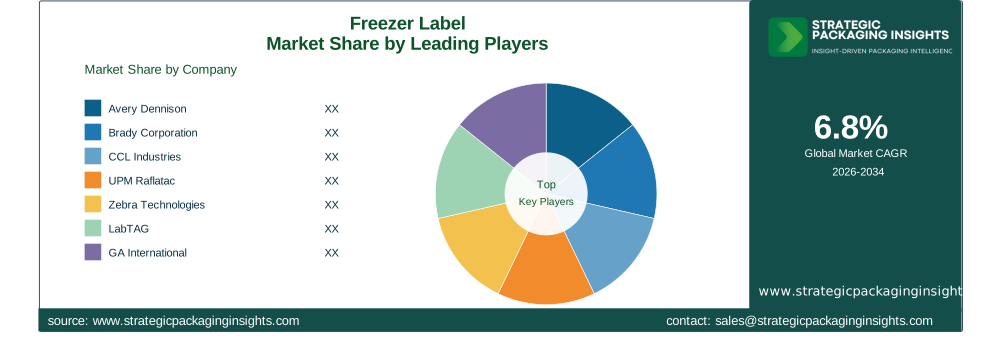
UPM Raflatac and Zebra Technologies are also significant players in the freezer label market, known for their advanced labeling solutions and commitment to sustainability. UPM Raflatac, in particular, has made significant strides in developing eco-friendly labeling solutions, catering to the growing demand for sustainable products. Zebra Technologies, on the other hand, is renowned for its expertise in smart labeling technologies, offering solutions that enhance product traceability and inventory management. These companies have leveraged their technological capabilities to capture a substantial share of the market.
Other notable players in the market include LabTAG, GA International, 3M, SATO, and Schreiner Group. LabTAG and GA International are recognized for their specialized labeling solutions for laboratory and pharmaceutical applications, providing labels that can withstand extreme temperatures and harsh chemicals. 3M, a global leader in adhesive technologies, offers a wide range of labeling solutions for various industries, including food and pharmaceuticals. SATO and Schreiner Group are known for their innovative labeling technologies and strong focus on customer-centric solutions, enabling them to maintain a competitive position in the market.
Key Highlights
- The freezer label market is projected to grow at a CAGR of 6.8% from 2026 to 2034.
- Technological advancements in label materials and printing technologies are driving market growth.
- The increasing demand for frozen foods and pharmaceutical products is boosting the demand for freezer labels.
- Smart labeling technologies, such as RFID and QR codes, are enhancing product traceability and inventory management.
- Eco-friendly labeling solutions are gaining traction as sustainability becomes a key focus for consumers and manufacturers.
- Volatility in raw material prices poses a challenge to market growth.
- Stringent regulations regarding label adhesives and inks impact production costs and material availability.
- Key players in the market include Avery Dennison, Brady Corporation, CCL Industries, UPM Raflatac, and Zebra Technologies.
- The market is characterized by a competitive landscape with several key players vying for market share.
Top Countries Insights
In the freezer label market, the United States stands out as a key player, with a market size of approximately $450 million and a CAGR of 5%. The country's robust frozen food industry and stringent labeling regulations in the pharmaceutical sector drive demand for high-quality freezer labels. Additionally, the presence of major market players and technological advancements in labeling solutions contribute to the market's growth. However, challenges such as fluctuating raw material prices and regulatory compliance remain significant concerns for manufacturers.
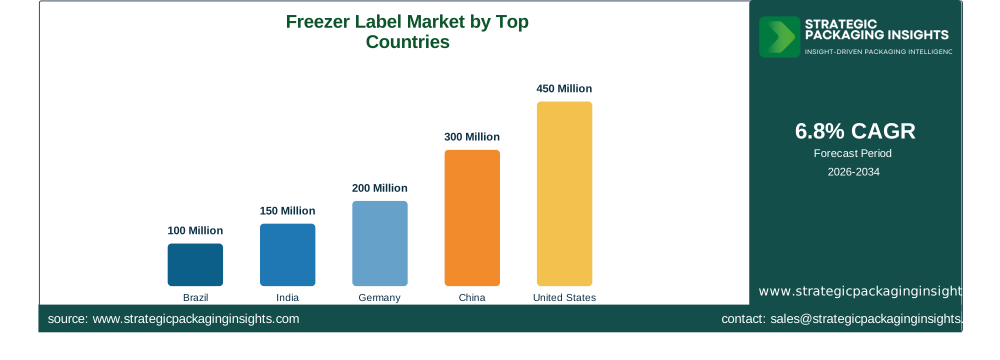
China is another significant market for freezer labels, with a market size of around $300 million and a CAGR of 8%. The country's expanding frozen food industry and growing pharmaceutical sector are key drivers of market growth. The increasing adoption of smart labeling technologies and the government's focus on improving cold chain logistics further boost the demand for freezer labels. However, the market faces challenges related to environmental regulations and the need for sustainable labeling solutions.
Germany, with a market size of approximately $200 million and a CAGR of 6%, is a prominent player in the European freezer label market. The country's strong emphasis on quality and precision in labeling, particularly in the pharmaceutical and food industries, drives demand for advanced labeling solutions. Additionally, the growing trend of automation in logistics and supply chain operations supports market growth. However, the market faces challenges related to regulatory compliance and the high cost of raw materials.
India, with a market size of around $150 million and a CAGR of 9%, is an emerging market for freezer labels. The country's rapidly growing frozen food industry and expanding pharmaceutical sector are key drivers of market growth. The increasing focus on improving cold chain logistics and the adoption of smart labeling technologies further contribute to the market's expansion. However, challenges such as regulatory compliance and the need for cost-effective labeling solutions remain significant concerns for manufacturers.
Brazil, with a market size of approximately $100 million and a CAGR of 7%, is a key player in the Latin American freezer label market. The country's growing frozen food industry and the expansion of the pharmaceutical sector drive demand for reliable labeling solutions. Additionally, the increasing adoption of smart labeling technologies and the government's focus on improving cold chain logistics support market growth. However, challenges related to regulatory compliance and the high cost of raw materials remain significant concerns for manufacturers.
Freezer Label Market Segments Insights

Product Type Analysis
The freezer label market is segmented by product type into cryogenic freezer labels, food freezer labels, and laboratory freezer labels. Cryogenic freezer labels are designed to withstand extremely low temperatures, making them ideal for applications in scientific research and biobanking. These labels are crucial for maintaining the integrity of samples stored in cryogenic conditions, ensuring accurate identification and traceability. The demand for cryogenic freezer labels is driven by the growing focus on scientific research and the expansion of biobanking facilities worldwide. As research institutions and biobanks continue to expand their operations, the need for reliable labeling solutions that can withstand extreme temperatures is expected to increase.
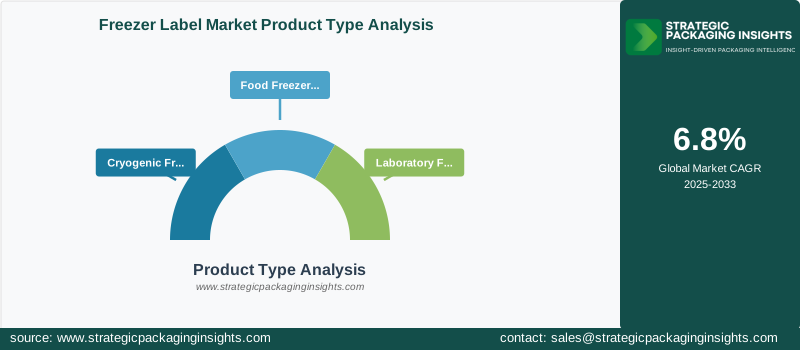
Food freezer labels are essential for the frozen food industry, where accurate labeling is crucial for inventory management and compliance with regulatory requirements. The increasing consumption of frozen foods, driven by changing consumer lifestyles and preferences, is boosting the demand for food freezer labels. These labels must be durable and resistant to moisture and low temperatures to ensure that they remain legible throughout the product's shelf life. As the frozen food industry continues to grow, the demand for high-quality food freezer labels is expected to rise, providing significant opportunities for manufacturers.
Laboratory freezer labels are used in various scientific and medical applications, where precise labeling is essential for sample identification and traceability. These labels must withstand low temperatures and exposure to chemicals, ensuring that they remain legible and adhere to surfaces in challenging conditions. The demand for laboratory freezer labels is driven by the expansion of research and development activities in the pharmaceutical and biotechnology sectors. As these industries continue to grow, the need for reliable labeling solutions that can withstand harsh laboratory environments is expected to increase, driving market growth.
Material Type Analysis
The freezer label market is segmented by material type into polyester, polypropylene, paper, and synthetic labels. Polyester labels are known for their durability and resistance to extreme temperatures, making them ideal for applications in cold storage environments. These labels offer excellent adhesion and remain legible even in harsh conditions, making them a popular choice for the frozen food and pharmaceutical industries. The demand for polyester labels is driven by the need for reliable labeling solutions that can withstand the rigors of cold storage and transportation.
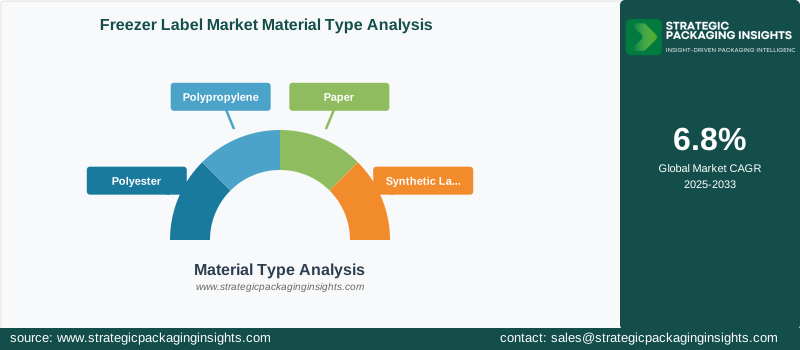
Polypropylene labels are another popular choice in the freezer label market, known for their flexibility and resistance to moisture and chemicals. These labels are widely used in the food and pharmaceutical industries, where they provide reliable performance in challenging environments. The demand for polypropylene labels is driven by the increasing consumption of frozen foods and the expansion of the pharmaceutical sector, where accurate labeling is essential for compliance with regulatory requirements.
Paper labels, while less durable than polyester and polypropylene labels, are a cost-effective option for applications where extreme durability is not required. These labels are commonly used in the food industry, where they provide adequate performance in less demanding environments. The demand for paper labels is driven by the need for cost-effective labeling solutions in the frozen food sector, where price sensitivity is a key consideration for manufacturers.
Application Analysis
The freezer label market is segmented by application into frozen food, laboratory samples, pharma storage, and logistics. The frozen food segment is a major driver of market growth, as the increasing consumption of frozen foods necessitates reliable labeling solutions that can withstand cold storage conditions. Accurate labeling is crucial for inventory management and compliance with regulatory requirements, driving demand for high-quality freezer labels in this segment.
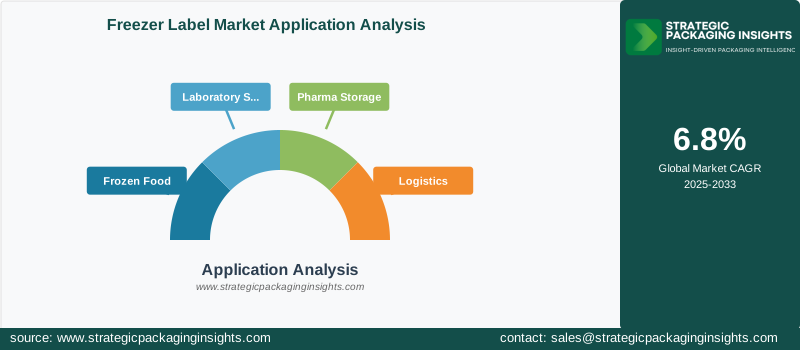
Laboratory samples represent another significant application for freezer labels, where precise labeling is essential for sample identification and traceability. The expansion of research and development activities in the pharmaceutical and biotechnology sectors is driving demand for reliable labeling solutions that can withstand harsh laboratory environments. As these industries continue to grow, the need for durable and temperature-resistant labels is expected to increase, providing significant opportunities for manufacturers.
Pharma storage is a critical application for freezer labels, as the pharmaceutical industry requires precise labeling for temperature-sensitive products. The demand for durable and temperature-resistant labels is driven by the need for compliance with stringent regulatory requirements and the growing focus on product safety and traceability. As the pharmaceutical industry continues to expand, the demand for high-quality freezer labels is expected to rise, driving market growth.
End Use Analysis
The freezer label market is segmented by end use into food processors, labs, pharma, and cold chain. Food processors are a major end-user of freezer labels, as the increasing consumption of frozen foods drives demand for reliable labeling solutions that can withstand cold storage conditions. Accurate labeling is crucial for inventory management and compliance with regulatory requirements, making high-quality freezer labels essential for food processors.
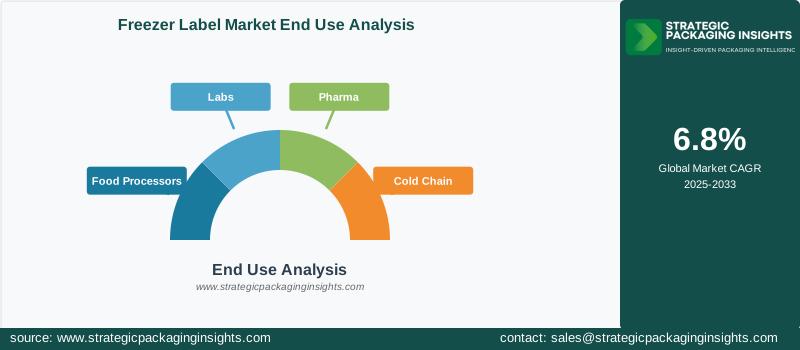
Labs represent another significant end-user of freezer labels, where precise labeling is essential for sample identification and traceability. The expansion of research and development activities in the pharmaceutical and biotechnology sectors is driving demand for reliable labeling solutions that can withstand harsh laboratory environments. As these industries continue to grow, the need for durable and temperature-resistant labels is expected to increase, providing significant opportunities for manufacturers.
The pharmaceutical industry is a critical end-user of freezer labels, as precise labeling is essential for temperature-sensitive products. The demand for durable and temperature-resistant labels is driven by the need for compliance with stringent regulatory requirements and the growing focus on product safety and traceability. As the pharmaceutical industry continues to expand, the demand for high-quality freezer labels is expected to rise, driving market growth.
Freezer Label Market Segments
The Freezer Label market has been segmented on the basis ofProduct Type
- Cryogenic Freezer Labels
- Food Freezer Labels
- Laboratory Freezer Labels
Material Type
- Polyester
- Polypropylene
- Paper
- Synthetic Labels
Application
- Frozen Food
- Laboratory Samples
- Pharma Storage
- Logistics
End Use
- Food Processors
- Labs
- Pharma
- Cold Chain
Region
- Asia Pacific
- North America
- Latin America
- Europe
- Middle East & Africa




