


Food-Grade rPP from Household Rigid Packaging Market Outlook
The Food-Grade rPP from Household Rigid Packaging market was valued at $1.05 billion in 2025 and is projected to reach $2.31 billion by 2034, growing at a CAGR of 9.2% during the forecast period 2026-2034. This market is witnessing significant growth due to the increasing demand for sustainable packaging solutions. The shift towards eco-friendly materials in packaging is driven by both consumer preferences and regulatory pressures. The use of recycled polypropylene (rPP) in food-grade applications is gaining traction as it offers a viable solution to reduce plastic waste and carbon footprint. The market is also benefiting from technological advancements in recycling processes, which enhance the quality and safety of rPP for food contact applications.
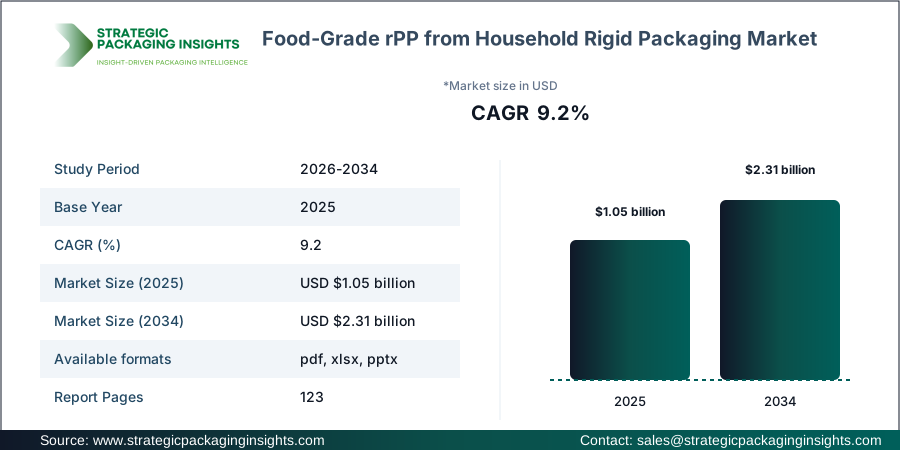
Despite the promising growth prospects, the market faces challenges such as stringent regulatory requirements for food safety and quality. The need for advanced decontamination processes to ensure the safety of recycled materials for food contact is a significant restraint. However, the potential for growth remains high as companies invest in innovative recycling technologies and expand their production capacities. The market is also supported by increasing collaborations between packaging manufacturers and recycling companies to develop efficient supply chains for rPP. As consumer awareness about sustainability continues to rise, the demand for food-grade rPP is expected to grow, offering lucrative opportunities for market players.
Report Scope
| Attributes | Details |
| Report Title | Food-Grade rPP from Household Rigid Packaging Market Size, Future Growth and Forecast 2034 |
| Process Type | Sorting, Washing, Decontamination, Extrusion |
| Application | Food Tubs, Trays, Closures, Rigid Containers |
| Grade | Natural rPP, Colored rPP, Deodorized rPP |
| End Use | Food Brands, Retailers, Converters, Recyclers |
| Region | Asia Pacific, North America, Latin America, Europe, Middle East & Africa |
| Base Year | 2025 |
| Historic Period | 2018-2024 |
| Forecast Period | 2026-2034 |
| Number of Pages | 123 |
| Customization Available | Yes* |
Opportunities & Threats
The Food-Grade rPP from Household Rigid Packaging market presents numerous opportunities, primarily driven by the growing emphasis on sustainability and circular economy principles. As consumers become more environmentally conscious, there is a rising demand for packaging solutions that minimize environmental impact. This trend is encouraging manufacturers to adopt recycled materials, such as rPP, which not only reduce waste but also offer cost advantages over virgin materials. Additionally, government initiatives and regulations aimed at reducing plastic waste are creating a favorable environment for the growth of the rPP market. Companies that can effectively leverage these opportunities by investing in advanced recycling technologies and expanding their product offerings are likely to gain a competitive edge.
Another significant opportunity lies in the development of innovative recycling processes that enhance the quality and safety of rPP for food contact applications. As technology advances, the ability to produce high-quality rPP that meets stringent food safety standards is becoming more feasible. This opens up new avenues for market expansion, particularly in regions with strict regulatory frameworks. Furthermore, partnerships and collaborations between packaging manufacturers, recyclers, and food brands can lead to the development of integrated supply chains that ensure a steady supply of high-quality rPP. Such collaborations can also facilitate knowledge sharing and innovation, driving further growth in the market.
However, the market also faces threats, particularly from the stringent regulatory requirements governing food-grade materials. Ensuring the safety and quality of recycled materials for food contact applications is a complex and costly process. Companies must invest in advanced decontamination technologies and adhere to rigorous testing and certification procedures, which can be a barrier to entry for smaller players. Additionally, fluctuations in the availability and quality of post-consumer waste feedstock can impact the production and cost-effectiveness of rPP. To mitigate these threats, companies need to focus on developing robust supply chains and investing in research and development to improve recycling processes.
Drivers & Challenges
The primary drivers of the Food-Grade rPP from Household Rigid Packaging market include the increasing demand for sustainable packaging solutions and the growing awareness of environmental issues among consumers. As the global population becomes more environmentally conscious, there is a significant shift towards packaging materials that are eco-friendly and reduce the carbon footprint. Recycled polypropylene (rPP) is gaining popularity as it offers a sustainable alternative to traditional plastics, helping to reduce plastic waste and promote a circular economy. Additionally, government regulations and initiatives aimed at reducing plastic waste and promoting recycling are further propelling the market growth. These regulations encourage manufacturers to adopt recycled materials, thereby boosting the demand for food-grade rPP.
Technological advancements in recycling processes are also driving the market. Innovations in sorting, washing, decontamination, and extrusion processes have significantly improved the quality and safety of rPP for food contact applications. These advancements enable manufacturers to produce high-quality rPP that meets stringent food safety standards, thereby expanding its application in the food packaging industry. Moreover, the cost-effectiveness of rPP compared to virgin materials is another factor driving its adoption. As companies seek to reduce costs and improve sustainability, the demand for rPP is expected to increase, providing a significant boost to the market.
Despite the positive drivers, the market faces several challenges, including stringent regulatory requirements and the complexity of recycling processes. Ensuring the safety and quality of recycled materials for food contact applications requires advanced decontamination technologies and rigorous testing and certification procedures. These requirements can be costly and time-consuming, posing a challenge for manufacturers. Additionally, the availability and quality of post-consumer waste feedstock can be inconsistent, impacting the production and cost-effectiveness of rPP. To overcome these challenges, companies need to invest in research and development to improve recycling processes and develop robust supply chains that ensure a steady supply of high-quality feedstock.
Market Share Analysis
The competitive landscape of the Food-Grade rPP from Household Rigid Packaging market is characterized by the presence of several key players who are actively investing in research and development to enhance their product offerings and expand their market presence. Companies such as PureCycle Technologies, Borealis, LyondellBasell, Veolia, and Suez are leading the market with their innovative recycling technologies and strong distribution networks. These companies are focusing on strategic partnerships and collaborations to strengthen their position in the market and capitalize on the growing demand for sustainable packaging solutions.
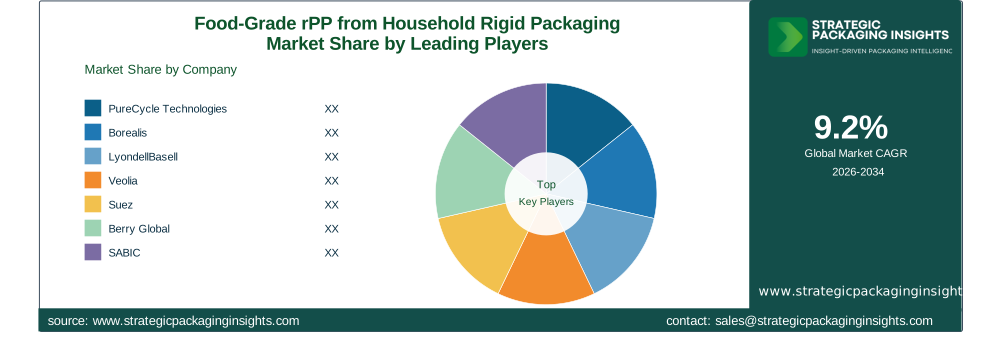
PureCycle Technologies is a prominent player in the market, known for its patented recycling process that produces ultra-pure recycled polypropylene. The company's innovative technology has positioned it as a leader in the production of high-quality rPP for food-grade applications. Borealis, another key player, is leveraging its expertise in polyolefins and recycling to develop sustainable packaging solutions that meet the needs of the food industry. The company's focus on innovation and sustainability has helped it maintain a strong market position.
LyondellBasell is a global leader in the production of polyolefins and is actively involved in the development of circular economy solutions. The company's commitment to sustainability and its extensive product portfolio make it a key player in the food-grade rPP market. Veolia and Suez, both leaders in waste management and recycling, are also significant contributors to the market. Their expertise in waste collection and recycling processes enables them to provide high-quality rPP for food-grade applications, further driving market growth.
Berry Global, SABIC, TotalEnergies, Tomra, and EREMA are other notable players in the market. Berry Global is known for its innovative packaging solutions and commitment to sustainability, while SABIC is a leading producer of chemicals and plastics with a strong focus on circular economy initiatives. TotalEnergies is actively involved in the development of sustainable energy solutions and is expanding its presence in the rPP market. Tomra and EREMA are leaders in recycling technology, providing advanced sorting and recycling solutions that enhance the quality and efficiency of rPP production.
Key Highlights
- The Food-Grade rPP market is projected to grow at a CAGR of 9.2% from 2026 to 2034.
- Technological advancements in recycling processes are enhancing the quality of rPP for food contact applications.
- Government regulations promoting recycling and reducing plastic waste are driving market growth.
- Partnerships between packaging manufacturers and recyclers are creating integrated supply chains for rPP.
- Fluctuations in the availability of post-consumer waste feedstock pose a challenge to market growth.
- Companies are investing in research and development to improve recycling technologies and expand product offerings.
- The market is characterized by the presence of key players such as PureCycle Technologies, Borealis, and LyondellBasell.
Top Countries Insights
In the Food-Grade rPP from Household Rigid Packaging market, the United States is a leading country, with a market size of approximately $500 million and a CAGR of 8%. The country's growth is driven by strong consumer demand for sustainable packaging solutions and supportive government policies promoting recycling. The presence of key market players and advanced recycling technologies further bolster the market's growth in the U.S.
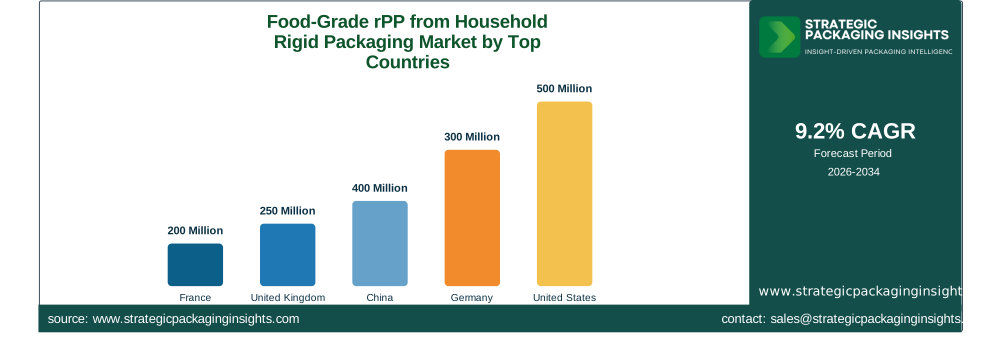
Germany is another significant market, with a market size of around $300 million and a CAGR of 7%. The country's stringent regulations on plastic waste and strong emphasis on sustainability are key drivers of market growth. Germany's well-established recycling infrastructure and technological advancements in recycling processes contribute to the market's expansion.
China is experiencing rapid growth in the Food-Grade rPP market, with a market size of $400 million and a CAGR of 12%. The country's large population and increasing consumer awareness about environmental issues are driving demand for sustainable packaging solutions. Government initiatives to reduce plastic waste and promote recycling are also supporting market growth.
The United Kingdom, with a market size of $250 million and a CAGR of 6%, is focusing on reducing plastic waste and promoting the use of recycled materials in packaging. The country's strong regulatory framework and consumer demand for eco-friendly products are key growth drivers.
France, with a market size of $200 million and a CAGR of 5%, is emphasizing sustainability and circular economy principles. The country's government policies and consumer preferences for sustainable packaging solutions are driving the market's growth.
Food-Grade rPP from Household Rigid Packaging Market Segments Insights

Process Type Analysis
The process type segment in the Food-Grade rPP from Household Rigid Packaging market includes sorting, washing, decontamination, and extrusion. Sorting is a critical step in the recycling process, ensuring that only suitable materials are selected for further processing. Advanced sorting technologies, such as optical sorting and near-infrared (NIR) systems, are enhancing the efficiency and accuracy of this process. Washing is another essential step, removing contaminants and impurities from the collected materials. Innovations in washing technologies are improving the quality of the recycled output, making it suitable for food-grade applications.
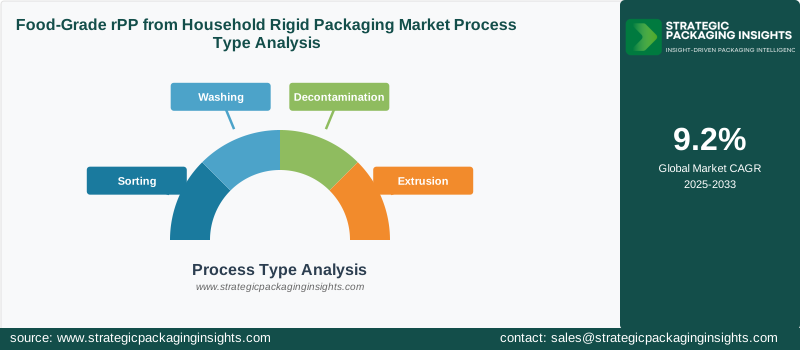
Decontamination is a crucial process that ensures the safety and quality of rPP for food contact applications. Advanced decontamination technologies are being developed to meet stringent food safety standards, enabling the production of high-quality rPP. Extrusion is the final step in the recycling process, where the cleaned and decontaminated materials are melted and formed into pellets. These pellets are then used to manufacture various packaging products. The extrusion process is being optimized to improve the efficiency and quality of the final product, further driving the growth of the market.
Application Analysis
The application segment of the Food-Grade rPP market includes food tubs, trays, closures, and rigid containers. Food tubs and trays are widely used in the packaging of ready-to-eat meals, dairy products, and other food items. The demand for these products is driven by the increasing consumer preference for convenience foods and the need for sustainable packaging solutions. Closures, such as caps and lids, are essential components of packaging, ensuring the safety and freshness of the contents. The use of rPP in closures is gaining popularity due to its durability and environmental benefits.
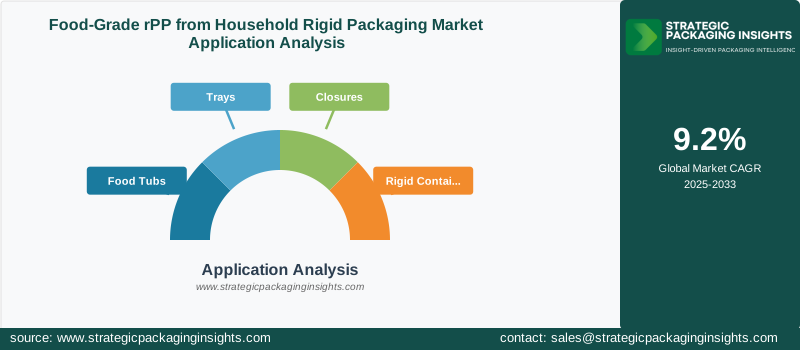
Rigid containers, used for packaging a variety of food products, are another significant application of rPP. These containers offer excellent protection and preservation of food items, making them a preferred choice for manufacturers. The growing demand for sustainable packaging solutions and the increasing focus on reducing plastic waste are driving the adoption of rPP in these applications. Companies are investing in research and development to enhance the performance and aesthetics of rPP packaging products, further boosting market growth.
Grade Analysis
The grade segment of the Food-Grade rPP market includes natural rPP, colored rPP, and deodorized rPP. Natural rPP is gaining popularity due to its versatility and ability to be used in a wide range of applications. It offers excellent mechanical properties and is suitable for food contact applications, making it a preferred choice for manufacturers. Colored rPP is used in applications where aesthetics are important, such as in packaging for branded products. The ability to produce rPP in various colors without compromising on quality is driving its demand.
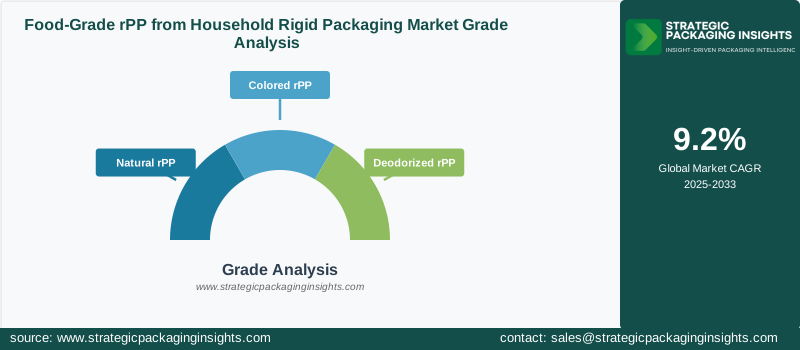
Deodorized rPP is a specialized grade that undergoes additional processing to remove any residual odors, making it suitable for sensitive applications. This grade is particularly important in food packaging, where maintaining the integrity and quality of the product is crucial. The demand for deodorized rPP is increasing as manufacturers seek to enhance the consumer experience and meet stringent food safety standards. The development of advanced deodorization technologies is further supporting the growth of this segment.
End Use Analysis
The end-use segment of the Food-Grade rPP market includes food brands, retailers, converters, and recyclers. Food brands are increasingly adopting rPP in their packaging solutions to meet consumer demand for sustainable products and comply with regulatory requirements. Retailers are also playing a significant role in driving the demand for rPP by promoting eco-friendly packaging solutions and encouraging suppliers to adopt sustainable practices.
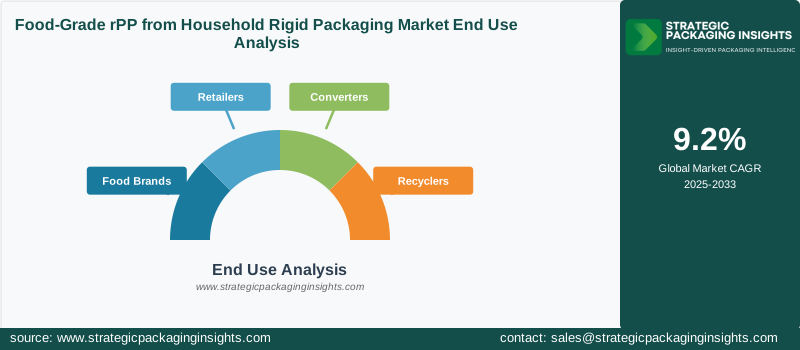
Converters, who transform raw materials into finished packaging products, are key players in the rPP market. They are investing in advanced technologies to enhance the quality and performance of rPP packaging solutions. Recyclers are crucial to the supply chain, providing the necessary feedstock for rPP production. Their role in collecting, sorting, and processing post-consumer waste is vital to ensuring a steady supply of high-quality rPP. The collaboration between these end-use segments is essential for the growth and sustainability of the rPP market.
Food-Grade rPP from Household Rigid Packaging Market Segments
The Food-Grade rPP from Household Rigid Packaging market has been segmented on the basis ofProcess Type
- Sorting
- Washing
- Decontamination
- Extrusion
Application
- Food Tubs
- Trays
- Closures
- Rigid Containers
Grade
- Natural rPP
- Colored rPP
- Deodorized rPP
End Use
- Food Brands
- Retailers
- Converters
- Recyclers
Region
- Asia Pacific
- North America
- Latin America
- Europe
- Middle East & Africa




