


Food Grade Bottles Market Outlook
The Food Grade Bottles market size was valued at USD 22.19 billion in 2025 and is anticipated to reach USD 35.32 billion by 2034, growing at a CAGR of 5.3% during the forecast period according to Strategic Packaging Insights. This growth is driven by increasing consumer demand for safe and sustainable packaging solutions, particularly in the food and beverage sector. Companies like Amcor and Berry Global are at the forefront, innovating with materials that ensure product safety while meeting environmental standards. The rise in health-conscious consumers and stringent food safety regulations are further propelling the demand for food-grade bottles, making them a critical component in the packaging industry.
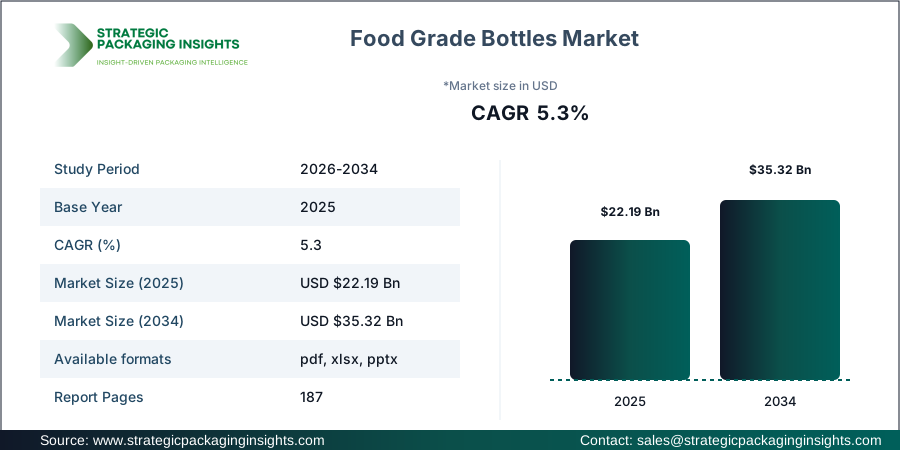
One of the most impactful drivers of the Food Grade Bottles market is the growing emphasis on sustainability and eco-friendly packaging solutions. According to recent government initiatives, there is a significant push towards reducing plastic waste and promoting recyclable materials. This has led companies like Alpla and Plastipak to invest heavily in research and development to create bottles that are not only food-safe but also environmentally friendly. The increasing awareness among consumers about the environmental impact of packaging waste is compelling manufacturers to adopt sustainable practices, thereby driving market growth.
Report Scope
| Attributes | Details |
| Report Title | Food Grade Bottles Market Size, Future Growth and Forecast 2034 |
| By Material Type | PET, HDPE, Glass, PP |
| By Product Type | Beverage Bottles, Dairy Bottles, Sauce Bottles, Edible Oil Bottles |
| By Application | Water, Juices, Sauces, Dairy |
| By End Use | Food & Beverage, Retail, Foodservice, FMCG |
| Region | Asia Pacific, North America, Latin America, Europe, Middle East & Africa |
| Base Year | 2025 |
| Historic Period | 2018-2024 |
| Forecast Period | 2026-2034 |
| Number of Pages | 187 |
| Customization Available | Yes* |
Sustainability & Circular Economy Analysis
Sustainability initiatives are reshaping the Food Grade Bottles market, with a strong focus on recyclable materials and eco-friendly innovations. Companies are increasingly adopting lightweight packaging solutions to reduce material usage and carbon footprint. For instance, the use of PET and HDPE, which are highly recyclable, is gaining traction. This shift is driven by consumer preferences for sustainable products and stringent packaging regulations aimed at minimizing environmental impact. As a result, manufacturers are investing in advanced technologies to enhance the recyclability and reusability of their products, aligning with circular economy principles.
The integration of circular economy practices is influencing packaging design and manufacturing processes. Companies are exploring innovative ways to incorporate recycled content into their bottles without compromising on quality or safety. This trend is supported by extended producer responsibility (EPR) regulations, which hold manufacturers accountable for the entire lifecycle of their products. By adopting these practices, companies like Silgan Holdings and O-I Glass are not only reducing waste but also enhancing their brand image and competitiveness in the market.
Furthermore, sustainability trends are impacting investment decisions and supply chain strategies. Investors are increasingly prioritizing companies with strong ESG (Environmental, Social, and Governance) credentials, prompting manufacturers to adopt sustainable practices. This includes optimizing supply chains to reduce emissions and improve efficiency. As a result, companies are forming strategic partnerships with suppliers and logistics providers to ensure a steady supply of sustainable materials. These efforts are crucial for maintaining regulatory compliance and achieving long-term market competitiveness.
Packaging Value Chain & Supply Chain Analysis
The packaging value chain for food-grade bottles is complex, involving multiple stakeholders from raw material sourcing to recycling networks. Raw materials such as PET, HDPE, and glass are sourced from global suppliers, with packaging converters and manufacturers playing a crucial role in transforming these materials into finished products. Companies like Graham Packaging and Gerresheimer are pivotal in this process, utilizing advanced machinery and technology to produce high-quality bottles that meet safety standards.
Supply chain efficiency is critical for the Food Grade Bottles market, as it directly impacts production capabilities and market performance. The availability of raw materials and transportation logistics are key factors influencing supply chain resilience. Manufacturers are adopting localization strategies to mitigate risks associated with global sourcing and ensure a steady supply of materials. This involves establishing partnerships with local suppliers and optimizing inventory management to reduce lead times and costs.
Strategic partnerships and collaborations are essential for enhancing supply chain capabilities and competitiveness. Companies are forming alliances with logistics providers and distribution channels to streamline operations and improve market reach. For instance, Pretium Packaging is leveraging its global presence to expand its distribution network and enhance customer service. These efforts are crucial for maintaining a competitive edge in the market and meeting the growing demand for food-grade bottles.
Opportunities & Threats
The Food Grade Bottles market presents significant opportunities for growth, driven by the increasing demand for sustainable and innovative packaging solutions. The rise in health-conscious consumers and stringent food safety regulations are creating a favorable environment for market expansion. Companies can capitalize on these trends by investing in research and development to create eco-friendly and recyclable bottles. Additionally, the growing popularity of e-commerce and online food delivery services is boosting the demand for convenient and safe packaging solutions, providing further growth opportunities for manufacturers.
Another opportunity lies in the expansion of the food and beverage industry, particularly in emerging markets. As disposable incomes rise and consumer preferences shift towards packaged and processed foods, the demand for food-grade bottles is expected to increase. Manufacturers can tap into these markets by offering innovative and cost-effective packaging solutions that cater to local preferences and regulatory requirements. This includes developing lightweight and durable bottles that reduce transportation costs and enhance product shelf life.
However, the market also faces threats from regulatory challenges and environmental concerns. Stringent regulations on plastic usage and waste management are compelling manufacturers to adopt sustainable practices, which can increase production costs. Additionally, the volatility in raw material prices and supply chain disruptions pose significant risks to market stability. Companies must navigate these challenges by adopting flexible and resilient supply chain strategies and investing in sustainable technologies to remain competitive.
Drivers & Challenges
The primary driver of the Food Grade Bottles market is the increasing consumer demand for safe and sustainable packaging solutions. As consumers become more health-conscious and environmentally aware, there is a growing preference for packaging that ensures product safety and minimizes environmental impact. This trend is supported by stringent food safety regulations and government initiatives aimed at reducing plastic waste. Companies like Amcor and Berry Global are leading the way by developing innovative packaging solutions that meet these demands and enhance brand value.
Technological advancements in packaging materials and manufacturing processes are also driving market growth. The development of lightweight and recyclable materials, such as PET and HDPE, is enabling manufacturers to create eco-friendly bottles that reduce carbon footprint and enhance product appeal. Additionally, the adoption of advanced manufacturing technologies, such as blow molding and injection molding, is improving production efficiency and reducing costs. These innovations are crucial for meeting the growing demand for food-grade bottles and maintaining a competitive edge in the market.
Despite these drivers, the market faces challenges from regulatory pressures and environmental concerns. Stringent regulations on plastic usage and waste management are compelling manufacturers to adopt sustainable practices, which can increase production costs. Additionally, the volatility in raw material prices and supply chain disruptions pose significant risks to market stability. Companies must navigate these challenges by adopting flexible and resilient supply chain strategies and investing in sustainable technologies to remain competitive.
Market Share Analysis
The Food Grade Bottles market is characterized by intense competition, with several key players dominating the landscape. Companies like Amcor, Berry Global, and Alpla hold significant market shares, driven by their extensive product portfolios and strong global presence. These companies are at the forefront of innovation, investing heavily in research and development to create sustainable and high-quality packaging solutions. Their strategic partnerships and collaborations with suppliers and distributors further enhance their market position and competitiveness.
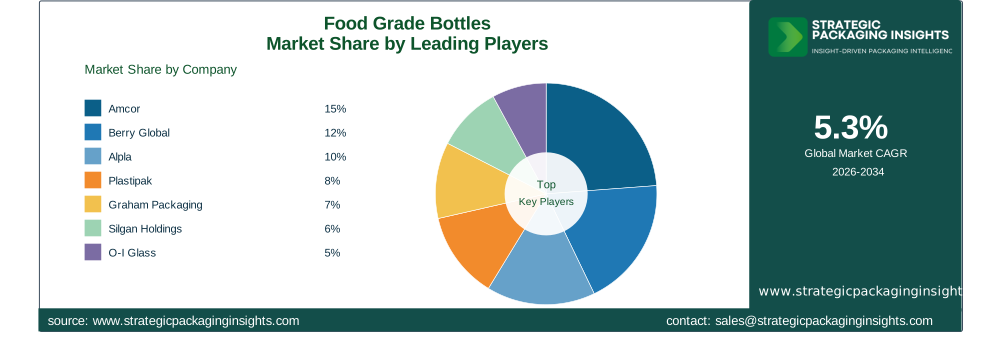
Amcor is a leading player in the Food Grade Bottles market, known for its innovative packaging solutions and commitment to sustainability. The company offers a wide range of products, including PET and HDPE bottles, that cater to various applications in the food and beverage industry. Berry Global is another major player, with a strong focus on developing eco-friendly packaging solutions. The company's extensive product portfolio and global reach make it a key player in the market.
Alpla is renowned for its advanced manufacturing capabilities and sustainable packaging solutions. The company has a strong presence in the global market, with operations in over 45 countries. Plastipak is another key player, known for its innovative packaging solutions and commitment to sustainability. The company's extensive product portfolio and strategic partnerships with leading brands make it a significant player in the market.
Other notable players in the market include Graham Packaging, Silgan Holdings, O-I Glass, Gerresheimer, Alpha Packaging, and Pretium Packaging. These companies are investing in advanced technologies and sustainable practices to enhance their market position and competitiveness. Their focus on innovation and customer-centric solutions is driving market growth and shaping the future of the Food Grade Bottles market.
Key Highlights
- Market Size: Valued at USD 22.19 billion in 2025, projected to reach USD 35.32 billion by 2034.
- Growth Rate: Expected CAGR of 5.3% during the forecast period.
- Leading Companies: Amcor, Berry Global, Alpla, and Plastipak are key players driving innovation.
- Material Trends: Increasing use of PET and HDPE for recyclable and eco-friendly solutions.
- Application Growth: High demand in water and juice packaging segments.
- Regional Insights: Asia Pacific and North America are leading markets with significant growth potential.
- Sustainability Focus: Strong emphasis on reducing carbon footprint and enhancing recyclability.
Food Grade Bottles Market Segments Insights

By Material Type Analysis
The Food Grade Bottles market is segmented by material type, including PET, HDPE, Glass, and PP. PET and HDPE are the most widely used materials due to their recyclability and lightweight properties. These materials are favored for their ability to preserve the quality and safety of food and beverages, making them ideal for packaging applications. Companies like Amcor and Berry Global are investing in advanced technologies to enhance the recyclability and sustainability of these materials, aligning with consumer preferences for eco-friendly packaging solutions.
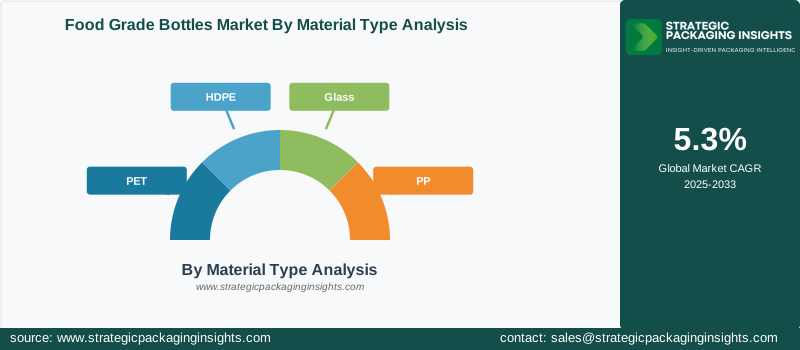
Glass bottles, while less common, are preferred for premium products due to their superior barrier properties and aesthetic appeal. The demand for glass bottles is driven by the growing trend of premiumization in the food and beverage industry. PP is also gaining traction due to its versatility and cost-effectiveness. Manufacturers are exploring innovative ways to incorporate recycled content into these materials without compromising on quality or safety, thereby enhancing their market competitiveness.
By Product Type Analysis
The market is also segmented by product type, including Beverage Bottles, Dairy Bottles, Sauce Bottles, and Edible Oil Bottles. Beverage bottles hold the largest market share, driven by the increasing consumption of bottled water and juices. The demand for dairy bottles is also rising, supported by the growing popularity of packaged dairy products. Companies are focusing on developing lightweight and durable bottles that enhance product shelf life and reduce transportation costs.
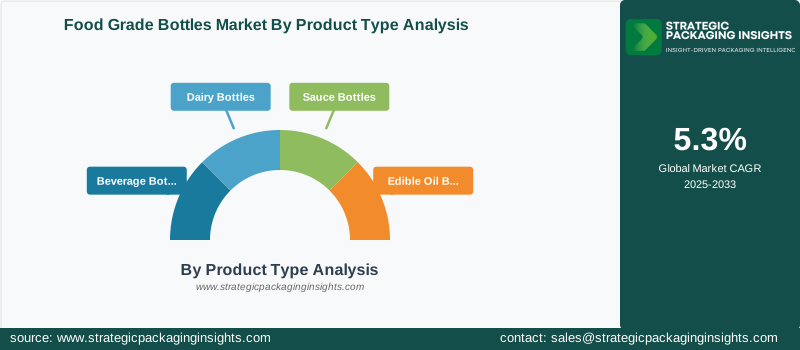
Sauce bottles and edible oil bottles are witnessing steady growth, driven by the increasing demand for packaged sauces and oils. Manufacturers are investing in innovative packaging solutions that offer convenience and ease of use for consumers. This includes developing bottles with ergonomic designs and tamper-evident features that ensure product safety and integrity. The focus on innovation and customer-centric solutions is driving market growth and shaping the future of the Food Grade Bottles market.
By Application Analysis
The application segment includes Water, Juices, Sauces, and Dairy. Water and juices are the largest application segments, driven by the increasing consumption of bottled beverages. The demand for sauce and dairy packaging is also rising, supported by the growing popularity of packaged sauces and dairy products. Companies are focusing on developing innovative packaging solutions that enhance product appeal and convenience for consumers.
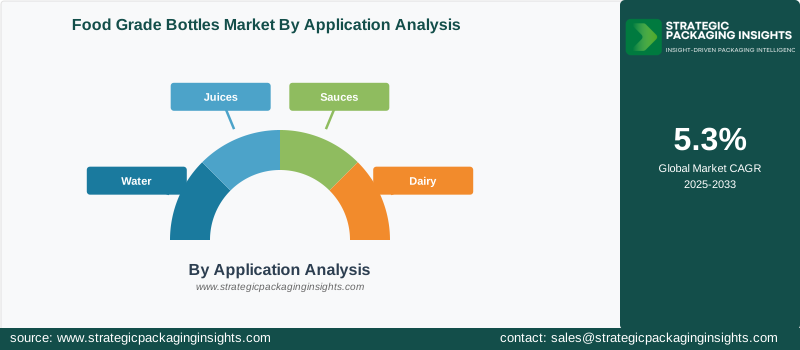
The growing trend of health-conscious consumers is driving the demand for safe and sustainable packaging solutions in these application segments. Manufacturers are investing in advanced technologies to create eco-friendly and recyclable bottles that meet consumer preferences and regulatory requirements. This includes developing lightweight and durable bottles that reduce transportation costs and enhance product shelf life.
By End Use Analysis
The end-use segment includes Food & Beverage, Retail, Foodservice, and FMCG. The food and beverage industry is the largest end-use segment, driven by the increasing demand for packaged and processed foods. The retail and foodservice sectors are also witnessing significant growth, supported by the growing popularity of e-commerce and online food delivery services.
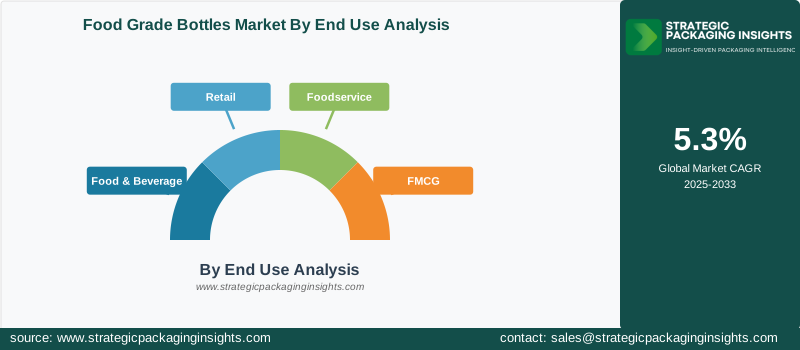
Manufacturers are focusing on developing innovative packaging solutions that cater to the specific needs of these end-use segments. This includes developing lightweight and durable bottles that enhance product shelf life and reduce transportation costs. The focus on innovation and customer-centric solutions is driving market growth and shaping the future of the Food Grade Bottles market.
Food Grade Bottles Market Segments
The Food Grade Bottles market has been segmented on the basis ofBy Material Type
- PET
- HDPE
- Glass
- PP
By Product Type
- Beverage Bottles
- Dairy Bottles
- Sauce Bottles
- Edible Oil Bottles
By Application
- Water
- Juices
- Sauces
- Dairy
By End Use
- Food & Beverage
- Retail
- Foodservice
- FMCG
Region
- Asia Pacific
- North America
- Latin America
- Europe
- Middle East & Africa




