


Foam Packaging Insert Market Outlook
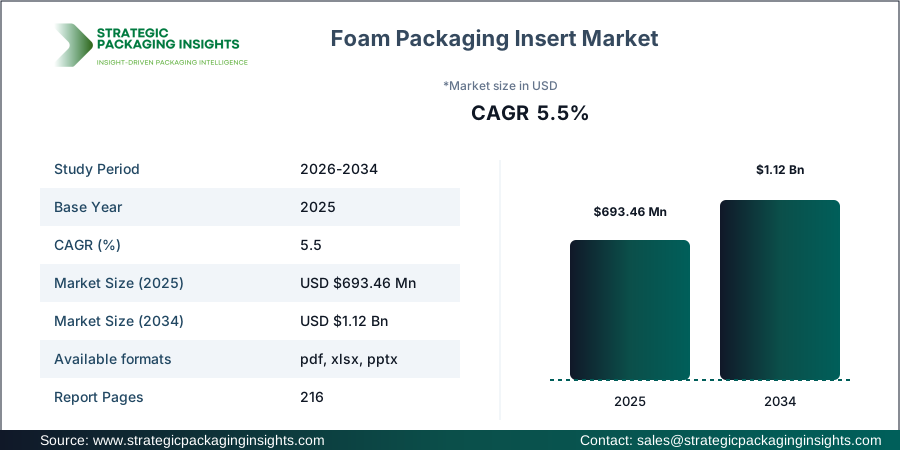
The Foam Packaging Insert market size was valued at USD 693.46 million in 2025 and is anticipated to reach USD 1.12 billion by 2034, growing at a CAGR of 5.5% during the forecast period according to Strategic Packaging Insights. This growth trajectory is driven by the increasing demand for protective packaging solutions across various industries, including electronics, healthcare, and automotive. Companies like Sealed Air and Pregis are at the forefront of this market, leveraging advanced technologies to enhance the durability and efficiency of foam packaging inserts. The rising e-commerce sector, which requires robust packaging solutions to ensure product safety during transit, is also a significant contributor to market expansion. Additionally, the trend towards sustainable packaging solutions is prompting manufacturers to innovate and develop eco-friendly foam inserts, further propelling market growth.
One of the most impactful drivers of the Foam Packaging Insert market is the growing emphasis on reducing product damage during transportation. According to industry reports, the global logistics and transportation sector is witnessing a surge in demand for reliable packaging solutions that can withstand rough handling and environmental stressors. This has led to increased adoption of foam packaging inserts, which offer superior cushioning and protection. Companies like Storopack and UFP Technologies are investing in research and development to create innovative foam solutions that cater to the specific needs of different industries. Furthermore, government regulations promoting the use of recyclable and biodegradable materials are encouraging manufacturers to explore sustainable alternatives, thereby opening new avenues for growth in the foam packaging insert market.
Report Scope
| Attributes | Details |
| Report Title | Foam Packaging Insert Market Size, Future Growth and Forecast 2034 |
| Foam Type | PE Foam, PU Foam, EPE Foam, EVA Foam |
| Product Type | Die-Cut Inserts, Custom Molded Inserts, Anti-Static Inserts |
| Application | Electronics, Medical Devices, Luxury Goods, Industrial Parts |
| End Use | Electronics, Healthcare, Retail, Automotive |
| Region | Asia Pacific, North America, Latin America, Europe, Middle East & Africa |
| Base Year | 2025 |
| Historic Period | 2018-2024 |
| Forecast Period | 2026-2034 |
| Number of Pages | 216 |
| Customization Available | Yes* |
Opportunities & Threats
The Foam Packaging Insert market presents significant opportunities for growth, particularly in the realm of sustainable packaging solutions. As environmental concerns continue to rise, there is a growing demand for eco-friendly packaging materials that minimize environmental impact. This trend is driving innovation in the development of biodegradable and recyclable foam inserts, offering companies like Smurfit Kappa and Ranpak a chance to differentiate themselves in the market. Additionally, the increasing penetration of e-commerce platforms globally is creating a substantial demand for protective packaging solutions, as online retailers seek to ensure the safe delivery of products to consumers. This shift towards online shopping is expected to further fuel the demand for foam packaging inserts, providing lucrative opportunities for market players.
Another opportunity lies in the customization of foam packaging inserts to meet the specific needs of different industries. With advancements in technology, manufacturers can now produce custom-molded inserts that offer tailored protection for a wide range of products, from delicate electronics to heavy industrial parts. This ability to provide bespoke solutions is attracting a diverse clientele, including luxury goods manufacturers and medical device companies, who require specialized packaging to maintain product integrity. Companies like Nefab and FoamPartner are capitalizing on this trend by offering innovative, customized packaging solutions that cater to the unique requirements of their clients, thereby expanding their market reach.
However, the Foam Packaging Insert market also faces certain threats that could hinder its growth. One of the primary challenges is the volatility in raw material prices, which can significantly impact production costs and profit margins for manufacturers. The foam packaging industry relies heavily on petrochemical derivatives, and fluctuations in oil prices can lead to increased costs for raw materials such as polyethylene and polyurethane. This price volatility poses a risk to market stability and profitability, forcing companies to adopt cost-effective production strategies and explore alternative materials to mitigate the impact of rising costs.
Drivers & Challenges
The Foam Packaging Insert market is driven by several key factors, including the increasing demand for protective packaging solutions in the electronics and healthcare industries. As consumer electronics become more sophisticated and fragile, there is a growing need for packaging that can provide adequate protection during shipping and handling. Foam inserts offer superior cushioning and shock absorption, making them an ideal choice for packaging delicate electronic components. Similarly, the healthcare industry requires reliable packaging solutions to ensure the safe transport of medical devices and equipment. Companies like Sonoco and Rogers Foam are leveraging their expertise in foam technology to develop innovative packaging solutions that meet the stringent requirements of these industries.
Another significant driver of the Foam Packaging Insert market is the rise of e-commerce and the subsequent increase in demand for efficient packaging solutions. With more consumers shopping online, there is a heightened need for packaging that can protect products during transit and ensure they arrive in perfect condition. Foam inserts are particularly well-suited for this purpose, as they provide excellent protection against impact and vibration. This trend is encouraging manufacturers to invest in advanced foam technologies and expand their product offerings to cater to the growing e-commerce sector. Companies like Sealed Air and Pregis are leading the charge in this area, developing innovative foam solutions that enhance product safety and customer satisfaction.
Despite these drivers, the Foam Packaging Insert market faces several challenges that could impede its growth. One of the primary challenges is the increasing competition from alternative packaging materials, such as molded pulp and corrugated cardboard, which are perceived as more environmentally friendly. As sustainability becomes a key consideration for consumers and businesses alike, there is a growing preference for packaging solutions that minimize environmental impact. This shift in consumer preferences is putting pressure on foam packaging manufacturers to develop eco-friendly alternatives and adopt sustainable practices. Additionally, stringent government regulations regarding the use of non-biodegradable materials are further challenging the market, prompting companies to innovate and explore new materials and technologies to remain competitive.
Market Growth Factors
- Regulatory pressure is increasing demand for lighter, custom-fit protective packaging. Regulation (EU) 2025/40 entered into force on February 11, 2025 and applies from August 12, 2026; it requires packaging to be recyclable and sets a 50% maximum empty-space ratio for grouped, transport and e-commerce packaging by 2030, which favors engineered foam inserts that reduce void space while protecting goods.
- California’s packaging EPR regime is forcing producers to redesign and document packaging choices. CalRecycle says the SB 54 permanent regulations became effective on May 1, 2026, with producer registration and reporting obligations beginning immediately and long-term targets that include 100% recyclable or compostable packaging by 2032.
- North American supply expansion is improving availability of molded and fabricated foam packaging. South Carolina’s March 2025 announcement for EFP’s .5 million Lee County expansion adds 200,000 square feet and raises EPS and EPP production capacity serving protective packaging markets.
- Commercialization of lower-carbon foam materials is broadening adoption options for end users under sustainability mandates. Storopack’s FOAMplus 7008-BIO offers certified biobased polyurethane foam while remaining compatible with installed FOAMplus systems, reducing switching friction for protective-packaging operations.
- Foam recycling infrastructure is expanding in the U.S. The Foodservice Packaging Institute’s 2025 Foam Recycling Coalition grant cycle continued offering grants of up to ,000 to establish or enhance foam polystyrene recycling, and the institute said the program has enabled more than 13 million additional residents to recycle foam polystyrene, including packaging materials.
- Closed-loop recycling programs are strengthening the business case for recycled-content foam. Pregis reported that partners in its Foam Densifier Program diverted 3,040,000 pounds of foam waste from landfills in 2025 and returned densified material for recycling, while the company’s Renew portfolio includes recycled-content foam offerings.
- Commercial use of circular styrenics is moving from pilot stage into real packaging applications. BASF reported in October 2025 that Pescafácil began using Knauf Industries CELOOPS boxes made with Styropor Ccycled EPS, showing that chemically recycled feedstocks are being adopted in protective foam packaging in response to circularity requirements such as PPWR. [BASF ]
- Packaging validation standards continue to favor engineered cushioning materials that can repeatedly pass parcel-shipping tests. ISTA’s 3P 2026 packaged-product overview specifies conditioning, drop, vibration and other performance tests, supporting demand for custom foam inserts that can be tuned to meet transit-testing requirements for fragile and irregular products. [International Safe Transit Association ]
Recent Developments
- In March 2025, EFP, LLC. announced a .5 million expansion of its Lee County, South Carolina operations, including a 200,000-square-foot addition that will increase production capacity for expanded polystyrene and expanded polypropylene solutions used in protective packaging, automotive and cold-chain applications. [S.C. Governor Henry McMaster ]
- In November 2025, Storopack launched FOAMplus 7008-BIO, which the company said is the first polyurethane packaging foam with certified biobased content; the product has more than 83% real biobased carbon content in the B-component and is compatible with all Storopack FOAMplus foam-in-place systems in North and South America. [Storopack ]
- In February 2026, Cumberland County, North Carolina received a ,000 grant from the Foodservice Packaging Institute’s Foam Recycling Coalition to install a foam densifier and start recycling foam polystyrene, including block packaging foam, expanding end-of-life infrastructure for packaging foam in the county.
- In April 2026, Pregis expanded its Purpose Awards with a new Recover Award linked to the Pregis Foam Densifier Program; the company said participating fabricator partners diverted 3,040,000 pounds of foam waste from landfills in 2025 by compacting scrap onsite and returning it for recycling into new products.
Market Share Analysis
The Foam Packaging Insert market is characterized by a competitive landscape with several key players vying for market share. Companies like Sealed Air, Pregis, and Storopack are among the leading players in the market, known for their innovative packaging solutions and strong market presence. These companies have established themselves as leaders in the industry by continuously investing in research and development to enhance their product offerings and meet the evolving needs of their customers. Their focus on sustainability and eco-friendly packaging solutions has also helped them maintain a competitive edge in the market.
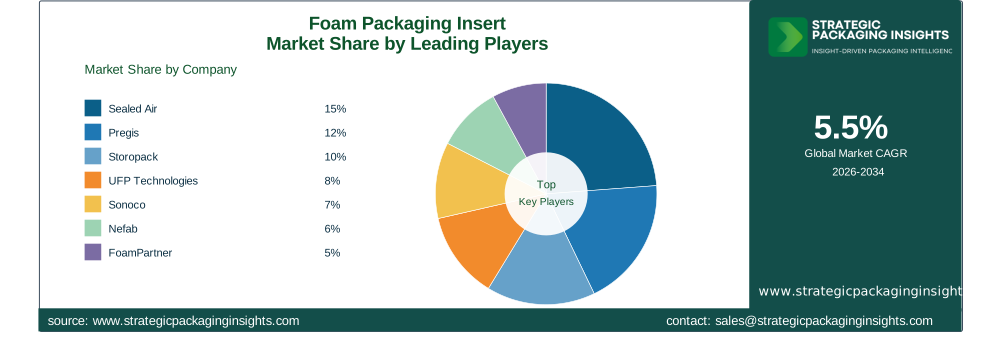
Sealed Air, for instance, is a prominent player in the foam packaging insert market, known for its commitment to sustainability and innovation. The company offers a wide range of foam packaging solutions that cater to various industries, including electronics, healthcare, and automotive. Pregis, another key player, is recognized for its advanced foam technologies and customized packaging solutions. The company's focus on customer-centric solutions and its ability to provide tailored packaging options have helped it secure a significant share of the market.
Storopack is another major player in the foam packaging insert market, known for its innovative and sustainable packaging solutions. The company offers a comprehensive range of foam inserts that provide superior protection for a wide range of products. Storopack's commitment to sustainability and its focus on developing eco-friendly packaging solutions have helped it maintain a strong market position. UFP Technologies, Sonoco, and Nefab are also key players in the market, known for their expertise in foam technology and their ability to provide customized packaging solutions that meet the specific needs of their clients.
FoamPartner and Smurfit Kappa are also notable players in the foam packaging insert market, recognized for their innovative packaging solutions and strong market presence. These companies have established themselves as leaders in the industry by continuously investing in research and development to enhance their product offerings and meet the evolving needs of their customers. Their focus on sustainability and eco-friendly packaging solutions has also helped them maintain a competitive edge in the market. Rogers Foam and Ranpak are also key players in the market, known for their expertise in foam technology and their ability to provide customized packaging solutions that meet the specific needs of their clients.
Key Highlights
- The Foam Packaging Insert market is projected to grow from USD 693.46 million in 2025 to USD 1.12 billion by 2034, at a CAGR of 5.5%.
- Key players in the market include Sealed Air, Pregis, Storopack, UFP Technologies, and Sonoco.
- The market is driven by the increasing demand for protective packaging solutions in the electronics and healthcare industries.
- Customization of foam packaging inserts to meet specific industry needs is a significant trend in the market.
- The rise of e-commerce is fueling the demand for efficient packaging solutions, driving market growth.
- Environmental concerns are prompting manufacturers to develop eco-friendly foam inserts.
- Volatility in raw material prices poses a challenge to market stability and profitability.
- Government regulations promoting the use of recyclable materials are encouraging innovation in the market.
- Competition from alternative packaging materials is challenging foam packaging manufacturers to innovate.
Foam Packaging Insert Market Segments Insights

Foam Type Analysis
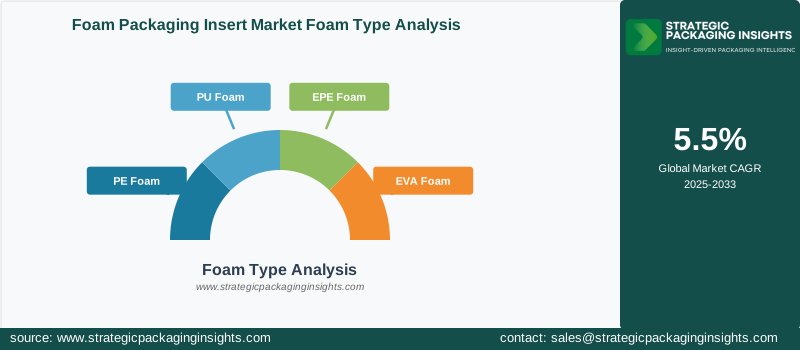
The Foam Packaging Insert market is segmented by foam type, including PE Foam, PU Foam, EPE Foam, and EVA Foam. Each type of foam offers unique properties that cater to different packaging needs. PE Foam is widely used due to its excellent cushioning properties and cost-effectiveness, making it a popular choice for packaging electronics and industrial parts. PU Foam, known for its flexibility and durability, is favored in applications requiring high resilience and impact resistance. EPE Foam, with its lightweight and shock-absorbing characteristics, is ideal for packaging delicate items such as medical devices and luxury goods. EVA Foam, known for its softness and elasticity, is often used in custom-molded inserts for specialized applications.
The demand for different foam types is influenced by factors such as cost, performance, and environmental impact. As sustainability becomes a key consideration for consumers and businesses, there is a growing preference for eco-friendly foam options. Manufacturers are responding to this trend by developing biodegradable and recyclable foam materials that offer the same level of protection as traditional foams. Companies like Sealed Air and Pregis are leading the way in this area, investing in research and development to create innovative foam solutions that meet the evolving needs of their customers.
Product Type Analysis
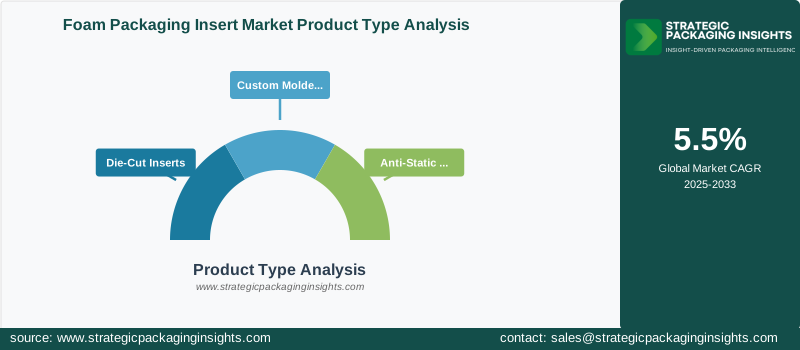
The Foam Packaging Insert market is also segmented by product type, including Die-Cut Inserts, Custom Molded Inserts, and Anti-Static Inserts. Die-Cut Inserts are widely used due to their versatility and ability to provide precise protection for a wide range of products. These inserts are often used in the electronics and healthcare industries, where precision and reliability are critical. Custom Molded Inserts, on the other hand, offer tailored protection for specific products, making them ideal for applications requiring specialized packaging solutions. Anti-Static Inserts are designed to protect sensitive electronic components from static electricity, making them essential in the electronics industry.
The demand for different product types is driven by factors such as industry requirements, product specifications, and customer preferences. As industries become more specialized, there is a growing need for customized packaging solutions that cater to specific needs. Manufacturers are responding to this demand by offering a wide range of product options that provide tailored protection for different applications. Companies like Storopack and UFP Technologies are at the forefront of this trend, developing innovative packaging solutions that meet the unique requirements of their clients.
Application Analysis
The Foam Packaging Insert market is segmented by application, including Electronics, Medical Devices, Luxury Goods, and Industrial Parts. Each application segment has unique packaging requirements that drive the demand for specific foam solutions. The electronics industry, for instance, requires packaging that provides superior protection against impact and vibration, making foam inserts an ideal choice. The medical devices industry, on the other hand, requires packaging that ensures the safe transport of delicate equipment, driving the demand for lightweight and shock-absorbing foam solutions.
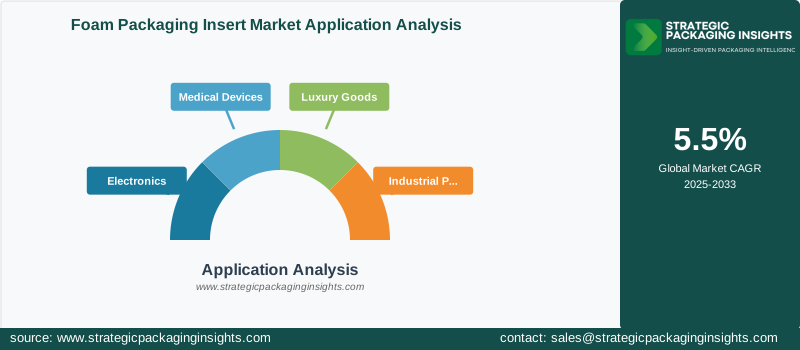
The demand for foam packaging inserts in different application segments is influenced by factors such as industry growth, technological advancements, and consumer preferences. As industries continue to evolve, there is a growing need for packaging solutions that offer enhanced protection and reliability. Manufacturers are responding to this demand by developing innovative foam solutions that cater to the specific needs of different applications. Companies like Sonoco and Rogers Foam are leading the way in this area, offering a wide range of foam packaging solutions that meet the unique requirements of their clients.
End Use Analysis
The Foam Packaging Insert market is segmented by end use, including Electronics, Healthcare, Retail, and Automotive. Each end-use segment has unique packaging requirements that drive the demand for specific foam solutions. The electronics industry, for instance, requires packaging that provides superior protection against impact and vibration, making foam inserts an ideal choice. The healthcare industry, on the other hand, requires packaging that ensures the safe transport of delicate equipment, driving the demand for lightweight and shock-absorbing foam solutions.
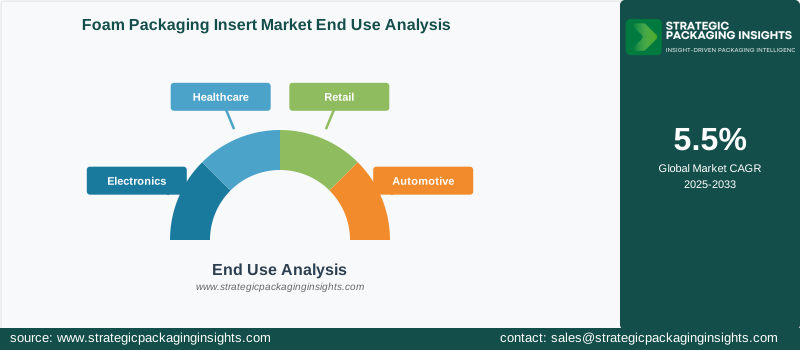
The demand for foam packaging inserts in different end-use segments is influenced by factors such as industry growth, technological advancements, and consumer preferences. As industries continue to evolve, there is a growing need for packaging solutions that offer enhanced protection and reliability. Manufacturers are responding to this demand by developing innovative foam solutions that cater to the specific needs of different end-use segments. Companies like Nefab and FoamPartner are leading the way in this area, offering a wide range of foam packaging solutions that meet the unique requirements of their clients.
Foam Packaging Insert Market Segments
The Foam Packaging Insert market has been segmented on the basis ofFoam Type
- PE Foam
- PU Foam
- EPE Foam
- EVA Foam
Product Type
- Die-Cut Inserts
- Custom Molded Inserts
- Anti-Static Inserts
Application
- Electronics
- Medical Devices
- Luxury Goods
- Industrial Parts
End Use
- Electronics
- Healthcare
- Retail
- Automotive
Region
- Asia Pacific
- North America
- Latin America
- Europe
- Middle East & Africa




