


Foam-Free Pad Formers Market Outlook
The Foam-Free Pad Formers market was valued at $360.45 million in 2025 and is projected to reach $702.73 million by 2034, growing at a CAGR of 7.7% during the forecast period 2026-2034. This market is witnessing significant growth due to the increasing demand for sustainable and eco-friendly packaging solutions. As industries shift towards reducing their carbon footprint, foam-free pad formers offer an attractive alternative to traditional foam packaging. The market is driven by the rising e-commerce sector, which requires efficient and protective packaging solutions to ensure safe delivery of goods. Additionally, the foodservice industry is increasingly adopting foam-free pad formers for food inserts, further propelling market growth.
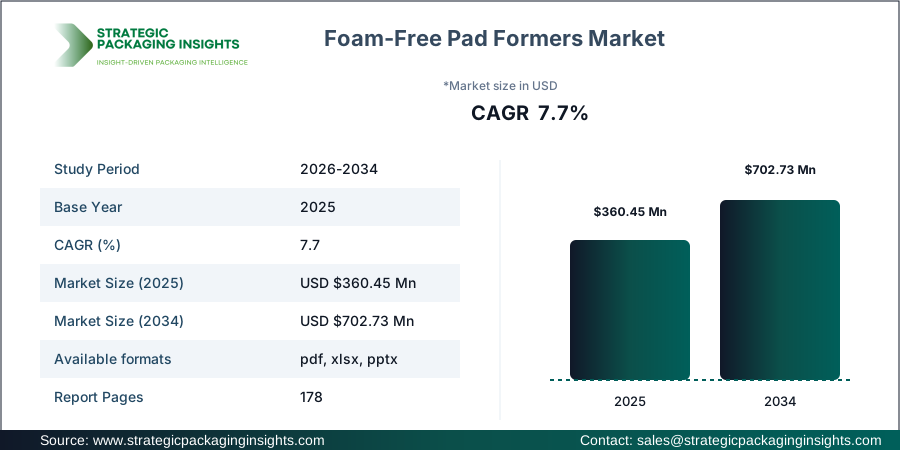
Report Scope
| Attributes | Details |
| Report Title | Foam-Free Pad Formers Market Size, Future Growth and Forecast 2034 |
| By Machine Type | paper pad formers, molded fiber pad formers, corrugated insert formers |
| By Application | protective packaging, food inserts, e-commerce cushioning |
| By Material Type | paper, molded fiber, corrugated board |
| By End Use | logistics, foodservice, electronics, retailers |
| Region | Asia Pacific, North America, Latin America, Europe, Middle East & Africa |
| Base Year | 2025 |
| Historic Period | 2018-2024 |
| Forecast Period | 2026-2034 |
| Number of Pages | 178 |
| Customization Available | Yes* |
Opportunities & Threats
The Foam-Free Pad Formers market presents numerous opportunities, particularly in the realm of sustainability. As environmental regulations become more stringent, companies are compelled to adopt greener packaging solutions. Foam-free pad formers, being biodegradable and recyclable, align perfectly with these regulatory requirements, offering a competitive edge to businesses that prioritize sustainability. Moreover, the growing awareness among consumers about the environmental impact of packaging materials is driving demand for eco-friendly alternatives, creating a fertile ground for market expansion. The increasing penetration of e-commerce globally also presents a significant opportunity, as online retailers seek cost-effective and sustainable packaging solutions to enhance customer satisfaction and reduce shipping costs.
Another opportunity lies in technological advancements in manufacturing processes. Innovations in material science and production techniques are enabling the development of more efficient and cost-effective foam-free pad formers. These advancements not only improve the quality and performance of the products but also reduce production costs, making them more accessible to a broader range of industries. Furthermore, the customization capabilities of foam-free pad formers allow businesses to tailor packaging solutions to specific product requirements, enhancing their appeal across various sectors such as electronics, logistics, and foodservice.
However, the market faces certain restraints that could hinder its growth. One of the primary challenges is the higher initial cost associated with foam-free pad formers compared to traditional foam packaging. While the long-term benefits of sustainability and regulatory compliance are clear, the upfront investment may deter some businesses, particularly small and medium enterprises, from adopting these solutions. Additionally, the availability of raw materials for producing foam-free pad formers can be inconsistent, leading to supply chain disruptions and potential price fluctuations. These factors could pose challenges to market growth, necessitating strategic planning and risk management by industry players.
Drivers & Challenges
The Foam-Free Pad Formers market is primarily driven by the increasing demand for sustainable packaging solutions. As consumers and businesses become more environmentally conscious, there is a growing preference for packaging materials that are biodegradable and recyclable. Foam-free pad formers meet these criteria, making them an attractive choice for companies looking to enhance their sustainability credentials. Additionally, the rise of e-commerce has significantly boosted the demand for protective packaging solutions that can ensure the safe delivery of goods. Foam-free pad formers provide excellent cushioning and protection, making them ideal for use in the e-commerce sector.
Another key driver is the regulatory landscape, which is increasingly favoring sustainable packaging solutions. Governments around the world are implementing stricter regulations on the use of non-biodegradable materials, prompting businesses to seek alternatives that comply with these regulations. Foam-free pad formers, being eco-friendly, align with these regulatory requirements, providing a competitive advantage to companies that adopt them. Furthermore, advancements in manufacturing technologies are enabling the production of high-quality foam-free pad formers at competitive prices, further driving market growth.
Despite these drivers, the market faces several challenges that could impede its growth. One of the main challenges is the competition from traditional foam packaging solutions, which are often cheaper and more readily available. While foam-free pad formers offer numerous environmental benefits, their higher cost can be a barrier to adoption, particularly for cost-sensitive industries. Additionally, the market is still in its nascent stages, and there is a lack of awareness among some businesses about the benefits of foam-free pad formers. This lack of awareness can hinder market penetration and growth, necessitating increased marketing and educational efforts by industry players.
Market Share Analysis
The Foam-Free Pad Formers market is characterized by a competitive landscape with several key players vying for market share. Companies such as Ranpak, Sealed Air, Pregis, Storopack, and PaperFoam are leading the charge in this market, leveraging their expertise and innovation capabilities to offer high-quality foam-free pad formers. These companies are focusing on expanding their product portfolios and enhancing their manufacturing capabilities to meet the growing demand for sustainable packaging solutions. Additionally, strategic partnerships and collaborations are common in this market, as companies seek to strengthen their market position and expand their reach.
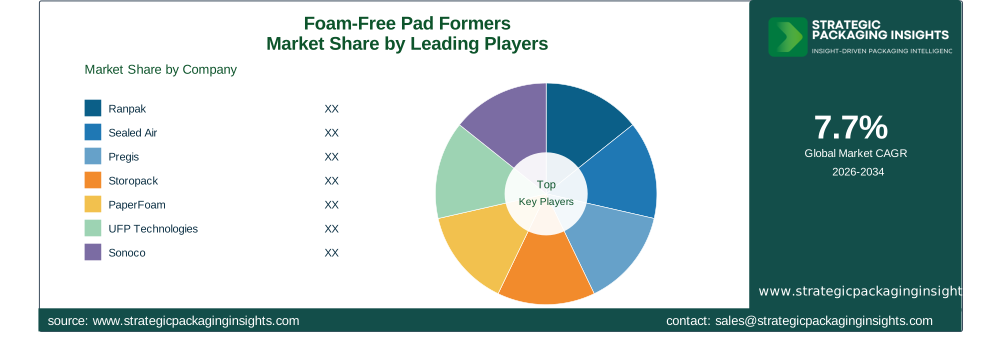
Ranpak is a prominent player in the Foam-Free Pad Formers market, known for its innovative packaging solutions that prioritize sustainability. The company has a strong focus on research and development, enabling it to offer cutting-edge products that meet the evolving needs of its customers. Sealed Air, another key player, is renowned for its commitment to sustainability and innovation. The company offers a wide range of foam-free pad formers that cater to various industries, including e-commerce, foodservice, and logistics. Pregis is also a significant player in the market, known for its high-quality protective packaging solutions that emphasize environmental responsibility.
Storopack is a leading provider of foam-free pad formers, offering a diverse range of products that cater to different packaging needs. The company is committed to sustainability and continuously invests in research and development to enhance its product offerings. PaperFoam, a pioneer in sustainable packaging solutions, is known for its innovative approach to foam-free pad formers. The company focuses on creating eco-friendly products that are both functional and aesthetically pleasing. UFP Technologies is another key player in the market, offering a wide range of foam-free pad formers that cater to various industries, including electronics, foodservice, and logistics.
Other notable companies in the Foam-Free Pad Formers market include Sonoco, Huhtamaki, DS Smith, and Smurfit Kappa. These companies are leveraging their extensive industry experience and global presence to capture a significant share of the market. They are focusing on expanding their product portfolios and enhancing their manufacturing capabilities to meet the growing demand for sustainable packaging solutions. Additionally, these companies are actively engaging in strategic partnerships and collaborations to strengthen their market position and expand their reach.
Key Highlights
- The Foam-Free Pad Formers market is projected to grow at a CAGR of 7.7% from 2026 to 2034.
- Increasing demand for sustainable packaging solutions is a major driver of market growth.
- The e-commerce sector is a significant contributor to the demand for foam-free pad formers.
- Technological advancements in manufacturing processes are enhancing product quality and reducing costs.
- Regulatory support for eco-friendly packaging solutions is boosting market growth.
- Key players in the market include Ranpak, Sealed Air, Pregis, and Storopack.
- Strategic partnerships and collaborations are common in the market to expand reach and strengthen market position.
- Customization capabilities of foam-free pad formers enhance their appeal across various industries.
- Higher initial costs compared to traditional foam packaging pose a challenge to market growth.
Top Countries Insights
In the Foam-Free Pad Formers market, the United States stands out as a leading country, with a market size of approximately $150 million and a CAGR of 8%. The country's strong focus on sustainability and environmental regulations drives the demand for eco-friendly packaging solutions. The e-commerce boom further fuels the market, as online retailers seek efficient and sustainable packaging options. However, challenges such as higher costs compared to traditional packaging solutions persist, necessitating strategic planning by industry players.
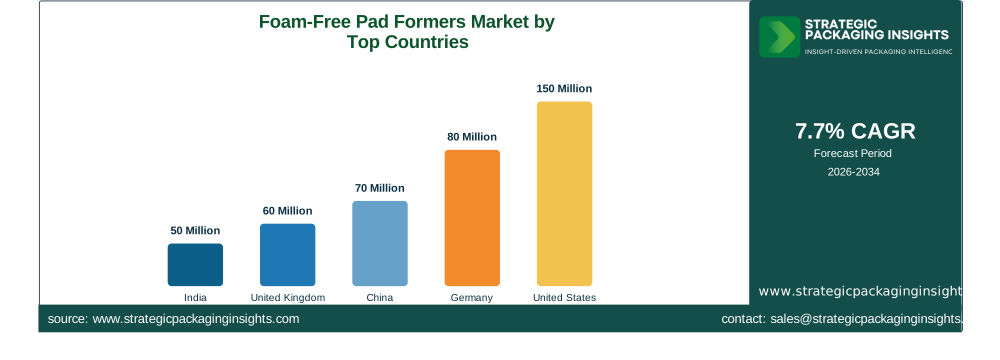
Germany is another key player in the Foam-Free Pad Formers market, with a market size of around $80 million and a CAGR of 7%. The country's stringent environmental regulations and strong emphasis on sustainability drive the demand for foam-free pad formers. The automotive and electronics industries, in particular, are significant contributors to market growth, as they seek sustainable packaging solutions to reduce their carbon footprint. However, the market faces challenges such as competition from traditional packaging solutions and the need for increased awareness among businesses.
China, with a market size of approximately $70 million and a CAGR of 9%, is a rapidly growing market for foam-free pad formers. The country's booming e-commerce sector and increasing focus on sustainability drive the demand for eco-friendly packaging solutions. However, challenges such as supply chain disruptions and price fluctuations of raw materials persist, necessitating strategic planning by industry players. Additionally, the market faces competition from traditional packaging solutions, which are often cheaper and more readily available.
In the United Kingdom, the Foam-Free Pad Formers market is valued at around $60 million, with a CAGR of 6%. The country's strong focus on sustainability and environmental regulations drives the demand for eco-friendly packaging solutions. The foodservice and logistics industries are significant contributors to market growth, as they seek sustainable packaging options to enhance their sustainability credentials. However, challenges such as higher costs compared to traditional packaging solutions and the need for increased awareness among businesses persist.
India, with a market size of approximately $50 million and a CAGR of 10%, is a rapidly growing market for foam-free pad formers. The country's increasing focus on sustainability and the booming e-commerce sector drive the demand for eco-friendly packaging solutions. However, challenges such as supply chain disruptions and price fluctuations of raw materials persist, necessitating strategic planning by industry players. Additionally, the market faces competition from traditional packaging solutions, which are often cheaper and more readily available.
Foam-Free Pad Formers Market Segments Insights

Machine Type Analysis
The Foam-Free Pad Formers market is segmented by machine type into paper pad formers, molded fiber pad formers, and corrugated insert formers. Paper pad formers are gaining traction due to their cost-effectiveness and ease of use. They are widely used in protective packaging applications, providing excellent cushioning and protection for a variety of products. Molded fiber pad formers, on the other hand, are favored for their sustainability and biodegradability. They are increasingly used in food inserts and e-commerce cushioning, as they offer superior protection and are environmentally friendly. Corrugated insert formers are also gaining popularity, particularly in the logistics and electronics industries, where they provide robust protection for fragile items.
The demand for these machine types is driven by the increasing need for sustainable packaging solutions across various industries. As businesses seek to reduce their environmental impact, foam-free pad formers offer an attractive alternative to traditional foam packaging. Additionally, advancements in manufacturing technologies are enabling the production of high-quality foam-free pad formers at competitive prices, further driving market growth. However, the market faces challenges such as competition from traditional packaging solutions and the need for increased awareness among businesses about the benefits of foam-free pad formers.
Application Analysis
The Foam-Free Pad Formers market is segmented by application into protective packaging, food inserts, and e-commerce cushioning. Protective packaging is the largest application segment, driven by the increasing demand for sustainable and efficient packaging solutions in the logistics and electronics industries. Foam-free pad formers provide excellent cushioning and protection, making them ideal for use in these industries. The food inserts segment is also growing rapidly, as the foodservice industry seeks eco-friendly packaging solutions to enhance its sustainability credentials. Foam-free pad formers are increasingly used in food inserts, as they are biodegradable and recyclable, aligning with the industry's sustainability goals.
The e-commerce cushioning segment is another significant contributor to market growth, driven by the booming e-commerce sector. As online retailers seek cost-effective and sustainable packaging solutions, foam-free pad formers offer an attractive alternative to traditional foam packaging. They provide excellent protection for a wide range of products, ensuring safe delivery to customers. However, the market faces challenges such as higher costs compared to traditional packaging solutions and the need for increased awareness among businesses about the benefits of foam-free pad formers.
Material Type Analysis
The Foam-Free Pad Formers market is segmented by material type into paper, molded fiber, and corrugated board. Paper is the most widely used material, favored for its cost-effectiveness and ease of use. It is widely used in protective packaging applications, providing excellent cushioning and protection for a variety of products. Molded fiber is gaining popularity due to its sustainability and biodegradability. It is increasingly used in food inserts and e-commerce cushioning, as it offers superior protection and is environmentally friendly. Corrugated board is also gaining traction, particularly in the logistics and electronics industries, where it provides robust protection for fragile items.
The demand for these materials is driven by the increasing need for sustainable packaging solutions across various industries. As businesses seek to reduce their environmental impact, foam-free pad formers offer an attractive alternative to traditional foam packaging. Additionally, advancements in material science are enabling the development of more efficient and cost-effective foam-free pad formers, further driving market growth. However, the market faces challenges such as competition from traditional packaging solutions and the need for increased awareness among businesses about the benefits of foam-free pad formers.
End Use Analysis
The Foam-Free Pad Formers market is segmented by end use into logistics, foodservice, electronics, and retailers. The logistics industry is the largest end-use segment, driven by the increasing demand for sustainable and efficient packaging solutions. Foam-free pad formers provide excellent cushioning and protection, making them ideal for use in the logistics industry. The foodservice industry is also a significant contributor to market growth, as it seeks eco-friendly packaging solutions to enhance its sustainability credentials. Foam-free pad formers are increasingly used in food inserts, as they are biodegradable and recyclable, aligning with the industry's sustainability goals.
The electronics industry is another significant end-use segment, driven by the need for robust protection for fragile items. Foam-free pad formers provide excellent protection for electronic products, ensuring safe delivery to customers. The retail industry is also adopting foam-free pad formers, as it seeks cost-effective and sustainable packaging solutions to enhance customer satisfaction. However, the market faces challenges such as higher costs compared to traditional packaging solutions and the need for increased awareness among businesses about the benefits of foam-free pad formers.
Foam-Free Pad Formers Market Segments
The Foam-Free Pad Formers market has been segmented on the basis ofBy Machine Type
- paper pad formers
- molded fiber pad formers
- corrugated insert formers
By Application
- protective packaging
- food inserts
- e-commerce cushioning
By Material Type
- paper
- molded fiber
- corrugated board
By End Use
- logistics
- foodservice
- electronics
- retailers
Region
- Asia Pacific
- North America
- Latin America
- Europe
- Middle East & Africa




