


Foam Cooler Box Market Outlook
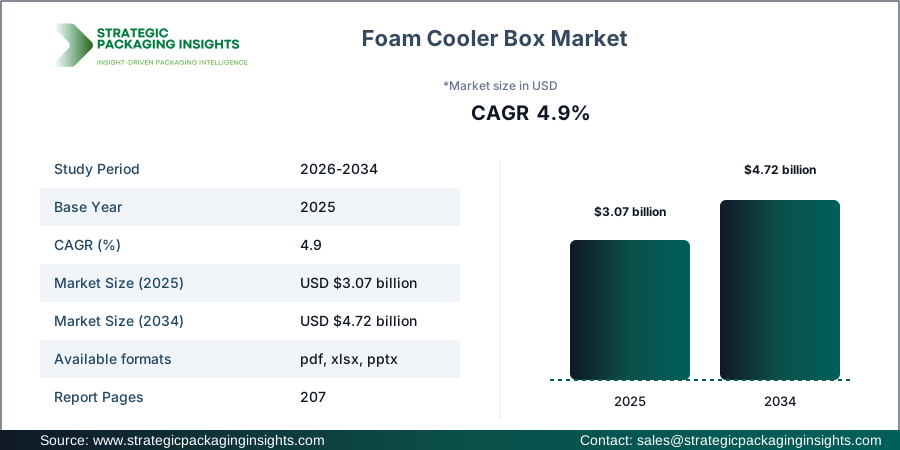
The Foam Cooler Box market was valued at $3.07 billion in 2025 and is projected to reach $4.72 billion by 2034, growing at a CAGR of 4.9% during the forecast period 2026-2034. This market is experiencing significant growth due to the increasing demand for temperature-sensitive packaging solutions across various industries. The rise in e-commerce and online food delivery services has further fueled the demand for foam cooler boxes, as they provide an effective solution for maintaining the temperature of perishable goods during transit. Additionally, the healthcare sector's reliance on cold chain logistics for the transportation of pharmaceuticals and vaccines is a major driver for the market. The versatility and cost-effectiveness of foam cooler boxes make them a preferred choice for businesses looking to optimize their supply chain operations.
However, the market faces challenges such as environmental concerns related to the disposal of foam materials, which are not biodegradable. Regulatory restrictions on the use of certain foam materials in packaging due to their environmental impact are also a significant restraint. Despite these challenges, the market holds substantial growth potential, driven by innovations in eco-friendly foam materials and the development of reusable cooler boxes. Companies are investing in research and development to create sustainable alternatives that meet regulatory standards while maintaining the performance characteristics of traditional foam cooler boxes. This focus on sustainability is expected to open new avenues for growth in the coming years.
Report Scope
| Attributes | Details |
| Report Title | Foam Cooler Box Market Size, Future Growth and Forecast 2034 |
| By Product Type | EPS Cooler Boxes, EPP Cooler Boxes, Insulated Foam Boxes |
| By Application | Seafood, Pharma, Food Delivery, Cold Chain |
| By End Use | Food & Beverage, Healthcare, Logistics, Retail |
| Region | Asia Pacific, North America, Latin America, Europe, Middle East & Africa |
| Base Year | 2025 |
| Historic Period | 2018-2024 |
| Forecast Period | 2026-2034 |
| Number of Pages | 207 |
| Customization Available | Yes* |
Opportunities & Threats
The Foam Cooler Box market presents numerous opportunities, particularly in the realm of sustainable packaging solutions. As environmental concerns continue to rise, there is a growing demand for eco-friendly alternatives to traditional foam materials. Companies that can innovate and offer biodegradable or recyclable foam cooler boxes stand to gain a competitive edge. Additionally, the expansion of the cold chain logistics sector, driven by the increasing need for temperature-controlled transportation of pharmaceuticals and food products, offers significant growth potential. The rise of e-commerce and online food delivery services also presents opportunities for market expansion, as these sectors require reliable packaging solutions to maintain product quality during transit.
Another opportunity lies in the development of reusable foam cooler boxes. As businesses and consumers become more environmentally conscious, there is a shift towards reusable packaging solutions that reduce waste and offer long-term cost savings. Companies that can develop durable and efficient reusable foam cooler boxes will likely see increased demand from both commercial and individual consumers. Furthermore, advancements in foam technology, such as improved insulation properties and lightweight designs, can enhance the performance of cooler boxes, making them more attractive to a wider range of industries.
On the other hand, the market faces threats from regulatory restrictions on the use of certain foam materials due to their environmental impact. Governments and regulatory bodies are increasingly imposing bans or limitations on non-biodegradable foam products, which could hinder market growth. Additionally, the availability of alternative packaging solutions, such as vacuum-insulated panels and phase change materials, poses a threat to the traditional foam cooler box market. These alternatives offer superior insulation properties and are often perceived as more environmentally friendly, which could lead to a shift in consumer preference away from foam cooler boxes.
Drivers & Challenges
One of the primary drivers of the Foam Cooler Box market is the increasing demand for temperature-sensitive packaging solutions across various industries. The rise in e-commerce and online food delivery services has significantly contributed to this demand, as these sectors require reliable packaging solutions to maintain the temperature of perishable goods during transit. Additionally, the healthcare sector's reliance on cold chain logistics for the transportation of pharmaceuticals and vaccines is a major driver for the market. The versatility and cost-effectiveness of foam cooler boxes make them a preferred choice for businesses looking to optimize their supply chain operations.
Another key driver is the growing awareness of the importance of maintaining product quality and safety during transportation. Foam cooler boxes provide an effective solution for preserving the integrity of temperature-sensitive products, ensuring that they reach their destination in optimal condition. This is particularly important in the food and beverage industry, where maintaining the freshness and quality of products is crucial. The increasing focus on food safety regulations and standards is also driving the demand for foam cooler boxes, as they offer a reliable means of complying with these requirements.
Despite these drivers, the market faces several challenges. Environmental concerns related to the disposal of foam materials, which are not biodegradable, pose a significant challenge. Regulatory restrictions on the use of certain foam materials in packaging due to their environmental impact are also a major restraint. Additionally, the availability of alternative packaging solutions, such as vacuum-insulated panels and phase change materials, poses a threat to the traditional foam cooler box market. These alternatives offer superior insulation properties and are often perceived as more environmentally friendly, which could lead to a shift in consumer preference away from foam cooler boxes.
Market Share Analysis
The Foam Cooler Box market is characterized by a competitive landscape with several key players vying for market share. Companies such as Sonoco ThermoSafe, Cold Chain Technologies, and Styropack are prominent players in the market, known for their innovative solutions and extensive product portfolios. Sonoco ThermoSafe, for instance, is a leader in temperature assurance packaging, offering a wide range of foam cooler boxes designed for various applications. Cold Chain Technologies is another major player, specializing in the development of advanced thermal packaging solutions for the healthcare and food industries.
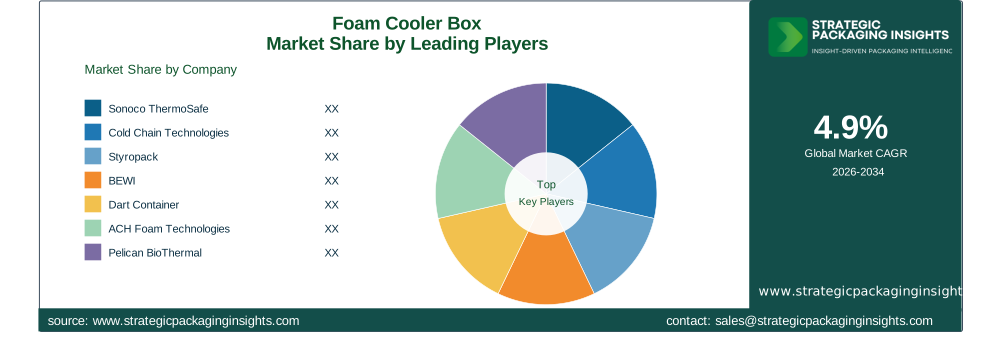
Styropack, a leading manufacturer of expanded polystyrene (EPS) products, holds a significant share of the market, offering a variety of foam cooler boxes for different end-use applications. BEWI, a European company, is also a key player, known for its sustainable packaging solutions and commitment to environmental responsibility. Dart Container, a global leader in the production of foam products, has a strong presence in the market, offering a range of foam cooler boxes for the food and beverage industry.
ACH Foam Technologies, Pelican BioThermal, and Cryopak are other notable companies in the market, each with a unique focus on specific applications and industries. ACH Foam Technologies is known for its high-performance foam products, while Pelican BioThermal specializes in temperature-controlled packaging solutions for the pharmaceutical and biotech industries. Cryopak, a subsidiary of TCP Reliable, offers a range of thermal packaging solutions, including foam cooler boxes, for various industries.
Softbox Systems and Intelsius are also key players in the market, known for their innovative packaging solutions and commitment to sustainability. Softbox Systems offers a range of reusable and recyclable foam cooler boxes, while Intelsius focuses on the development of environmentally friendly packaging solutions for the healthcare and life sciences industries. These companies, along with others in the market, are continuously investing in research and development to create innovative and sustainable packaging solutions that meet the evolving needs of their customers.
Key Highlights
- The Foam Cooler Box market is projected to grow from $3.07 billion in 2025 to $4.72 billion by 2034, at a CAGR of 4.9%.
- Increasing demand for temperature-sensitive packaging solutions is a major driver of market growth.
- Environmental concerns and regulatory restrictions pose significant challenges to the market.
- Innovations in eco-friendly foam materials and reusable cooler boxes offer growth opportunities.
- The rise of e-commerce and online food delivery services is fueling demand for foam cooler boxes.
- Key players in the market include Sonoco ThermoSafe, Cold Chain Technologies, and Styropack.
- Advancements in foam technology are enhancing the performance of cooler boxes.
- The healthcare sector's reliance on cold chain logistics is a major driver for the market.
- Alternative packaging solutions pose a threat to the traditional foam cooler box market.
Top Countries Insights
In the Foam Cooler Box market, the United States holds a significant share, driven by the robust demand from the healthcare and food delivery sectors. The market in the U.S. is valued at approximately $1.2 billion, with a CAGR of 5%. The country's well-established cold chain infrastructure and the increasing adoption of online food delivery services are key growth drivers. However, regulatory challenges related to environmental concerns pose a potential hurdle for market expansion.
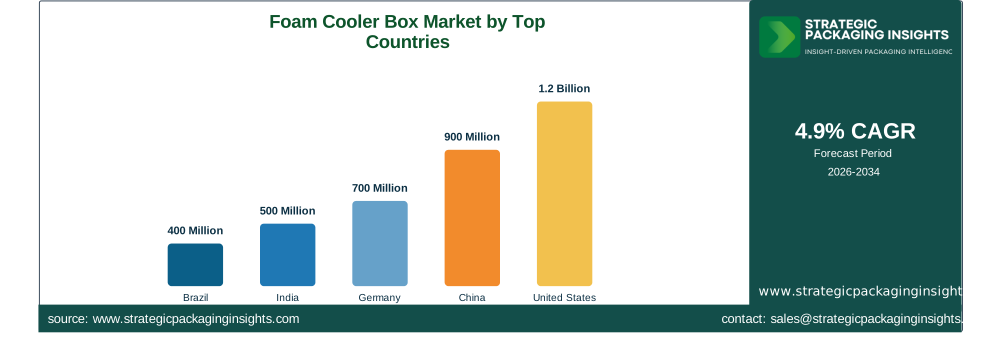
China is another major player in the Foam Cooler Box market, with a market size of around $900 million and a CAGR of 6%. The rapid growth of the e-commerce sector and the increasing demand for temperature-sensitive packaging solutions in the pharmaceutical industry are driving market growth. The Chinese government's focus on improving cold chain logistics infrastructure is also contributing to market expansion.
Germany, with a market size of $700 million and a CAGR of 4%, is a key market in Europe. The country's strong emphasis on sustainability and environmental responsibility is driving the demand for eco-friendly foam cooler boxes. The presence of major pharmaceutical companies and the growing need for temperature-controlled packaging solutions are also contributing to market growth.
India, with a market size of $500 million and a CAGR of 7%, is experiencing rapid growth in the Foam Cooler Box market. The increasing demand for cold chain logistics solutions in the food and pharmaceutical industries is a major growth driver. The Indian government's initiatives to improve cold chain infrastructure and promote sustainable packaging solutions are also contributing to market expansion.
Brazil, with a market size of $400 million and a CAGR of 5%, is a key market in Latin America. The country's growing food and beverage industry and the increasing demand for temperature-sensitive packaging solutions are driving market growth. However, economic challenges and regulatory restrictions related to environmental concerns pose potential hurdles for market expansion.
Foam Cooler Box Market Segments Insights

Product Type Analysis
The Foam Cooler Box market is segmented by product type into EPS Cooler Boxes, EPP Cooler Boxes, and Insulated Foam Boxes. EPS Cooler Boxes are the most widely used due to their excellent insulation properties and cost-effectiveness. They are particularly popular in the food and beverage industry, where maintaining the temperature of perishable goods is crucial. However, environmental concerns related to the disposal of EPS materials are driving the demand for alternative solutions. EPP Cooler Boxes, known for their durability and recyclability, are gaining traction as a more sustainable option. Insulated Foam Boxes, with their superior insulation properties, are preferred in the healthcare and pharmaceutical industries, where maintaining precise temperature control is essential.
The demand for EPP Cooler Boxes is expected to grow significantly during the forecast period, driven by the increasing focus on sustainability and environmental responsibility. Companies are investing in research and development to create innovative EPP solutions that offer the same performance characteristics as traditional EPS boxes while being more environmentally friendly. Insulated Foam Boxes are also expected to see strong growth, particularly in the healthcare sector, where the need for reliable temperature-controlled packaging solutions is critical. The development of advanced insulation technologies and the increasing adoption of reusable foam cooler boxes are key trends shaping the product type segment.
Application Analysis
The Foam Cooler Box market is segmented by application into Seafood, Pharma, Food Delivery, and Cold Chain. The seafood industry is a major user of foam cooler boxes, as maintaining the freshness and quality of seafood during transportation is crucial. The increasing demand for seafood products and the expansion of the global seafood trade are driving the demand for foam cooler boxes in this segment. The pharmaceutical industry is another key application area, with foam cooler boxes being used extensively for the transportation of temperature-sensitive drugs and vaccines. The growing focus on healthcare and the increasing demand for cold chain logistics solutions are driving market growth in this segment.
The food delivery segment is experiencing rapid growth, driven by the rise of online food delivery services and the increasing demand for convenient and reliable packaging solutions. Foam cooler boxes provide an effective solution for maintaining the temperature of food products during transit, ensuring that they reach consumers in optimal condition. The cold chain segment, which encompasses a wide range of industries, including food and beverage, healthcare, and logistics, is also a major driver of market growth. The increasing focus on food safety and quality, as well as the growing demand for temperature-controlled logistics solutions, are key trends shaping the application segment.
End Use Analysis
The Foam Cooler Box market is segmented by end use into Food & Beverage, Healthcare, Logistics, and Retail. The food and beverage industry is the largest end-use segment, driven by the increasing demand for temperature-sensitive packaging solutions to maintain the quality and freshness of perishable goods. The rise of e-commerce and online food delivery services is also contributing to the growth of this segment. The healthcare industry is another major end-use segment, with foam cooler boxes being used extensively for the transportation of pharmaceuticals and vaccines. The growing focus on healthcare and the increasing demand for cold chain logistics solutions are driving market growth in this segment.
The logistics industry is experiencing significant growth, driven by the increasing demand for temperature-controlled transportation solutions. Foam cooler boxes provide an effective solution for maintaining the temperature of goods during transit, ensuring that they reach their destination in optimal condition. The retail industry is also a key end-use segment, with foam cooler boxes being used for the transportation of temperature-sensitive products, such as food and beverages, pharmaceuticals, and cosmetics. The increasing focus on sustainability and the growing demand for eco-friendly packaging solutions are key trends shaping the end-use segment.
Region Analysis
The Foam Cooler Box market is segmented by region into Asia Pacific, North America, Latin America, Europe, and Middle East & Africa. North America is the largest market, driven by the robust demand from the healthcare and food delivery sectors. The region's well-established cold chain infrastructure and the increasing adoption of online food delivery services are key growth drivers. However, regulatory challenges related to environmental concerns pose a potential hurdle for market expansion. Europe is another major market, with a strong emphasis on sustainability and environmental responsibility driving the demand for eco-friendly foam cooler boxes.
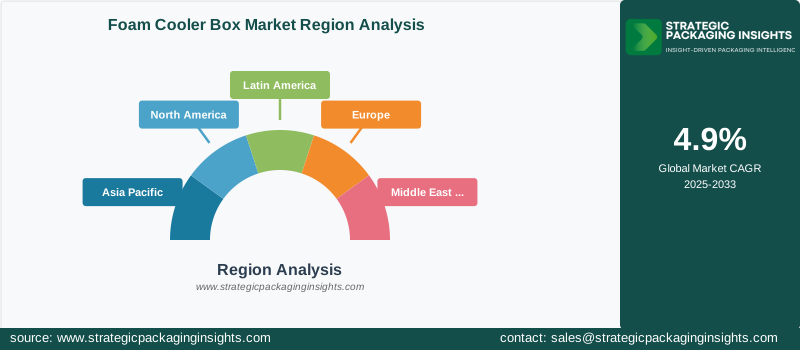
Asia Pacific is experiencing rapid growth, driven by the increasing demand for temperature-sensitive packaging solutions in the pharmaceutical and food industries. The region's growing e-commerce sector and the focus on improving cold chain logistics infrastructure are also contributing to market expansion. Latin America and Middle East & Africa are emerging markets, with significant growth potential driven by the increasing demand for temperature-controlled logistics solutions and the expansion of the food and beverage industry. However, economic challenges and regulatory restrictions related to environmental concerns pose potential hurdles for market expansion in these regions.
Foam Cooler Box Market Segments
The Foam Cooler Box market has been segmented on the basis ofBy Product Type
- EPS Cooler Boxes
- EPP Cooler Boxes
- Insulated Foam Boxes
By Application
- Seafood
- Pharma
- Food Delivery
- Cold Chain
By End Use
- Food & Beverage
- Healthcare
- Logistics
- Retail
Region
- Asia Pacific
- North America
- Latin America
- Europe
- Middle East & Africa




