


Fluorinated Containers Market Outlook
The Fluorinated Containers market size was valued at USD 3.21 billion in 2025 and is anticipated to reach USD 5.46 billion by 2034, growing at a CAGR of 6.1% during the forecast period according to Strategic Packaging Insights. The market is driven by the increasing demand for chemical-resistant packaging solutions across various industries, including chemicals, agriculture, and food ingredients. Companies like Inhance Technologies and Greif are at the forefront of this growth, leveraging advanced fluorination technologies to enhance the barrier properties of containers, thereby extending the shelf life of sensitive products. The rising awareness about the benefits of fluorinated containers, such as their ability to prevent permeation and contamination, is further propelling market demand.
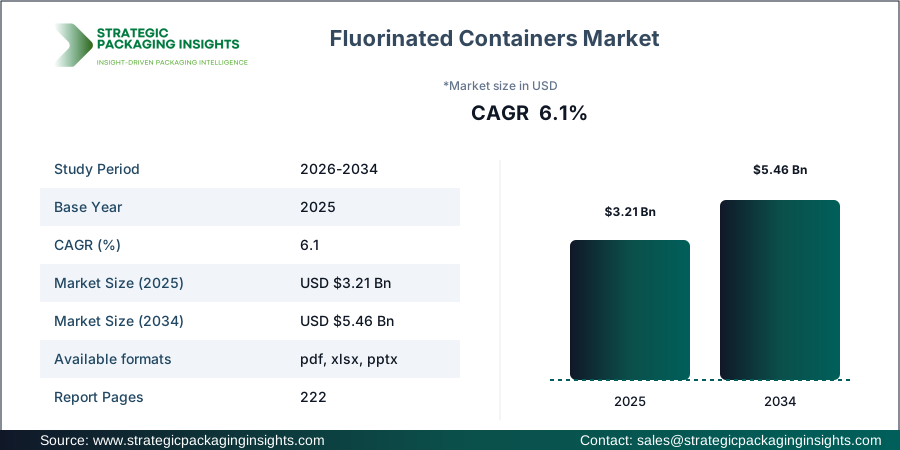
One of the most impactful drivers of the Fluorinated Containers market is the stringent regulatory landscape governing the safe transportation and storage of hazardous materials. According to the U.S. Environmental Protection Agency, regulations mandating the use of high-barrier packaging for volatile organic compounds (VOCs) and other hazardous substances are pushing industries to adopt fluorinated containers. This regulatory push is complemented by the growing emphasis on sustainability, as fluorinated containers are increasingly being designed to be recyclable and reusable, aligning with global environmental goals. Companies like Berry Global and Mauser Packaging Solutions are investing in sustainable packaging innovations, which not only comply with regulations but also cater to the eco-conscious consumer base.
Report Scope
| Attributes | Details |
| Report Title | Fluorinated Containers Market Size, Future Growth and Forecast 2034 |
| By Material Type | Fluorinated HDPE, Fluorinated PP, Barrier-Treated Plastic |
| By Container Type | Bottles, Jerricans, Pails, Drums |
| By Application | Solvents, Agrochemicals, Flavors, Fragrances |
| By End Use | Chemicals, Agriculture, Food Ingredients, Industrial |
| Region | Asia Pacific, North America, Latin America, Europe, Middle East & Africa |
| Base Year | 2025 |
| Historic Period | 2018-2024 |
| Forecast Period | 2026-2034 |
| Number of Pages | 222 |
| Customization Available | Yes* |
Sustainability & Circular Economy Analysis
Sustainability initiatives and circular economy practices are significantly shaping the packaging market, particularly in the realm of fluorinated containers. The integration of recyclable materials and the development of reusable packaging solutions are becoming central to the strategies of leading companies like Schutz and CurTec. These companies are focusing on lightweight packaging innovations that reduce material usage without compromising on performance, thereby minimizing the carbon footprint associated with production and transportation. The adoption of eco-friendly material innovations is not only a response to consumer sustainability preferences but also a strategic move to comply with stringent packaging regulations and extended producer responsibility (EPR) mandates.
The influence of sustainability trends on packaging design and manufacturing is profound. Companies are increasingly investing in research and development to create containers that are not only durable and resistant to chemical permeation but also environmentally friendly. This shift is driving investment decisions and supply chain strategies, as manufacturers seek to source sustainable raw materials and optimize production processes to reduce waste. The focus on waste reduction strategies and ESG initiatives is enhancing the long-term market competitiveness of companies like Fluoro-Seal and Time Technoplast, which are leading the charge in sustainable packaging solutions.
Moreover, the regulatory compliance landscape is evolving, with governments worldwide implementing stricter guidelines to ensure the environmental impact of packaging is minimized. This is prompting packaging manufacturers and brand owners to adopt circular economy practices, such as closed-loop recycling systems and the use of biodegradable materials. The emphasis on reducing the carbon footprint and aligning with global sustainability goals is not only a regulatory requirement but also a market differentiator, as consumers increasingly favor brands that demonstrate a commitment to environmental stewardship. This trend is expected to continue driving innovation and competitiveness in the fluorinated containers market.
Packaging Value Chain & Supply Chain Analysis
The packaging value chain for fluorinated containers is complex, involving multiple stakeholders from raw material suppliers to end-users. Raw material sourcing is a critical component, with companies like Berry Global and Mauser Packaging Solutions relying on high-quality polymers to ensure the durability and chemical resistance of their containers. Packaging converters and manufacturers play a pivotal role in transforming these materials into finished products, utilizing advanced machinery and technologies to enhance the barrier properties of the containers. The efficiency of this process is crucial for maintaining competitive pricing and meeting the growing demand for fluorinated containers across various industries.
Logistics and distribution channels are integral to the supply chain ecosystem, ensuring that fluorinated containers reach their intended markets efficiently and cost-effectively. Companies like Greif and Berlin Packaging have established robust distribution networks that enable them to serve a global customer base, while also focusing on localization strategies to reduce transportation costs and carbon emissions. The availability of raw materials and the capacity of production facilities are key factors influencing supply chain resilience, with strategic partnerships and inventory management playing a vital role in mitigating potential disruptions.
Recycling networks and procurement strategies are becoming increasingly important as companies strive to enhance their sustainability credentials. The integration of recycling initiatives into the supply chain not only supports environmental goals but also provides a competitive edge in a market where consumers and regulators are demanding greater accountability. The collaboration between brand owners, retailers, and recycling networks is facilitating the development of closed-loop systems that promote the reuse and recycling of fluorinated containers. This holistic approach to the supply chain is essential for maintaining market performance and ensuring long-term business competitiveness in the fluorinated containers market.
Opportunities & Threats
The fluorinated containers market presents numerous opportunities for growth, driven by the increasing demand for high-performance packaging solutions in industries such as chemicals, agriculture, and food ingredients. The ability of fluorinated containers to provide superior barrier properties and prevent contamination makes them an attractive option for companies looking to enhance the safety and shelf life of their products. Additionally, the growing emphasis on sustainability and environmental responsibility is creating opportunities for companies to innovate and develop eco-friendly packaging solutions that meet regulatory requirements and consumer expectations. Companies like TricorBraun and CurTec are well-positioned to capitalize on these opportunities by leveraging their expertise in sustainable packaging design and manufacturing.
Another significant opportunity lies in the expansion of the fluorinated containers market in emerging economies, where industrialization and urbanization are driving demand for advanced packaging solutions. The increasing adoption of fluorinated containers in regions such as Asia Pacific and Latin America is expected to fuel market growth, as companies seek to tap into these burgeoning markets. The development of strategic partnerships and collaborations with local manufacturers and distributors can further enhance market penetration and provide a competitive advantage. Companies like Schutz and Time Technoplast are actively exploring these opportunities to expand their global footprint and capture a larger share of the market.
However, the market also faces several threats, including the volatility of raw material prices and the potential for supply chain disruptions. The reliance on specific polymers for the production of fluorinated containers makes the market vulnerable to fluctuations in raw material availability and pricing. Additionally, the increasing regulatory scrutiny on packaging materials and the need to comply with stringent environmental standards pose challenges for companies operating in this space. The ability to navigate these challenges and adapt to changing market conditions will be crucial for maintaining competitiveness and ensuring long-term success in the fluorinated containers market.
Drivers & Challenges
The fluorinated containers market is driven by several key factors, including the growing demand for chemical-resistant packaging solutions and the increasing emphasis on sustainability. The ability of fluorinated containers to provide superior barrier properties and prevent contamination makes them an attractive option for industries such as chemicals, agriculture, and food ingredients. Companies like Inhance Technologies and Greif are leveraging advanced fluorination technologies to enhance the performance of their containers, thereby driving market growth. Additionally, the rising awareness about the benefits of fluorinated containers, such as their ability to extend the shelf life of sensitive products, is further propelling demand.
Another significant driver is the stringent regulatory landscape governing the safe transportation and storage of hazardous materials. Regulations mandating the use of high-barrier packaging for volatile organic compounds (VOCs) and other hazardous substances are pushing industries to adopt fluorinated containers. This regulatory push is complemented by the growing emphasis on sustainability, as fluorinated containers are increasingly being designed to be recyclable and reusable, aligning with global environmental goals. Companies like Berry Global and Mauser Packaging Solutions are investing in sustainable packaging innovations, which not only comply with regulations but also cater to the eco-conscious consumer base.
Despite these drivers, the market faces several challenges, including the volatility of raw material prices and the potential for supply chain disruptions. The reliance on specific polymers for the production of fluorinated containers makes the market vulnerable to fluctuations in raw material availability and pricing. Additionally, the increasing regulatory scrutiny on packaging materials and the need to comply with stringent environmental standards pose challenges for companies operating in this space. The ability to navigate these challenges and adapt to changing market conditions will be crucial for maintaining competitiveness and ensuring long-term success in the fluorinated containers market.
Market Share Analysis
The competitive landscape of the fluorinated containers market is characterized by the presence of several key players, each striving to enhance their market share through innovation and strategic partnerships. Companies like Inhance Technologies and Greif are leading the market with their advanced fluorination technologies and comprehensive product offerings. These companies are focusing on expanding their production capacities and enhancing their distribution networks to cater to the growing demand for fluorinated containers across various industries. The emphasis on sustainability and eco-friendly packaging solutions is also driving competition, as companies seek to differentiate themselves in a crowded market.
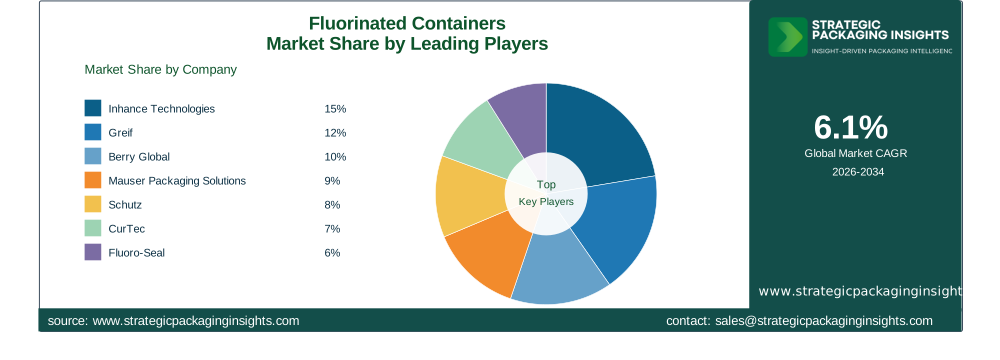
Berry Global and Mauser Packaging Solutions are also prominent players in the fluorinated containers market, leveraging their extensive experience and expertise in packaging design and manufacturing. These companies are investing in research and development to create innovative packaging solutions that meet the evolving needs of their customers. The focus on sustainability and regulatory compliance is a key differentiator for these companies, as they strive to align their product offerings with global environmental goals. The ability to provide high-performance packaging solutions that are both durable and environmentally friendly is a significant competitive advantage in this market.
Other notable players in the market include Schutz, CurTec, and Fluoro-Seal, each of which has carved out a niche in the fluorinated containers market through their unique product offerings and strategic partnerships. These companies are focusing on expanding their global footprint and enhancing their production capabilities to meet the growing demand for fluorinated containers. The emphasis on innovation and sustainability is a common theme among these companies, as they seek to differentiate themselves in a competitive market. The ability to provide customized packaging solutions that meet the specific needs of their customers is a key factor driving their success.
Time Technoplast, Berlin Packaging, and TricorBraun are also key players in the fluorinated containers market, each with a strong focus on innovation and customer satisfaction. These companies are leveraging their extensive distribution networks and strategic partnerships to enhance their market presence and capture a larger share of the market. The emphasis on sustainability and eco-friendly packaging solutions is a key differentiator for these companies, as they strive to meet the evolving needs of their customers and comply with stringent regulatory requirements. The ability to provide high-quality packaging solutions that are both durable and environmentally friendly is a significant competitive advantage in this market.
Key Highlights
- Market Size: The fluorinated containers market was valued at USD 3.21 billion in 2025 and is projected to reach USD 5.46 billion by 2034.
- Growth Rate: The market is expected to grow at a CAGR of 6.1% during the forecast period.
- Leading Companies: Key players include Inhance Technologies, Greif, Berry Global, and Mauser Packaging Solutions.
- Material Type: Fluorinated HDPE, Fluorinated PP, and Barrier-Treated Plastic are the primary materials used.
- Container Types: Bottles, Jerricans, Pails, and Drums are the main container types.
- Regional Growth: Asia Pacific is expected to witness significant growth due to industrialization and urbanization.
- Sustainability Focus: Companies are investing in eco-friendly packaging solutions to meet regulatory requirements and consumer expectations.
Fluorinated Containers Market Segments Insights

By Material Type Analysis
The fluorinated containers market is segmented by material type into Fluorinated HDPE, Fluorinated PP, and Barrier-Treated Plastic. Fluorinated HDPE is the most widely used material due to its excellent chemical resistance and durability, making it ideal for packaging hazardous substances. Companies like Inhance Technologies and Greif are leveraging advanced fluorination technologies to enhance the barrier properties of HDPE containers, thereby extending the shelf life of sensitive products. The demand for Fluorinated PP is also growing, driven by its lightweight and recyclable nature, which aligns with the increasing emphasis on sustainability and environmental responsibility.
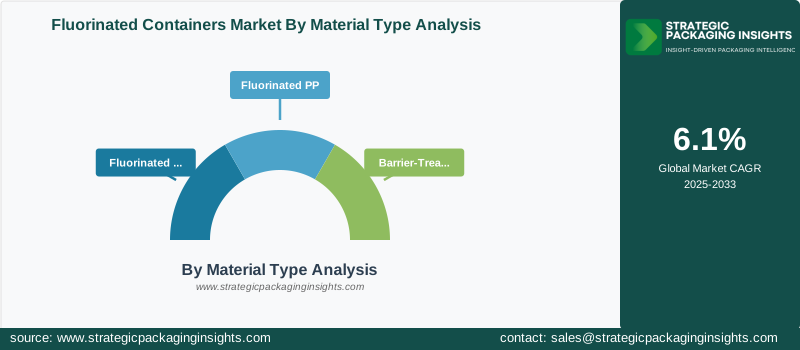
Barrier-Treated Plastic is gaining traction in the market due to its ability to provide superior protection against permeation and contamination. This material is particularly popular in the packaging of volatile organic compounds (VOCs) and other hazardous substances, where high-barrier properties are essential. Companies like Berry Global and Mauser Packaging Solutions are investing in research and development to create innovative barrier-treated plastic solutions that meet the evolving needs of their customers. The focus on sustainability and regulatory compliance is a key driver of growth in this segment, as companies seek to align their product offerings with global environmental goals.
By Container Type Analysis
The fluorinated containers market is segmented by container type into Bottles, Jerricans, Pails, and Drums. Bottles are the most commonly used container type, accounting for a significant share of the market due to their versatility and ease of use. Companies like Schutz and CurTec are focusing on enhancing the design and functionality of their bottles to meet the specific needs of their customers. The demand for Jerricans is also growing, driven by their ability to provide superior protection against contamination and leakage, making them ideal for packaging hazardous substances.
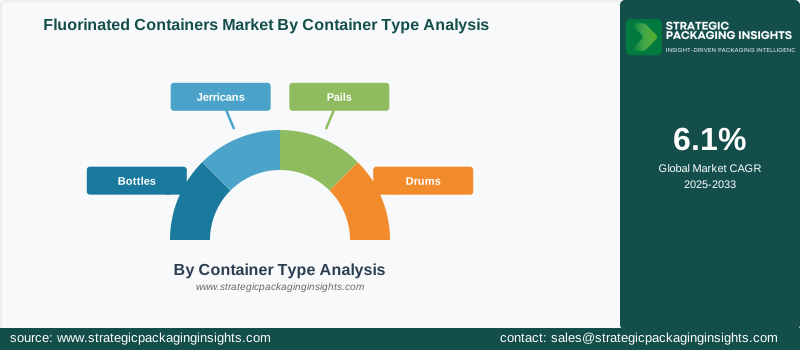
Pails and Drums are gaining popularity in the market due to their ability to provide high-capacity storage solutions for bulk materials. Companies like Fluoro-Seal and Time Technoplast are investing in research and development to create innovative pail and drum solutions that meet the evolving needs of their customers. The focus on sustainability and regulatory compliance is a key driver of growth in this segment, as companies seek to align their product offerings with global environmental goals. The ability to provide high-performance packaging solutions that are both durable and environmentally friendly is a significant competitive advantage in this market.
By Application Analysis
The fluorinated containers market is segmented by application into Solvents, Agrochemicals, Flavors, and Fragrances. The demand for fluorinated containers in the solvents segment is driven by the need for high-barrier packaging solutions that prevent contamination and extend the shelf life of volatile organic compounds (VOCs). Companies like TricorBraun and Berlin Packaging are focusing on enhancing the design and functionality of their containers to meet the specific needs of their customers. The agrochemicals segment is also experiencing significant growth, driven by the increasing demand for safe and effective packaging solutions that protect against contamination and leakage.
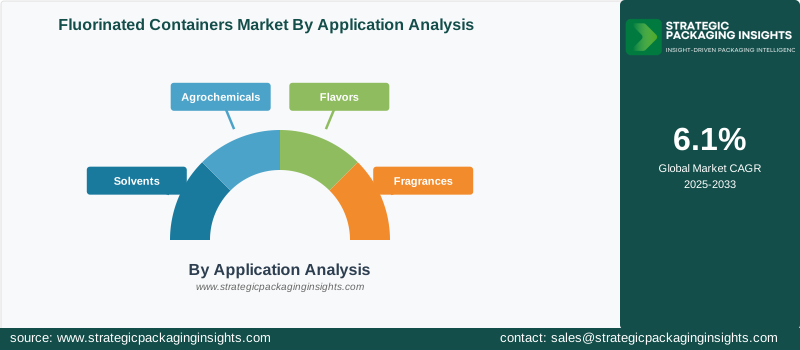
The flavors and fragrances segment is gaining traction in the market due to the need for high-barrier packaging solutions that preserve the quality and integrity of sensitive products. Companies like Schutz and CurTec are investing in research and development to create innovative packaging solutions that meet the evolving needs of their customers. The focus on sustainability and regulatory compliance is a key driver of growth in this segment, as companies seek to align their product offerings with global environmental goals. The ability to provide high-performance packaging solutions that are both durable and environmentally friendly is a significant competitive advantage in this market.
By End Use Analysis
The fluorinated containers market is segmented by end use into Chemicals, Agriculture, Food Ingredients, and Industrial. The chemicals segment is the largest end-use segment, driven by the need for high-barrier packaging solutions that prevent contamination and extend the shelf life of hazardous substances. Companies like Inhance Technologies and Greif are focusing on enhancing the design and functionality of their containers to meet the specific needs of their customers. The agriculture segment is also experiencing significant growth, driven by the increasing demand for safe and effective packaging solutions that protect against contamination and leakage.
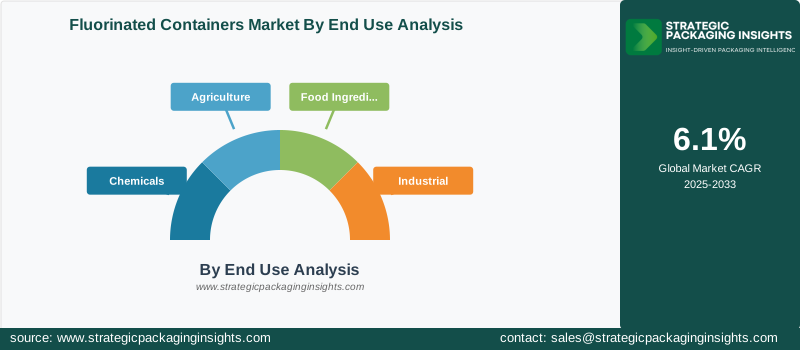
The food ingredients segment is gaining traction in the market due to the need for high-barrier packaging solutions that preserve the quality and integrity of sensitive products. Companies like Berry Global and Mauser Packaging Solutions are investing in research and development to create innovative packaging solutions that meet the evolving needs of their customers. The focus on sustainability and regulatory compliance is a key driver of growth in this segment, as companies seek to align their product offerings with global environmental goals. The ability to provide high-performance packaging solutions that are both durable and environmentally friendly is a significant competitive advantage in this market.
Fluorinated Containers Market Segments
The Fluorinated Containers market has been segmented on the basis ofBy Material Type
- Fluorinated HDPE
- Fluorinated PP
- Barrier-Treated Plastic
By Container Type
- Bottles
- Jerricans
- Pails
- Drums
By Application
- Solvents
- Agrochemicals
- Flavors
- Fragrances
By End Use
- Chemicals
- Agriculture
- Food Ingredients
- Industrial
Region
- Asia Pacific
- North America
- Latin America
- Europe
- Middle East & Africa




