


Pails Market Outlook
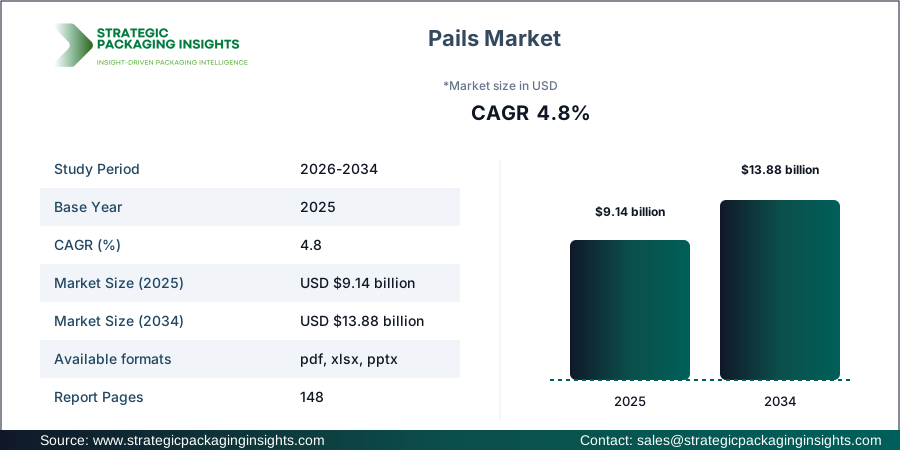
The pails market was valued at $9.14 billion in 2025 and is projected to reach $13.88 billion by 2034, growing at a CAGR of 4.8% during the forecast period 2026-2034. This growth is driven by the increasing demand for durable and versatile packaging solutions across various industries. The pails market is witnessing significant traction due to its wide application in sectors such as paints, chemicals, food products, and lubricants. The adaptability of pails to different materials like plastic, steel, tinplate, and fiber further enhances their utility, making them a preferred choice for manufacturers looking for reliable packaging options. The market's expansion is also fueled by the rising industrial activities and construction projects globally, which require robust packaging solutions to ensure the safe transport and storage of materials.
Despite the promising growth trajectory, the pails market faces certain challenges that could impede its progress. Regulatory constraints related to environmental concerns and the disposal of plastic waste are significant hurdles. However, the market holds substantial growth potential as manufacturers are increasingly focusing on developing eco-friendly and recyclable pail options to align with global sustainability goals. The shift towards sustainable packaging solutions is expected to open new avenues for market players, allowing them to cater to the evolving consumer preferences and regulatory requirements. Additionally, technological advancements in manufacturing processes are likely to enhance the quality and functionality of pails, further driving their adoption across various end-use industries.
Report Scope
| Attributes | Details |
| Report Title | Pails Market Size, Future Growth and Forecast 2034 |
| By Material Type | Plastic, Steel, Tinplate, Fiber |
| By Capacity | Below 5 Liters, 5–20 Liters, Above 20 Liters |
| By Application | Paints, Chemicals, Food Products, Lubricants |
| By End Use | Industrial, Construction, Food & Beverage, Chemicals |
| Region | Asia Pacific, North America, Latin America, Europe, Middle East & Africa |
| Base Year | 2025 |
| Historic Period | 2018-2024 |
| Forecast Period | 2026-2034 |
| Number of Pages | 148 |
| Customization Available | Yes* |
Opportunities & Threats
The pails market presents numerous opportunities, particularly in the realm of sustainable packaging solutions. As environmental concerns continue to rise, there is a growing demand for eco-friendly packaging options. This trend is pushing manufacturers to innovate and develop pails made from biodegradable materials or those that can be easily recycled. Companies that can successfully integrate sustainability into their product offerings are likely to gain a competitive edge in the market. Furthermore, the increasing industrialization and urbanization in emerging economies present significant growth opportunities for the pails market. As these regions continue to develop, the demand for construction materials and industrial goods is expected to rise, thereby boosting the need for durable and reliable packaging solutions like pails.
Another opportunity lies in the customization of pails to meet specific industry needs. With advancements in manufacturing technologies, companies can now offer pails in various sizes, shapes, and materials, tailored to the unique requirements of different applications. This ability to customize products provides a significant advantage, allowing manufacturers to cater to a broader range of industries and applications. Additionally, the growing trend of online retail and e-commerce is driving the demand for efficient packaging solutions that can withstand the rigors of shipping and handling. Pails, with their sturdy construction and versatility, are well-suited to meet these demands, further expanding their market potential.
However, the pails market is not without its threats. One of the primary challenges is the volatility in raw material prices, particularly for plastic and steel, which can significantly impact production costs and profit margins. Additionally, the market faces stiff competition from alternative packaging solutions such as drums and barrels, which offer similar benefits and are often preferred for certain applications. To mitigate these threats, companies need to focus on cost-effective production methods and explore innovative materials that can offer similar or superior performance at a lower cost. Moreover, staying abreast of regulatory changes and consumer preferences will be crucial for market players to maintain their competitive position.
Drivers & Challenges
The pails market is primarily driven by the increasing demand for efficient and reliable packaging solutions across various industries. The versatility of pails, which can be used for storing and transporting a wide range of products, makes them an attractive option for manufacturers. The growing industrial activities, particularly in emerging economies, are further propelling the demand for pails. As industries such as construction, chemicals, and food and beverage continue to expand, the need for durable and cost-effective packaging solutions is expected to rise, driving the growth of the pails market. Additionally, the trend towards sustainable packaging is encouraging manufacturers to innovate and develop eco-friendly pail options, further boosting market growth.
Technological advancements in manufacturing processes are also playing a significant role in driving the pails market. Innovations in material science and production techniques have enabled manufacturers to produce pails that are not only more durable but also lighter and more cost-effective. These advancements are helping companies to meet the increasing demand for high-quality packaging solutions while also addressing environmental concerns. Furthermore, the ability to customize pails to meet specific industry needs is providing manufacturers with a competitive advantage, allowing them to cater to a broader range of applications and industries.
Despite these drivers, the pails market faces several challenges that could hinder its growth. One of the primary challenges is the environmental impact of plastic pails, which are widely used due to their durability and cost-effectiveness. The growing concerns over plastic waste and its impact on the environment are prompting regulatory bodies to impose stricter regulations on plastic packaging. This is pushing manufacturers to explore alternative materials and develop more sustainable packaging solutions. Additionally, the volatility in raw material prices, particularly for plastic and steel, poses a significant challenge for manufacturers, as it can impact production costs and profit margins. To overcome these challenges, companies need to focus on innovation and sustainability, developing products that meet regulatory requirements and consumer preferences.
Market Share Analysis
The pails market is characterized by a competitive landscape with several key players vying for market share. Companies such as Berry Global, Mauser Packaging Solutions, Greif, BWAY, and Silgan Holdings are among the leading players in the market, each holding a significant share. These companies have established themselves as leaders through their extensive product offerings, strong distribution networks, and focus on innovation. Berry Global, for instance, is known for its wide range of packaging solutions, including pails, which are used across various industries. The company's commitment to sustainability and innovation has helped it maintain a strong position in the market.
Mauser Packaging Solutions is another major player in the pails market, offering a comprehensive range of packaging solutions for industrial and commercial applications. The company's focus on sustainability and its ability to provide customized solutions have been key factors in its success. Similarly, Greif is a leading provider of industrial packaging solutions, including pails, and has a strong presence in the market due to its extensive product portfolio and global reach. The company's emphasis on quality and customer service has helped it build a loyal customer base and maintain a competitive edge.
BWAY and Silgan Holdings are also prominent players in the pails market, known for their innovative packaging solutions and strong market presence. BWAY, in particular, has a diverse product portfolio that includes a wide range of pails for various applications. The company's focus on innovation and sustainability has helped it capture a significant share of the market. Silgan Holdings, on the other hand, is known for its high-quality packaging solutions and strong customer relationships, which have been instrumental in its success.
Other notable companies in the pails market include IPL Plastics, Schutz, Jokey Group, Time Technoplast, and Letica Corporation. These companies have established themselves as key players through their focus on innovation, quality, and customer service. IPL Plastics, for example, is known for its innovative packaging solutions and commitment to sustainability, while Schutz is recognized for its high-quality industrial packaging products. Jokey Group, Time Technoplast, and Letica Corporation are also well-regarded in the market for their diverse product offerings and strong customer relationships.
Key Highlights
- The pails market is projected to grow from $9.14 billion in 2025 to $13.88 billion by 2034, at a CAGR of 4.8%.
- Key drivers include the increasing demand for durable and versatile packaging solutions across various industries.
- Environmental concerns and regulatory constraints pose significant challenges to market growth.
- Technological advancements in manufacturing processes are enhancing the quality and functionality of pails.
- The market is characterized by a competitive landscape with several key players vying for market share.
- Customization of pails to meet specific industry needs provides a significant advantage for manufacturers.
- The shift towards sustainable packaging solutions is opening new avenues for market players.
- Volatility in raw material prices, particularly for plastic and steel, poses a challenge for manufacturers.
- The growing trend of online retail and e-commerce is driving the demand for efficient packaging solutions.
- Emerging economies present significant growth opportunities for the pails market.
Top Countries Insights
In the pails market, the United States stands out as a key player, with a market size of approximately $2.5 billion and a CAGR of 3%. The country's robust industrial sector and the increasing demand for efficient packaging solutions in industries such as chemicals and food and beverage are driving market growth. Additionally, the focus on sustainability and the development of eco-friendly packaging options are further propelling the market in the United States.
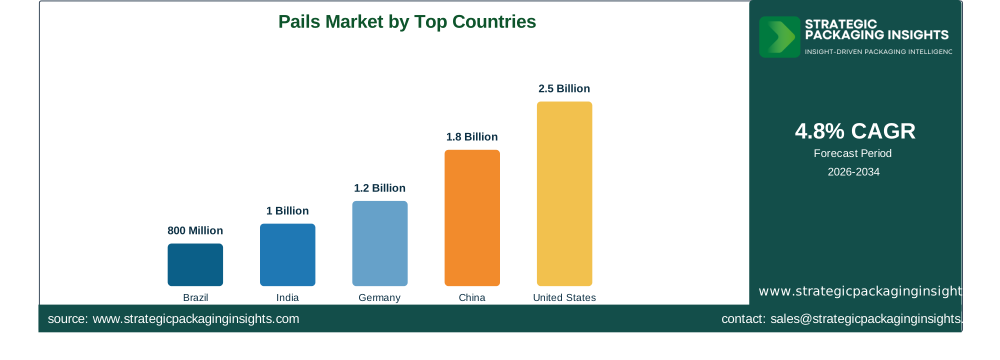
China is another significant market for pails, with a market size of around $1.8 billion and a CAGR of 6%. The rapid industrialization and urbanization in the country are major growth drivers, leading to increased demand for construction materials and industrial goods. The government's focus on environmental sustainability and the promotion of green packaging solutions are also contributing to market growth in China.
Germany, with a market size of approximately $1.2 billion and a CAGR of 4%, is a key player in the European pails market. The country's strong industrial base and the emphasis on high-quality packaging solutions are driving demand. Additionally, the focus on sustainability and the development of innovative packaging materials are further boosting the market in Germany.
India, with a market size of around $1 billion and a CAGR of 7%, is emerging as a significant market for pails. The country's growing industrial sector and the increasing demand for durable packaging solutions are key growth drivers. The government's initiatives to promote sustainable packaging and the development of eco-friendly materials are also contributing to market growth in India.
Brazil, with a market size of approximately $800 million and a CAGR of 5%, is a notable player in the Latin American pails market. The country's expanding industrial sector and the increasing demand for efficient packaging solutions are driving market growth. Additionally, the focus on sustainability and the development of innovative packaging materials are further propelling the market in Brazil.
Pails Market Segments Insights

Material Type Analysis
The material type segment of the pails market is dominated by plastic, which is favored for its durability, lightweight nature, and cost-effectiveness. Plastic pails are widely used across various industries, including paints, chemicals, and food products, due to their versatility and ability to withstand harsh conditions. However, the environmental impact of plastic waste is a significant concern, prompting manufacturers to explore alternative materials such as biodegradable plastics and recycled materials. Steel and tinplate pails are also popular, particularly in industrial applications where strength and durability are paramount. Fiber pails, while less common, are gaining traction due to their eco-friendly nature and suitability for certain applications.
The demand for sustainable packaging solutions is driving innovation in the material type segment, with manufacturers focusing on developing pails that are not only durable but also environmentally friendly. The shift towards sustainable materials is expected to open new opportunities for market players, allowing them to cater to the evolving consumer preferences and regulatory requirements. Additionally, advancements in material science are enabling the development of pails with enhanced properties, such as improved resistance to chemicals and UV radiation, further boosting their adoption across various industries.
Capacity Analysis
The capacity segment of the pails market is categorized into below 5 liters, 5-20 liters, and above 20 liters. Pails with a capacity of 5-20 liters are the most popular, as they offer a balance between size and convenience, making them suitable for a wide range of applications. These pails are commonly used in industries such as paints, chemicals, and food products, where moderate quantities are required. Pails with a capacity below 5 liters are typically used for smaller applications, such as household products and specialty chemicals, while those above 20 liters are favored in industrial applications where larger quantities are needed.
The demand for pails with varying capacities is driven by the diverse needs of different industries and applications. Manufacturers are focusing on offering a wide range of capacity options to cater to the specific requirements of their customers. Additionally, the ability to customize pails in terms of capacity, shape, and material is providing manufacturers with a competitive advantage, allowing them to cater to a broader range of industries and applications. The growing trend of online retail and e-commerce is also driving the demand for pails with varying capacities, as efficient packaging solutions are required to withstand the rigors of shipping and handling.
Application Analysis
The application segment of the pails market is diverse, with pails being used in industries such as paints, chemicals, food products, and lubricants. The paints industry is a major consumer of pails, as they provide a convenient and efficient packaging solution for storing and transporting paint products. The chemical industry also relies heavily on pails for the safe storage and transport of various chemicals, as they offer excellent resistance to harsh conditions and chemicals. In the food products industry, pails are used for packaging a wide range of products, from sauces and condiments to bulk food items, due to their durability and ability to maintain product freshness.
The demand for pails in the application segment is driven by the need for efficient and reliable packaging solutions across various industries. Manufacturers are focusing on developing pails that meet the specific requirements of different applications, such as enhanced resistance to chemicals and improved sealing capabilities. Additionally, the trend towards sustainable packaging is encouraging manufacturers to develop eco-friendly pail options, further boosting their adoption across various industries. The growing industrial activities and construction projects globally are also driving the demand for pails in the application segment, as they provide a robust packaging solution for transporting and storing materials.
End Use Analysis
The end-use segment of the pails market is categorized into industrial, construction, food & beverage, and chemicals. The industrial sector is a major consumer of pails, as they provide a durable and reliable packaging solution for storing and transporting a wide range of products. The construction industry also relies heavily on pails for the safe transport and storage of construction materials, such as paints and adhesives. In the food & beverage industry, pails are used for packaging a wide range of products, from sauces and condiments to bulk food items, due to their durability and ability to maintain product freshness.
The demand for pails in the end-use segment is driven by the need for efficient and reliable packaging solutions across various industries. Manufacturers are focusing on developing pails that meet the specific requirements of different end-use applications, such as enhanced resistance to chemicals and improved sealing capabilities. Additionally, the trend towards sustainable packaging is encouraging manufacturers to develop eco-friendly pail options, further boosting their adoption across various industries. The growing industrial activities and construction projects globally are also driving the demand for pails in the end-use segment, as they provide a robust packaging solution for transporting and storing materials.
Pails Market Segments
The Pails market has been segmented on the basis ofBy Material Type
- Plastic
- Steel
- Tinplate
- Fiber
By Capacity
- Below 5 Liters
- 5–20 Liters
- Above 20 Liters
By Application
- Paints
- Chemicals
- Food Products
- Lubricants
By End Use
- Industrial
- Construction
- Food & Beverage
- Chemicals
Region
- Asia Pacific
- North America
- Latin America
- Europe
- Middle East & Africa




