


FFS Rigid Films Market Outlook
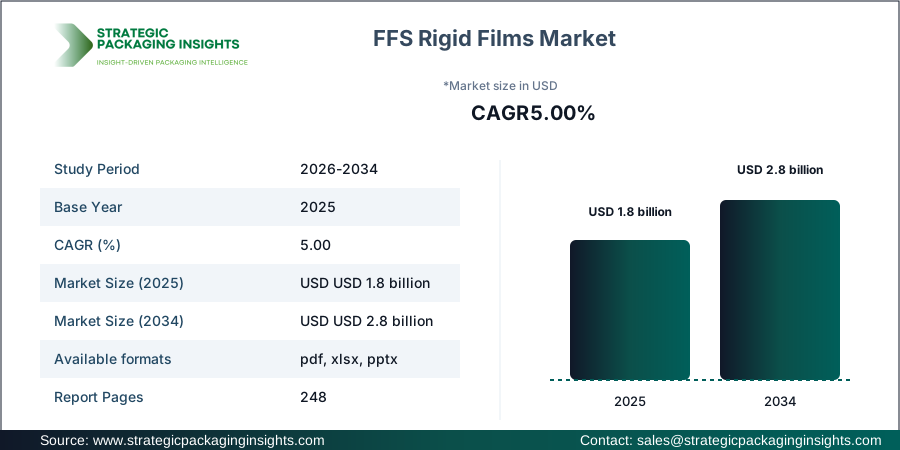
The FFS Rigid Films market size was valued at USD 1.8 billion in 2025 and is anticipated to reach USD 2.8 billion by 2034, growing at a CAGR of 5.00% during the forecast period according to Strategic Packaging Insights. The market is driven by the increasing demand for efficient and sustainable packaging solutions across various industries, including pharmaceuticals, dairy, and confectionery. Companies like Klockner Pentaplast and Amcor are at the forefront of this growth, leveraging advanced materials and innovative processes to meet the evolving needs of consumers and businesses alike. The rise in consumer awareness regarding product safety and shelf life is further propelling the demand for FFS rigid films, making it a lucrative segment in the packaging industry.
One of the most impactful drivers of the FFS Rigid Films market is the growing emphasis on sustainability and eco-friendly packaging solutions. Governments and regulatory bodies worldwide are implementing stringent regulations to reduce plastic waste and promote the use of recyclable materials. This shift is encouraging manufacturers to innovate and develop bio-based rigid films, which are gaining traction due to their reduced environmental impact. Companies like SUDPACK and Constantia are investing heavily in research and development to create sustainable packaging solutions that comply with these regulations, thereby enhancing their market position and competitiveness.
Report Scope
| Attributes | Details |
| Report Title | FFS Rigid Films Market Size, Future Growth and Forecast 2034 |
| By Material | PVC/PVDC, PET / APET, PP, PS, PE-Based Rigid Webs, Bio-Based Rigid Films |
| By Process | Thermoform-Fill-Seal, Blister FFS |
| By Thickness | Below 250 Micron, 250-500 Micron, Above 500 Micron |
| By End Use | Pharmaceutical Blisters, Dairy (Cups, Portion Packs), Meat & Protein Trays, Medical Device Packaging, Confectionery |
| By Region | North America (U.S., Canada, Mexico), Europe (Germany, UK, France, Italy, Spain, Rest of Europe), Asia Pacific (China, India, Japan, South Korea, Australia, Rest of Asia Pacific), Latin America (Brazil, Argentina, Rest of Latin America), Middle East & Africa (GCC Countries, South Africa, Rest of MEA) |
| Base Year | 2025 |
| Historic Period | 2018-2024 |
| Forecast Period | 2026-2034 |
| Number of Pages | 248 |
| Customization Available | Yes* |
Sustainability & Circular Economy Analysis
Sustainability initiatives and circular economy practices are significantly influencing the FFS Rigid Films market. The increasing focus on reducing plastic waste and promoting the use of recyclable materials is driving innovation in packaging design and manufacturing. Companies are investing in the development of bio-based rigid films and lightweight packaging solutions to minimize their carbon footprint and meet consumer demand for eco-friendly products. This trend is not only enhancing the environmental credentials of packaging manufacturers but also providing them with a competitive edge in the market.
The adoption of extended producer responsibility (EPR) and other regulatory measures is encouraging companies to implement waste reduction strategies and improve their recycling networks. This is leading to the development of closed-loop supply chains, where packaging materials are reused and recycled, reducing the need for virgin materials. As a result, companies like Wipak and Uflex are focusing on creating sustainable packaging solutions that align with these regulatory requirements, ensuring long-term market competitiveness and compliance.
Consumer preferences for sustainable packaging are also influencing investment decisions and supply chain strategies. Brand owners and retailers are increasingly prioritizing eco-friendly packaging solutions to meet consumer expectations and enhance their brand image. This shift is driving demand for innovative packaging materials and technologies that reduce environmental impact while maintaining product quality and safety. As a result, companies are investing in research and development to create packaging solutions that meet these evolving consumer needs, ensuring their relevance and competitiveness in the market.
Packaging Value Chain & Supply Chain Analysis
The packaging value chain for FFS Rigid Films involves a complex ecosystem of raw material suppliers, converters, manufacturers, and logistics providers. Raw material sourcing is a critical component, with companies relying on a mix of traditional and bio-based materials to meet sustainability goals. Packaging converters and manufacturers play a crucial role in transforming these materials into finished products, utilizing advanced machinery and technologies to enhance production efficiency and quality. Companies like Tekni-Plex and Perlen Packaging are investing in state-of-the-art facilities and equipment to optimize their manufacturing processes and meet the growing demand for FFS rigid films.
Logistics and distribution channels are essential for ensuring the timely delivery of packaging products to brand owners and retailers. Efficient transportation and inventory management strategies are crucial for maintaining supply chain resilience and minimizing disruptions. Companies are increasingly adopting localization strategies to reduce transportation costs and enhance supply chain efficiency. This involves establishing production facilities closer to key markets and leveraging strategic partnerships with local suppliers and distributors to streamline operations and improve market responsiveness.
Recycling networks and procurement strategies are also integral to the packaging value chain, particularly in the context of sustainability and circular economy practices. Companies are focusing on developing robust recycling networks to facilitate the collection and processing of used packaging materials, reducing their reliance on virgin materials. This is driving the adoption of closed-loop supply chains, where materials are reused and recycled, minimizing waste and environmental impact. Strategic partnerships with recycling companies and investment in advanced recycling technologies are key to achieving these goals and enhancing overall market performance.
Opportunities & Threats
The FFS Rigid Films market presents several opportunities for growth and innovation. The increasing demand for sustainable packaging solutions is driving the development of bio-based rigid films and recyclable materials. Companies that invest in research and development to create innovative packaging solutions that meet consumer and regulatory demands are well-positioned to capitalize on this trend. Additionally, the growing emphasis on product safety and shelf life is creating opportunities for companies to develop advanced packaging technologies that enhance product protection and extend shelf life, further driving market growth.
Another significant opportunity lies in the expansion of the pharmaceutical and healthcare sectors, which are major end-users of FFS rigid films. The increasing demand for pharmaceutical blisters and medical device packaging is driving the need for high-quality, reliable packaging solutions. Companies that can provide innovative, cost-effective packaging solutions that meet the stringent requirements of these industries are likely to experience significant growth. Furthermore, the rise in e-commerce and online retailing is creating new opportunities for packaging manufacturers to develop solutions that cater to the unique needs of this rapidly growing market segment.
Despite these opportunities, the FFS Rigid Films market faces several threats and challenges. One of the primary challenges is the volatility in raw material prices, which can impact production costs and profitability. Companies need to develop effective procurement strategies and establish strong relationships with suppliers to mitigate this risk. Additionally, the increasing regulatory pressure to reduce plastic waste and promote sustainability can pose challenges for companies that are slow to adapt to these changes. Companies must invest in sustainable packaging solutions and comply with regulatory requirements to remain competitive in the market.
Drivers & Challenges
The FFS Rigid Films market is driven by several key factors, including the increasing demand for efficient and sustainable packaging solutions. The growing awareness of environmental issues and the need to reduce plastic waste are driving the demand for recyclable and bio-based rigid films. Companies that can provide innovative, eco-friendly packaging solutions are well-positioned to capitalize on this trend. Additionally, the rise in consumer demand for convenience and product safety is driving the need for advanced packaging technologies that enhance product protection and extend shelf life.
Another significant driver of the FFS Rigid Films market is the expansion of the pharmaceutical and healthcare sectors. The increasing demand for pharmaceutical blisters and medical device packaging is driving the need for high-quality, reliable packaging solutions. Companies that can provide innovative, cost-effective packaging solutions that meet the stringent requirements of these industries are likely to experience significant growth. Furthermore, the rise in e-commerce and online retailing is creating new opportunities for packaging manufacturers to develop solutions that cater to the unique needs of this rapidly growing market segment.
Despite these drivers, the FFS Rigid Films market faces several challenges. One of the primary challenges is the volatility in raw material prices, which can impact production costs and profitability. Companies need to develop effective procurement strategies and establish strong relationships with suppliers to mitigate this risk. Additionally, the increasing regulatory pressure to reduce plastic waste and promote sustainability can pose challenges for companies that are slow to adapt to these changes. Companies must invest in sustainable packaging solutions and comply with regulatory requirements to remain competitive in the market.
Market Share Analysis
The competitive landscape of the FFS Rigid Films market is characterized by the presence of several key players, each striving to enhance their market position through innovation and strategic partnerships. Companies like Klockner Pentaplast, SUDPACK, and Amcor are leading the market with their extensive product portfolios and strong focus on sustainability. These companies are investing heavily in research and development to create innovative packaging solutions that meet the evolving needs of consumers and businesses alike. Their commitment to sustainability and eco-friendly packaging solutions is providing them with a competitive edge in the market.
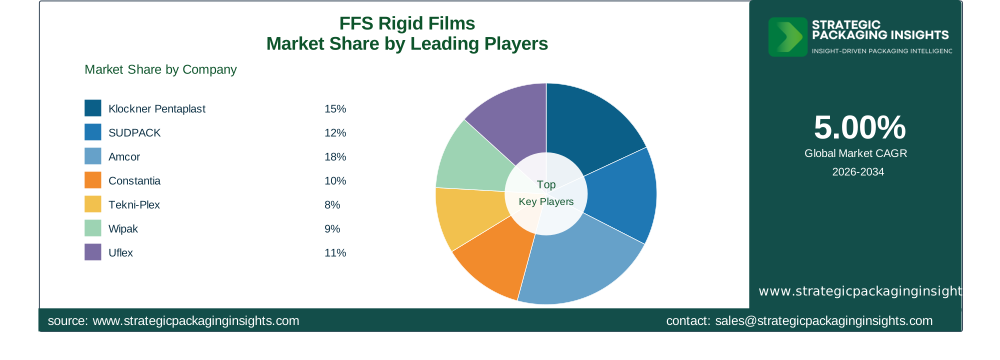
Constantia and Tekni-Plex are also prominent players in the FFS Rigid Films market, known for their advanced manufacturing capabilities and focus on quality. These companies are leveraging their expertise in packaging design and manufacturing to develop innovative solutions that enhance product protection and extend shelf life. Their strong focus on customer satisfaction and ability to adapt to changing market trends are key factors contributing to their success in the market.
Wipak and Uflex are other notable players in the market, known for their commitment to sustainability and innovation. These companies are investing in advanced technologies and sustainable materials to create packaging solutions that meet the stringent requirements of various industries, including pharmaceuticals and healthcare. Their focus on reducing environmental impact and enhancing product safety is driving their growth and competitiveness in the market.
Perlen Packaging and Plastiroll are also key players in the FFS Rigid Films market, known for their strong focus on quality and innovation. These companies are leveraging their expertise in packaging design and manufacturing to develop solutions that meet the unique needs of their customers. Their commitment to sustainability and ability to adapt to changing market trends are key factors contributing to their success in the market.
Key Highlights
- Market Size: USD 1.8 billion in 2025, projected to reach USD 2.8 billion by 2034.
- Growth Rate: CAGR of 5.00% during the forecast period.
- Leading Companies: Klockner Pentaplast, SUDPACK, Amcor, Constantia, Tekni-Plex.
- Material Innovation: Bio-based rigid films gaining traction.
- End-Use Expansion: Significant growth in pharmaceutical and healthcare sectors.
- Regional Growth: Asia Pacific leading with the highest CAGR.
- Sustainability Focus: Increasing demand for eco-friendly packaging solutions.
FFS Rigid Films Market Segments Insights

By Material Analysis
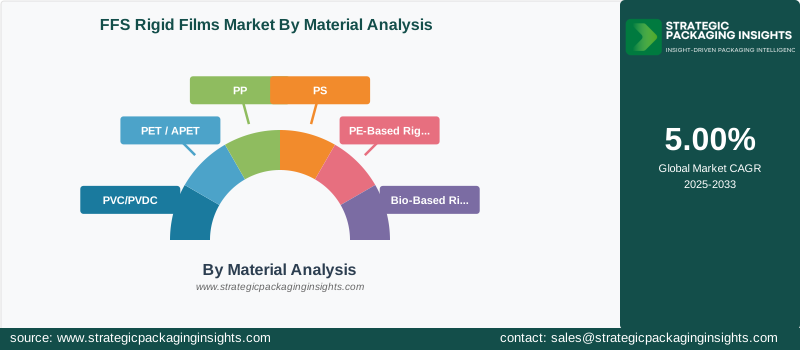
The FFS Rigid Films market is segmented by material, with PVC/PVDC, PET/APET, PP, PS, PE-Based Rigid Webs, and Bio-Based Rigid Films being the primary categories. PVC/PVDC and PET/APET are widely used due to their excellent barrier properties and versatility, making them ideal for various packaging applications. However, the growing emphasis on sustainability is driving the demand for bio-based rigid films, which offer reduced environmental impact and align with consumer preferences for eco-friendly packaging solutions. Companies are investing in research and development to create innovative materials that meet these evolving demands, ensuring their competitiveness in the market.
Bio-based rigid films are gaining traction as companies seek to reduce their carbon footprint and comply with stringent environmental regulations. These materials offer a sustainable alternative to traditional plastics, providing excellent performance while minimizing environmental impact. The increasing demand for sustainable packaging solutions is driving the growth of this segment, with companies like Amcor and Constantia leading the way in developing innovative bio-based materials. As consumer awareness of environmental issues continues to rise, the demand for bio-based rigid films is expected to grow, providing significant opportunities for market expansion.
By Process Analysis
The FFS Rigid Films market is also segmented by process, with Thermoform-Fill-Seal and Blister FFS being the primary categories. Thermoform-Fill-Seal is a widely used process due to its efficiency and ability to produce high-quality packaging solutions. This process is ideal for applications that require precise control over packaging dimensions and product protection, making it popular in the pharmaceutical and healthcare sectors. Companies are investing in advanced machinery and technologies to enhance the efficiency and quality of their thermoform-fill-seal processes, ensuring their competitiveness in the market.
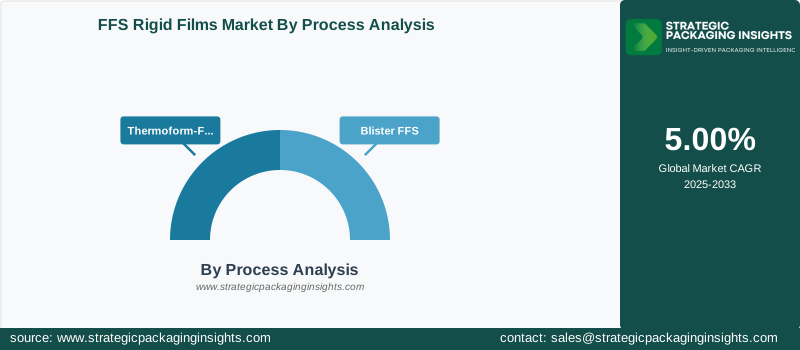
Blister FFS is another important segment, particularly in the pharmaceutical industry, where it is used to package tablets and capsules. This process offers excellent product protection and tamper-evidence, making it ideal for applications that require high levels of security and safety. The increasing demand for pharmaceutical blisters is driving the growth of this segment, with companies like Tekni-Plex and Perlen Packaging leading the way in developing innovative blister FFS solutions. As the pharmaceutical industry continues to expand, the demand for blister FFS is expected to grow, providing significant opportunities for market expansion.
By Thickness Analysis
The FFS Rigid Films market is segmented by thickness, with Below 250 Micron, 250-500 Micron, and Above 500 Micron being the primary categories. Films with a thickness below 250 microns are widely used in applications that require lightweight and flexible packaging solutions. These films offer excellent performance while minimizing material usage, making them ideal for applications that require cost-effective and sustainable packaging solutions. Companies are investing in advanced technologies to produce high-quality films with reduced thickness, ensuring their competitiveness in the market.
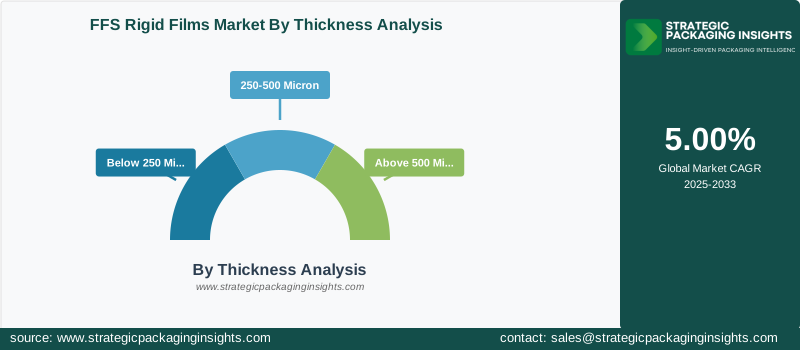
Films with a thickness of 250-500 microns are popular in applications that require enhanced product protection and durability. These films offer excellent barrier properties and mechanical strength, making them ideal for applications that require high levels of product protection and shelf life extension. The increasing demand for durable and reliable packaging solutions is driving the growth of this segment, with companies like Wipak and Uflex leading the way in developing innovative films with enhanced performance characteristics.
By End Use Analysis
The FFS Rigid Films market is segmented by end use, with Pharmaceutical Blisters, Dairy (Cups, Portion Packs), Meat & Protein Trays, Medical Device Packaging, and Confectionery being the primary categories. Pharmaceutical blisters are a significant segment, driven by the increasing demand for high-quality, reliable packaging solutions in the pharmaceutical industry. Companies are investing in advanced technologies to develop innovative blister packaging solutions that meet the stringent requirements of this industry, ensuring their competitiveness in the market.
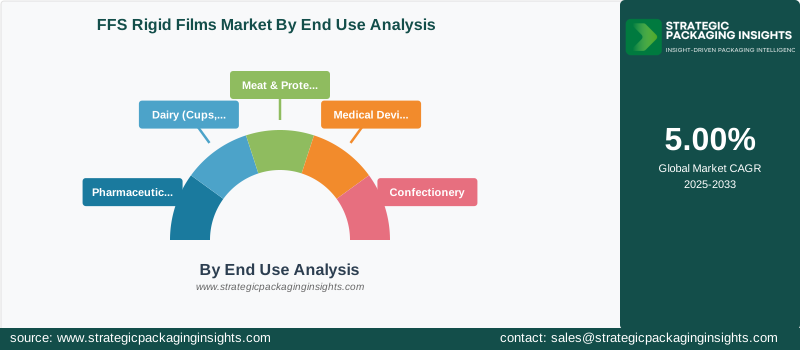
Dairy and meat & protein trays are also important segments, driven by the increasing demand for convenient and sustainable packaging solutions in the food industry. Companies are investing in research and development to create innovative packaging solutions that enhance product protection and extend shelf life, ensuring their competitiveness in the market. The increasing demand for convenient and sustainable packaging solutions is driving the growth of these segments, providing significant opportunities for market expansion.
FFS Rigid Films Market Segments
The FFS Rigid Films market has been segmented on the basis ofBy Material
- PVC/PVDC
- PET / APET
- PP
- PS
- PE-Based Rigid Webs
- Bio-Based Rigid Films
By Process
- Thermoform-Fill-Seal
- Blister FFS
By Thickness
- Below 250 Micron
- 250-500 Micron
- Above 500 Micron
By End Use
- Pharmaceutical Blisters
- Dairy (Cups, Portion Packs)
- Meat & Protein Trays
- Medical Device Packaging
- Confectionery
By Region
- North America (U.S., Canada, Mexico)
- Europe (Germany, UK, France, Italy, Spain, Rest of Europe)
- Asia Pacific (China, India, Japan, South Korea, Australia, Rest of Asia Pacific)
- Latin America (Brazil, Argentina, Rest of Latin America)
- Middle East & Africa (GCC Countries, South Africa, Rest of MEA)




