


Electronic Shelf Label Market Outlook
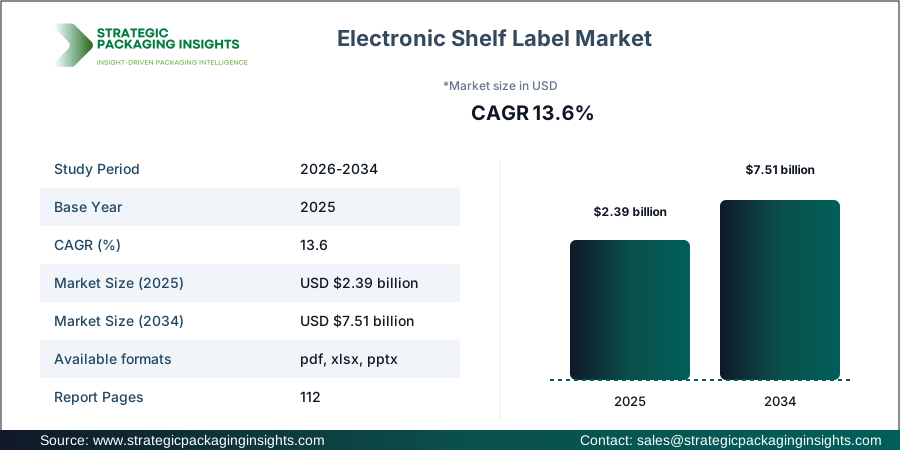
The Electronic Shelf Label (ESL) market was valued at $2.39 billion in 2025 and is projected to reach $7.51 billion by 2034, growing at a CAGR of 13.6% during the forecast period 2026-2034. This robust growth trajectory is driven by the increasing adoption of automation in retail environments, where ESLs offer significant advantages in terms of operational efficiency and customer engagement. The demand for real-time pricing updates and enhanced inventory management is propelling the market forward, as retailers seek to improve their competitive edge and customer experience. Additionally, technological advancements in display technologies and connectivity solutions are further enhancing the functionality and appeal of ESL systems.
Report Scope
| Attributes | Details |
| Report Title | Electronic Shelf Label Market Size, Future Growth and Forecast 2034 |
| Technology | E-ink, LCD |
| Size | Small, Large |
| Application | Retail, Pharmacy |
| Connectivity | RF, IR |
| Region | Asia Pacific, North America, Latin America, Europe, Middle East & Africa |
| Base Year | 2025 |
| Historic Period | 2018-2024 |
| Forecast Period | 2026-2034 |
| Number of Pages | 112 |
| Customization Available | Yes* |
Opportunities & Threats
The ESL market presents numerous opportunities, particularly in the realm of technological innovation. As retailers continue to digitize their operations, the demand for advanced ESL systems that integrate seamlessly with existing IT infrastructure is on the rise. This creates a fertile ground for companies to develop and offer innovative solutions that cater to the evolving needs of the retail sector. Furthermore, the growing trend of omnichannel retailing, where physical and digital shopping experiences are integrated, is driving the need for ESLs that can support dynamic pricing strategies and personalized promotions, thereby enhancing customer engagement and loyalty.
Another significant opportunity lies in the expansion of ESL applications beyond traditional retail environments. Sectors such as healthcare and logistics are beginning to recognize the benefits of ESLs for inventory management and operational efficiency. In pharmacies, for instance, ESLs can facilitate accurate and timely updates of drug prices and availability, reducing the risk of errors and improving patient safety. Similarly, in logistics, ESLs can streamline warehouse operations by providing real-time information on stock levels and locations, thereby optimizing supply chain management.
Despite these opportunities, the ESL market faces certain threats that could hinder its growth. One of the primary challenges is the high initial cost of implementation, which can be a significant barrier for small and medium-sized enterprises. Additionally, concerns regarding data security and privacy, particularly in the context of wireless connectivity, could deter some retailers from adopting ESL systems. Furthermore, the rapid pace of technological change means that companies must continuously innovate to stay competitive, which can be resource-intensive and risky.
Drivers & Challenges
The primary drivers of the ESL market include the increasing demand for automation and efficiency in retail operations. As retailers strive to enhance their operational efficiency and reduce labor costs, ESLs offer a compelling solution by automating the process of price updates and inventory management. This not only reduces the likelihood of pricing errors but also frees up staff to focus on more value-added activities, such as customer service and sales. Additionally, the growing consumer preference for personalized shopping experiences is driving retailers to adopt ESLs that can support dynamic pricing and targeted promotions.
Another key driver is the advancement in display technologies, such as e-ink and LCD, which are making ESLs more versatile and visually appealing. These technologies enable the creation of high-resolution, energy-efficient displays that can be easily read in various lighting conditions, enhancing the overall shopping experience. Moreover, the integration of IoT and AI technologies into ESL systems is enabling retailers to gather and analyze data on customer behavior and preferences, allowing for more informed decision-making and strategic planning.
However, the ESL market also faces several challenges that could impede its growth. One of the main challenges is the complexity of integrating ESL systems with existing IT infrastructure, which can be a time-consuming and costly process. Additionally, the lack of standardization in ESL technologies and protocols can lead to compatibility issues, making it difficult for retailers to implement and manage these systems effectively. Furthermore, the ongoing concerns about data security and privacy, particularly in the context of wireless connectivity, could pose a significant challenge for the widespread adoption of ESLs.
Market Share Analysis
The competitive landscape of the Electronic Shelf Label market is characterized by the presence of several key players who are driving innovation and growth in the industry. Companies such as SES-imagotag, Hanshow, and Pricer are leading the market with their advanced ESL solutions that cater to the diverse needs of retailers worldwide. These companies are focusing on expanding their product portfolios and enhancing their technological capabilities to maintain their competitive edge. Additionally, strategic partnerships and collaborations with retailers and technology providers are enabling these companies to strengthen their market position and expand their global reach.
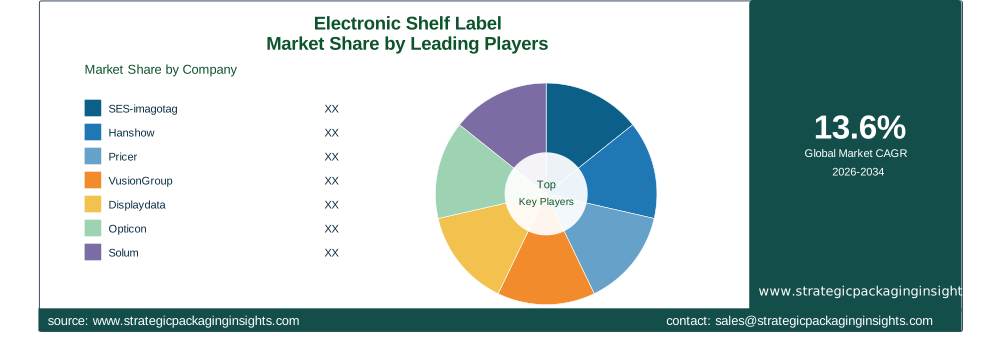
SES-imagotag is a prominent player in the ESL market, known for its innovative solutions that combine advanced display technologies with robust connectivity options. The company has a strong presence in Europe and is expanding its operations in North America and Asia Pacific. Hanshow, another key player, is recognized for its cutting-edge ESL systems that offer seamless integration with retail IT infrastructure. The company is focusing on expanding its product offerings and enhancing its technological capabilities to cater to the evolving needs of the retail sector.
Pricer is a leading provider of ESL solutions, known for its high-quality displays and reliable connectivity options. The company has a strong presence in Europe and is expanding its operations in other regions, including North America and Asia Pacific. VusionGroup, Displaydata, and Opticon are also significant players in the ESL market, offering a range of solutions that cater to the diverse needs of retailers. These companies are focusing on enhancing their product offerings and expanding their global reach through strategic partnerships and collaborations.
Other notable companies in the ESL market include Solum, Teraoka Seiko, LG CNS, and Crisp Wikipedia. These companies are leveraging their technological expertise and industry experience to develop innovative ESL solutions that cater to the evolving needs of the retail sector. By focusing on product innovation and strategic partnerships, these companies are well-positioned to capitalize on the growing demand for ESL systems and maintain their competitive edge in the market.
Key Highlights
- The ESL market is projected to grow from $2.39 billion in 2025 to $7.51 billion by 2034, at a CAGR of 13.6%.
- Technological advancements in display technologies and connectivity solutions are driving market growth.
- Retailers are increasingly adopting ESLs to enhance operational efficiency and customer engagement.
- The growing trend of omnichannel retailing is boosting the demand for ESLs that support dynamic pricing strategies.
- ESL applications are expanding beyond traditional retail environments to sectors such as healthcare and logistics.
- High initial implementation costs and data security concerns are significant challenges for the market.
- Key players in the market include SES-imagotag, Hanshow, Pricer, VusionGroup, and Displaydata.
- Strategic partnerships and collaborations are enabling companies to expand their global reach and strengthen their market position.
- The integration of IoT and AI technologies into ESL systems is enhancing data analysis and decision-making capabilities.
Top Countries Insights
In the Electronic Shelf Label market, the United States stands out as a key player, with a market size of approximately $1.2 billion and a CAGR of 14%. The country's strong retail sector, coupled with a high adoption rate of advanced technologies, drives the demand for ESL systems. Government initiatives promoting digital transformation in retail further bolster market growth. However, challenges such as high implementation costs and data privacy concerns persist.
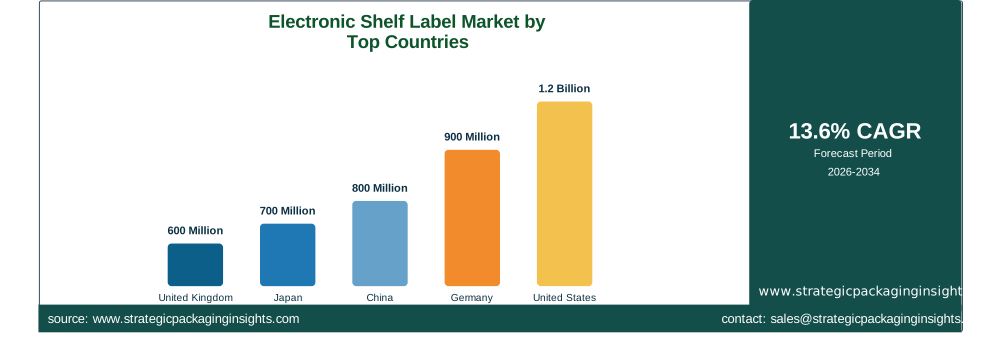
Germany is another significant market, with a size of around $900 million and a CAGR of 12%. The country's robust retail infrastructure and focus on technological innovation contribute to the growth of the ESL market. The German government's support for digitalization in retail, along with the increasing demand for efficient inventory management solutions, drives the adoption of ESL systems. However, the market faces challenges related to standardization and integration with existing IT systems.
China, with a market size of approximately $800 million and a CAGR of 16%, is a rapidly growing market for ESLs. The country's booming retail sector and increasing focus on automation and efficiency drive the demand for ESL systems. Government policies promoting smart retail solutions and the integration of IoT technologies further support market growth. However, challenges such as data security and privacy concerns remain.
In Japan, the ESL market is valued at around $700 million, with a CAGR of 10%. The country's advanced technological infrastructure and focus on innovation drive the adoption of ESL systems. The Japanese government's initiatives to promote digital transformation in retail, along with the increasing demand for personalized shopping experiences, contribute to market growth. However, challenges related to high implementation costs and compatibility issues persist.
The United Kingdom, with a market size of approximately $600 million and a CAGR of 11%, is another key market for ESLs. The country's strong retail sector and focus on enhancing customer engagement drive the demand for ESL systems. Government initiatives promoting digitalization in retail and the growing trend of omnichannel retailing further support market growth. However, challenges such as data privacy concerns and integration complexities remain.
Electronic Shelf Label Market Segments Insights

Technology Analysis
The Electronic Shelf Label market is segmented by technology into E-ink and LCD. E-ink technology is gaining significant traction due to its energy efficiency and superior readability in various lighting conditions. This technology is particularly favored in retail environments where displays need to be visible from a distance and under different lighting scenarios. The low power consumption of E-ink displays also contributes to their growing popularity, as it reduces the overall operational costs for retailers. On the other hand, LCD technology offers vibrant color displays and faster refresh rates, making it suitable for dynamic pricing and promotional displays. The choice between E-ink and LCD often depends on the specific requirements of the retailer, such as display size, color needs, and budget constraints.
As the market evolves, there is a growing trend towards hybrid solutions that combine the best features of both E-ink and LCD technologies. These hybrid displays offer the energy efficiency and readability of E-ink with the color and dynamic capabilities of LCD, providing retailers with a versatile solution that can adapt to various use cases. Additionally, advancements in display technologies are leading to the development of more durable and flexible ESLs, which can withstand the rigors of retail environments and offer greater design flexibility. The competition in this segment is intense, with companies investing heavily in research and development to enhance their product offerings and gain a competitive edge.
Size Analysis
The ESL market is also segmented by size into small and large displays. Small ESLs are typically used for individual product pricing and are favored for their compact size and ease of installation. These displays are ideal for environments where space is limited, such as convenience stores and pharmacies. Large ESLs, on the other hand, are used for promotional displays and shelf-edge signage, where visibility and impact are crucial. These displays are often used in supermarkets and hypermarkets, where they can attract customer attention and enhance the overall shopping experience.
The demand for large ESLs is growing as retailers seek to create more engaging and interactive shopping environments. These displays offer greater flexibility in terms of content and design, allowing retailers to showcase dynamic pricing, promotions, and product information. The trend towards larger displays is also driven by the increasing adoption of digital signage in retail environments, where ESLs are used to complement traditional signage and enhance customer engagement. As retailers continue to invest in creating immersive shopping experiences, the demand for large ESLs is expected to grow, driving innovation and competition in this segment.
Application Analysis
The application segment of the ESL market includes retail and pharmacy. Retail is the largest application segment, driven by the increasing demand for automation and efficiency in pricing and inventory management. ESLs offer significant advantages in retail environments, where they can automate the process of price updates and reduce the likelihood of pricing errors. This not only enhances operational efficiency but also improves the overall customer experience by ensuring accurate and up-to-date pricing information.
In the pharmacy segment, ESLs are used to facilitate accurate and timely updates of drug prices and availability. This is particularly important in environments where pricing and inventory information needs to be updated frequently to comply with regulatory requirements and ensure patient safety. The adoption of ESLs in pharmacies is driven by the need for efficient inventory management and the growing trend towards digitalization in healthcare. As pharmacies continue to invest in technology to enhance their operations, the demand for ESLs is expected to grow, driving innovation and competition in this segment.
Connectivity Analysis
The ESL market is segmented by connectivity into RF and IR. RF (Radio Frequency) connectivity is the most widely used technology in ESL systems, offering reliable and efficient communication between the ESLs and the central management system. RF technology is favored for its ability to cover large areas and support a high number of devices, making it ideal for retail environments where multiple ESLs need to be managed simultaneously. The growing demand for real-time pricing updates and dynamic promotions is driving the adoption of RF connectivity in ESL systems.
IR (Infrared) connectivity, on the other hand, is used in environments where RF signals may be disrupted or where a more localized communication solution is required. IR technology offers a cost-effective solution for small-scale deployments, where the number of ESLs is limited, and the communication range is shorter. The choice between RF and IR connectivity often depends on the specific requirements of the retailer, such as the size of the store, the number of ESLs, and the desired level of communication reliability. As the market evolves, there is a growing trend towards hybrid connectivity solutions that combine the strengths of both RF and IR technologies, providing retailers with a versatile and reliable communication solution.
Electronic Shelf Label Market Segments
The Electronic Shelf Label market has been segmented on the basis ofTechnology
- E-ink
- LCD
Size
- Small
- Large
Application
- Retail
- Pharmacy
Connectivity
- RF
- IR
Region
- Asia Pacific
- North America
- Latin America
- Europe
- Middle East & Africa




