


EFSA-Compliant Food-Grade rHDPE for FMCG Packaging Market Outlook
The EFSA-Compliant Food-Grade rHDPE for FMCG Packaging market was valued at $710.35 million in 2025 and is projected to reach $1.48 billion by 2034, growing at a CAGR of 8.5% during the forecast period 2026-2034. This market is driven by the increasing demand for sustainable packaging solutions in the fast-moving consumer goods (FMCG) sector. The shift towards eco-friendly materials is propelled by stringent regulations and consumer awareness regarding environmental impacts. The adoption of recycled high-density polyethylene (rHDPE) is gaining traction due to its compliance with European Food Safety Authority (EFSA) standards, ensuring safety and quality in food-grade applications. The market is also witnessing innovations in recycling technologies, enhancing the quality and usability of rHDPE in various packaging applications.
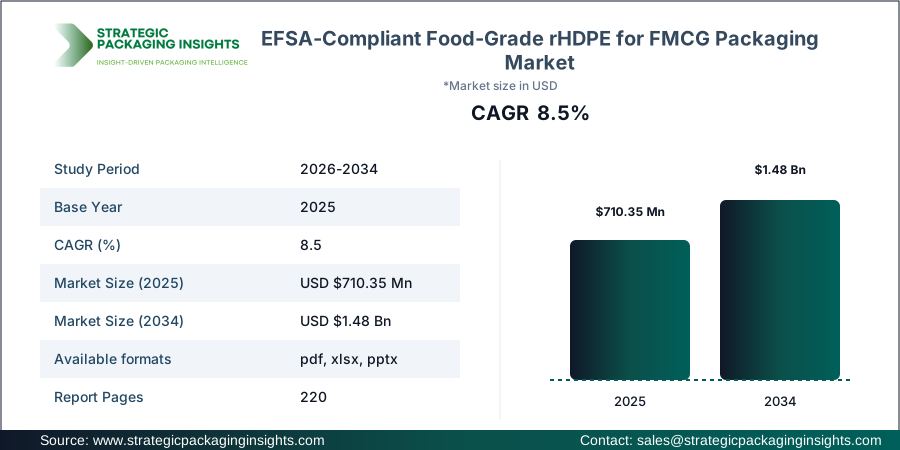
Despite the promising growth, the market faces challenges such as the high cost of recycling processes and the need for advanced technology to ensure the purity and safety of recycled materials. Regulatory frameworks across different regions also pose a challenge, as they require compliance with varying standards, which can complicate the production process. However, the potential for growth remains significant, driven by the increasing investments in recycling infrastructure and the development of new technologies that improve the efficiency and cost-effectiveness of rHDPE production. The market's growth is further supported by the rising demand for sustainable packaging solutions from major FMCG companies, which are increasingly adopting rHDPE to meet their sustainability goals.
Report Scope
| Attributes | Details |
| Report Title | EFSA-Compliant Food-Grade rHDPE for FMCG Packaging Market Size, Future Growth and Forecast 2034 |
| Process Type | Mechanical Recycling, Solvent Cleaning, Super-Clean Recycling |
| Application | Bottles, Caps, Personal Care Packs, Household Packs |
| End Use | FMCG, Food Packaging, Retail Private Label |
| Grade | Natural rHDPE, Colored rHDPE, Deodorized rHDPE |
| Region | Asia Pacific, North America, Latin America, Europe, Middle East & Africa |
| Base Year | 2025 |
| Historic Period | 2018-2024 |
| Forecast Period | 2026-2034 |
| Number of Pages | 220 |
| Customization Available | Yes* |
Opportunities & Threats
The EFSA-Compliant Food-Grade rHDPE for FMCG Packaging market presents numerous opportunities, primarily driven by the growing consumer demand for sustainable and eco-friendly packaging solutions. As consumers become more environmentally conscious, there is a significant shift towards packaging materials that reduce carbon footprints and promote recycling. This trend is further supported by government regulations and initiatives aimed at reducing plastic waste and promoting the use of recycled materials. Companies in the FMCG sector are increasingly adopting rHDPE packaging to align with these sustainability goals, creating a robust demand for EFSA-compliant food-grade rHDPE. Additionally, advancements in recycling technologies are enhancing the quality and usability of rHDPE, opening new avenues for its application in various packaging formats.
Another opportunity lies in the expansion of the market in emerging economies, where the demand for packaged goods is rising rapidly. These regions offer untapped potential for rHDPE manufacturers, as they seek to capitalize on the growing consumer base and the increasing awareness of sustainable packaging solutions. Collaborations and partnerships with local players can further enhance market penetration and drive growth. Moreover, the development of innovative recycling processes that improve the efficiency and cost-effectiveness of rHDPE production can significantly boost market growth, providing a competitive edge to companies that invest in such technologies.
However, the market also faces threats, particularly from the high cost of recycling processes and the need for advanced technology to ensure the purity and safety of recycled materials. The complexity of regulatory frameworks across different regions can also pose challenges, as companies must navigate varying standards and compliance requirements. Additionally, the availability of raw materials for recycling can be inconsistent, affecting the supply chain and production processes. To mitigate these threats, companies must invest in research and development to enhance recycling technologies and improve the quality of rHDPE, ensuring compliance with stringent safety standards.
Drivers & Challenges
The primary drivers of the EFSA-Compliant Food-Grade rHDPE for FMCG Packaging market include the increasing demand for sustainable packaging solutions and the stringent regulations promoting the use of recycled materials. As environmental concerns continue to rise, consumers and companies alike are seeking packaging options that minimize environmental impact. This shift is further supported by government initiatives and policies aimed at reducing plastic waste and promoting recycling. The adoption of rHDPE is particularly appealing due to its compliance with EFSA standards, ensuring safety and quality in food-grade applications. Additionally, advancements in recycling technologies are enhancing the quality and usability of rHDPE, making it a viable option for various packaging applications.
Another significant driver is the growing awareness and demand for eco-friendly packaging solutions among consumers. As consumers become more environmentally conscious, they are increasingly opting for products that use sustainable packaging materials. This trend is particularly evident in the FMCG sector, where companies are adopting rHDPE packaging to meet consumer expectations and align with sustainability goals. The market is also benefiting from the increasing investments in recycling infrastructure and the development of new technologies that improve the efficiency and cost-effectiveness of rHDPE production. These factors are contributing to the robust growth of the market, providing ample opportunities for companies to expand their product offerings and capture a larger market share.
Despite these drivers, the market faces several challenges, including the high cost of recycling processes and the need for advanced technology to ensure the purity and safety of recycled materials. The complexity of regulatory frameworks across different regions can also pose challenges, as companies must navigate varying standards and compliance requirements. Additionally, the availability of raw materials for recycling can be inconsistent, affecting the supply chain and production processes. To overcome these challenges, companies must invest in research and development to enhance recycling technologies and improve the quality of rHDPE, ensuring compliance with stringent safety standards. Collaborations and partnerships with local players can also help companies navigate regulatory complexities and expand their market presence.
Market Share Analysis
The EFSA-Compliant Food-Grade rHDPE for FMCG Packaging market is characterized by a competitive landscape with several key players vying for market share. Companies such as Veolia, ALPLA, Berry Global, Plastipak, and Suez are leading the market, leveraging their extensive experience and expertise in recycling and packaging solutions. These companies are investing heavily in research and development to enhance their product offerings and improve the quality and efficiency of rHDPE production. The market is also witnessing the entry of new players, attracted by the growing demand for sustainable packaging solutions and the potential for significant growth in the coming years.
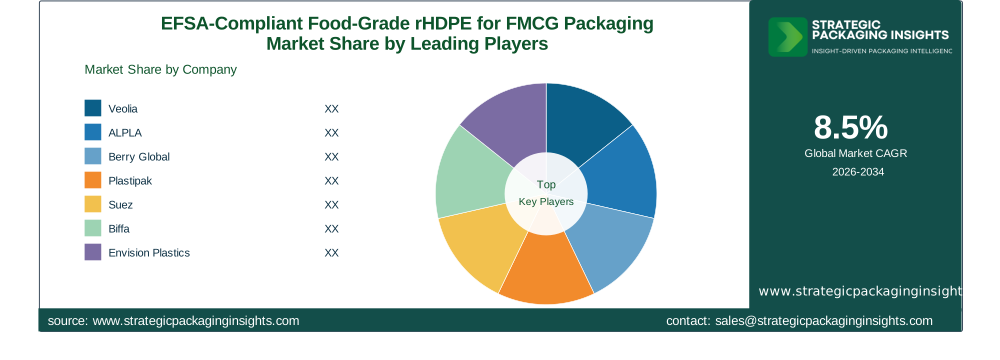
Veolia is a prominent player in the market, known for its comprehensive recycling solutions and commitment to sustainability. The company has established a strong presence in the rHDPE market, leveraging its extensive network and expertise in waste management and recycling. ALPLA, another key player, is renowned for its innovative packaging solutions and focus on sustainability. The company has made significant investments in recycling technologies, enhancing the quality and usability of rHDPE in various packaging applications. Berry Global is also a major player, offering a wide range of packaging solutions and investing in advanced recycling technologies to meet the growing demand for sustainable packaging materials.
Plastipak is a leading provider of plastic packaging solutions, with a strong focus on sustainability and innovation. The company has developed advanced recycling processes that improve the efficiency and cost-effectiveness of rHDPE production, providing a competitive edge in the market. Suez, a global leader in environmental services, is also a key player in the rHDPE market, offering comprehensive recycling solutions and investing in research and development to enhance its product offerings. Other notable players include Biffa, Envision Plastics, Jayplas, KW Plastics, and Clean Tech UK, each contributing to the market's growth through their innovative solutions and commitment to sustainability.
The competitive landscape of the EFSA-Compliant Food-Grade rHDPE for FMCG Packaging market is dynamic, with companies continuously striving to enhance their product offerings and expand their market presence. The market is characterized by a high level of innovation, with companies investing in research and development to improve the quality and efficiency of rHDPE production. Collaborations and partnerships are also common, as companies seek to leverage each other's strengths and expand their reach in the market. The growing demand for sustainable packaging solutions presents significant opportunities for companies to capture a larger market share and drive growth in the coming years.
Key Highlights
- The EFSA-Compliant Food-Grade rHDPE market is projected to grow at a CAGR of 8.5% from 2026 to 2034.
- Increasing consumer demand for sustainable packaging solutions is driving market growth.
- Advancements in recycling technologies are enhancing the quality and usability of rHDPE.
- Stringent regulations promoting the use of recycled materials are supporting market expansion.
- Emerging economies offer untapped potential for market growth.
- Key players are investing in research and development to enhance product offerings.
- Collaborations and partnerships are common strategies for market expansion.
- The market faces challenges such as high recycling costs and regulatory complexities.
- Innovative recycling processes are improving the efficiency of rHDPE production.
- Major FMCG companies are adopting rHDPE to meet sustainability goals.
Top Countries Insights
In the EFSA-Compliant Food-Grade rHDPE for FMCG Packaging market, the United States stands out as a key player, with a market size of approximately $300 million and a CAGR of 7%. The country's strong regulatory framework and consumer demand for sustainable packaging solutions drive market growth. The presence of major FMCG companies adopting rHDPE packaging further supports this trend. However, challenges such as high recycling costs and the need for advanced technology to ensure material purity remain.
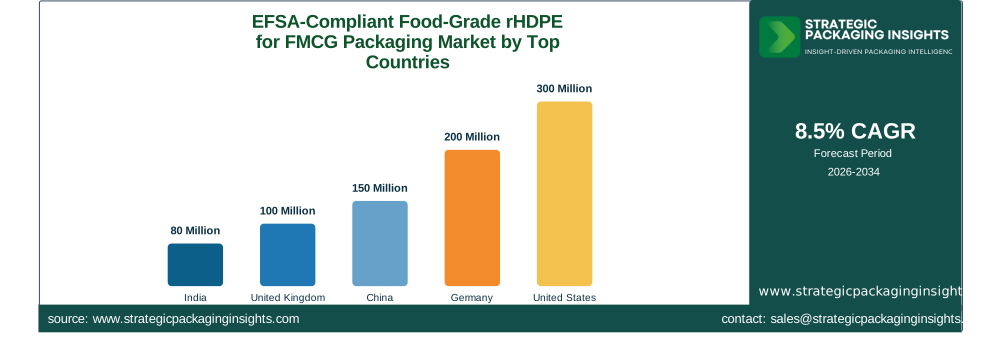
Germany is another significant market, with a market size of around $200 million and a CAGR of 6%. The country's stringent environmental regulations and commitment to sustainability drive the adoption of rHDPE packaging. The presence of leading recycling companies and advancements in recycling technologies further support market growth. However, regulatory complexities and the availability of raw materials for recycling pose challenges.
China, with a market size of approximately $150 million and a CAGR of 9%, offers significant growth potential. The country's rapid economic growth and increasing consumer awareness of sustainable packaging solutions drive market expansion. Government initiatives promoting recycling and the use of recycled materials further support this trend. However, the market faces challenges such as inconsistent raw material supply and regulatory compliance.
The United Kingdom, with a market size of around $100 million and a CAGR of 5%, is also a key player in the market. The country's strong focus on sustainability and the presence of leading recycling companies drive market growth. The adoption of rHDPE packaging by major FMCG companies further supports this trend. However, challenges such as high recycling costs and regulatory complexities remain.
India, with a market size of approximately $80 million and a CAGR of 10%, offers significant growth opportunities. The country's growing consumer base and increasing awareness of sustainable packaging solutions drive market expansion. Government initiatives promoting recycling and the use of recycled materials further support this trend. However, challenges such as inconsistent raw material supply and regulatory compliance pose obstacles.
EFSA-Compliant Food-Grade rHDPE for FMCG Packaging Market Segments Insights

Process Type Analysis
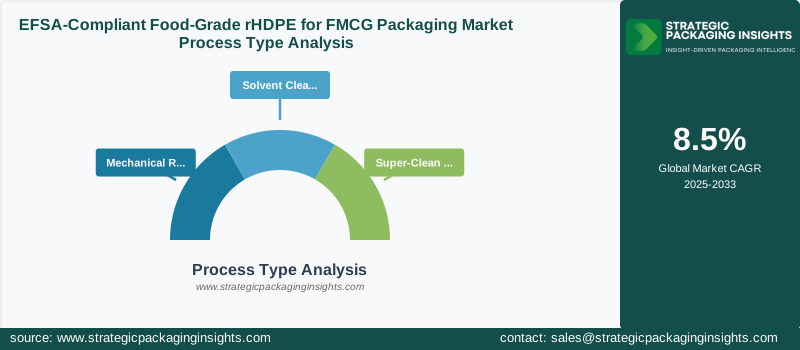
The EFSA-Compliant Food-Grade rHDPE for FMCG Packaging market is segmented by process type into mechanical recycling, solvent cleaning, and super-clean recycling. Mechanical recycling is the most widely used process, driven by its cost-effectiveness and efficiency in producing high-quality rHDPE. This process involves the physical reprocessing of plastic waste into new products, making it a popular choice among manufacturers. However, the quality of the recycled material can vary, depending on the contamination levels and the efficiency of the recycling process. Solvent cleaning, on the other hand, offers a more refined approach, using solvents to remove impurities and contaminants from the plastic waste. This process results in higher purity rHDPE, suitable for food-grade applications. Super-clean recycling is an advanced process that combines mechanical and chemical methods to produce high-quality rHDPE with minimal contamination. This process is gaining traction due to its ability to meet stringent EFSA standards, ensuring safety and quality in food-grade applications.
Application Analysis
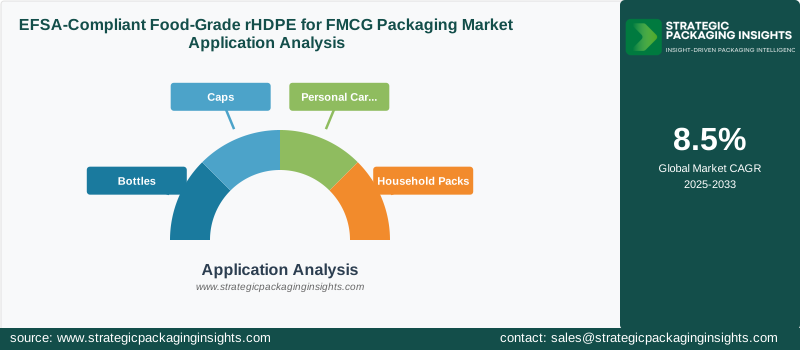
The application segment of the EFSA-Compliant Food-Grade rHDPE for FMCG Packaging market includes bottles, caps, personal care packs, and household packs. Bottles represent the largest application segment, driven by the increasing demand for sustainable packaging solutions in the beverage and personal care industries. The use of rHDPE in bottle production offers several advantages, including durability, lightweight, and recyclability, making it an ideal choice for manufacturers. Caps are another significant application, with rHDPE offering excellent sealing properties and resistance to moisture and chemicals. Personal care packs and household packs are also witnessing increased adoption of rHDPE, driven by the growing consumer demand for eco-friendly packaging solutions. The versatility and durability of rHDPE make it suitable for a wide range of packaging applications, further supporting market growth.
End Use Analysis
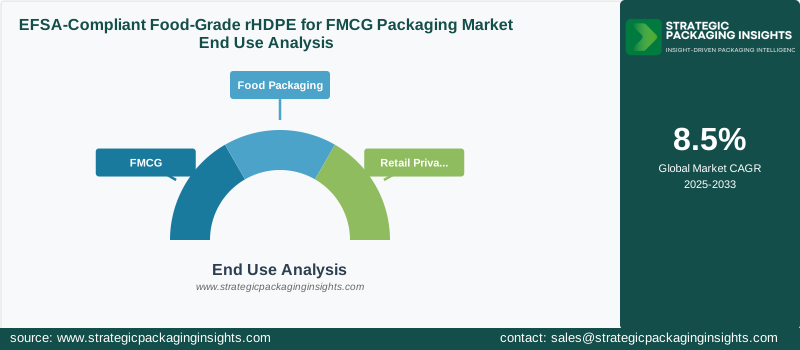
The end-use segment of the EFSA-Compliant Food-Grade rHDPE for FMCG Packaging market includes FMCG, food packaging, and retail private label. The FMCG sector is the largest end-use segment, driven by the increasing demand for sustainable packaging solutions from major companies. The adoption of rHDPE in FMCG packaging offers several benefits, including reduced environmental impact, compliance with regulatory standards, and enhanced brand image. Food packaging is another significant end-use segment, with rHDPE offering excellent barrier properties and safety for food-grade applications. Retail private label is also witnessing increased adoption of rHDPE, driven by the growing consumer demand for eco-friendly packaging solutions. The versatility and durability of rHDPE make it suitable for a wide range of packaging applications, further supporting market growth.
Grade Analysis
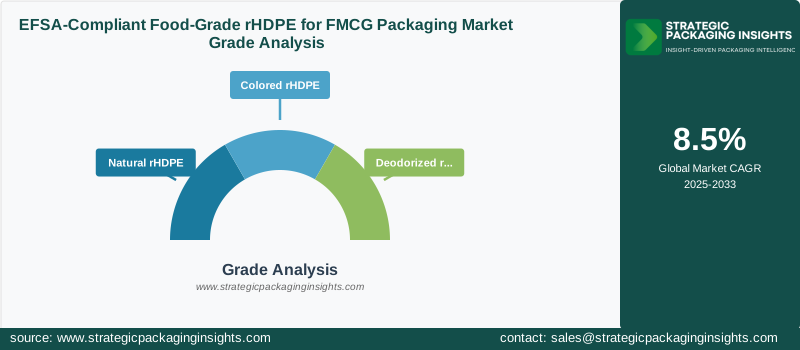
The grade segment of the EFSA-Compliant Food-Grade rHDPE for FMCG Packaging market includes natural rHDPE, colored rHDPE, and deodorized rHDPE. Natural rHDPE is the most widely used grade, driven by its versatility and suitability for a wide range of packaging applications. This grade offers excellent durability, lightweight, and recyclability, making it an ideal choice for manufacturers. Colored rHDPE is also gaining traction, offering aesthetic appeal and branding opportunities for companies. Deodorized rHDPE is a specialized grade, designed to eliminate odors and improve the sensory experience of packaged products. This grade is particularly popular in the food and personal care industries, where product quality and consumer experience are paramount.
EFSA-Compliant Food-Grade rHDPE for FMCG Packaging Market Segments
The EFSA-Compliant Food-Grade rHDPE for FMCG Packaging market has been segmented on the basis ofProcess Type
- Mechanical Recycling
- Solvent Cleaning
- Super-Clean Recycling
Application
- Bottles
- Caps
- Personal Care Packs
- Household Packs
End Use
- FMCG
- Food Packaging
- Retail Private Label
Grade
- Natural rHDPE
- Colored rHDPE
- Deodorized rHDPE
Region
- Asia Pacific
- North America
- Latin America
- Europe
- Middle East & Africa




