


Edible Water Pods Market Outlook
The Edible Water Pods market was valued at $145.67 million in 2025 and is projected to reach $316.38 million by 2034, growing at a CAGR of 9.0% during the forecast period 2026-2034. This market is gaining traction due to increasing environmental concerns and the push for sustainable packaging solutions. Edible water pods offer a biodegradable alternative to traditional plastic bottles, aligning with global efforts to reduce plastic waste. The market is driven by innovations in material science, particularly the use of seaweed and alginate, which are not only sustainable but also safe for consumption. The growing awareness among consumers about the environmental impact of plastic waste is further propelling the demand for edible water pods.
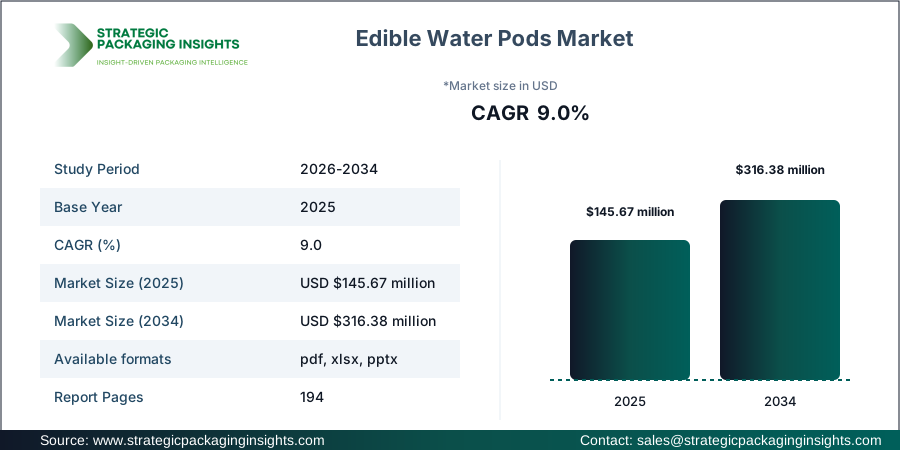
Despite the promising growth, the edible water pods market faces challenges such as high production costs and limited consumer awareness. Regulatory hurdles related to food safety and packaging standards also pose significant restraints. However, the potential for growth remains substantial as companies continue to innovate and improve the cost-effectiveness of production processes. The market's expansion is supported by increasing investments in research and development, as well as strategic partnerships aimed at enhancing product offerings and expanding market reach. As consumer preferences shift towards eco-friendly products, the edible water pods market is poised for significant growth.
Report Scope
| Attributes | Details |
| Report Title | Edible Water Pods Market Size, Future Growth and Forecast 2034 |
| Material | Seaweed, Alginate |
| Size | Small, Large |
| Application | Events, Retail |
| Flavor | Plain, Flavored |
| Region | Asia Pacific, North America, Latin America, Europe, Middle East & Africa |
| Base Year | 2025 |
| Historic Period | 2018-2024 |
| Forecast Period | 2026-2034 |
| Number of Pages | 194 |
| Customization Available | Yes* |
Opportunities & Threats
The edible water pods market presents numerous opportunities, particularly in the realm of sustainability and environmental conservation. As global awareness of plastic pollution rises, there is a growing demand for eco-friendly alternatives. Edible water pods, being biodegradable, offer a viable solution to the plastic waste problem. This creates a significant opportunity for companies to capitalize on the increasing consumer preference for sustainable products. Additionally, the market is ripe for innovation, with potential for new flavors and applications that can cater to diverse consumer preferences. The expansion of distribution channels, including online retail, also presents an opportunity to reach a broader audience and increase market penetration.
Another opportunity lies in the potential for partnerships and collaborations with events and organizations focused on sustainability. Large-scale events, such as marathons and music festivals, are increasingly seeking sustainable solutions to reduce their environmental impact. By partnering with such events, companies can not only increase their visibility but also demonstrate the practical applications of edible water pods in reducing plastic waste. Furthermore, government initiatives and policies promoting sustainable packaging solutions can provide a supportive regulatory environment, encouraging more companies to enter the market and innovate.
However, the market also faces threats, primarily from the high production costs associated with edible water pods. The cost of raw materials, such as seaweed and alginate, can be high, impacting the overall cost-effectiveness of production. Additionally, the market is still in its nascent stage, with limited consumer awareness and acceptance. Overcoming these challenges requires significant investment in marketing and consumer education to highlight the benefits and applications of edible water pods. Moreover, competition from traditional plastic packaging and other sustainable alternatives poses a threat to market growth.
Drivers & Challenges
The primary driver of the edible water pods market is the increasing environmental awareness and the global push towards reducing plastic waste. Consumers are becoming more conscious of their environmental footprint, leading to a shift in preference towards sustainable and eco-friendly products. Edible water pods, being biodegradable, align perfectly with this trend, offering a sustainable alternative to single-use plastic bottles. Additionally, advancements in material science, particularly the use of seaweed and alginate, have made it possible to produce edible water pods that are not only environmentally friendly but also safe for consumption. These innovations are driving the market forward, attracting both consumers and investors.
Another significant driver is the growing support from governments and regulatory bodies for sustainable packaging solutions. Many countries are implementing policies and regulations aimed at reducing plastic waste, creating a favorable environment for the growth of the edible water pods market. This regulatory support, coupled with increasing investments in research and development, is encouraging companies to innovate and expand their product offerings. The market is also benefiting from the increasing popularity of health and wellness trends, as consumers seek products that are not only environmentally friendly but also beneficial for their health.
Despite these drivers, the market faces several challenges. One of the main challenges is the high production cost associated with edible water pods. The cost of raw materials, such as seaweed and alginate, can be high, impacting the overall cost-effectiveness of production. Additionally, the market is still in its early stages, with limited consumer awareness and acceptance. Overcoming these challenges requires significant investment in marketing and consumer education to highlight the benefits and applications of edible water pods. Furthermore, competition from traditional plastic packaging and other sustainable alternatives poses a threat to market growth.
Market Share Analysis
The edible water pods market is characterized by a competitive landscape with several key players striving to gain a foothold in this emerging market. Companies such as Notpla, Ooho, and Skip Drinks are at the forefront, leveraging their innovative approaches to capture market share. Notpla, for instance, has been a pioneer in the development of seaweed-based packaging solutions, gaining significant attention for its sustainable and biodegradable products. Similarly, Ooho has made a name for itself with its innovative water pods, which have been used in various events and marathons, showcasing their practical applications.
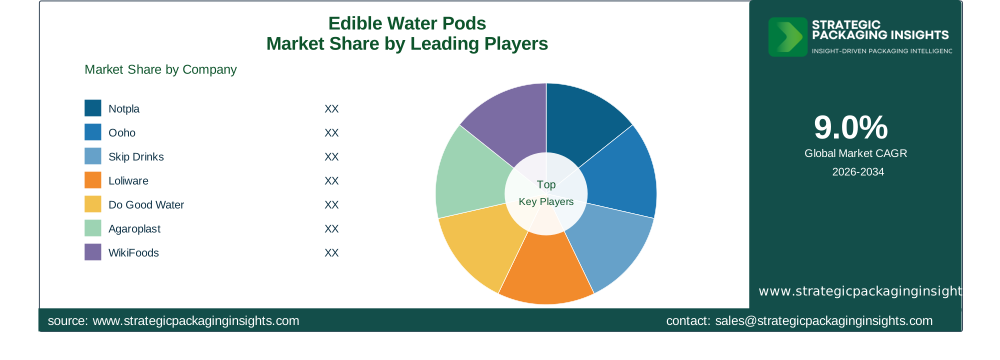
Other notable companies in the market include Loliware, Do Good Water, and Agaroplast, each bringing unique offerings to the table. Loliware, known for its edible cups, has expanded its product line to include edible water pods, capitalizing on its expertise in biodegradable materials. Do Good Water focuses on providing sustainable water solutions, emphasizing the environmental benefits of its products. Agaroplast, on the other hand, specializes in the use of agar-based materials, offering an alternative to traditional seaweed-based pods.
WikiFoods, Tôm Crowie, Sway, and The Water Bulb are also key players in the market, each contributing to the competitive landscape with their innovative products and solutions. WikiFoods, for example, has developed a range of edible packaging solutions, including water pods, that cater to the growing demand for sustainable products. Tôm Crowie and Sway are known for their focus on flavor innovation, offering a variety of flavored water pods to appeal to diverse consumer preferences. The Water Bulb, with its unique approach to water packaging, has carved out a niche in the market, attracting environmentally conscious consumers.
The competitive landscape of the edible water pods market is dynamic, with companies continuously innovating to differentiate themselves and capture market share. The market is expected to witness increased competition as more players enter the space, driven by the growing demand for sustainable packaging solutions. Companies are likely to focus on expanding their product offerings, enhancing distribution channels, and forming strategic partnerships to strengthen their market position and capitalize on the growing opportunities in the edible water pods market.
Key Highlights
- The edible water pods market is projected to grow at a CAGR of 9.0% from 2026 to 2034.
- Key players include Notpla, Ooho, Skip Drinks, and Loliware, among others.
- Seaweed and alginate are the primary materials used in the production of edible water pods.
- The market is driven by increasing environmental awareness and the push for sustainable packaging solutions.
- High production costs and limited consumer awareness are significant challenges.
- Government support and regulatory policies favoring sustainable packaging are boosting market growth.
- Innovations in flavor and application are expanding the market's reach and appeal.
- Partnerships with events and organizations focused on sustainability present growth opportunities.
- The market is characterized by a competitive landscape with continuous innovation.
Top Countries Insights
In the edible water pods market, the United States stands out as a key player, with a market size of approximately $50 million and a CAGR of 8%. The country's strong focus on sustainability and environmental conservation drives demand for eco-friendly packaging solutions. Government initiatives promoting sustainable practices further bolster market growth. However, challenges such as high production costs and consumer awareness need to be addressed to fully capitalize on the market potential.
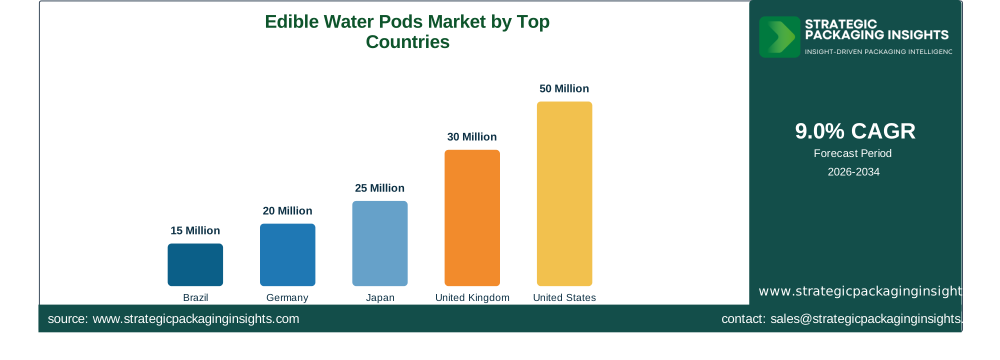
The United Kingdom is another significant market, with a market size of around $30 million and a CAGR of 7%. The UK's stringent regulations on plastic waste and strong consumer preference for sustainable products drive the demand for edible water pods. The market benefits from a supportive regulatory environment and increasing investments in research and development. However, the high cost of raw materials remains a challenge for market players.
In Asia, Japan is emerging as a promising market, with a market size of $25 million and a CAGR of 10%. The country's focus on innovation and technology, coupled with a strong consumer preference for sustainable products, drives market growth. Government policies promoting eco-friendly packaging solutions further support the market's expansion. However, the market faces challenges related to consumer awareness and acceptance.
Germany, with a market size of $20 million and a CAGR of 9%, is a key player in the European market. The country's strong focus on sustainability and environmental conservation drives demand for edible water pods. Government initiatives promoting sustainable practices and increasing investments in research and development further bolster market growth. However, challenges such as high production costs and consumer awareness need to be addressed to fully capitalize on the market potential.
In Latin America, Brazil is a growing market, with a market size of $15 million and a CAGR of 11%. The country's increasing focus on sustainability and environmental conservation drives demand for eco-friendly packaging solutions. Government initiatives promoting sustainable practices and increasing investments in research and development further bolster market growth. However, challenges such as high production costs and consumer awareness need to be addressed to fully capitalize on the market potential.
Edible Water Pods Market Segments Insights

Material Analysis
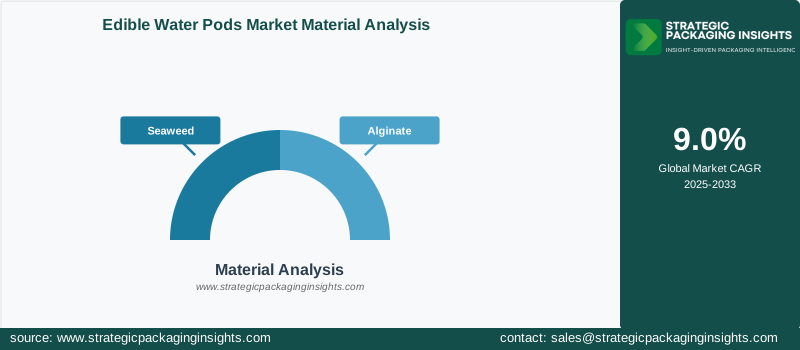
The material segment of the edible water pods market is primarily dominated by seaweed and alginate. Seaweed, being a natural and biodegradable material, is highly favored for its sustainability and minimal environmental impact. It is rich in nutrients and offers a safe and edible alternative to traditional packaging materials. The use of seaweed in edible water pods is driven by its abundance and renewability, making it a cost-effective option for manufacturers. Alginate, derived from brown seaweed, is another popular material due to its gelling properties, which are ideal for encapsulating liquids. The demand for alginate is driven by its versatility and ability to form stable gels, making it suitable for various applications in the edible water pods market.
Manufacturers are increasingly focusing on developing innovative materials that enhance the functionality and appeal of edible water pods. The trend towards natural and organic materials is gaining momentum, with consumers seeking products that are not only environmentally friendly but also safe for consumption. The competition in the material segment is intense, with companies investing in research and development to improve the properties and performance of their products. The growing demand for sustainable packaging solutions is expected to drive further innovation in the material segment, with new materials and formulations being introduced to meet the evolving needs of consumers.
Size Analysis
The size segment of the edible water pods market is categorized into small and large pods. Small pods are popular for their convenience and portability, making them ideal for on-the-go consumption. They are often used in events and marathons, where participants require quick and easy access to hydration. The demand for small pods is driven by their practicality and ease of use, appealing to consumers who lead active lifestyles. Large pods, on the other hand, are favored for their capacity to hold more liquid, making them suitable for retail and commercial applications. The demand for large pods is driven by their ability to provide a substantial amount of hydration in a single serving, catering to consumers who prefer larger quantities.
The competition in the size segment is driven by consumer preferences and the need for customization. Manufacturers are focusing on offering a variety of sizes to cater to different consumer needs and preferences. The trend towards personalization and customization is gaining traction, with consumers seeking products that align with their individual lifestyles and preferences. The size segment is expected to witness further growth as manufacturers continue to innovate and introduce new sizes and formats to meet the diverse needs of consumers.
Application Analysis
The application segment of the edible water pods market is divided into events and retail. Events, such as marathons, music festivals, and sports competitions, are significant drivers of demand for edible water pods. These events require sustainable and convenient hydration solutions, making edible water pods an ideal choice. The demand for edible water pods in events is driven by their practicality and environmental benefits, as they help reduce plastic waste and promote sustainability. Retail, on the other hand, is a growing segment, with consumers increasingly seeking eco-friendly alternatives to traditional bottled water. The demand for edible water pods in retail is driven by the growing awareness of environmental issues and the desire for sustainable products.
The competition in the application segment is driven by the need for innovation and differentiation. Manufacturers are focusing on developing new applications and expanding their product offerings to cater to different consumer needs and preferences. The trend towards sustainability and environmental conservation is expected to drive further growth in the application segment, with new applications and use cases being introduced to meet the evolving needs of consumers. The application segment is expected to witness further growth as manufacturers continue to innovate and introduce new applications and formats to meet the diverse needs of consumers.
Flavor Analysis
The flavor segment of the edible water pods market is categorized into plain and flavored pods. Plain pods are popular for their simplicity and versatility, making them suitable for a wide range of applications. They are often used in events and marathons, where participants require quick and easy access to hydration without any added flavors. The demand for plain pods is driven by their practicality and ease of use, appealing to consumers who prefer a neutral taste. Flavored pods, on the other hand, are favored for their ability to provide a refreshing and enjoyable hydration experience. The demand for flavored pods is driven by their ability to offer a variety of taste options, catering to consumers who prefer flavored beverages.
The competition in the flavor segment is driven by consumer preferences and the need for innovation. Manufacturers are focusing on offering a variety of flavors to cater to different consumer tastes and preferences. The trend towards personalization and customization is gaining traction, with consumers seeking products that align with their individual tastes and preferences. The flavor segment is expected to witness further growth as manufacturers continue to innovate and introduce new flavors and formats to meet the diverse needs of consumers.
Edible Water Pods Market Segments
The Edible Water Pods market has been segmented on the basis ofMaterial
- Seaweed
- Alginate
Size
- Small
- Large
Application
- Events
- Retail
Flavor
- Plain
- Flavored
Region
- Asia Pacific
- North America
- Latin America
- Europe
- Middle East & Africa




