


Dosing Bottles Market Outlook
The dosing bottles market was valued at $9.90 billion in 2025 and is projected to reach $15.23 billion by 2034, growing at a CAGR of 4.9% during the forecast period 2026-2034. This growth is driven by increasing demand across various applications such as pharmaceuticals, agrochemicals, and household cleaners. The market is witnessing a surge in demand due to the rising need for precise dosing solutions in these sectors. The pharmaceutical industry, in particular, is a significant contributor to this growth, as dosing bottles offer an effective solution for accurate medication dispensing. Additionally, the agrochemical sector is adopting dosing bottles for their ability to provide precise measurements, reducing waste and improving efficiency.
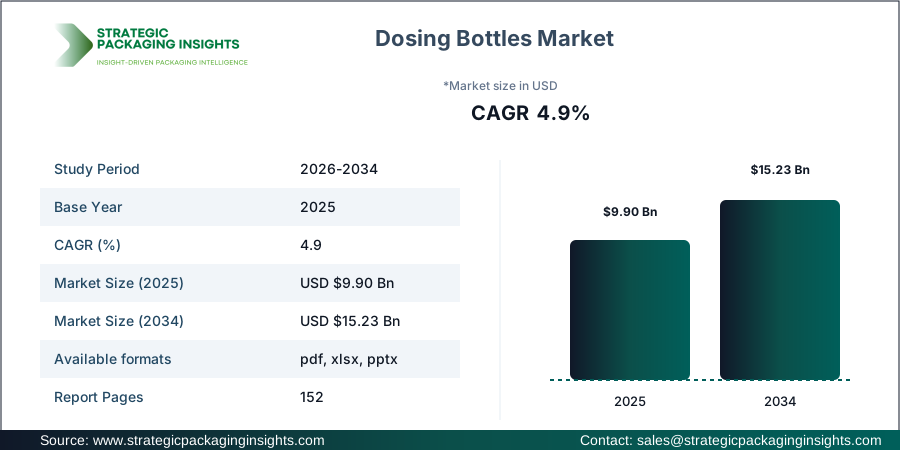
Despite the promising growth prospects, the dosing bottles market faces certain challenges. Regulatory constraints and environmental concerns regarding plastic usage are significant restraining factors. However, the market holds substantial growth potential due to innovations in material types and closure mechanisms. The development of eco-friendly materials and advanced closure systems is expected to mitigate some of these challenges, offering new opportunities for market players. Furthermore, the increasing focus on sustainability and the circular economy is likely to drive the adoption of recyclable and biodegradable materials in dosing bottle production, further enhancing market growth potential.
Report Scope
| Attributes | Details |
| Report Title | Dosing Bottles Market Size, Future Growth and Forecast 2034 |
| By Product Type | Measuring Chamber Bottles, Squeeze Dosing Bottles, Graduated Bottles |
| By Material Type | HDPE, PET, PP |
| By Application | Agrochemicals, Household Cleaners, Automotive Fluids, Pharmaceuticals |
| By Closure Type | Measuring Caps, Child-Resistant Caps, Dispensing Caps |
| Region | Asia Pacific, North America, Latin America, Europe, Middle East & Africa |
| Base Year | 2025 |
| Historic Period | 2018-2024 |
| Forecast Period | 2026-2034 |
| Number of Pages | 152 |
| Customization Available | Yes* |
Opportunities & Threats
The dosing bottles market presents numerous opportunities, particularly in the realm of material innovation. With growing environmental concerns, there is a significant push towards developing sustainable and eco-friendly materials for dosing bottles. Companies are investing in research and development to create biodegradable and recyclable materials that meet regulatory standards while maintaining product integrity. This shift towards sustainable materials not only addresses environmental concerns but also opens up new market segments, as consumers and industries increasingly prefer eco-friendly products. Additionally, the integration of smart technologies in dosing bottles, such as digital measurement indicators and IoT connectivity, offers further opportunities for market expansion.
Another opportunity lies in the expanding pharmaceutical and healthcare sectors. As the global population ages and healthcare needs increase, the demand for precise and reliable dosing solutions is expected to rise. Dosing bottles, with their ability to provide accurate measurements, are well-positioned to meet this demand. The pharmaceutical industry's stringent regulations regarding dosage accuracy further bolster the market's growth prospects. Moreover, the increasing prevalence of chronic diseases and the subsequent rise in medication consumption are likely to drive the demand for dosing bottles in the healthcare sector.
However, the market is not without its threats. One of the primary challenges is the regulatory landscape surrounding plastic usage. Governments worldwide are implementing stringent regulations to curb plastic waste, which could impact the production and use of plastic dosing bottles. Companies must navigate these regulations carefully and invest in alternative materials to remain competitive. Additionally, the threat of substitutes, such as flexible packaging solutions and alternative dispensing systems, poses a challenge to the market. These substitutes offer similar benefits and may appeal to cost-conscious consumers, potentially affecting the market share of traditional dosing bottles.
Drivers & Challenges
The dosing bottles market is primarily driven by the increasing demand for precise and efficient dosing solutions across various industries. In the pharmaceutical sector, the need for accurate medication dispensing is a critical driver. Dosing bottles provide a reliable solution for ensuring patients receive the correct dosage, thereby enhancing treatment efficacy and patient safety. Similarly, in the agrochemical industry, dosing bottles are essential for precise application of fertilizers and pesticides, reducing waste and improving crop yield. The growing awareness of the benefits of accurate dosing in these sectors is a significant driver of market growth.
Technological advancements in dosing bottle design and manufacturing processes are also driving market growth. Innovations such as child-resistant caps, tamper-evident closures, and advanced dispensing mechanisms enhance the functionality and safety of dosing bottles, making them more appealing to consumers and industries alike. Furthermore, the development of smart dosing bottles with digital measurement indicators and IoT connectivity is revolutionizing the market, offering new functionalities and improving user experience. These technological advancements are expected to continue driving market growth in the coming years.
Despite these drivers, the dosing bottles market faces several challenges. One of the primary challenges is the environmental impact of plastic waste. As consumers and governments become increasingly concerned about plastic pollution, there is growing pressure on manufacturers to develop sustainable alternatives. This challenge is compounded by the regulatory landscape, which is becoming more stringent regarding plastic usage. Companies must invest in research and development to create eco-friendly materials and innovative designs that meet regulatory standards while maintaining product performance. Additionally, the high cost of raw materials and manufacturing processes poses a challenge to market growth, as companies strive to balance cost-effectiveness with quality and sustainability.
Market Share Analysis
The dosing bottles market is characterized by a competitive landscape with several key players vying for market share. Companies such as Berry Global, ALPLA, Greiner Packaging, and Silgan Plastics are prominent players in the market, each holding a significant share. These companies are known for their extensive product portfolios, innovative designs, and strong distribution networks, which enable them to maintain a competitive edge. The market is also witnessing the entry of new players, further intensifying competition. As a result, companies are focusing on product differentiation, strategic partnerships, and mergers and acquisitions to strengthen their market position.
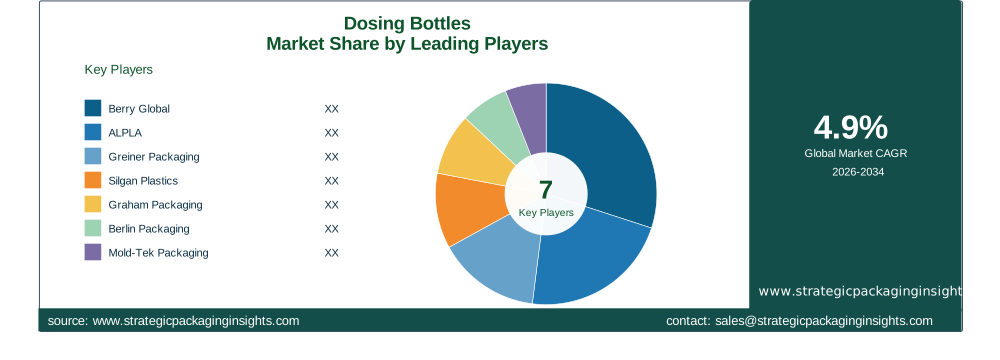
Berry Global is a leading player in the dosing bottles market, known for its innovative packaging solutions and commitment to sustainability. The company offers a wide range of dosing bottles made from recyclable materials, catering to various industries such as pharmaceuticals, agrochemicals, and household cleaners. ALPLA, another major player, is renowned for its advanced manufacturing technologies and focus on eco-friendly packaging solutions. The company's dosing bottles are designed to meet the highest standards of quality and safety, making them a preferred choice for many industries.
Greiner Packaging and Silgan Plastics are also key players in the market, offering a diverse range of dosing bottles with innovative closure systems and material options. Greiner Packaging is known for its focus on sustainability and circular economy principles, while Silgan Plastics is recognized for its expertise in plastic packaging solutions. Both companies have a strong presence in the global market, supported by extensive distribution networks and strategic partnerships.
Other notable companies in the dosing bottles market include Graham Packaging, Berlin Packaging, Mold-Tek Packaging, C.L. Smith, Plastipak, and Comar. These companies are actively investing in research and development to enhance their product offerings and meet the evolving needs of consumers and industries. With a focus on innovation, sustainability, and customer satisfaction, these companies are well-positioned to capitalize on the growth opportunities in the dosing bottles market.
Key Highlights
- The dosing bottles market is projected to grow from $9.90 billion in 2025 to $15.23 billion by 2034, at a CAGR of 4.9%.
- Key drivers include the increasing demand for precise dosing solutions in pharmaceuticals and agrochemicals.
- Technological advancements in dosing bottle design, such as smart features and advanced closures, are driving market growth.
- Environmental concerns and regulatory constraints on plastic usage pose challenges to market growth.
- Companies are focusing on developing eco-friendly materials and innovative designs to address sustainability concerns.
- The market is characterized by intense competition, with key players such as Berry Global and ALPLA leading the way.
- Strategic partnerships, mergers, and acquisitions are common strategies among market players to strengthen their position.
- The pharmaceutical and healthcare sectors offer significant growth opportunities for dosing bottles.
- Smart dosing bottles with digital measurement indicators and IoT connectivity are emerging trends in the market.
Top Countries Insights
In the dosing bottles market, the United States holds a significant share, driven by the robust pharmaceutical and healthcare sectors. The market size in the U.S. is substantial, with a CAGR of 5%. The country's stringent regulations on medication dispensing and the growing demand for precise dosing solutions are key growth drivers. Additionally, the presence of major market players and advanced manufacturing technologies contribute to the market's strength. However, environmental concerns and regulatory constraints on plastic usage pose challenges, prompting companies to invest in sustainable materials.
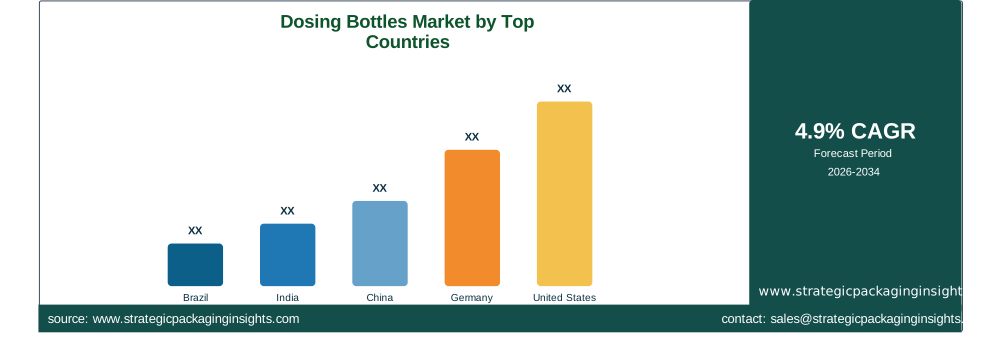
Germany is another key market for dosing bottles, with a CAGR of 4%. The country's strong focus on sustainability and innovation drives the demand for eco-friendly dosing bottles. The pharmaceutical and agrochemical industries are significant contributors to market growth, with a growing emphasis on precise dosing solutions. Germany's regulatory framework supports the development of sustainable packaging solutions, further enhancing market prospects. However, the high cost of raw materials and manufacturing processes remains a challenge for market players.
China's dosing bottles market is experiencing rapid growth, with a CAGR of 6%. The country's expanding pharmaceutical and agrochemical sectors are key drivers, supported by government initiatives to improve healthcare infrastructure and agricultural productivity. The increasing demand for precise dosing solutions and the adoption of advanced technologies in packaging are contributing to market growth. However, regulatory challenges and environmental concerns regarding plastic usage are potential hurdles for market players.
In India, the dosing bottles market is growing at a CAGR of 5%. The country's burgeoning pharmaceutical industry and increasing healthcare needs are driving demand for dosing bottles. The government's focus on improving healthcare access and the rising prevalence of chronic diseases are key growth drivers. However, the market faces challenges related to regulatory compliance and the availability of sustainable materials. Companies are investing in research and development to address these challenges and capitalize on growth opportunities.
Brazil's dosing bottles market is also witnessing growth, with a CAGR of 4%. The country's agrochemical and pharmaceutical sectors are significant contributors to market expansion. The demand for precise dosing solutions and the adoption of advanced packaging technologies are driving market growth. However, economic challenges and regulatory constraints on plastic usage pose potential hurdles for market players. Companies are focusing on developing innovative and sustainable solutions to overcome these challenges and strengthen their market position.
Dosing Bottles Market Segments Insights

Product Type Analysis
The dosing bottles market is segmented by product type into measuring chamber bottles, squeeze dosing bottles, and graduated bottles. Measuring chamber bottles are gaining popularity due to their ability to provide precise measurements, making them ideal for pharmaceutical and agrochemical applications. These bottles are designed with integrated measuring chambers that allow users to dispense accurate doses, reducing waste and improving efficiency. The demand for measuring chamber bottles is driven by the increasing need for precise dosing solutions in the healthcare and agricultural sectors.
Squeeze dosing bottles are also witnessing significant demand, particularly in the household cleaners and automotive fluids segments. These bottles offer convenience and ease of use, allowing users to dispense the desired amount of liquid with a simple squeeze. The growing demand for user-friendly packaging solutions in the household and automotive industries is driving the adoption of squeeze dosing bottles. Additionally, the development of innovative closure systems and materials is enhancing the functionality and appeal of these bottles, further boosting their market share.
Material Type Analysis
The dosing bottles market is segmented by material type into HDPE, PET, and PP. HDPE is the most commonly used material due to its durability, chemical resistance, and cost-effectiveness. It is widely used in the production of dosing bottles for pharmaceuticals, agrochemicals, and household cleaners. The demand for HDPE dosing bottles is driven by their ability to withstand harsh chemicals and provide long-lasting performance. However, environmental concerns regarding plastic usage are prompting companies to explore alternative materials and develop sustainable solutions.
PET and PP are also popular materials in the dosing bottles market, offering unique benefits such as transparency, lightweight, and recyclability. PET dosing bottles are favored for their clarity and aesthetic appeal, making them suitable for consumer-facing products. PP, on the other hand, is known for its high heat resistance and versatility, making it ideal for a wide range of applications. The growing focus on sustainability and the circular economy is driving the adoption of recyclable materials like PET and PP in dosing bottle production.
Application Analysis
The dosing bottles market is segmented by application into agrochemicals, household cleaners, automotive fluids, and pharmaceuticals. The pharmaceutical sector is a major driver of market growth, with dosing bottles playing a crucial role in ensuring accurate medication dispensing. The increasing prevalence of chronic diseases and the growing demand for precise dosing solutions are key factors driving the adoption of dosing bottles in the healthcare industry. Additionally, the stringent regulations regarding dosage accuracy in the pharmaceutical sector further bolster market growth.
In the agrochemical industry, dosing bottles are essential for the precise application of fertilizers and pesticides. The demand for dosing bottles in this sector is driven by the need to reduce waste and improve crop yield. The household cleaners and automotive fluids segments also contribute to market growth, with dosing bottles offering convenience and ease of use for consumers. The development of innovative designs and materials is enhancing the functionality and appeal of dosing bottles across these applications, further driving market expansion.
Closure Type Analysis
The dosing bottles market is segmented by closure type into measuring caps, child-resistant caps, and dispensing caps. Measuring caps are widely used in the pharmaceutical and agrochemical sectors, providing an accurate and convenient way to measure and dispense liquids. The demand for measuring caps is driven by the increasing need for precise dosing solutions in these industries. Child-resistant caps are also gaining popularity, particularly in the pharmaceutical sector, where safety is a top priority. These caps are designed to prevent accidental ingestion by children, enhancing the safety of dosing bottles.
Dispensing caps are favored in the household cleaners and automotive fluids segments, offering convenience and ease of use for consumers. The development of innovative closure systems, such as tamper-evident and leak-proof designs, is enhancing the functionality and appeal of dispensing caps. The growing demand for user-friendly packaging solutions is driving the adoption of advanced closure systems in the dosing bottles market. Companies are investing in research and development to create innovative and sustainable closure solutions that meet the evolving needs of consumers and industries.
Dosing Bottles Market Segments
The Dosing Bottles market has been segmented on the basis ofBy Product Type
- Measuring Chamber Bottles
- Squeeze Dosing Bottles
- Graduated Bottles
By Material Type
- HDPE
- PET
- PP
By Application
- Agrochemicals
- Household Cleaners
- Automotive Fluids
- Pharmaceuticals
By Closure Type
- Measuring Caps
- Child-Resistant Caps
- Dispensing Caps
Region
- Asia Pacific
- North America
- Latin America
- Europe
- Middle East & Africa




