


Disposable Plate Market Outlook
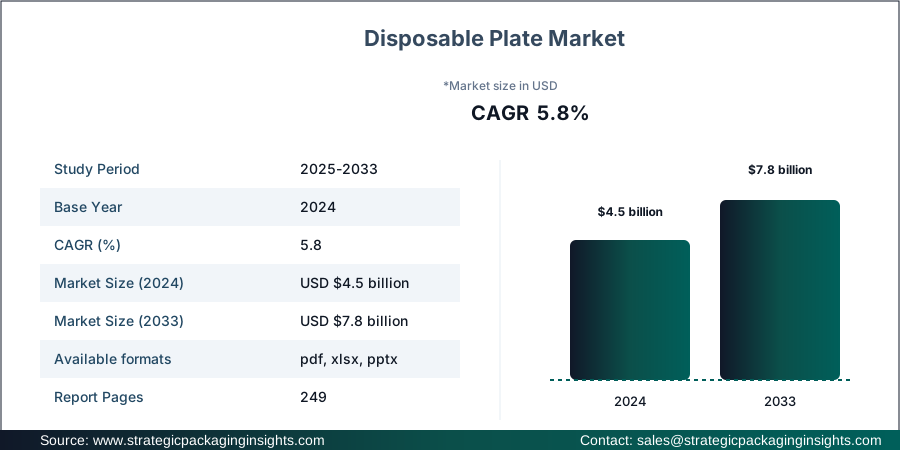
The disposable plate market was valued at $4.5 billion in 2024 and is projected to reach $7.8 billion by 2033, growing at a CAGR of 5.8% during the forecast period 2025-2033. This growth is driven by increasing consumer demand for convenience and the rising trend of outdoor dining and events, which necessitate easy-to-use and disposable tableware. The market is also benefiting from the growing awareness of hygiene and sanitation, especially in the wake of global health concerns. Furthermore, the shift towards eco-friendly and biodegradable materials is opening new avenues for market expansion, as consumers and businesses alike seek sustainable alternatives to traditional plastic plates.
Report Scope
| Attributes | Details |
| Report Title | Disposable Plate Market Size, Future Growth and Forecast 2033 |
| Material | Plastic, Paper, Bamboo, Bagasse |
| Application | Household, Commercial, Institutional |
| Distribution Channel | Online, Offline |
| Base Year | 2024 |
| Historic Period | 2017-2023 |
| Forecast Period | 2025-2033 |
| Number of Pages | 249 |
| Customization Available | Yes* |
Opportunities & Threats
One of the significant opportunities in the disposable plate market is the increasing consumer preference for eco-friendly products. As environmental concerns continue to rise, there is a growing demand for plates made from biodegradable materials such as bagasse, bamboo, and recycled paper. This shift is not only driven by consumer preferences but also by stringent government regulations aimed at reducing plastic waste. Companies that can innovate and offer sustainable solutions are likely to capture a significant share of the market. Additionally, the expansion of e-commerce platforms provides an opportunity for manufacturers to reach a broader audience, offering convenience and a wider range of products to consumers globally.
Another opportunity lies in the growing hospitality and food service industry, which is a major consumer of disposable plates. With the increase in outdoor events, festivals, and food delivery services, the demand for disposable plates is expected to rise. This trend is particularly strong in emerging markets where the food service industry is expanding rapidly. Companies that can establish strong distribution networks and partnerships with food service providers will likely benefit from this growth. Moreover, advancements in manufacturing technologies that reduce production costs and improve product quality can also provide a competitive edge.
However, the market faces threats from the increasing scrutiny of single-use plastics and the push for more sustainable alternatives. Regulatory bodies across the globe are implementing bans and restrictions on plastic products, which could impact the production and sale of traditional plastic disposable plates. Additionally, fluctuations in raw material prices, particularly for biodegradable materials, can pose a challenge for manufacturers. Companies need to navigate these regulatory landscapes carefully and invest in research and development to create cost-effective, sustainable products that meet consumer and regulatory demands.
Drivers & Challenges
The primary driver of the disposable plate market is the growing demand for convenience and hygiene. In today's fast-paced world, consumers are increasingly looking for products that simplify their lives, and disposable plates fit this need perfectly. They are easy to use, require no cleaning, and are ideal for on-the-go lifestyles. Additionally, the heightened awareness of hygiene, especially in public and shared spaces, has led to an increased use of disposable plates in various settings, including restaurants, offices, and events. This trend is further supported by the growth of the food delivery and takeaway industry, which relies heavily on disposable tableware.
Another significant driver is the shift towards sustainable and eco-friendly products. As consumers become more environmentally conscious, there is a growing demand for disposable plates made from renewable and biodegradable materials. This trend is supported by government regulations aimed at reducing plastic waste and promoting sustainable practices. Companies that can offer eco-friendly alternatives are likely to see increased demand and market share. Furthermore, advancements in manufacturing technologies are enabling the production of high-quality, sustainable disposable plates at competitive prices, making them more accessible to a broader audience.
Despite these drivers, the market faces several challenges. One of the main challenges is the high cost of biodegradable materials compared to traditional plastics. This can make eco-friendly disposable plates more expensive for consumers, potentially limiting their adoption. Additionally, the market is highly competitive, with numerous players offering a wide range of products. Companies need to differentiate themselves through innovation, quality, and pricing strategies to maintain their market position. Furthermore, the regulatory landscape is constantly evolving, and companies must stay abreast of changes to ensure compliance and avoid potential fines or restrictions.
Market Share Analysis
The disposable plate market is characterized by a highly competitive landscape with numerous players vying for market share. The market is dominated by a mix of established companies and emerging players, each offering a diverse range of products to cater to different consumer needs. The competitive landscape is shaped by factors such as product innovation, pricing strategies, distribution networks, and brand reputation. Companies that can effectively leverage these factors are likely to gain a competitive edge in the market.
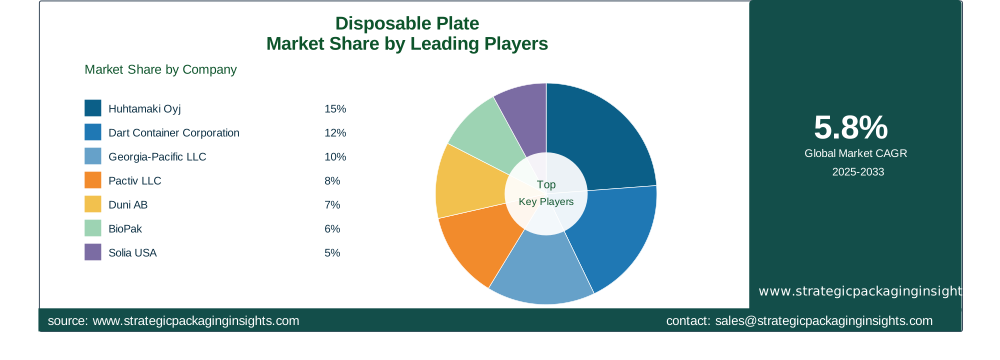
Major players in the market include Huhtamaki Oyj, Dart Container Corporation, Georgia-Pacific LLC, and Pactiv LLC, among others. These companies have established themselves as leaders in the market through their extensive product portfolios, strong distribution networks, and commitment to sustainability. They invest heavily in research and development to innovate and offer new products that meet changing consumer preferences and regulatory requirements. Additionally, these companies have a strong global presence, allowing them to tap into emerging markets and expand their customer base.
Huhtamaki Oyj, for example, is a leading player in the disposable plate market, known for its focus on sustainability and innovation. The company offers a wide range of eco-friendly products made from renewable materials, catering to the growing demand for sustainable solutions. Dart Container Corporation is another major player, offering a diverse range of disposable tableware products, including plates, cups, and cutlery. The company is known for its strong distribution network and commitment to quality, making it a preferred choice for many consumers and businesses.
Georgia-Pacific LLC and Pactiv LLC are also key players in the market, known for their extensive product offerings and strong market presence. Georgia-Pacific LLC, a subsidiary of Koch Industries, offers a wide range of disposable tableware products, including plates, bowls, and cups. The company is committed to sustainability and has implemented various initiatives to reduce its environmental impact. Pactiv LLC, on the other hand, is known for its innovative product designs and focus on customer satisfaction. The company offers a wide range of disposable tableware products, catering to both commercial and consumer markets.
Key Highlights
- The disposable plate market is projected to grow at a CAGR of 5.8% from 2025 to 2033.
- Eco-friendly and biodegradable materials are gaining traction due to environmental concerns.
- The food service industry is a major consumer of disposable plates, driving market demand.
- Regulatory restrictions on single-use plastics are influencing market dynamics.
- Advancements in manufacturing technologies are reducing production costs and improving product quality.
- Online distribution channels are expanding, offering convenience and a wider product range.
- Emerging markets present significant growth opportunities for market players.
Top Countries Insights
In the disposable plate market, the United States holds a significant share, with a market size of approximately $1.2 billion and a CAGR of 4%. The growth in this region is driven by the high demand for convenience products and the strong presence of the food service industry. Additionally, regulatory measures promoting the use of biodegradable materials are encouraging manufacturers to innovate and offer sustainable solutions.
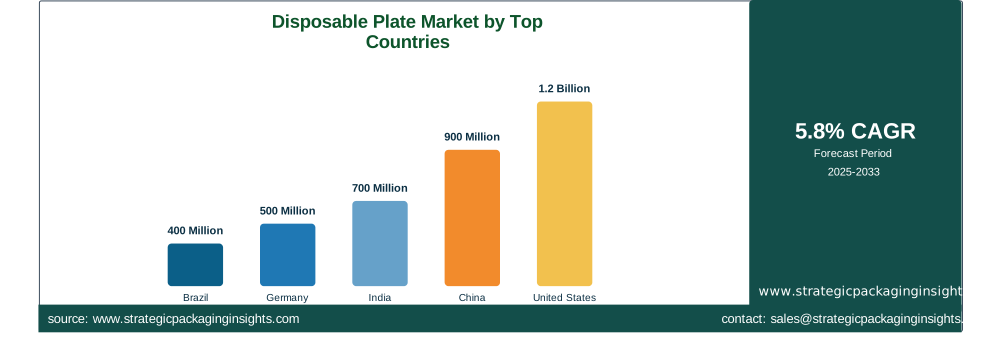
China is another key market, with a market size of $900 million and a CAGR of 6%. The rapid expansion of the food delivery and takeaway industry, coupled with increasing consumer awareness of environmental issues, is driving demand for disposable plates. Government initiatives to reduce plastic waste are also playing a crucial role in shaping the market dynamics.
India, with a market size of $700 million and a CAGR of 7%, is experiencing significant growth due to the rising middle-class population and increasing disposable incomes. The growing trend of outdoor dining and events is boosting demand for disposable plates, while government policies promoting sustainable practices are encouraging the use of eco-friendly materials.
Germany, with a market size of $500 million and a CAGR of 3%, is driven by the strong emphasis on sustainability and environmental protection. The market is characterized by a high demand for biodegradable and compostable products, supported by stringent regulations on single-use plastics.
Brazil, with a market size of $400 million and a CAGR of 5%, is witnessing growth due to the expanding food service industry and increasing consumer preference for convenience products. The market is also influenced by government initiatives to promote sustainable practices and reduce plastic waste.
Disposable Plate Market Segments Insights

Material Analysis
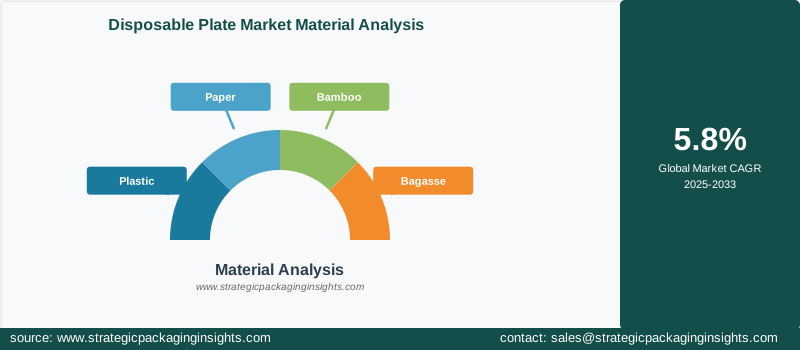
The material segment of the disposable plate market is diverse, encompassing plastic, paper, bamboo, and bagasse. Plastic plates, while still popular due to their low cost and durability, are facing increasing scrutiny due to environmental concerns. As a result, there is a growing shift towards biodegradable materials such as bagasse and bamboo, which are derived from renewable resources and decompose naturally. Paper plates are also gaining traction, particularly those made from recycled materials, as they offer a balance between cost-effectiveness and sustainability. The demand for eco-friendly materials is expected to drive innovation and product development in this segment, with companies investing in research to create high-quality, sustainable alternatives to traditional plastic plates.
In terms of competition, the material segment is highly competitive, with numerous players offering a wide range of products to cater to different consumer preferences. Companies that can offer innovative, sustainable solutions at competitive prices are likely to gain a significant market share. Additionally, the growing consumer awareness of environmental issues is driving demand for products that are not only functional but also environmentally friendly. This trend is expected to continue, with biodegradable materials becoming increasingly popular as consumers and businesses alike seek to reduce their environmental impact.
Application Analysis
The application segment of the disposable plate market is primarily divided into household, commercial, and institutional use. The household segment is driven by the increasing demand for convenience products, particularly among busy families and individuals who prefer disposable tableware for ease of use and hygiene. The commercial segment, which includes restaurants, cafes, and catering services, is a major consumer of disposable plates, driven by the need for cost-effective and convenient solutions for serving food. The institutional segment, which includes schools, hospitals, and other organizations, is also a significant consumer of disposable plates, particularly in settings where hygiene and convenience are paramount.
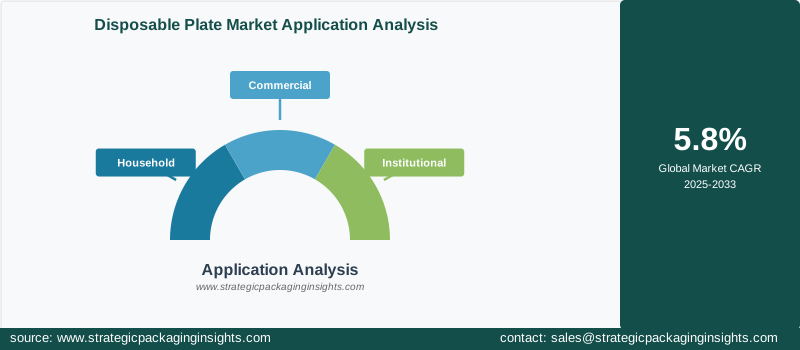
In terms of trends, the application segment is witnessing a growing demand for eco-friendly products, particularly in the commercial and institutional sectors. Businesses and organizations are increasingly seeking sustainable solutions to meet regulatory requirements and consumer preferences. This trend is expected to drive innovation and product development in the application segment, with companies investing in research to create high-quality, sustainable alternatives to traditional disposable plates. Additionally, the growing trend of outdoor dining and events is expected to boost demand for disposable plates, particularly in the commercial segment.
Distribution Channel Analysis
The distribution channel segment of the disposable plate market is divided into online and offline channels. The online channel is experiencing significant growth, driven by the increasing popularity of e-commerce platforms and the convenience they offer to consumers. Online platforms provide a wide range of products, competitive pricing, and the convenience of home delivery, making them an attractive option for consumers. The offline channel, which includes supermarkets, hypermarkets, and specialty stores, remains a significant distribution channel, particularly for consumers who prefer to see and feel products before purchasing.
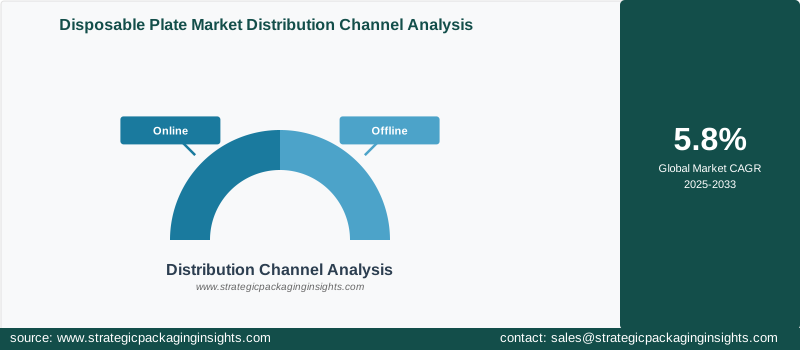
In terms of trends, the distribution channel segment is witnessing a growing shift towards online platforms, driven by the increasing penetration of the internet and smartphones. This trend is expected to continue, with online platforms becoming an increasingly important distribution channel for disposable plates. Companies that can effectively leverage online platforms to reach a broader audience and offer a wide range of products at competitive prices are likely to gain a significant market share. Additionally, the growing trend of direct-to-consumer sales is expected to drive innovation and product development in the distribution channel segment, with companies investing in research to create high-quality, sustainable alternatives to traditional disposable plates.
Regional Analysis
The regional segment of the disposable plate market is diverse, encompassing North America, Europe, Asia Pacific, Latin America, and the Middle East & Africa. North America is a significant market, driven by the high demand for convenience products and the strong presence of the food service industry. Europe is characterized by a strong emphasis on sustainability and environmental protection, with a high demand for biodegradable and compostable products. Asia Pacific is experiencing significant growth, driven by the rapid expansion of the food delivery and takeaway industry and increasing consumer awareness of environmental issues. Latin America and the Middle East & Africa are also witnessing growth, driven by the expanding food service industry and increasing consumer preference for convenience products.
In terms of trends, the regional segment is witnessing a growing demand for eco-friendly products, particularly in North America and Europe. This trend is expected to drive innovation and product development in the regional segment, with companies investing in research to create high-quality, sustainable alternatives to traditional disposable plates. Additionally, the growing trend of outdoor dining and events is expected to boost demand for disposable plates, particularly in the commercial segment. Companies that can effectively leverage regional trends and offer innovative, sustainable solutions at competitive prices are likely to gain a significant market share.
Disposable Plate Market Segments
The Disposable Plate market has been segmented on the basis ofMaterial
- Plastic
- Paper
- Bamboo
- Bagasse
Application
- Household
- Commercial
- Institutional
Distribution Channel
- Online
- Offline




