


Digital-Watermark Enabled Sorting for Flexible Food Packaging Market Outlook
The Digital-Watermark Enabled Sorting for Flexible Food Packaging market was valued at $3.59 billion in 2025 and is projected to reach $7.45 billion by 2034, growing at a CAGR of 8.5% during the forecast period 2026-2034. This market is witnessing significant growth due to the increasing demand for sustainable packaging solutions and the rising awareness about environmental conservation. The integration of digital watermark technology in flexible food packaging is revolutionizing the recycling process by enabling more efficient sorting and reducing contamination in recycling streams. This technology is particularly beneficial for flexible packaging, which is often challenging to recycle due to its complex material composition. The market is also driven by stringent regulations and policies aimed at reducing plastic waste and promoting circular economy practices.
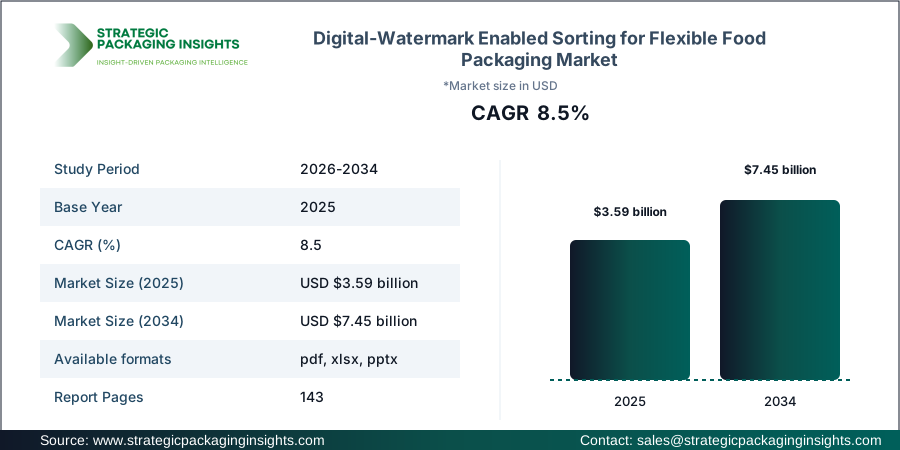
Despite the promising growth prospects, the market faces several challenges, including high initial setup costs and the need for significant investment in technology and infrastructure. Additionally, the lack of standardized regulations across different regions can hinder the widespread adoption of digital watermark technology. However, the potential for growth remains substantial, as more companies and governments recognize the importance of sustainable packaging solutions. The market is also expected to benefit from technological advancements and innovations that enhance the efficiency and effectiveness of digital watermark-enabled sorting systems. As the demand for eco-friendly packaging continues to rise, the market is poised for significant expansion in the coming years.
Report Scope
| Attributes | Details |
| Report Title | Digital-Watermark Enabled Sorting for Flexible Food Packaging Market Size, Future Growth and Forecast 2034 |
| Technology | Digital Watermarks, Optical Sorting, AI-Enabled Recognition |
| Packaging Type | Flexible Films, Pouches, Wrappers |
| Application | Food Packaging Recycling, Material Identification, Waste Sorting |
| End Use | Recyclers, Converters, FMCG Brands, Municipalities |
| Region | Asia Pacific, North America, Latin America, Europe, Middle East & Africa |
| Base Year | 2025 |
| Historic Period | 2018-2024 |
| Forecast Period | 2026-2034 |
| Number of Pages | 143 |
| Customization Available | Yes* |
Opportunities & Threats
The Digital-Watermark Enabled Sorting for Flexible Food Packaging market presents numerous opportunities for growth and innovation. One of the key opportunities lies in the increasing demand for sustainable packaging solutions. As consumers become more environmentally conscious, there is a growing preference for packaging that is not only functional but also eco-friendly. This trend is driving the adoption of digital watermark technology, which enables more efficient sorting and recycling of flexible food packaging. Additionally, the market is benefiting from advancements in technology, such as AI-enabled recognition systems, which enhance the accuracy and efficiency of sorting processes. These technological innovations are creating new opportunities for companies to develop and implement cutting-edge solutions that meet the evolving needs of the market.
Another significant opportunity in the market is the growing support from governments and regulatory bodies for sustainable packaging initiatives. Many countries are implementing policies and regulations aimed at reducing plastic waste and promoting recycling. This regulatory support is encouraging companies to invest in digital watermark technology and other sustainable packaging solutions. Furthermore, the increasing collaboration between industry players, such as the HolyGrail 2.0 Alliance, is fostering innovation and driving the development of standardized solutions that can be adopted globally. These collaborative efforts are expected to accelerate the adoption of digital watermark technology and contribute to the growth of the market.
However, the market also faces several threats that could hinder its growth. One of the primary threats is the high cost of implementing digital watermark technology. The initial investment required for setting up the necessary infrastructure and technology can be substantial, which may deter some companies from adopting this solution. Additionally, the lack of standardized regulations across different regions can create challenges for companies looking to implement digital watermark technology on a global scale. This lack of standardization can lead to inconsistencies in recycling processes and hinder the overall effectiveness of digital watermark-enabled sorting systems. Despite these challenges, the market is expected to continue growing as companies and governments recognize the importance of sustainable packaging solutions.
Drivers & Challenges
Several key drivers are propelling the growth of the Digital-Watermark Enabled Sorting for Flexible Food Packaging market. One of the primary drivers is the increasing demand for sustainable packaging solutions. As consumers become more environmentally conscious, there is a growing preference for packaging that is not only functional but also eco-friendly. This trend is driving the adoption of digital watermark technology, which enables more efficient sorting and recycling of flexible food packaging. Additionally, the market is benefiting from advancements in technology, such as AI-enabled recognition systems, which enhance the accuracy and efficiency of sorting processes. These technological innovations are creating new opportunities for companies to develop and implement cutting-edge solutions that meet the evolving needs of the market.
Another significant driver of the market is the growing support from governments and regulatory bodies for sustainable packaging initiatives. Many countries are implementing policies and regulations aimed at reducing plastic waste and promoting recycling. This regulatory support is encouraging companies to invest in digital watermark technology and other sustainable packaging solutions. Furthermore, the increasing collaboration between industry players, such as the HolyGrail 2.0 Alliance, is fostering innovation and driving the development of standardized solutions that can be adopted globally. These collaborative efforts are expected to accelerate the adoption of digital watermark technology and contribute to the growth of the market.
Despite the promising growth prospects, the market faces several challenges that could hinder its expansion. One of the primary challenges is the high cost of implementing digital watermark technology. The initial investment required for setting up the necessary infrastructure and technology can be substantial, which may deter some companies from adopting this solution. Additionally, the lack of standardized regulations across different regions can create challenges for companies looking to implement digital watermark technology on a global scale. This lack of standardization can lead to inconsistencies in recycling processes and hinder the overall effectiveness of digital watermark-enabled sorting systems. Despite these challenges, the market is expected to continue growing as companies and governments recognize the importance of sustainable packaging solutions.
Market Share Analysis
The competitive landscape of the Digital-Watermark Enabled Sorting for Flexible Food Packaging market is characterized by the presence of several key players who are driving innovation and growth in the industry. Companies such as Digimarc, Tomra, Pellenc ST, Avery Dennison, CCL Industries, Amcor, Mondi, Berry Global, ProAmpac, and participants of the HolyGrail 2.0 Alliance are at the forefront of developing and implementing digital watermark technology for flexible food packaging. These companies are leveraging their expertise and resources to create innovative solutions that enhance the efficiency and effectiveness of sorting and recycling processes.
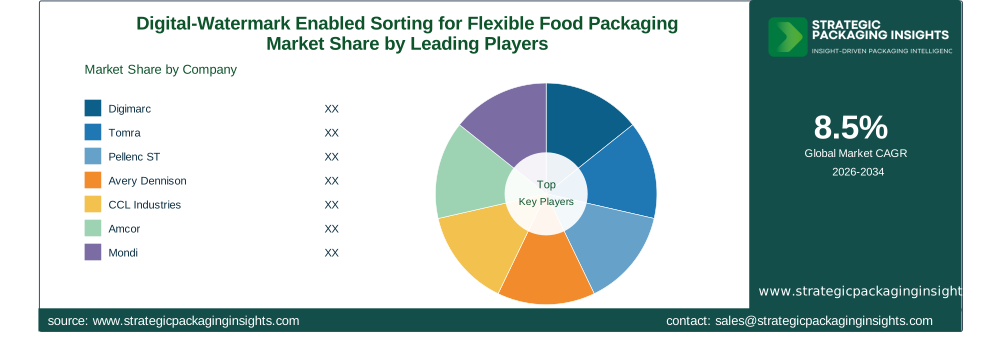
Digimarc is a leading player in the market, known for its pioneering digital watermark technology that enables more efficient sorting and recycling of flexible food packaging. The company has a significant market share and is continuously investing in research and development to enhance its technology and expand its product offerings. Tomra, another major player, is renowned for its advanced sorting solutions that incorporate digital watermark technology. The company is focused on developing innovative solutions that improve the accuracy and efficiency of sorting processes, thereby contributing to the growth of the market.
Pellenc ST is also a key player in the market, offering a range of sorting solutions that utilize digital watermark technology. The company is committed to providing sustainable packaging solutions and is actively involved in initiatives aimed at promoting recycling and reducing plastic waste. Avery Dennison, a global leader in labeling and packaging materials, is leveraging its expertise to develop digital watermark solutions that enhance the recyclability of flexible food packaging. The company is focused on creating innovative solutions that meet the evolving needs of the market and contribute to a more sustainable future.
Other notable players in the market include CCL Industries, Amcor, Mondi, Berry Global, and ProAmpac, all of which are actively involved in the development and implementation of digital watermark technology for flexible food packaging. These companies are investing in research and development to create innovative solutions that enhance the efficiency and effectiveness of sorting and recycling processes. The HolyGrail 2.0 Alliance, a collaborative initiative involving multiple industry players, is also playing a significant role in driving the adoption of digital watermark technology and promoting sustainable packaging solutions. Through collaboration and innovation, these companies are contributing to the growth and development of the Digital-Watermark Enabled Sorting for Flexible Food Packaging market.
Key Highlights
- The market is projected to grow from $3.59 billion in 2025 to $7.45 billion by 2034, at a CAGR of 8.5%.
- Digital watermark technology is revolutionizing the recycling process by enabling more efficient sorting and reducing contamination in recycling streams.
- Stringent regulations and policies aimed at reducing plastic waste and promoting circular economy practices are driving market growth.
- Technological advancements, such as AI-enabled recognition systems, are enhancing the accuracy and efficiency of sorting processes.
- The market is benefiting from increasing collaboration between industry players, such as the HolyGrail 2.0 Alliance.
- High initial setup costs and lack of standardized regulations across regions are key challenges for the market.
- Companies like Digimarc, Tomra, and Pellenc ST are leading the market with innovative digital watermark solutions.
- Government support for sustainable packaging initiatives is encouraging investment in digital watermark technology.
- The market is expected to benefit from the growing demand for eco-friendly packaging solutions.
Top Countries Insights
In the Digital-Watermark Enabled Sorting for Flexible Food Packaging market, the United States is a leading player, with a market size of approximately $1.2 billion and a CAGR of 9%. The country's strong regulatory framework and emphasis on sustainability are key drivers of market growth. The U.S. government has implemented several policies aimed at reducing plastic waste and promoting recycling, which are encouraging companies to adopt digital watermark technology. Additionally, the presence of major industry players and technological advancements are contributing to the market's expansion.
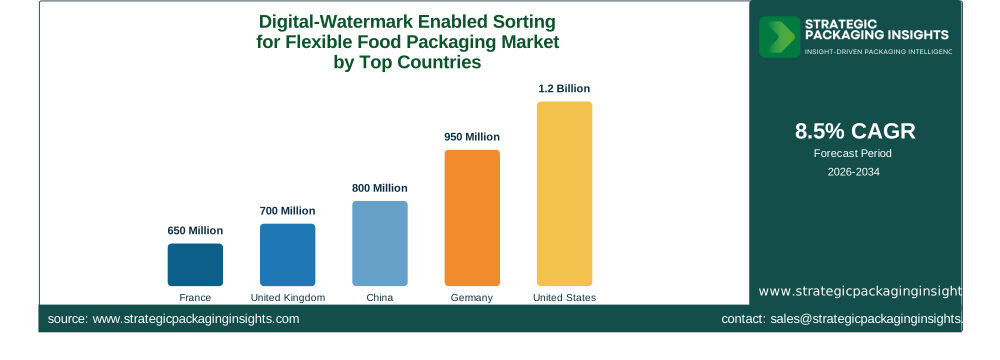
Germany is another significant market, with a market size of around $950 million and a CAGR of 8%. The country's commitment to environmental conservation and sustainable packaging solutions is driving the adoption of digital watermark technology. Germany's strong recycling infrastructure and government support for sustainable initiatives are key factors contributing to market growth. The country is also home to several leading companies in the packaging industry, which are actively investing in digital watermark solutions.
China is experiencing rapid growth in the market, with a market size of approximately $800 million and a CAGR of 12%. The country's large population and increasing demand for packaged food products are driving the need for efficient recycling solutions. The Chinese government is also implementing policies to reduce plastic waste and promote sustainable packaging, which are encouraging the adoption of digital watermark technology. Additionally, the presence of a robust manufacturing sector is contributing to the market's expansion.
The United Kingdom is a key player in the market, with a market size of around $700 million and a CAGR of 7%. The country's strong focus on sustainability and environmental conservation is driving the adoption of digital watermark technology. The UK government has implemented several initiatives aimed at reducing plastic waste and promoting recycling, which are encouraging companies to invest in digital watermark solutions. Additionally, the presence of leading packaging companies and technological advancements are contributing to market growth.
France is also a significant market, with a market size of approximately $650 million and a CAGR of 6%. The country's commitment to sustainability and circular economy practices is driving the adoption of digital watermark technology. The French government is implementing policies to reduce plastic waste and promote recycling, which are encouraging companies to invest in digital watermark solutions. Additionally, the presence of a strong packaging industry and technological advancements are contributing to the market's expansion.
Digital-Watermark Enabled Sorting for Flexible Food Packaging Market Segments Insights

Technology Analysis
The technology segment of the Digital-Watermark Enabled Sorting for Flexible Food Packaging market is primarily driven by the increasing adoption of digital watermarks, optical sorting, and AI-enabled recognition systems. Digital watermarks are gaining popularity due to their ability to enhance the efficiency and accuracy of sorting processes. These invisible codes can be embedded into packaging materials, allowing for easy identification and sorting during the recycling process. Optical sorting technology is also playing a crucial role in the market, as it enables the automated separation of different types of packaging materials based on their physical properties. AI-enabled recognition systems are further enhancing the capabilities of sorting technologies by providing real-time data analysis and decision-making capabilities.
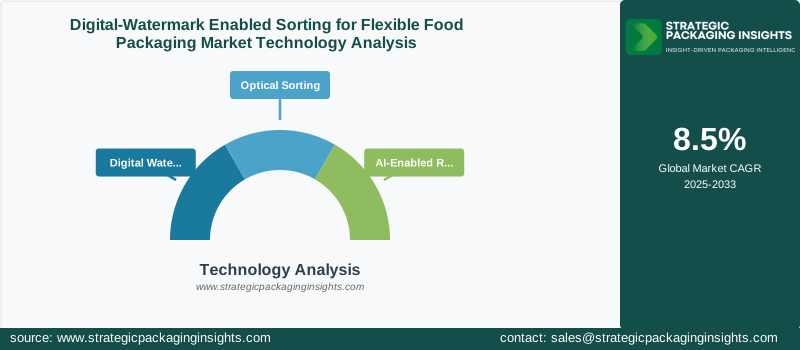
The integration of these technologies is revolutionizing the recycling process for flexible food packaging, making it more efficient and effective. Companies are investing in research and development to create innovative solutions that leverage these technologies to improve the recyclability of packaging materials. The growing demand for sustainable packaging solutions is driving the adoption of these technologies, as they offer a viable solution to the challenges associated with recycling flexible packaging. Additionally, advancements in technology are leading to the development of more sophisticated sorting systems that can handle a wider range of packaging materials, further contributing to the growth of the market.
Packaging Type Analysis
The packaging type segment of the market includes flexible films, pouches, and wrappers, each of which plays a significant role in the overall market dynamics. Flexible films are widely used in the food packaging industry due to their versatility and ability to preserve the freshness of food products. The demand for flexible films is driven by their lightweight nature and cost-effectiveness, making them a popular choice for manufacturers. Pouches are also gaining popularity in the market, as they offer convenience and ease of use for consumers. The growing demand for on-the-go food products is driving the adoption of pouches in the food packaging industry.
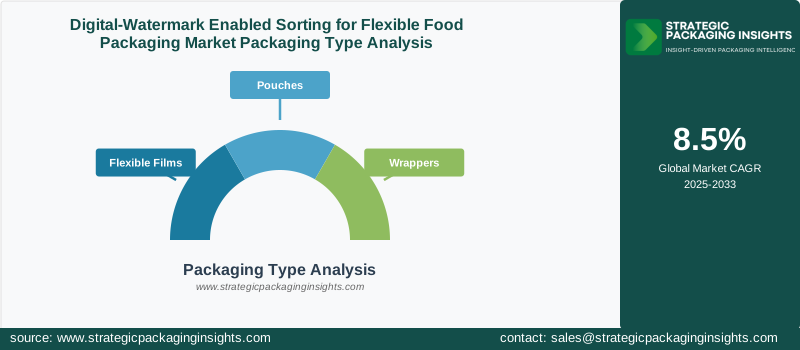
Wrappers, on the other hand, are commonly used for packaging confectionery and snack products. The demand for wrappers is driven by their ability to provide a protective barrier against external contaminants, ensuring the safety and quality of food products. The increasing demand for sustainable packaging solutions is encouraging manufacturers to develop eco-friendly wrappers that are recyclable and biodegradable. The packaging type segment is expected to witness significant growth in the coming years, as manufacturers continue to innovate and develop new packaging solutions that meet the evolving needs of consumers and the industry.
Application Analysis
The application segment of the market includes food packaging recycling, material identification, and waste sorting, each of which plays a crucial role in the overall market dynamics. Food packaging recycling is a key application area, as it involves the collection and processing of used packaging materials to create new products. The growing awareness about environmental conservation and the need to reduce plastic waste are driving the demand for food packaging recycling solutions. Material identification is another important application area, as it involves the identification and separation of different types of packaging materials based on their composition. This process is essential for ensuring the efficient recycling of packaging materials.
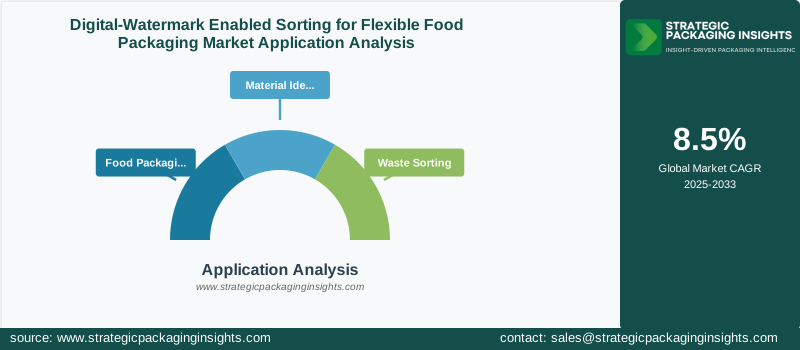
Waste sorting is also a critical application area, as it involves the separation of different types of waste materials for recycling and disposal. The increasing demand for efficient waste management solutions is driving the adoption of digital watermark technology in waste sorting applications. The application segment is expected to witness significant growth in the coming years, as companies and governments continue to invest in sustainable packaging solutions and recycling initiatives. The growing demand for eco-friendly packaging solutions is encouraging manufacturers to develop innovative applications that enhance the efficiency and effectiveness of recycling processes.
End Use Analysis
The end use segment of the market includes recyclers, converters, FMCG brands, and municipalities, each of which plays a significant role in the overall market dynamics. Recyclers are key players in the market, as they are responsible for collecting and processing used packaging materials for recycling. The growing demand for sustainable packaging solutions is driving the adoption of digital watermark technology among recyclers, as it enables more efficient sorting and recycling processes. Converters, on the other hand, are responsible for transforming raw materials into finished packaging products. The increasing demand for eco-friendly packaging solutions is encouraging converters to invest in digital watermark technology to enhance the recyclability of their products.
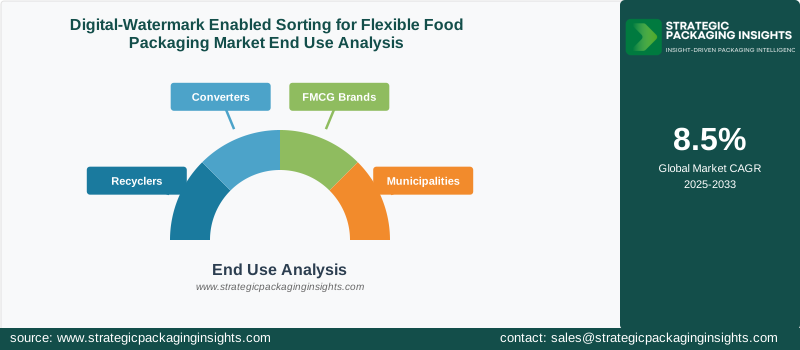
FMCG brands are also significant players in the market, as they are responsible for producing and distributing packaged food products. The growing awareness about environmental conservation and the need to reduce plastic waste are driving FMCG brands to adopt sustainable packaging solutions, including digital watermark technology. Municipalities are also playing a crucial role in the market, as they are responsible for managing waste collection and recycling processes. The increasing demand for efficient waste management solutions is encouraging municipalities to invest in digital watermark technology to enhance the efficiency and effectiveness of recycling processes. The end use segment is expected to witness significant growth in the coming years, as companies and governments continue to invest in sustainable packaging solutions and recycling initiatives.
Digital-Watermark Enabled Sorting for Flexible Food Packaging Market Segments
The Digital-Watermark Enabled Sorting for Flexible Food Packaging market has been segmented on the basis ofTechnology
- Digital Watermarks
- Optical Sorting
- AI-Enabled Recognition
Packaging Type
- Flexible Films
- Pouches
- Wrappers
Application
- Food Packaging Recycling
- Material Identification
- Waste Sorting
End Use
- Recyclers
- Converters
- FMCG Brands
- Municipalities
Region
- Asia Pacific
- North America
- Latin America
- Europe
- Middle East & Africa




