


Digital Label Printing Market Outlook
The Digital Label Printing market was valued at $12.09 billion in 2025 and is projected to reach $27.22 billion by 2034, growing at a CAGR of 9.4% during the forecast period 2026-2034. This market is experiencing significant growth due to the increasing demand for customized and short-run labels across various industries. The rise in e-commerce and the need for efficient supply chain management have further fueled the demand for digital label printing solutions. Additionally, advancements in printing technologies, such as inkjet and electrophotography, are enhancing the quality and speed of label production, making digital label printing a preferred choice for businesses looking to improve their branding and packaging strategies.
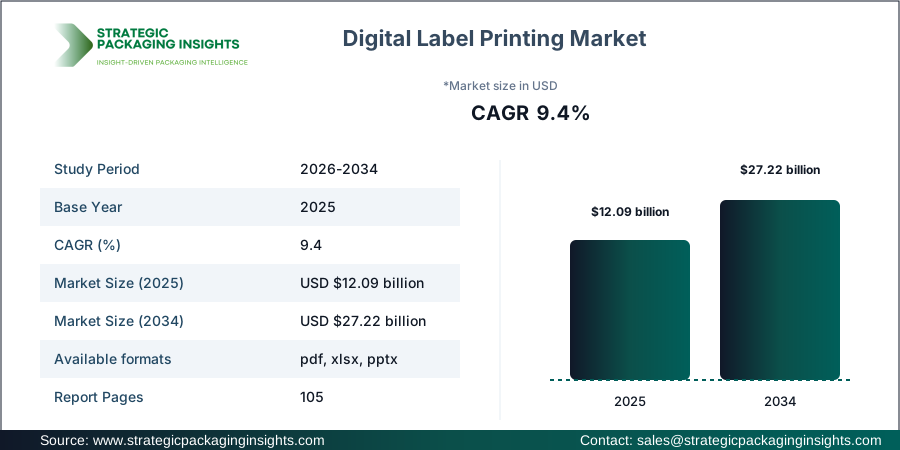
Despite the promising growth prospects, the digital label printing market faces certain challenges. Regulatory constraints and environmental concerns related to printing materials and waste management are some of the key restraining factors. However, the market holds immense potential for growth, driven by the increasing adoption of digital printing technologies in emerging markets and the continuous innovation in printing techniques. The shift towards sustainable and eco-friendly printing solutions is also expected to create new opportunities for market players, as businesses strive to meet consumer demands for environmentally responsible products.
Report Scope
| Attributes | Details |
| Report Title | Digital Label Printing Market Size, Future Growth and Forecast 2034 |
| By Technology | Inkjet Printing, Electrophotography, Laser Printing, Thermal Transfer |
| By Label Type | Pressure-Sensitive Labels, Shrink Sleeve Labels, In-Mold Labels, Wet Glue Labels |
| By Application | Food Labels, Beverage Labels, Pharma Labels, Personal Care Labels |
| By End Use | Food & Beverage, Healthcare, Cosmetics, Retail |
| Region | Asia Pacific, North America, Latin America, Europe, Middle East & Africa |
| Base Year | 2025 |
| Historic Period | 2018-2024 |
| Forecast Period | 2026-2034 |
| Number of Pages | 105 |
| Customization Available | Yes* |
Opportunities & Threats
The digital label printing market presents numerous opportunities for growth, particularly in the realm of customization and personalization. As consumer preferences shift towards unique and personalized products, businesses are increasingly turning to digital label printing to meet these demands. This trend is particularly evident in the food and beverage industry, where companies are leveraging digital printing to create eye-catching and informative labels that enhance brand recognition and consumer engagement. Additionally, the rise of e-commerce and online retailing has created a need for efficient and flexible labeling solutions, further driving the demand for digital label printing technologies.
Another significant opportunity lies in the development of eco-friendly and sustainable printing solutions. With growing awareness of environmental issues, consumers and businesses alike are seeking products that minimize environmental impact. Digital label printing offers a more sustainable alternative to traditional printing methods, as it reduces waste and energy consumption. Companies that invest in green printing technologies and materials are likely to gain a competitive edge in the market, as they align with the increasing demand for sustainable products.
However, the market is not without its threats. One of the primary challenges is the high initial investment required for digital printing equipment and technology. Small and medium-sized enterprises may find it difficult to justify the cost, especially if they have limited production volumes. Additionally, the rapid pace of technological advancements means that companies must continuously invest in upgrading their equipment to stay competitive. This can be a significant financial burden, particularly for businesses operating on tight margins.
Drivers & Challenges
The digital label printing market is driven by several key factors, including the increasing demand for short-run and customized labels. As businesses seek to differentiate their products in a crowded marketplace, the ability to produce high-quality, personalized labels quickly and cost-effectively has become a significant competitive advantage. Digital label printing technologies, such as inkjet and electrophotography, enable businesses to achieve this by offering flexibility, speed, and precision in label production. Furthermore, the growing trend towards smart packaging, which incorporates digital labels with QR codes and NFC technology, is further propelling the market forward.
Another major driver is the advancement in digital printing technologies, which has significantly improved the quality and efficiency of label production. Innovations in ink formulations, print heads, and software have enhanced the capabilities of digital label printers, allowing for higher resolution, faster printing speeds, and greater color accuracy. These advancements have made digital label printing an attractive option for a wide range of industries, from food and beverage to pharmaceuticals and cosmetics, where high-quality labeling is essential for brand image and regulatory compliance.
Despite these drivers, the digital label printing market faces several challenges. One of the primary challenges is the high cost of digital printing equipment and consumables, which can be a barrier to entry for small and medium-sized enterprises. Additionally, the market is highly competitive, with numerous players vying for market share. This competition can lead to price pressures and reduced profit margins, particularly for companies that are unable to differentiate their offerings. Furthermore, the rapid pace of technological change means that companies must continuously invest in research and development to stay ahead of the curve, which can be a significant financial burden.
Market Share Analysis
The digital label printing market is characterized by a highly competitive landscape, with several key players dominating the market. Companies such as HP Indigo, Xeikon, Epson, Domino Printing, and Durst are among the leading players, each holding a significant share of the market. These companies have established themselves as leaders through continuous innovation, strategic partnerships, and a strong focus on customer satisfaction. Their extensive product portfolios and global distribution networks have enabled them to maintain a competitive edge in the market.
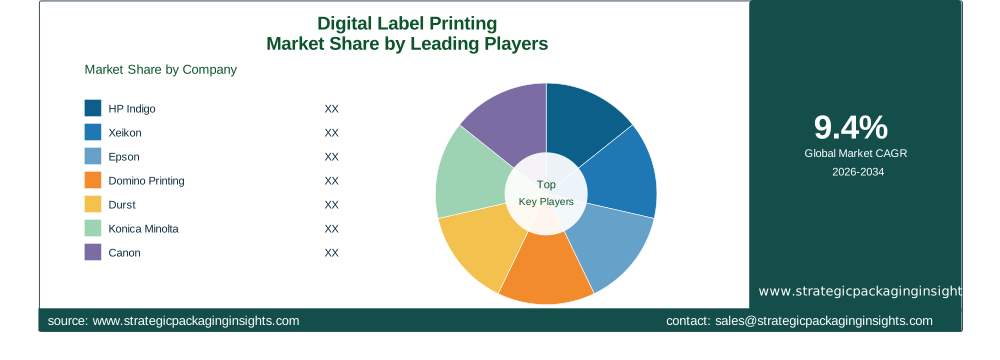
HP Indigo is a major player in the digital label printing market, known for its advanced printing technologies and high-quality output. The company's focus on innovation and sustainability has helped it capture a significant share of the market. Xeikon, another key player, is renowned for its electrophotographic printing technology, which offers high-speed and high-quality label production. Epson, with its expertise in inkjet printing, has also carved out a substantial market share, offering a range of digital label printers that cater to various industry needs.
Domino Printing and Durst are also prominent players in the market, known for their cutting-edge printing solutions and commitment to customer satisfaction. Domino Printing's focus on innovation and technology has enabled it to offer a wide range of digital label printing solutions, while Durst's emphasis on quality and reliability has helped it build a strong reputation in the industry. Other notable companies in the market include Konica Minolta, Canon, Fujifilm, Mark Andy, and Gallus, each contributing to the competitive dynamics of the market.
Konica Minolta has made significant strides in the digital label printing market with its AccurioLabel series, which offers high-quality and cost-effective printing solutions. Canon, with its expertise in imaging and printing technologies, has also established a strong presence in the market, offering a range of digital label printers that cater to various industry needs. Fujifilm, known for its innovative printing technologies, has also captured a significant share of the market, offering a range of digital label printing solutions that meet the demands of various industries.
Key Highlights
- The digital label printing market is projected to grow at a CAGR of 9.4% from 2026 to 2034.
- Advancements in inkjet and electrophotographic technologies are driving market growth.
- Customization and personalization trends are boosting demand for digital label printing.
- Eco-friendly and sustainable printing solutions are gaining traction in the market.
- The food and beverage industry is a major end-user of digital label printing solutions.
- High initial investment costs pose a challenge for small and medium-sized enterprises.
- Technological advancements are enhancing the quality and efficiency of digital label printing.
- Key players in the market include HP Indigo, Xeikon, Epson, and Domino Printing.
- Asia Pacific is expected to witness significant growth in the digital label printing market.
Top Countries Insights
The United States is a leading market for digital label printing, with a market size of approximately $3.5 billion and a CAGR of 8%. The country's strong demand for customized and high-quality labels, particularly in the food and beverage and healthcare sectors, is driving market growth. Additionally, the presence of major players such as HP Indigo and Epson further strengthens the market's position. However, regulatory challenges and environmental concerns related to printing materials remain key challenges for the market.
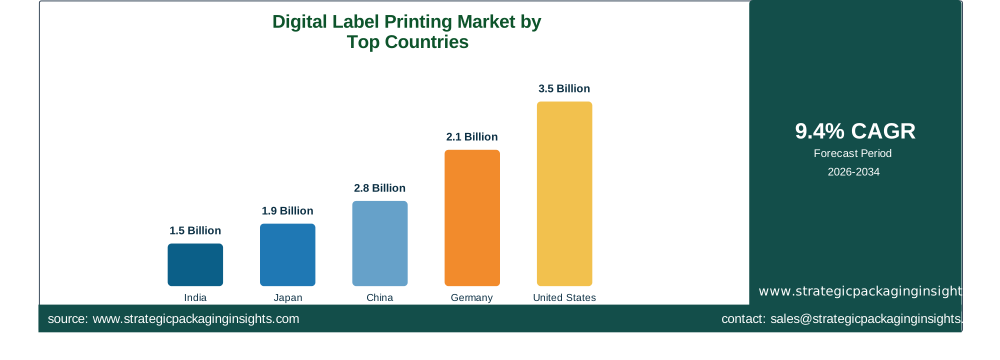
Germany is another significant market for digital label printing, with a market size of around $2.1 billion and a CAGR of 7%. The country's strong manufacturing base and emphasis on quality and innovation are key drivers of market growth. The demand for sustainable and eco-friendly printing solutions is also on the rise, as businesses seek to align with consumer preferences for environmentally responsible products. However, the high cost of digital printing equipment and consumables remains a challenge for the market.
China is expected to witness substantial growth in the digital label printing market, with a market size of approximately $2.8 billion and a CAGR of 12%. The country's rapidly expanding e-commerce sector and increasing demand for customized labels are key growth drivers. Additionally, government initiatives to promote sustainable manufacturing practices are expected to boost the adoption of digital label printing technologies. However, the market faces challenges related to regulatory compliance and environmental concerns.
Japan is another key market for digital label printing, with a market size of around $1.9 billion and a CAGR of 6%. The country's strong focus on innovation and technology, coupled with a well-established manufacturing sector, is driving market growth. The demand for high-quality and customized labels, particularly in the cosmetics and personal care industries, is also contributing to market expansion. However, the high cost of digital printing equipment and the need for continuous technological upgrades pose challenges for the market.
India is poised for significant growth in the digital label printing market, with a market size of approximately $1.5 billion and a CAGR of 15%. The country's burgeoning e-commerce sector and increasing demand for personalized labels are key growth drivers. Additionally, government initiatives to promote digitalization and sustainable manufacturing practices are expected to boost market growth. However, the market faces challenges related to regulatory compliance and the high cost of digital printing equipment.
Digital Label Printing Market Segments Insights

Technology Analysis
The digital label printing market is segmented by technology into inkjet printing, electrophotography, laser printing, and thermal transfer. Inkjet printing is one of the most widely used technologies in the market, known for its versatility and ability to produce high-quality labels with vibrant colors and fine details. The technology's ability to print on a wide range of substrates, including paper, film, and foil, makes it a popular choice for various industries. Additionally, advancements in ink formulations and print head technology have enhanced the speed and efficiency of inkjet printing, further driving its adoption in the market.
Electrophotography, also known as digital offset printing, is another key technology in the digital label printing market. This technology is renowned for its high-speed and high-quality output, making it ideal for large-scale label production. Electrophotography offers excellent color consistency and image quality, which are critical for industries such as food and beverage, pharmaceuticals, and cosmetics. The technology's ability to handle a wide range of substrates and its compatibility with various finishing processes make it a preferred choice for businesses looking to produce high-quality labels efficiently.
Label Type Analysis
The digital label printing market is segmented by label type into pressure-sensitive labels, shrink sleeve labels, in-mold labels, and wet glue labels. Pressure-sensitive labels are the most commonly used label type in the market, known for their versatility and ease of application. These labels are used across various industries, including food and beverage, healthcare, and cosmetics, due to their ability to adhere to a wide range of surfaces and their compatibility with different printing technologies. The demand for pressure-sensitive labels is driven by the need for high-quality, durable, and customizable labeling solutions.
Shrink sleeve labels are another popular label type in the digital label printing market, known for their 360-degree coverage and ability to conform to complex container shapes. These labels are widely used in the beverage industry, where they provide a visually appealing and tamper-evident packaging solution. The demand for shrink sleeve labels is driven by the growing trend towards innovative and eye-catching packaging designs, as well as the need for labels that can withstand harsh environmental conditions.
Application Analysis
The digital label printing market is segmented by application into food labels, beverage labels, pharma labels, and personal care labels. Food labels are a significant segment of the market, driven by the increasing demand for high-quality and informative labels that enhance brand recognition and consumer engagement. The need for labels that comply with regulatory requirements and provide clear and accurate information about product ingredients and nutritional content is also driving the demand for digital label printing in the food industry.
Beverage labels are another key application segment in the digital label printing market, driven by the need for visually appealing and durable labels that can withstand exposure to moisture and temperature fluctuations. The demand for beverage labels is further fueled by the growing trend towards premium and craft beverages, which require high-quality and customizable labeling solutions. Additionally, the use of digital labels with QR codes and NFC technology is gaining traction in the beverage industry, as companies seek to enhance consumer engagement and provide interactive product information.
End Use Analysis
The digital label printing market is segmented by end use into food & beverage, healthcare, cosmetics, and retail. The food & beverage industry is the largest end-user of digital label printing solutions, driven by the need for high-quality, customizable, and informative labels that enhance brand recognition and consumer engagement. The demand for digital label printing in the food & beverage industry is further fueled by the growing trend towards premium and craft products, which require unique and eye-catching packaging solutions.
The healthcare industry is another significant end-user of digital label printing solutions, driven by the need for labels that comply with regulatory requirements and provide clear and accurate information about product ingredients and usage instructions. The demand for digital label printing in the healthcare industry is further fueled by the growing trend towards personalized medicine, which requires customized labeling solutions that can accommodate small production runs and variable data printing.
Digital Label Printing Market Segments
The Digital Label Printing market has been segmented on the basis ofBy Technology
- Inkjet Printing
- Electrophotography
- Laser Printing
- Thermal Transfer
By Label Type
- Pressure-Sensitive Labels
- Shrink Sleeve Labels
- In-Mold Labels
- Wet Glue Labels
By Application
- Food Labels
- Beverage Labels
- Pharma Labels
- Personal Care Labels
By End Use
- Food & Beverage
- Healthcare
- Cosmetics
- Retail
Region
- Asia Pacific
- North America
- Latin America
- Europe
- Middle East & Africa




