


Degassing Valves Market Outlook
The Degassing Valves market was valued at $556.35 million in 2025 and is projected to reach $888.14 million by 2034, growing at a CAGR of 5.3% during the forecast period 2026-2034. This market is witnessing significant growth due to the increasing demand for fresh and quality food products, particularly in the coffee and fermented foods sectors. The rise in consumer preference for convenient packaging solutions that maintain product freshness is driving the adoption of degassing valves. These valves are essential in preventing the buildup of gases within packaging, thereby extending the shelf life of products. The market is also benefiting from technological advancements in valve design and materials, which enhance their efficiency and reliability.
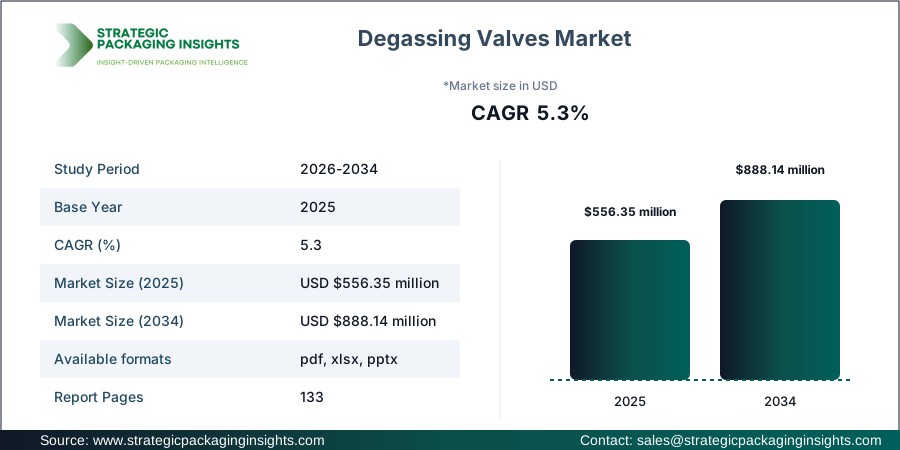
However, the market faces challenges such as stringent regulatory standards and the high cost of advanced degassing valve systems. Despite these challenges, the market holds substantial growth potential, driven by the expanding food and beverage industry and the increasing popularity of ready-to-eat products. The growing trend of sustainable and eco-friendly packaging solutions is also expected to create new opportunities for market players. Companies are focusing on developing innovative products that cater to the evolving needs of consumers and comply with environmental regulations. As a result, the degassing valves market is poised for steady growth in the coming years.
Report Scope
| Attributes | Details |
| Report Title | Degassing Valves Market Size, Future Growth and Forecast 2034 |
| By Product Type | One-Way Degassing Valves, Filter Valves, Pressure Relief Valves |
| By Application | Coffee, Fermented Foods, Chemicals, Pet Food |
| By Packaging Type | Pouches, Bags, Cans |
| By End Use | Coffee Roasters, Food Processors, Converters |
| Region | Asia Pacific, North America, Latin America, Europe, Middle East & Africa |
| Base Year | 2025 |
| Historic Period | 2018-2024 |
| Forecast Period | 2026-2034 |
| Number of Pages | 133 |
| Customization Available | Yes* |
Opportunities & Threats
The Degassing Valves market presents numerous opportunities, particularly in the realm of sustainable packaging solutions. As consumers become more environmentally conscious, there is a growing demand for packaging that not only preserves product quality but also minimizes environmental impact. This trend is driving manufacturers to innovate and develop eco-friendly degassing valves that are biodegradable or made from recycled materials. Additionally, the increasing popularity of specialty coffee and fermented foods is creating a niche market for high-performance degassing valves that cater to specific product requirements. Companies that can offer customized solutions to meet these demands are likely to gain a competitive edge.
Another significant opportunity lies in the expansion of the food and beverage industry in emerging markets. As disposable incomes rise and consumer preferences shift towards premium and convenience foods, the demand for effective packaging solutions is expected to increase. This presents a lucrative opportunity for degassing valve manufacturers to expand their presence in these regions. Furthermore, advancements in valve technology, such as the development of smart valves with integrated sensors for real-time monitoring, are opening new avenues for growth and differentiation in the market.
On the flip side, the market faces threats from stringent regulatory standards and the high cost of advanced degassing valve systems. Compliance with food safety and packaging regulations can be challenging and costly for manufacturers, particularly for small and medium-sized enterprises. Additionally, the high initial investment required for advanced valve systems may deter some companies from adopting these technologies. To mitigate these threats, companies need to focus on cost-effective production methods and collaborate with regulatory bodies to ensure compliance and streamline approval processes.
Drivers & Challenges
The primary driver of the Degassing Valves market is the increasing demand for fresh and quality food products. Consumers are becoming more health-conscious and are seeking products that offer freshness and extended shelf life. Degassing valves play a crucial role in maintaining the quality of packaged foods by preventing the buildup of gases that can lead to spoilage. This demand is particularly strong in the coffee and fermented foods sectors, where product freshness is a key selling point. Additionally, the rise in consumer preference for convenient packaging solutions is driving the adoption of degassing valves across various applications.
Technological advancements in valve design and materials are also driving market growth. Manufacturers are investing in research and development to create more efficient and reliable valves that cater to the evolving needs of consumers. Innovations such as smart valves with integrated sensors for real-time monitoring are gaining traction, offering enhanced functionality and convenience. These advancements are not only improving product performance but also expanding the range of applications for degassing valves, further fueling market growth.
Despite these drivers, the market faces challenges such as stringent regulatory standards and the high cost of advanced degassing valve systems. Compliance with food safety and packaging regulations can be complex and costly, particularly for small and medium-sized enterprises. Additionally, the high initial investment required for advanced valve systems may deter some companies from adopting these technologies. To overcome these challenges, manufacturers need to focus on cost-effective production methods and collaborate with regulatory bodies to ensure compliance and streamline approval processes.
Market Share Analysis
The Degassing Valves market is characterized by a competitive landscape with several key players vying for market share. Companies such as Goglio, Plitek, Syntegon, Wipf AG, Fres-co System USA, CCL Industries, Amcor, Mondi, ProAmpac, and PBFY Flexible Packaging are prominent in this space. These companies are focusing on product innovation, strategic partnerships, and mergers and acquisitions to strengthen their market position and expand their product offerings. The competitive landscape is further intensified by the presence of regional players who cater to specific markets and offer customized solutions.
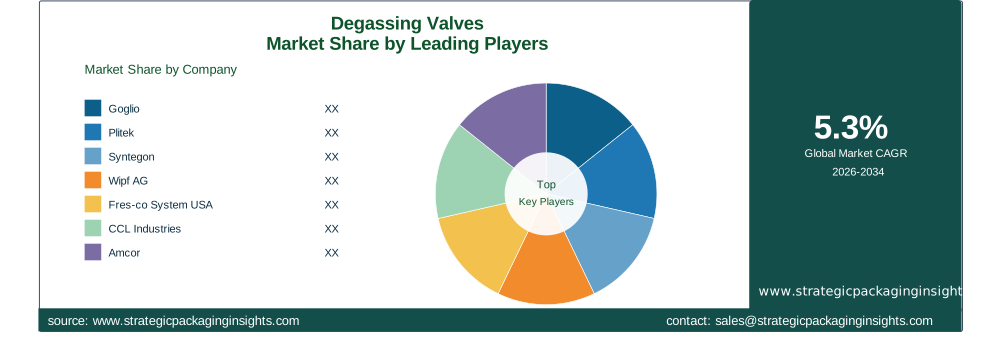
Goglio is a leading player in the degassing valves market, known for its innovative packaging solutions and extensive product portfolio. The company has a strong presence in the coffee sector, offering a range of valves that cater to the specific needs of coffee roasters and processors. Plitek, another key player, is recognized for its high-quality degassing valves and commitment to sustainability. The company focuses on developing eco-friendly solutions that align with the growing demand for sustainable packaging.
Syntegon, formerly known as Bosch Packaging Technology, is a major player in the market, offering a wide range of packaging solutions, including degassing valves. The company's expertise in automation and technology-driven solutions gives it a competitive edge in the market. Wipf AG is another prominent player, known for its innovative valve designs and focus on quality and reliability. The company has a strong presence in the European market and is expanding its reach to other regions.
Fres-co System USA, CCL Industries, Amcor, Mondi, ProAmpac, and PBFY Flexible Packaging are also significant players in the market, each with its unique strengths and market strategies. These companies are investing in research and development to enhance their product offerings and cater to the evolving needs of consumers. The competitive landscape is expected to remain dynamic, with companies focusing on innovation and strategic collaborations to gain a competitive advantage.
Key Highlights
- The Degassing Valves market is projected to grow at a CAGR of 5.3% from 2026 to 2034.
- Increasing demand for fresh and quality food products is driving market growth.
- Technological advancements in valve design and materials are enhancing product efficiency.
- Stringent regulatory standards pose a challenge for market players.
- Emerging markets offer significant growth opportunities for degassing valve manufacturers.
- Eco-friendly and sustainable packaging solutions are gaining traction.
- Smart valves with integrated sensors are a growing trend in the market.
- Key players are focusing on product innovation and strategic partnerships.
- The coffee and fermented foods sectors are major application areas for degassing valves.
- High initial investment costs may deter some companies from adopting advanced valve systems.
Top Countries Insights
In the Degassing Valves market, the United States stands out as a key player, with a market size of approximately $150 million and a CAGR of 4%. The country's robust food and beverage industry, coupled with a strong emphasis on quality and freshness, drives the demand for degassing valves. The presence of major coffee roasters and food processors further boosts market growth. However, regulatory challenges and the need for compliance with stringent standards pose hurdles for manufacturers.
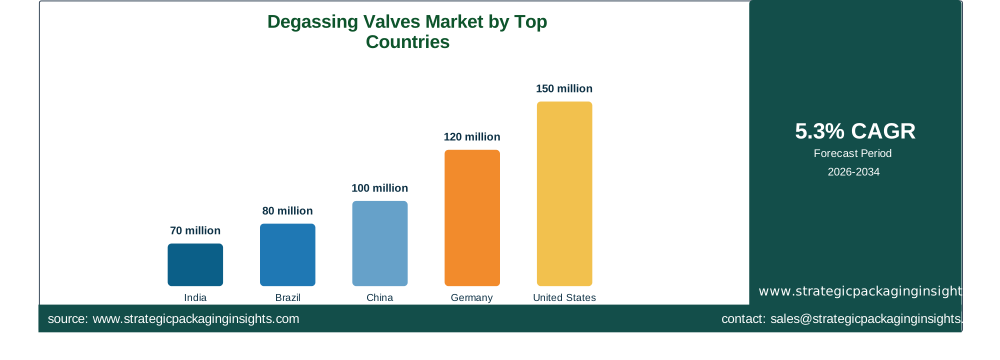
Germany is another significant market, with a market size of around $120 million and a CAGR of 5%. The country's focus on innovation and technology in packaging solutions, along with a strong emphasis on sustainability, drives the demand for advanced degassing valves. The presence of leading packaging companies and a well-established food processing industry contribute to market growth. However, high production costs and regulatory compliance remain challenges for manufacturers.
China, with a market size of approximately $100 million and a CAGR of 6%, is a rapidly growing market for degassing valves. The country's expanding food and beverage industry, driven by rising disposable incomes and changing consumer preferences, fuels the demand for effective packaging solutions. The government's focus on food safety and quality standards further supports market growth. However, intense competition and price sensitivity pose challenges for market players.
Brazil, with a market size of around $80 million and a CAGR of 5%, is an emerging market for degassing valves. The country's growing coffee industry and increasing demand for convenience foods drive the need for effective packaging solutions. The presence of local manufacturers and a focus on cost-effective production methods contribute to market growth. However, economic instability and regulatory challenges remain hurdles for manufacturers.
India, with a market size of approximately $70 million and a CAGR of 7%, is a promising market for degassing valves. The country's expanding food processing industry, driven by a growing middle class and increasing urbanization, fuels the demand for quality packaging solutions. The government's initiatives to promote food safety and quality standards further support market growth. However, infrastructure challenges and regulatory compliance pose hurdles for manufacturers.
Degassing Valves Market Segments Insights

Product Type Analysis
The Degassing Valves market is segmented by product type into one-way degassing valves, filter valves, and pressure relief valves. One-way degassing valves dominate the market due to their widespread application in the coffee industry. These valves allow gases to escape from the packaging without letting air in, preserving the freshness and aroma of coffee. The demand for one-way valves is driven by the increasing consumption of specialty coffee and the growing trend of home brewing. Filter valves, on the other hand, are gaining traction in the fermented foods sector, where they help maintain product quality by preventing contamination. Pressure relief valves are used in applications where controlled pressure release is critical, such as in chemical packaging.
Technological advancements in valve design and materials are enhancing the efficiency and reliability of these products. Manufacturers are focusing on developing valves that offer superior performance and cater to the specific needs of different applications. The growing demand for customized solutions is driving innovation in this segment, with companies investing in research and development to create products that meet the evolving needs of consumers. The competitive landscape is characterized by the presence of both global and regional players, each offering a range of products to cater to diverse market needs.
Application Analysis
The application segment of the Degassing Valves market includes coffee, fermented foods, chemicals, and pet food. The coffee sector is the largest application area, driven by the increasing consumption of specialty coffee and the growing trend of home brewing. Degassing valves are essential in preserving the freshness and aroma of coffee, making them a critical component of coffee packaging. The fermented foods sector is another significant application area, where degassing valves help maintain product quality by preventing contamination and spoilage.
The chemicals sector is witnessing growing demand for degassing valves, particularly in applications where controlled pressure release is critical. The pet food industry is also emerging as a key application area, driven by the increasing demand for premium and convenience pet food products. The growing trend of pet humanization and the focus on pet health and nutrition are driving the demand for effective packaging solutions in this sector. The application segment is characterized by diverse market needs, with companies focusing on developing customized solutions to cater to specific product requirements.
Packaging Type Analysis
The Degassing Valves market is segmented by packaging type into pouches, bags, and cans. Pouches are the most popular packaging type, driven by their convenience and cost-effectiveness. The demand for pouches is particularly strong in the coffee and fermented foods sectors, where they offer superior protection and preserve product freshness. Bags are also widely used, particularly in the pet food and chemicals sectors, where they provide durability and ease of handling.
Cans are used in applications where long shelf life and product protection are critical, such as in the chemicals sector. The growing demand for sustainable and eco-friendly packaging solutions is driving innovation in this segment, with companies focusing on developing biodegradable and recyclable packaging options. The competitive landscape is characterized by the presence of both global and regional players, each offering a range of packaging solutions to cater to diverse market needs.
End Use Analysis
The end-use segment of the Degassing Valves market includes coffee roasters, food processors, and converters. Coffee roasters are the largest end-use segment, driven by the increasing consumption of specialty coffee and the growing trend of home brewing. Degassing valves are essential in preserving the freshness and aroma of coffee, making them a critical component of coffee packaging. Food processors are another significant end-use segment, where degassing valves help maintain product quality by preventing contamination and spoilage.
Converters are emerging as a key end-use segment, driven by the increasing demand for customized packaging solutions. The growing trend of sustainable and eco-friendly packaging is driving innovation in this segment, with companies focusing on developing biodegradable and recyclable packaging options. The end-use segment is characterized by diverse market needs, with companies focusing on developing customized solutions to cater to specific product requirements.
Degassing Valves Market Segments
The Degassing Valves market has been segmented on the basis ofBy Product Type
- One-Way Degassing Valves
- Filter Valves
- Pressure Relief Valves
By Application
- Coffee
- Fermented Foods
- Chemicals
- Pet Food
By Packaging Type
- Pouches
- Bags
- Cans
By End Use
- Coffee Roasters
- Food Processors
- Converters
Region
- Asia Pacific
- North America
- Latin America
- Europe
- Middle East & Africa




