


De-seamable Adhesives Market Outlook
The De-seamable Adhesives market was valued at $1.56 billion in 2025 and is projected to reach $3.12 billion by 2034, growing at a CAGR of 9.5% during the forecast period 2026-2034. This market is witnessing significant growth due to the increasing demand for sustainable and efficient adhesive solutions across various industries. The rise in packaging and labeling applications, driven by the e-commerce boom and the need for efficient logistics, is a major factor propelling the market. Additionally, the medical sector's growing reliance on de-seamable adhesives for non-invasive applications further fuels market expansion. The market's growth is also supported by advancements in adhesive technologies, which enhance product performance and environmental compliance.
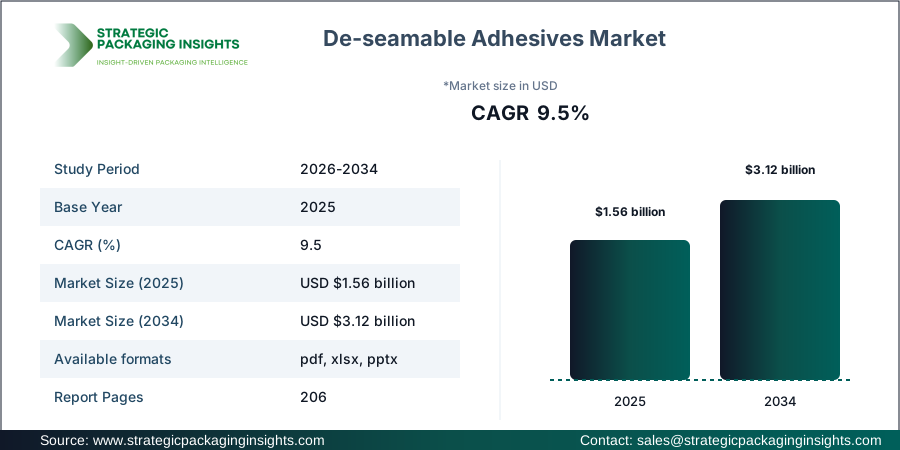
Despite the promising growth trajectory, the De-seamable Adhesives market faces challenges such as stringent regulatory standards and fluctuating raw material prices. These factors can potentially hinder market growth by increasing production costs and limiting product innovation. However, the market's potential remains robust, with opportunities arising from the increasing focus on eco-friendly and recyclable adhesive solutions. Companies are investing in research and development to create adhesives that meet environmental standards while maintaining high performance. This focus on sustainability is expected to open new avenues for market players, particularly in regions with strict environmental regulations.
Report Scope
| Attributes | Details |
| Report Title | De-seamable Adhesives Market Size, Future Growth and Forecast 2034 |
| By Formulation | Hot Melt, Pressure-Sensitive, UV-Curable |
| By Application | Packaging, Medical, Industrial |
| By Removal Mode | Peelable, Clean-Release |
| By End Use | Labels, Tapes, Closures |
| Region | Asia Pacific, North America, Latin America, Europe, Middle East & Africa |
| Base Year | 2025 |
| Historic Period | 2018-2024 |
| Forecast Period | 2026-2034 |
| Number of Pages | 206 |
| Customization Available | Yes* |
Opportunities & Threats
The De-seamable Adhesives market presents numerous opportunities, particularly in the realm of sustainable packaging solutions. As consumers and industries alike become more environmentally conscious, there is a growing demand for adhesives that can be easily removed or recycled without leaving residues. This trend is driving innovation in adhesive formulations, with companies investing in research and development to create products that meet these new demands. Additionally, the rise of e-commerce and the need for efficient packaging solutions offer significant growth potential for de-seamable adhesives, as they provide the flexibility and reliability required for modern logistics.
Another opportunity lies in the medical sector, where de-seamable adhesives are increasingly used in applications such as wound care and medical device assembly. The demand for non-invasive and patient-friendly adhesive solutions is on the rise, driven by advancements in medical technology and an aging population. This creates a lucrative market for de-seamable adhesives, as they offer the necessary performance characteristics while ensuring patient comfort and safety. Furthermore, the industrial sector's need for efficient and reliable adhesive solutions in manufacturing processes presents additional growth opportunities for market players.
However, the market also faces threats, primarily from regulatory challenges and raw material price volatility. Stringent environmental regulations can increase compliance costs and limit product innovation, posing a significant challenge for manufacturers. Additionally, fluctuations in the prices of raw materials used in adhesive production can impact profit margins and market competitiveness. Companies must navigate these challenges by investing in sustainable practices and developing cost-effective solutions to maintain their market position.
Drivers & Challenges
The primary drivers of the De-seamable Adhesives market include the increasing demand for efficient packaging solutions and the growing emphasis on sustainability. The rise of e-commerce has led to a surge in packaging requirements, with companies seeking adhesives that offer reliability and ease of use. De-seamable adhesives provide the necessary performance characteristics, making them an ideal choice for packaging applications. Additionally, the shift towards sustainable practices is driving demand for adhesives that can be easily removed or recycled, aligning with global environmental goals.
Technological advancements in adhesive formulations are also driving market growth. Innovations in hot melt, pressure-sensitive, and UV-curable adhesives have enhanced product performance, offering improved adhesion, durability, and environmental compliance. These advancements are enabling manufacturers to meet the evolving needs of various industries, from packaging to medical applications. Furthermore, the increasing focus on research and development is leading to the creation of new adhesive solutions that address specific industry challenges, further propelling market growth.
Despite these drivers, the market faces challenges such as regulatory compliance and raw material price volatility. Stringent environmental regulations can increase production costs and limit product innovation, posing a significant challenge for manufacturers. Additionally, fluctuations in raw material prices can impact profit margins and market competitiveness. Companies must navigate these challenges by investing in sustainable practices and developing cost-effective solutions to maintain their market position. The ability to adapt to changing market conditions and regulatory requirements will be crucial for the long-term success of market players.
Market Share Analysis
The De-seamable Adhesives market is characterized by a competitive landscape with several key players vying for market share. Companies such as Henkel, 3M, H.B. Fuller, Arkema, Sika, Dow, Avery Dennison, tesa, Bostik, and Intertape Polymer are prominent in this market, each offering a range of adhesive solutions tailored to various applications. These companies are investing heavily in research and development to create innovative products that meet the evolving needs of their customers. The competitive landscape is further intensified by the presence of regional players who offer specialized solutions for local markets.
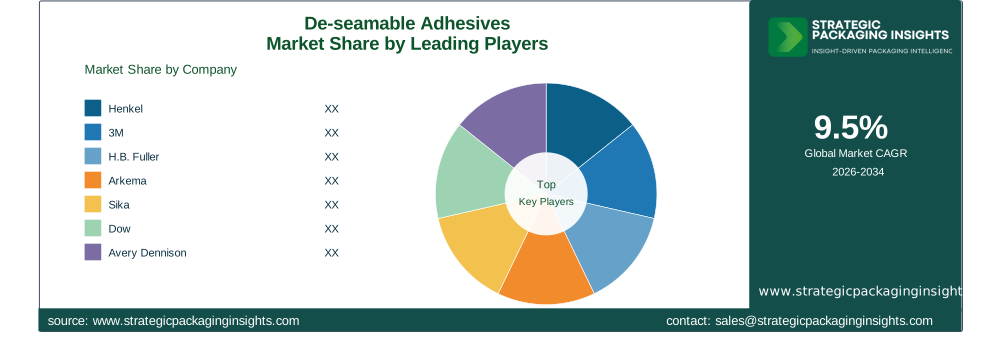
Henkel is a leading player in the De-seamable Adhesives market, known for its extensive product portfolio and strong focus on sustainability. The company is committed to developing eco-friendly adhesive solutions that meet stringent environmental standards. Similarly, 3M is a major player, leveraging its expertise in adhesive technologies to offer high-performance products for various industries. The company's focus on innovation and customer-centric solutions has helped it maintain a strong market position.
H.B. Fuller is another key player, renowned for its comprehensive range of adhesive solutions and commitment to sustainability. The company is focused on developing products that offer superior performance while minimizing environmental impact. Arkema, with its extensive research capabilities, is also a significant player in the market, offering a range of adhesive solutions for diverse applications. The company's focus on innovation and sustainability has helped it capture a substantial market share.
Sika, Dow, Avery Dennison, tesa, Bostik, and Intertape Polymer are also prominent players in the De-seamable Adhesives market. These companies are investing in research and development to create innovative products that meet the evolving needs of their customers. The competitive landscape is further intensified by the presence of regional players who offer specialized solutions for local markets. The ability to adapt to changing market conditions and regulatory requirements will be crucial for the long-term success of market players.
Key Highlights
- The De-seamable Adhesives market is projected to grow at a CAGR of 9.5% from 2026 to 2034.
- Key players include Henkel, 3M, H.B. Fuller, Arkema, Sika, Dow, Avery Dennison, tesa, Bostik, and Intertape Polymer.
- Increasing demand for sustainable packaging solutions is driving market growth.
- Technological advancements in adhesive formulations are enhancing product performance.
- The medical sector presents significant growth opportunities for de-seamable adhesives.
- Regulatory challenges and raw material price volatility pose threats to market growth.
- Companies are investing in research and development to create innovative adhesive solutions.
- The competitive landscape is characterized by the presence of both global and regional players.
- Focus on sustainability is opening new avenues for market players.
- The rise of e-commerce is driving demand for efficient packaging solutions.
Top Countries Insights
In the De-seamable Adhesives market, the United States stands out as a key player, with a market size of $450 million and a CAGR of 8%. The country's robust packaging industry, driven by the e-commerce boom, is a major growth driver. Additionally, the focus on sustainable packaging solutions aligns with the increasing demand for eco-friendly adhesives. However, regulatory challenges related to environmental compliance pose a significant hurdle for market players.
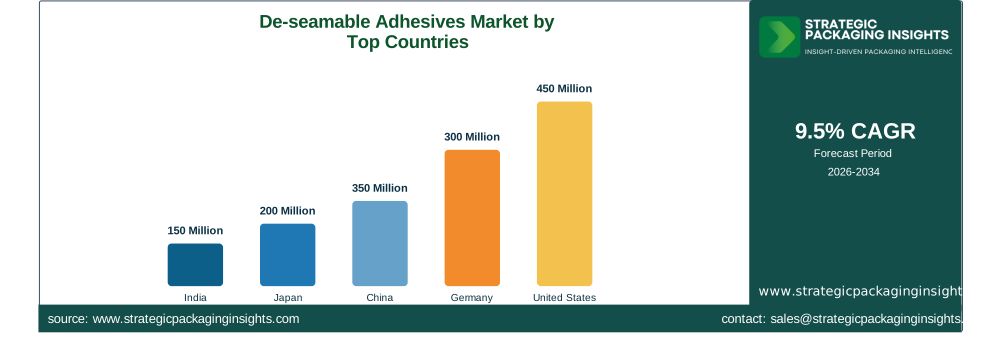
Germany is another significant market, with a size of $300 million and a CAGR of 7%. The country's strong industrial base and emphasis on innovation drive demand for advanced adhesive solutions. The automotive and manufacturing sectors are key contributors to market growth, with de-seamable adhesives playing a crucial role in assembly and production processes. However, stringent environmental regulations and high production costs present challenges for manufacturers.
China, with a market size of $350 million and a CAGR of 10%, is a rapidly growing market for de-seamable adhesives. The country's expanding packaging and manufacturing industries, coupled with increasing consumer demand for sustainable products, drive market growth. However, the market faces challenges related to regulatory compliance and raw material price volatility, which can impact profit margins.
Japan, with a market size of $200 million and a CAGR of 6%, is a mature market for de-seamable adhesives. The country's focus on technological innovation and high-quality manufacturing processes drives demand for advanced adhesive solutions. The electronics and automotive sectors are key growth drivers, with de-seamable adhesives playing a crucial role in product assembly and performance.
India, with a market size of $150 million and a CAGR of 12%, is an emerging market for de-seamable adhesives. The country's growing packaging and industrial sectors, driven by economic development and increasing consumer demand, present significant growth opportunities. However, challenges related to infrastructure and regulatory compliance can impact market growth.
De-seamable Adhesives Market Segments Insights

Formulation Analysis
The formulation segment of the De-seamable Adhesives market is categorized into hot melt, pressure-sensitive, and UV-curable adhesives. Hot melt adhesives are gaining traction due to their ease of application and strong bonding capabilities. They are widely used in packaging and industrial applications, where quick setting times and strong adhesion are crucial. Pressure-sensitive adhesives, on the other hand, are favored for their versatility and ability to bond with various substrates. They are commonly used in labels and tapes, where ease of removal and reusability are important. UV-curable adhesives are gaining popularity due to their environmental benefits and fast curing times, making them ideal for medical and industrial applications.
The demand for these formulations is driven by the need for efficient and sustainable adhesive solutions across various industries. Companies are investing in research and development to enhance the performance and environmental compliance of their adhesive formulations. The focus on sustainability is particularly strong in the pressure-sensitive and UV-curable segments, where companies are developing products that meet stringent environmental standards while maintaining high performance. The ability to offer innovative and eco-friendly adhesive solutions is a key competitive advantage for market players.
Application Analysis
The application segment of the De-seamable Adhesives market includes packaging, medical, and industrial applications. The packaging sector is a major driver of market growth, with the rise of e-commerce and the need for efficient logistics fueling demand for de-seamable adhesives. These adhesives offer the flexibility and reliability required for modern packaging solutions, making them an ideal choice for companies seeking to enhance their packaging efficiency. The medical sector is another significant application area, with de-seamable adhesives used in wound care and medical device assembly. The demand for non-invasive and patient-friendly adhesive solutions is on the rise, driven by advancements in medical technology and an aging population.
In the industrial sector, de-seamable adhesives are used in various manufacturing processes, where they offer reliable bonding and ease of removal. The demand for efficient and reliable adhesive solutions in manufacturing is a key driver of market growth, with companies seeking adhesives that enhance production efficiency and product performance. The ability to offer tailored adhesive solutions for specific applications is a key competitive advantage for market players, enabling them to capture a larger share of the market.
Removal Mode Analysis
The removal mode segment of the De-seamable Adhesives market is divided into peelable and clean-release adhesives. Peelable adhesives are designed for applications where ease of removal is crucial, such as in labels and tapes. These adhesives offer strong bonding capabilities while allowing for easy removal without leaving residues, making them ideal for applications where reusability is important. Clean-release adhesives, on the other hand, are designed for applications where a clean and residue-free removal is essential, such as in medical and industrial applications.
The demand for these removal modes is driven by the need for efficient and reliable adhesive solutions that offer ease of removal and reusability. Companies are investing in research and development to enhance the performance and environmental compliance of their removal mode adhesives. The focus on sustainability is particularly strong in the clean-release segment, where companies are developing products that meet stringent environmental standards while maintaining high performance. The ability to offer innovative and eco-friendly adhesive solutions is a key competitive advantage for market players.
End Use Analysis
The end-use segment of the De-seamable Adhesives market includes labels, tapes, and closures. Labels are a major application area, with the rise of e-commerce and the need for efficient logistics fueling demand for de-seamable adhesives. These adhesives offer the flexibility and reliability required for modern labeling solutions, making them an ideal choice for companies seeking to enhance their labeling efficiency. Tapes are another significant application area, with de-seamable adhesives used in various industrial and packaging applications. The demand for efficient and reliable adhesive solutions in tapes is a key driver of market growth, with companies seeking adhesives that enhance production efficiency and product performance.
Closures are a growing application area, with de-seamable adhesives used in various packaging and industrial applications. The demand for efficient and reliable adhesive solutions in closures is driven by the need for secure and tamper-evident packaging solutions. The ability to offer tailored adhesive solutions for specific end-use applications is a key competitive advantage for market players, enabling them to capture a larger share of the market.
De-seamable Adhesives Market Segments
The De-seamable Adhesives market has been segmented on the basis ofBy Formulation
- Hot Melt
- Pressure-Sensitive
- UV-Curable
By Application
- Packaging
- Medical
- Industrial
By Removal Mode
- Peelable
- Clean-Release
By End Use
- Labels
- Tapes
- Closures
Region
- Asia Pacific
- North America
- Latin America
- Europe
- Middle East & Africa




