


De-nester and Liner Inserter Market Outlook
The De-nester and Liner Inserter market was valued at $417.52 million in 2025 and is projected to reach $620.47 million by 2034, growing at a CAGR of 4.5% during the forecast period 2026-2034. This market is witnessing significant growth due to the increasing demand for automation in packaging processes across various industries. The need for efficient and reliable packaging solutions in the food and medical sectors is driving the adoption of de-nester and liner inserter machines. These machines offer enhanced productivity, reduced labor costs, and improved packaging quality, making them an attractive investment for manufacturers and packers.
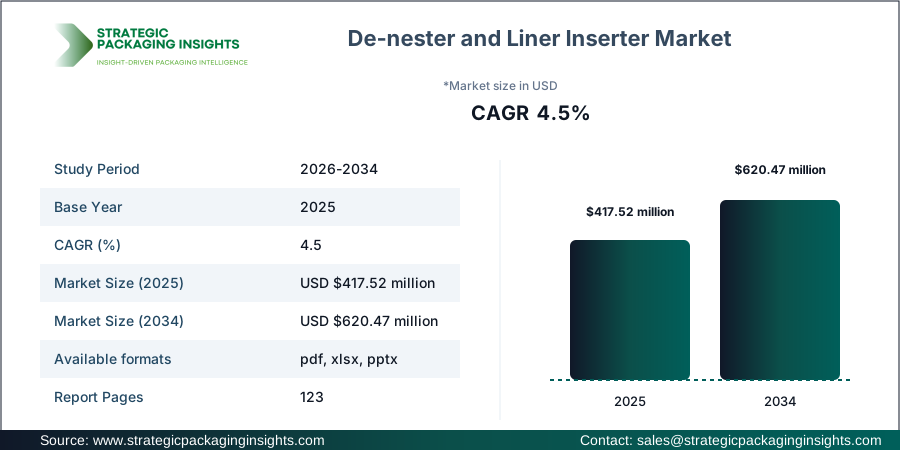
Despite the promising growth prospects, the market faces certain challenges, including high initial investment costs and the need for skilled operators to manage these advanced machines. However, the potential for cost savings and increased efficiency in the long run outweighs these initial hurdles. Additionally, regulatory standards and safety requirements in the food and medical packaging sectors necessitate the use of high-quality, reliable machinery, further boosting the demand for de-nester and liner inserter solutions. As industries continue to prioritize automation and efficiency, the market is expected to witness sustained growth over the forecast period.
Report Scope
| Attributes | Details |
| Report Title | De-nester and Liner Inserter Market Size, Future Growth and Forecast 2034 |
| Machine Type | Tray De-nesters, Cup De-nesters, Liner Inserters, Integrated Systems |
| Application | Food Trays, Cups, Containers, Medical Packaging |
| Automation | Semi-Automatic, Automatic, Robotic-Assisted |
| End Use | Food Processors, Packaging Lines, Medical Packers, Contract Packers |
| Region | Asia Pacific, North America, Latin America, Europe, Middle East & Africa |
| Base Year | 2025 |
| Historic Period | 2018-2024 |
| Forecast Period | 2026-2034 |
| Number of Pages | 123 |
| Customization Available | Yes* |
Opportunities & Threats
The De-nester and Liner Inserter market presents numerous opportunities for growth, primarily driven by the increasing demand for automation in the packaging industry. As companies strive to enhance operational efficiency and reduce labor costs, the adoption of automated packaging solutions is on the rise. This trend is particularly evident in the food and beverage sector, where the need for fast and accurate packaging processes is paramount. Additionally, the growing emphasis on sustainability and eco-friendly packaging solutions is creating opportunities for manufacturers to develop innovative machines that cater to these demands. The integration of advanced technologies, such as IoT and AI, into de-nester and liner inserter machines is also opening new avenues for market expansion.
Another significant opportunity lies in the expanding medical packaging sector. With the increasing demand for medical supplies and pharmaceuticals, there is a growing need for efficient and reliable packaging solutions. De-nester and liner inserter machines play a crucial role in ensuring the safe and secure packaging of medical products, thereby driving their adoption in this sector. Furthermore, the rise of e-commerce and online retail is boosting the demand for packaging solutions that can handle a wide variety of products, providing additional growth opportunities for the market.
However, the market also faces certain threats, such as the high initial investment costs associated with these machines. Small and medium-sized enterprises may find it challenging to invest in advanced packaging solutions due to budget constraints. Additionally, the need for skilled operators to manage these machines can be a barrier to adoption, particularly in regions with a shortage of skilled labor. Moreover, the rapid pace of technological advancements may render existing machines obsolete, posing a risk to manufacturers and end-users alike.
Drivers & Challenges
The primary drivers of the De-nester and Liner Inserter market include the increasing demand for automation in packaging processes and the need for efficient and reliable packaging solutions. As industries strive to enhance productivity and reduce operational costs, the adoption of automated packaging machines is becoming increasingly prevalent. These machines offer numerous benefits, including faster packaging speeds, improved accuracy, and reduced labor costs, making them an attractive investment for manufacturers and packers. Additionally, the growing emphasis on sustainability and eco-friendly packaging solutions is driving the development of innovative machines that cater to these demands.
Another key driver is the expanding food and beverage industry, which requires fast and accurate packaging processes to meet the growing demand for packaged products. The rise of e-commerce and online retail is also contributing to the demand for efficient packaging solutions that can handle a wide variety of products. Furthermore, the increasing demand for medical supplies and pharmaceuticals is driving the adoption of de-nester and liner inserter machines in the medical packaging sector. These machines play a crucial role in ensuring the safe and secure packaging of medical products, thereby boosting their demand.
Despite the promising growth prospects, the market faces certain challenges, including high initial investment costs and the need for skilled operators to manage these advanced machines. Small and medium-sized enterprises may find it challenging to invest in these machines due to budget constraints. Additionally, the rapid pace of technological advancements may render existing machines obsolete, posing a risk to manufacturers and end-users alike. Moreover, regulatory standards and safety requirements in the food and medical packaging sectors necessitate the use of high-quality, reliable machinery, which can be a barrier to entry for new market players.
Market Share Analysis
The De-nester and Liner Inserter market is characterized by a competitive landscape with several key players vying for market share. Prominent companies in this market include ProMach, Coesia, BW Packaging, Syntegon, Bradman Lake, Multivac, JLS Automation, R.A Jones, Marchesini Group, and Sidel. These companies are focusing on product innovation, strategic partnerships, and mergers and acquisitions to strengthen their market position and expand their product offerings. The competitive landscape is further intensified by the presence of regional players who are catering to the specific needs of local markets.
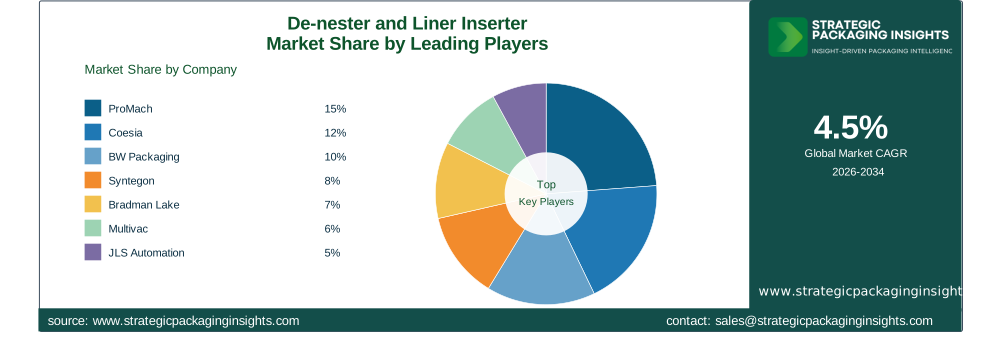
ProMach is a leading player in the De-nester and Liner Inserter market, known for its comprehensive range of packaging solutions and strong focus on innovation. The company has a significant market share and is continuously expanding its product portfolio to cater to the evolving needs of the packaging industry. Coesia, another major player, is renowned for its advanced packaging technologies and strong global presence. The company is actively investing in research and development to enhance its product offerings and maintain its competitive edge.
BW Packaging and Syntegon are also key players in the market, known for their extensive range of packaging solutions and strong focus on customer satisfaction. These companies are leveraging their expertise in automation and technology to develop innovative machines that cater to the specific needs of various industries. Bradman Lake and Multivac are other notable players, offering a wide range of packaging solutions and focusing on expanding their market presence through strategic partnerships and collaborations.
JLS Automation, R.A Jones, Marchesini Group, and Sidel are also significant contributors to the De-nester and Liner Inserter market. These companies are focusing on enhancing their product offerings and expanding their market reach through strategic initiatives and investments in research and development. The competitive landscape of the market is expected to remain dynamic, with companies continuously striving to innovate and meet the evolving demands of the packaging industry.
Key Highlights
- The De-nester and Liner Inserter market is projected to grow from $417.52 million in 2025 to $620.47 million by 2034, at a CAGR of 4.5%.
- Increasing demand for automation in packaging processes is a major driver of market growth.
- The food and beverage industry is a key end-user segment, driving the demand for efficient packaging solutions.
- High initial investment costs and the need for skilled operators are significant challenges for market growth.
- Key players in the market include ProMach, Coesia, BW Packaging, Syntegon, and Bradman Lake.
- The medical packaging sector presents significant growth opportunities for the market.
- Technological advancements and the integration of IoT and AI are opening new avenues for market expansion.
- The competitive landscape is characterized by the presence of several key players and regional competitors.
- Regulatory standards and safety requirements in the food and medical packaging sectors are driving the demand for high-quality machinery.
Top Countries Insights
In the De-nester and Liner Inserter market, the United States holds a significant share, driven by the strong presence of key players and the high demand for automated packaging solutions in the food and beverage industry. The market in the U.S. is expected to grow at a CAGR of 5%, supported by technological advancements and the increasing adoption of IoT and AI in packaging processes. The regulatory environment in the U.S. also favors the adoption of high-quality, reliable packaging machinery, further boosting market growth.
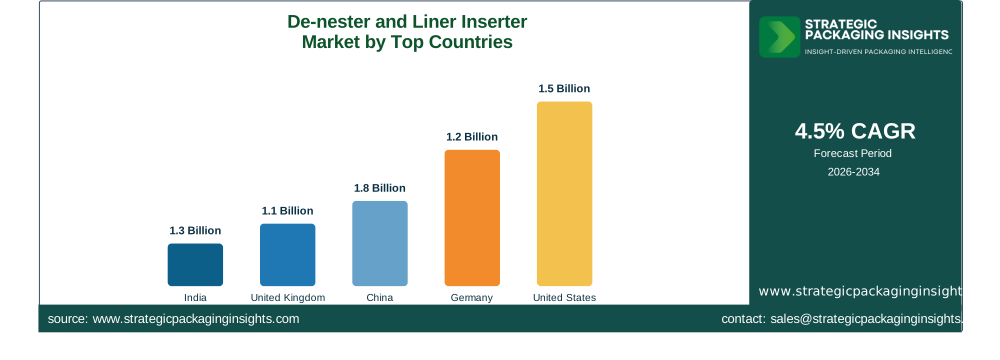
Germany is another key market for De-nester and Liner Inserter machines, with a strong focus on innovation and sustainability in packaging solutions. The market in Germany is projected to grow at a CAGR of 4%, driven by the increasing demand for eco-friendly packaging solutions and the presence of leading packaging machinery manufacturers. The country's emphasis on automation and efficiency in manufacturing processes is also contributing to market growth.
China is emerging as a significant market for De-nester and Liner Inserter machines, with rapid industrialization and the growing demand for packaged food products driving market growth. The market in China is expected to grow at a CAGR of 6%, supported by government initiatives to promote automation and technological advancements in the manufacturing sector. The increasing focus on food safety and quality standards is also boosting the demand for reliable packaging solutions.
In the United Kingdom, the De-nester and Liner Inserter market is witnessing steady growth, driven by the increasing demand for efficient packaging solutions in the food and beverage industry. The market is projected to grow at a CAGR of 3%, supported by the presence of key players and the growing emphasis on sustainability and eco-friendly packaging solutions. The regulatory environment in the UK also favors the adoption of high-quality packaging machinery, further supporting market growth.
India is another promising market for De-nester and Liner Inserter machines, with the growing demand for packaged food products and the increasing adoption of automation in the packaging industry driving market growth. The market in India is expected to grow at a CAGR of 7%, supported by government initiatives to promote manufacturing and technological advancements in the packaging sector. The rising focus on food safety and quality standards is also contributing to the demand for reliable packaging solutions.
De-nester and Liner Inserter Market Segments Insights

Machine Type Analysis
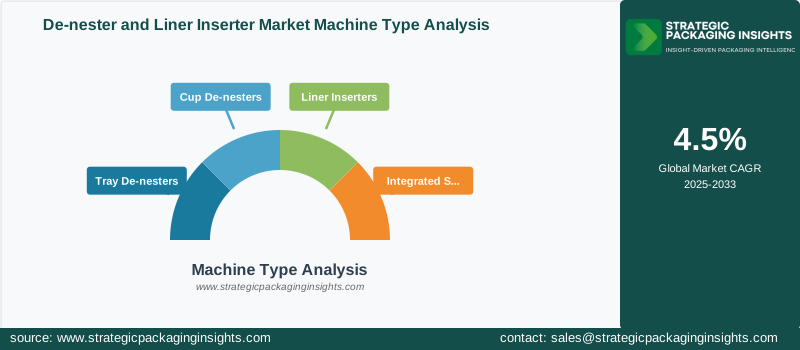
The De-nester and Liner Inserter market is segmented by machine type into tray de-nesters, cup de-nesters, liner inserters, and integrated systems. Tray de-nesters are widely used in the food packaging industry, where the need for efficient and accurate tray handling is paramount. These machines offer high-speed operation and precision, making them an essential component of modern packaging lines. Cup de-nesters, on the other hand, are gaining traction in the beverage industry, where the demand for automated cup handling solutions is on the rise. Liner inserters are crucial in ensuring the safe and secure packaging of products, particularly in the medical and pharmaceutical sectors. Integrated systems, which combine multiple functionalities, are becoming increasingly popular as they offer enhanced efficiency and flexibility in packaging operations.
The demand for these machines is driven by the need for automation and efficiency in packaging processes. As industries strive to enhance productivity and reduce operational costs, the adoption of advanced packaging solutions is becoming increasingly prevalent. The integration of IoT and AI technologies into these machines is further enhancing their capabilities, allowing for real-time monitoring and control of packaging operations. This trend is expected to continue, with manufacturers focusing on developing innovative machines that cater to the evolving needs of the packaging industry.
Application Analysis
The application segment of the De-nester and Liner Inserter market includes food trays, cups, containers, and medical packaging. The food trays segment is a major contributor to market growth, driven by the increasing demand for packaged food products and the need for efficient and reliable packaging solutions. The cups segment is also witnessing significant growth, particularly in the beverage industry, where the demand for automated cup handling solutions is on the rise. Containers are widely used in various industries, including food and beverage, pharmaceuticals, and consumer goods, driving the demand for de-nester and liner inserter machines.
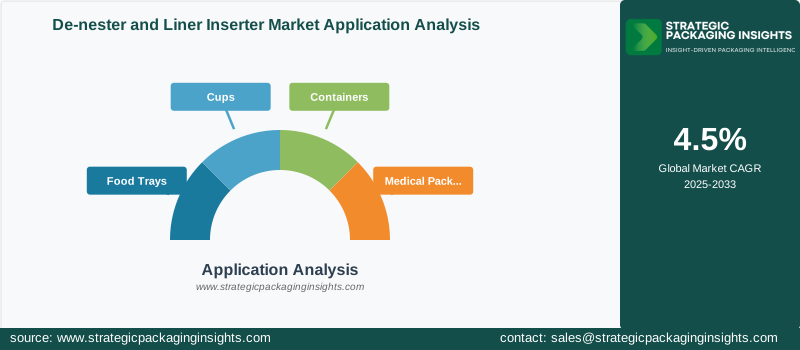
Medical packaging is another key application segment, with the increasing demand for medical supplies and pharmaceuticals driving the adoption of these machines. The need for safe and secure packaging of medical products is paramount, and de-nester and liner inserter machines play a crucial role in ensuring the integrity and quality of packaging. The growing emphasis on sustainability and eco-friendly packaging solutions is also driving the demand for innovative machines that cater to these needs. As industries continue to prioritize automation and efficiency, the application segment is expected to witness sustained growth over the forecast period.
Automation Analysis
The De-nester and Liner Inserter market is segmented by automation into semi-automatic, automatic, and robotic-assisted machines. Automatic machines are the most widely used, offering high-speed operation and precision in packaging processes. These machines are essential for industries that require fast and accurate packaging solutions, such as food and beverage and pharmaceuticals. Semi-automatic machines are also popular, particularly in small and medium-sized enterprises that may not have the budget for fully automated solutions. These machines offer a balance between cost and efficiency, making them an attractive option for many manufacturers.
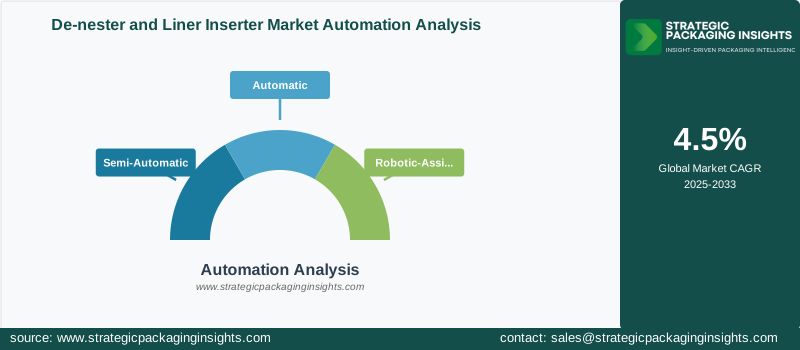
Robotic-assisted machines are gaining traction in the market, driven by the increasing demand for advanced automation solutions. These machines offer enhanced flexibility and precision, allowing for the handling of a wide variety of products and packaging formats. The integration of IoT and AI technologies into these machines is further enhancing their capabilities, allowing for real-time monitoring and control of packaging operations. As industries continue to prioritize automation and efficiency, the demand for robotic-assisted machines is expected to grow, driving the overall growth of the automation segment.
End Use Analysis
The end-use segment of the De-nester and Liner Inserter market includes food processors, packaging lines, medical packers, and contract packers. Food processors are a major end-user segment, driven by the increasing demand for packaged food products and the need for efficient and reliable packaging solutions. Packaging lines are also significant contributors to market growth, with the demand for automated packaging solutions on the rise. Medical packers are another key end-user segment, with the increasing demand for medical supplies and pharmaceuticals driving the adoption of these machines.
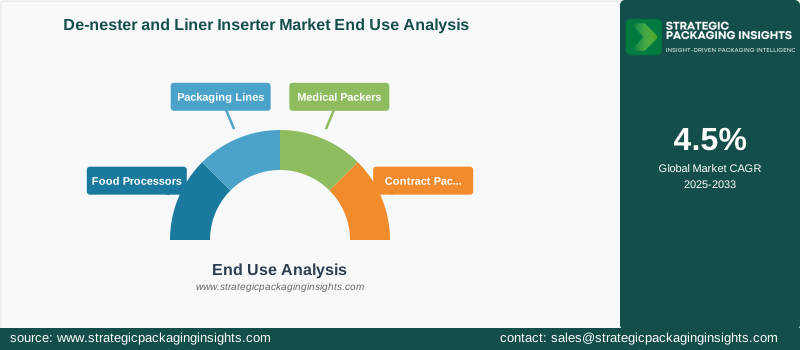
Contract packers are gaining prominence in the market, offering packaging services to various industries, including food and beverage, pharmaceuticals, and consumer goods. These companies rely on advanced packaging solutions to meet the diverse needs of their clients, driving the demand for de-nester and liner inserter machines. The growing emphasis on sustainability and eco-friendly packaging solutions is also driving the demand for innovative machines that cater to these needs. As industries continue to prioritize automation and efficiency, the end-use segment is expected to witness sustained growth over the forecast period.
De-nester and Liner Inserter Market Segments
The De-nester and Liner Inserter market has been segmented on the basis ofMachine Type
- Tray De-nesters
- Cup De-nesters
- Liner Inserters
- Integrated Systems
Application
- Food Trays
- Cups
- Containers
- Medical Packaging
Automation
- Semi-Automatic
- Automatic
- Robotic-Assisted
End Use
- Food Processors
- Packaging Lines
- Medical Packers
- Contract Packers
Region
- Asia Pacific
- North America
- Latin America
- Europe
- Middle East & Africa




