


Cryogenic Insulation Films Market Outlook
The Cryogenic Insulation Films market size was valued at USD 3.86 billion in 2025 and is anticipated to reach USD 7.45 billion by 2034, growing at a CAGR of 7.6% during the forecast period according to Strategic Packaging Insights. This market is witnessing significant growth due to the increasing demand for efficient thermal insulation solutions in industries such as energy, healthcare, and aerospace. Companies like DuPont and 3M are at the forefront, leveraging advanced materials and technologies to enhance the performance of cryogenic insulation films. The rising adoption of liquefied natural gas (LNG) and the expansion of the medical cold chain logistics are key factors driving the demand for these films, as they provide superior insulation properties essential for maintaining low temperatures.
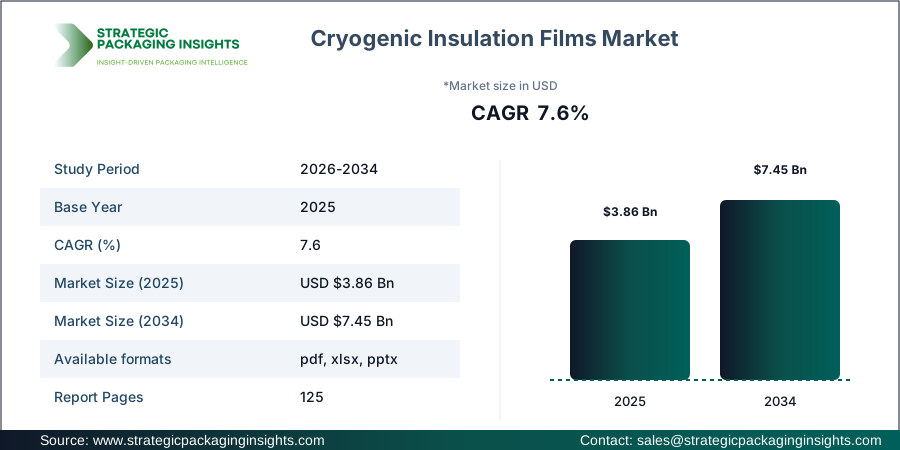
One of the most impactful drivers of the Cryogenic Insulation Films market is the growing emphasis on energy efficiency and sustainability. Governments worldwide are implementing stringent regulations to reduce carbon emissions, which is propelling the demand for advanced insulation materials. According to the International Energy Agency, improving energy efficiency in industrial processes can significantly reduce greenhouse gas emissions, thereby supporting global climate goals. Companies like Saint-Gobain and Aspen Aerogels are investing in research and development to create innovative insulation solutions that meet these regulatory requirements while offering enhanced performance. This trend is expected to continue, driving the growth of the cryogenic insulation films market over the forecast period.
Report Scope
| Attributes | Details |
| Report Title | Cryogenic Insulation Films Market Size, Future Growth and Forecast 2034 |
| By Material Type | Metallized PET, Polyimide, Multilayer Insulation Film |
| By Application | LNG Storage, Cryogenic Tanks, Aerospace, Medical Cold Chain |
| By End Use | Energy, Healthcare, Aerospace, Industrial Gases |
| By Film Type | Reflective Films, Barrier Films, Vacuum Insulation Films |
| Region | Asia Pacific, North America, Latin America, Europe, Middle East & Africa |
| Base Year | 2025 |
| Historic Period | 2018-2024 |
| Forecast Period | 2026-2034 |
| Number of Pages | 125 |
| Customization Available | Yes* |
Sustainability & Circular Economy Analysis
Sustainability initiatives and circular economy practices are increasingly shaping the packaging market, including the cryogenic insulation films sector. The focus on reducing environmental impact has led to the development of recyclable materials and reusable packaging solutions. Companies are investing in lightweight packaging and eco-friendly material innovations to minimize waste and reduce carbon footprints. For instance, the use of metallized PET and polyimide films, which are recyclable, is gaining traction as they offer excellent insulation properties while being environmentally friendly. These trends are influencing packaging design and manufacturing processes, encouraging companies to adopt sustainable practices that align with consumer preferences and regulatory requirements.
Extended Producer Responsibility (EPR) and packaging regulations are driving companies to rethink their supply chain strategies and investment decisions. By incorporating waste reduction strategies and ESG initiatives, businesses are enhancing their long-term market competitiveness. The integration of sustainable practices not only helps in regulatory compliance but also strengthens brand reputation and customer loyalty. As consumers become more environmentally conscious, their preferences are shifting towards products with sustainable packaging, prompting companies to innovate and invest in eco-friendly solutions. This shift is expected to have a lasting impact on the cryogenic insulation films market, influencing product development and market dynamics.
The emphasis on sustainability is also affecting the supply chain, with companies focusing on reducing their carbon footprint through efficient logistics and distribution channels. By optimizing transportation and production capabilities, businesses can achieve significant cost savings while minimizing environmental impact. Strategic partnerships and collaborations are becoming increasingly important as companies seek to enhance their supply chain resilience and localization efforts. These initiatives are crucial for maintaining a competitive edge in the market, as they enable companies to respond effectively to changing consumer demands and regulatory landscapes. Overall, sustainability and circular economy practices are playing a pivotal role in shaping the future of the cryogenic insulation films market.
Packaging Value Chain & Supply Chain Analysis
The packaging value chain and supply chain ecosystem for cryogenic insulation films is complex, involving multiple stakeholders from raw material sourcing to end-user delivery. Raw material availability is a critical factor influencing the market, as it affects production capabilities and cost structures. Companies like Toray Industries and Dunmore are focusing on securing reliable sources of high-quality materials to ensure consistent product quality and supply. Packaging converters and manufacturers play a vital role in transforming these materials into finished products, utilizing advanced machinery and technologies to enhance efficiency and reduce waste.
Logistics and distribution channels are essential components of the supply chain, ensuring that cryogenic insulation films reach their intended markets efficiently. Transportation plays a significant role in maintaining the integrity of these films, as they are often used in applications requiring precise temperature control. Companies are investing in robust logistics networks and strategic partnerships to enhance their distribution capabilities and meet the growing demand for cryogenic insulation solutions. Inventory management and procurement strategies are also crucial for optimizing supply chain performance and minimizing costs.
Supply chain resilience and localization efforts are becoming increasingly important as companies navigate global sourcing challenges and geopolitical uncertainties. By diversifying their supplier base and investing in local production facilities, businesses can mitigate risks and enhance their competitive advantage. Recycling networks are also gaining prominence, as companies seek to close the loop on their supply chains and reduce environmental impact. Overall, the packaging value chain and supply chain ecosystem for cryogenic insulation films is evolving to meet the demands of a dynamic market, with a focus on efficiency, sustainability, and innovation.
Opportunities & Threats
The cryogenic insulation films market presents several opportunities for growth, driven by the increasing demand for energy-efficient solutions across various industries. The expansion of the LNG sector, particularly in emerging economies, is creating significant opportunities for manufacturers of cryogenic insulation films. As countries invest in LNG infrastructure to meet their energy needs, the demand for advanced insulation materials is expected to rise. Companies like Armacell and va-Q-tec are well-positioned to capitalize on this trend by offering innovative products that meet the stringent requirements of the LNG industry.
Another opportunity lies in the healthcare sector, where the need for reliable cold chain logistics is driving the demand for cryogenic insulation films. The growth of the pharmaceutical and biotechnology industries, coupled with the increasing focus on vaccine distribution, is creating a favorable environment for market expansion. Companies that can provide high-performance insulation solutions for medical cold chain applications are likely to benefit from this trend. Additionally, advancements in aerospace technology are opening new avenues for the use of cryogenic insulation films, as they offer superior thermal protection for sensitive components.
Despite these opportunities, the market faces several threats that could hinder its growth. One of the primary challenges is the volatility of raw material prices, which can impact production costs and profit margins. Companies must navigate these fluctuations by implementing effective procurement strategies and cost management practices. Additionally, stringent regulatory requirements and environmental concerns pose significant challenges for manufacturers. Compliance with these regulations requires continuous investment in research and development, which can strain resources and affect profitability. Companies must also address the threat of competition from alternative insulation materials, which could limit market share and growth potential.
Drivers & Challenges
The cryogenic insulation films market is driven by several key factors, including the growing demand for energy-efficient solutions and the expansion of the LNG sector. As countries strive to reduce their carbon emissions and improve energy efficiency, the need for advanced insulation materials is becoming increasingly important. Cryogenic insulation films offer superior thermal performance, making them ideal for applications in the energy, healthcare, and aerospace industries. Companies like Mersen and Krempel are investing in research and development to create innovative products that meet the evolving needs of these industries.
Another significant driver is the increasing focus on sustainability and environmental responsibility. Consumers and businesses alike are becoming more conscious of their environmental impact, leading to a growing demand for eco-friendly packaging solutions. Cryogenic insulation films made from recyclable materials and designed for reuse are gaining popularity, as they align with consumer preferences and regulatory requirements. This trend is encouraging companies to invest in sustainable practices and develop products that minimize waste and reduce carbon footprints.
However, the market also faces several challenges that could impact its growth. One of the primary challenges is the high cost of production, which can limit the adoption of cryogenic insulation films in price-sensitive markets. Companies must find ways to optimize their production processes and reduce costs without compromising on quality. Additionally, the market is subject to stringent regulatory requirements, which can pose significant hurdles for manufacturers. Compliance with these regulations requires continuous investment in research and development, as well as robust quality control measures. Companies must also address the threat of competition from alternative insulation materials, which could limit market share and growth potential.
Market Share Analysis
The competitive landscape of the cryogenic insulation films market is characterized by the presence of several key players, each striving to enhance their market share through innovation and strategic partnerships. DuPont, a leader in the industry, is known for its advanced material solutions and commitment to sustainability. The company leverages its extensive research and development capabilities to create high-performance insulation films that meet the stringent requirements of various industries. Similarly, 3M is recognized for its innovative products and strong focus on customer satisfaction, offering a wide range of insulation solutions tailored to specific applications.
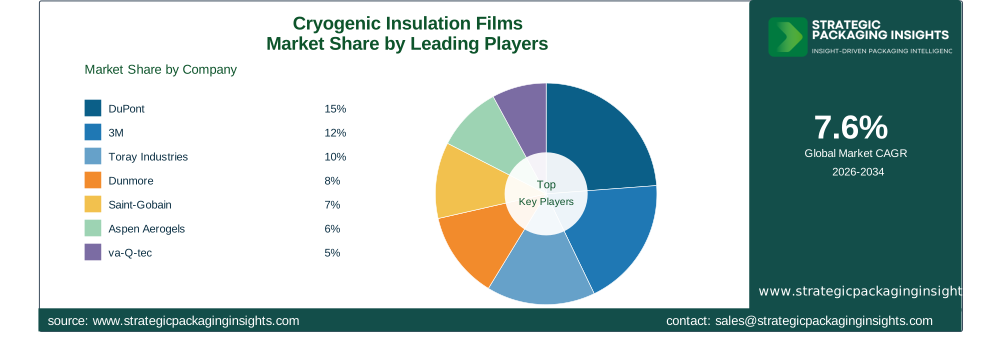
Toray Industries is another prominent player in the market, renowned for its expertise in advanced materials and technologies. The company's cryogenic insulation films are widely used in the aerospace and energy sectors, where they provide superior thermal protection and durability. Dunmore, a subsidiary of Steel Partners Holdings, is known for its high-quality metallized films and coatings, which are used in a variety of applications, including cryogenic insulation. The company's commitment to quality and innovation has helped it maintain a strong position in the market.
Saint-Gobain, a global leader in building materials, offers a range of insulation solutions designed to enhance energy efficiency and sustainability. The company's cryogenic insulation films are used in various applications, including LNG storage and medical cold chain logistics. Aspen Aerogels, known for its cutting-edge aerogel technology, provides high-performance insulation solutions that offer exceptional thermal protection and energy efficiency. The company's products are widely used in the energy and industrial gases sectors, where they help reduce energy consumption and carbon emissions.
va-Q-tec, a pioneer in vacuum insulation technology, offers innovative solutions for temperature-sensitive applications. The company's cryogenic insulation films are used in the healthcare and aerospace industries, where they provide reliable thermal protection for sensitive components. Armacell, a leading manufacturer of flexible insulation materials, offers a range of cryogenic insulation solutions designed to meet the needs of various industries. The company's products are known for their durability and energy efficiency, making them a popular choice among customers.
Key Highlights
- Market Size: The cryogenic insulation films market was valued at USD 3.86 billion in 2025 and is projected to reach USD 7.45 billion by 2034.
- Growth Rate: The market is expected to grow at a CAGR of 7.6% during the forecast period.
- Leading Companies: Key players include DuPont, 3M, Toray Industries, and Saint-Gobain.
- Material Type: Metallized PET and polyimide films are gaining popularity due to their recyclability and insulation properties.
- Application Growth: LNG storage and medical cold chain logistics are driving demand for cryogenic insulation films.
- Regional Insights: Asia Pacific is expected to witness significant growth due to increasing industrialization and energy demand.
- Sustainability Focus: Companies are investing in eco-friendly materials and sustainable practices to meet regulatory requirements and consumer preferences.
Cryogenic Insulation Films Market Segments Insights

Material Type Analysis
The material type segment of the cryogenic insulation films market is dominated by metallized PET, polyimide, and multilayer insulation films. Metallized PET films are gaining traction due to their excellent thermal insulation properties and recyclability, making them a popular choice for applications in the energy and healthcare sectors. Polyimide films, known for their high-temperature resistance and durability, are widely used in aerospace and industrial applications. Multilayer insulation films offer superior thermal protection and are commonly used in cryogenic tanks and LNG storage. Companies like DuPont and Toray Industries are investing in research and development to enhance the performance of these materials and meet the evolving needs of the market.
The demand for advanced materials in cryogenic insulation films is driven by the need for energy-efficient solutions and the growing emphasis on sustainability. As industries strive to reduce their carbon footprint and improve energy efficiency, the adoption of recyclable and eco-friendly materials is becoming increasingly important. Companies are focusing on developing innovative materials that offer superior insulation properties while minimizing environmental impact. This trend is expected to drive the growth of the material type segment, as businesses seek to enhance their product offerings and meet regulatory requirements.
Application Analysis
The application segment of the cryogenic insulation films market includes LNG storage, cryogenic tanks, aerospace, and medical cold chain logistics. LNG storage is a major driver of demand, as countries invest in infrastructure to meet their energy needs. Cryogenic insulation films provide superior thermal protection, ensuring the safe and efficient storage of LNG. The aerospace industry is another key application area, where these films are used to protect sensitive components from extreme temperatures. The medical cold chain logistics sector is also experiencing significant growth, driven by the increasing demand for reliable temperature-controlled solutions in the pharmaceutical and biotechnology industries.
The growth of the application segment is supported by the increasing focus on energy efficiency and sustainability. Companies are investing in advanced insulation solutions that offer superior performance and meet the stringent requirements of various industries. The expansion of the LNG sector, coupled with advancements in aerospace technology, is expected to drive the demand for cryogenic insulation films in the coming years. Additionally, the growing emphasis on vaccine distribution and cold chain logistics is creating new opportunities for market expansion, as companies seek to enhance their product offerings and meet the evolving needs of the healthcare sector.
End Use Analysis
The end-use segment of the cryogenic insulation films market includes energy, healthcare, aerospace, and industrial gases. The energy sector is a major driver of demand, as countries invest in LNG infrastructure and seek to improve energy efficiency. Cryogenic insulation films offer superior thermal protection, making them ideal for applications in the energy industry. The healthcare sector is also experiencing significant growth, driven by the increasing demand for reliable cold chain logistics and temperature-controlled solutions. The aerospace industry is another key end-use area, where these films are used to protect sensitive components from extreme temperatures.
The growth of the end-use segment is supported by the increasing focus on sustainability and environmental responsibility. Companies are investing in advanced insulation solutions that offer superior performance and meet the stringent requirements of various industries. The expansion of the LNG sector, coupled with advancements in aerospace technology, is expected to drive the demand for cryogenic insulation films in the coming years. Additionally, the growing emphasis on vaccine distribution and cold chain logistics is creating new opportunities for market expansion, as companies seek to enhance their product offerings and meet the evolving needs of the healthcare sector.
Film Type Analysis
The film type segment of the cryogenic insulation films market includes reflective films, barrier films, and vacuum insulation films. Reflective films are widely used in applications requiring superior thermal protection, as they reflect heat and minimize energy loss. Barrier films offer excellent insulation properties and are commonly used in cryogenic tanks and LNG storage. Vacuum insulation films provide superior thermal protection and are used in applications requiring precise temperature control. Companies like 3M and Dunmore are investing in research and development to enhance the performance of these films and meet the evolving needs of the market.
The demand for advanced film types in cryogenic insulation films is driven by the need for energy-efficient solutions and the growing emphasis on sustainability. As industries strive to reduce their carbon footprint and improve energy efficiency, the adoption of innovative film types is becoming increasingly important. Companies are focusing on developing films that offer superior insulation properties while minimizing environmental impact. This trend is expected to drive the growth of the film type segment, as businesses seek to enhance their product offerings and meet regulatory requirements.
Cryogenic Insulation Films Market Segments
The Cryogenic Insulation Films market has been segmented on the basis ofBy Material Type
- Metallized PET
- Polyimide
- Multilayer Insulation Film
By Application
- LNG Storage
- Cryogenic Tanks
- Aerospace
- Medical Cold Chain
By End Use
- Energy
- Healthcare
- Aerospace
- Industrial Gases
By Film Type
- Reflective Films
- Barrier Films
- Vacuum Insulation Films
Region
- Asia Pacific
- North America
- Latin America
- Europe
- Middle East & Africa




