


Cosmetics and Personal Care PP Jar and Closure Recycling Streams Market Outlook
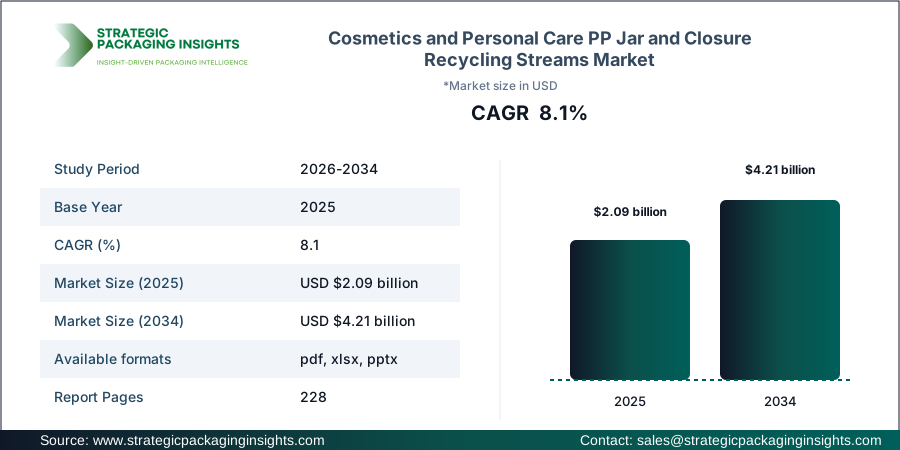
The Cosmetics and Personal Care PP Jar and Closure Recycling Streams market was valued at $2.09 billion in 2025 and is projected to reach $4.21 billion by 2034, growing at a CAGR of 8.1% during the forecast period 2026-2034. This market is witnessing significant growth due to increasing consumer awareness about sustainability and the environmental impact of plastic waste. The demand for recycled polypropylene (PP) in the cosmetics and personal care industry is driven by the need to reduce carbon footprints and adhere to stringent environmental regulations. The market is also propelled by advancements in recycling technologies that enhance the quality and usability of recycled PP, making it a viable alternative to virgin materials.
Despite the promising growth, the market faces challenges such as the high cost of recycling processes and the complexity of sorting and processing mixed plastic waste. Regulatory frameworks across different regions also pose challenges, as they vary significantly, affecting the uniformity of recycling practices. However, the potential for growth remains substantial, with increasing investments in recycling infrastructure and innovations in recycling technologies. Companies are focusing on developing closed-loop systems to ensure the continuous use of recycled materials, thereby enhancing the market's growth potential.
Report Scope
| Attributes | Details |
| Report Title | Cosmetics and Personal Care PP Jar and Closure Recycling Streams Market Size, Future Growth and Forecast 2034 |
| Feedstock Type | PP jars, PP caps, mixed personal care rigid plastics |
| Process Type | sorting, washing, deodorization, extrusion |
| Application | cosmetic jars, closures, refill packs |
| End Use | beauty brands, recyclers, packaging converters |
| Region | Asia Pacific, North America, Latin America, Europe, Middle East & Africa |
| Base Year | 2025 |
| Historic Period | 2018-2024 |
| Forecast Period | 2026-2034 |
| Number of Pages | 228 |
| Customization Available | Yes* |
Opportunities & Threats
The Cosmetics and Personal Care PP Jar and Closure Recycling Streams market presents numerous opportunities, particularly in the development of advanced recycling technologies. Innovations such as chemical recycling and enhanced mechanical recycling processes are opening new avenues for the efficient processing of PP waste. These technologies not only improve the quality of recycled materials but also expand the range of applications for recycled PP in the cosmetics and personal care industry. Additionally, the growing trend of eco-friendly packaging among consumers is encouraging brands to adopt recycled materials, thereby driving demand in this market.
Another significant opportunity lies in the expansion of recycling infrastructure in emerging markets. Countries in Asia Pacific and Latin America are increasingly investing in recycling facilities to manage plastic waste more effectively. This expansion is supported by government initiatives and policies aimed at promoting sustainable practices and reducing environmental pollution. As these regions develop their recycling capabilities, they are expected to contribute significantly to the growth of the global market.
However, the market also faces threats from fluctuating oil prices, which can affect the cost competitiveness of recycled PP compared to virgin materials. Additionally, the lack of standardized recycling practices and quality standards across regions can hinder the market's growth. Companies must navigate these challenges by investing in research and development to improve recycling processes and by collaborating with regulatory bodies to establish uniform standards.
Drivers & Challenges
The primary drivers of the Cosmetics and Personal Care PP Jar and Closure Recycling Streams market include the increasing consumer demand for sustainable and eco-friendly products. As consumers become more environmentally conscious, they are seeking products that align with their values, prompting brands to incorporate recycled materials into their packaging. This shift in consumer preferences is a significant driver for the market, encouraging companies to invest in recycling technologies and sustainable practices.
Another key driver is the regulatory push towards sustainability. Governments worldwide are implementing stringent regulations to reduce plastic waste and promote recycling. These regulations are compelling companies to adopt recycled materials and improve their recycling processes, thereby driving market growth. Additionally, the development of new recycling technologies that enhance the efficiency and quality of recycled PP is further propelling the market.
Despite these drivers, the market faces challenges such as the high cost of recycling processes and the complexity of sorting and processing mixed plastic waste. The lack of infrastructure in certain regions also poses a challenge, as it limits the availability of recycled materials. Companies must address these challenges by investing in advanced recycling technologies and expanding their recycling capabilities to meet the growing demand for recycled PP.
Market Share Analysis
The competitive landscape of the Cosmetics and Personal Care PP Jar and Closure Recycling Streams market is characterized by the presence of several key players who are actively investing in recycling technologies and sustainable practices. L’Oréal, a leading player in the cosmetics industry, is focusing on incorporating recycled materials into its packaging to meet its sustainability goals. The company is also investing in research and development to improve its recycling processes and reduce its environmental impact.
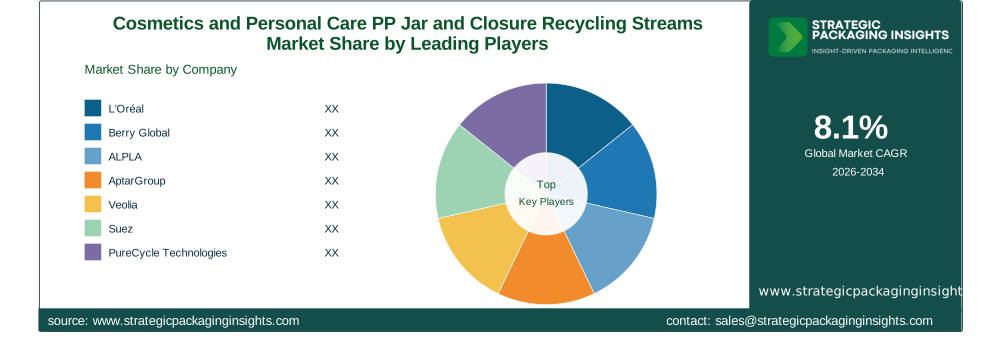
Berry Global, another major player, is leveraging its expertise in packaging solutions to develop innovative recycling technologies. The company is committed to increasing the use of recycled materials in its products and is actively collaborating with other industry players to enhance its recycling capabilities. ALPLA, a global leader in plastic packaging, is also investing in recycling technologies to expand its portfolio of sustainable packaging solutions.
AptarGroup, known for its innovative dispensing solutions, is focusing on developing sustainable packaging options that incorporate recycled materials. The company is also working on improving its recycling processes to enhance the quality of its products. Veolia and Suez, both leaders in waste management and recycling, are investing in advanced recycling technologies to improve the efficiency and quality of recycled PP.
PureCycle Technologies, LyondellBasell, Borealis, and Amcor are also key players in the market, each contributing to the development of sustainable packaging solutions. These companies are focusing on expanding their recycling capabilities and developing new technologies to improve the quality and usability of recycled PP. The competitive landscape is dynamic, with companies continuously innovating to meet the growing demand for sustainable packaging solutions.
Key Highlights
- The market is projected to grow at a CAGR of 8.1% from 2026 to 2034.
- Increasing consumer demand for sustainable packaging is driving market growth.
- Advancements in recycling technologies are enhancing the quality of recycled PP.
- Regulatory frameworks are promoting the use of recycled materials in packaging.
- Emerging markets are investing in recycling infrastructure to manage plastic waste.
- Fluctuating oil prices pose a threat to the cost competitiveness of recycled PP.
- Key players are focusing on developing closed-loop systems for continuous recycling.
Top Countries Insights
In the Cosmetics and Personal Care PP Jar and Closure Recycling Streams market, the United States is a leading player, with a market size of $1.2 billion and a CAGR of 6%. The country's growth is driven by strong regulatory support for recycling and a high level of consumer awareness regarding sustainability. The presence of major cosmetics brands that are committed to sustainable practices further boosts the market.
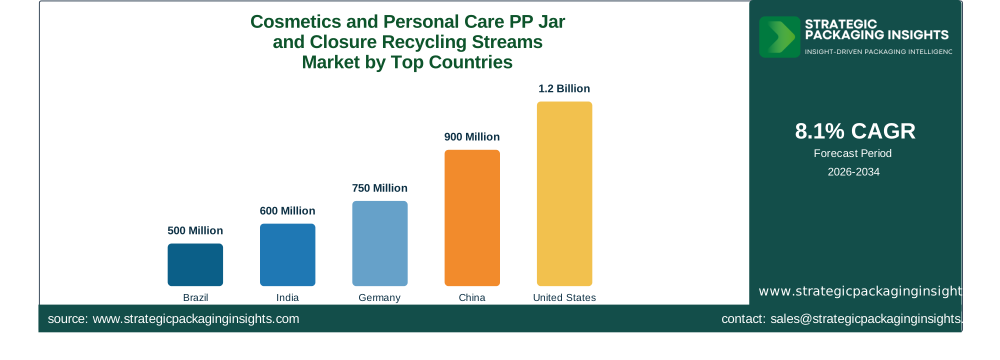
China, with a market size of $900 million and a CAGR of 10%, is rapidly expanding its recycling capabilities. The government's initiatives to reduce plastic waste and promote recycling are key drivers of growth. Additionally, the increasing demand for eco-friendly packaging among consumers is encouraging companies to adopt recycled materials.
Germany, with a market size of $750 million and a CAGR of 8%, is a significant player in the European market. The country's stringent environmental regulations and strong consumer demand for sustainable products are driving the market. Germany's advanced recycling infrastructure also supports the growth of the market.
India, with a market size of $600 million and a CAGR of 12%, is emerging as a key market for recycled PP. The government's focus on reducing plastic waste and promoting sustainable practices is driving growth. The increasing consumer demand for eco-friendly packaging is also contributing to the market's expansion.
Brazil, with a market size of $500 million and a CAGR of 9%, is a growing market in Latin America. The country's efforts to improve its recycling infrastructure and reduce plastic waste are key drivers of growth. The increasing awareness among consumers about the environmental impact of plastic waste is also boosting the market.
Cosmetics and Personal Care PP Jar and Closure Recycling Streams Market Segments Insights

Feedstock Type Analysis
The feedstock type segment in the Cosmetics and Personal Care PP Jar and Closure Recycling Streams market is categorized into PP jars, PP caps, and mixed personal care rigid plastics. PP jars are the most significant sub-segment, driven by the high demand for sustainable packaging solutions in the cosmetics industry. The increasing consumer preference for eco-friendly products is encouraging brands to adopt recycled PP jars, thereby driving the growth of this segment. PP caps are also witnessing significant demand, as they are an essential component of cosmetic packaging. The use of recycled PP caps helps brands reduce their environmental impact and align with sustainability goals.
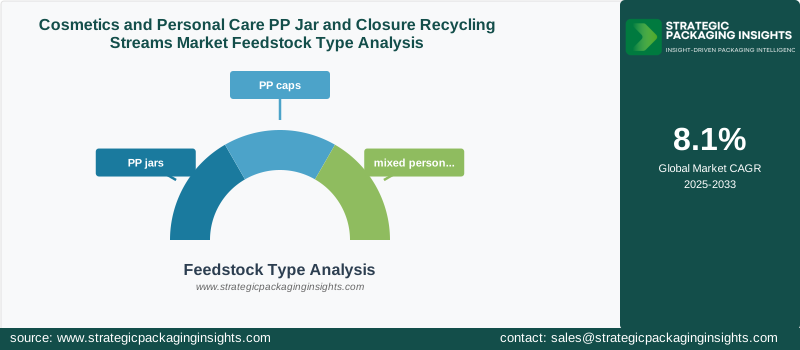
Mixed personal care rigid plastics, although a smaller segment, are gaining traction due to advancements in recycling technologies that enable the efficient processing of mixed plastic waste. The development of new sorting and processing techniques is enhancing the quality of recycled materials, making them suitable for use in cosmetic packaging. This segment is expected to grow as companies continue to invest in recycling technologies and expand their capabilities to process mixed plastics.
Process Type Analysis
The process type segment includes sorting, washing, deodorization, and extrusion. Sorting is a critical step in the recycling process, as it ensures the separation of different types of plastics for efficient processing. The development of advanced sorting technologies, such as optical sorting and AI-based systems, is enhancing the efficiency and accuracy of the sorting process, driving the growth of this segment. Washing is another essential process, as it removes contaminants and impurities from the plastic waste, improving the quality of the recycled materials.
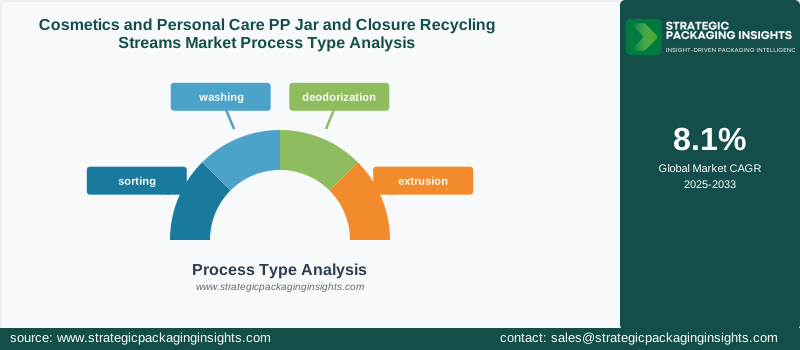
Deodorization is gaining importance as it addresses the issue of odor in recycled plastics, making them more suitable for use in cosmetic packaging. The development of new deodorization techniques is enhancing the quality of recycled PP, driving the growth of this segment. Extrusion, the final step in the recycling process, involves melting and reshaping the plastic into new products. The development of advanced extrusion technologies is improving the quality and usability of recycled PP, contributing to the growth of this segment.
Application Analysis
The application segment includes cosmetic jars, closures, and refill packs. Cosmetic jars are the largest sub-segment, driven by the high demand for sustainable packaging solutions in the cosmetics industry. The increasing consumer preference for eco-friendly products is encouraging brands to adopt recycled PP jars, thereby driving the growth of this segment. Closures are also witnessing significant demand, as they are an essential component of cosmetic packaging. The use of recycled PP closures helps brands reduce their environmental impact and align with sustainability goals.
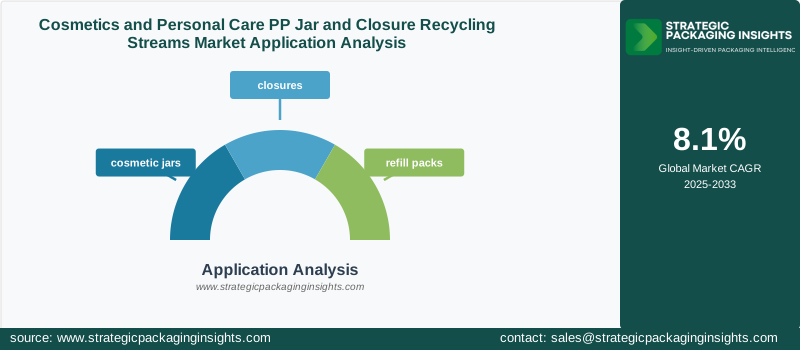
Refill packs, although a smaller segment, are gaining traction due to the growing trend of refillable packaging in the cosmetics industry. The use of recycled PP in refill packs helps brands reduce their environmental impact and meet consumer demand for sustainable products. This segment is expected to grow as companies continue to invest in recycling technologies and expand their capabilities to produce high-quality recycled PP for use in refill packs.
End Use Analysis
The end-use segment includes beauty brands, recyclers, and packaging converters. Beauty brands are the largest sub-segment, driven by the increasing consumer demand for sustainable products. Brands are focusing on incorporating recycled materials into their packaging to meet consumer expectations and align with sustainability goals. This trend is driving the growth of the beauty brands segment in the market.
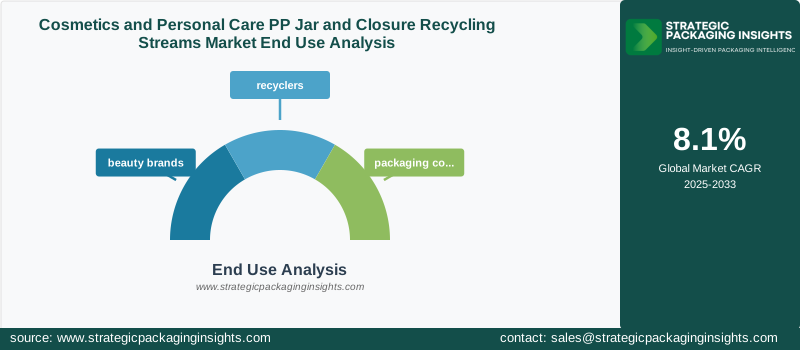
Recyclers play a crucial role in the market, as they are responsible for processing plastic waste and producing high-quality recycled materials. The development of advanced recycling technologies is enhancing the capabilities of recyclers, driving the growth of this segment. Packaging converters, although a smaller segment, are gaining importance as they are responsible for transforming recycled materials into new packaging products. The increasing demand for sustainable packaging solutions is encouraging packaging converters to adopt recycled materials, driving the growth of this segment.
Cosmetics and Personal Care PP Jar and Closure Recycling Streams Market Segments
The Cosmetics and Personal Care PP Jar and Closure Recycling Streams market has been segmented on the basis ofFeedstock Type
- PP jars
- PP caps
- mixed personal care rigid plastics
Process Type
- sorting
- washing
- deodorization
- extrusion
Application
- cosmetic jars
- closures
- refill packs
End Use
- beauty brands
- recyclers
- packaging converters
Region
- Asia Pacific
- North America
- Latin America
- Europe
- Middle East & Africa




