


Compostable Plastic Packaging Material Market Outlook
The compostable plastic packaging material market was valued at $8.42 billion in 2025 and is projected to reach $21.05 billion by 2034, growing at a CAGR of 10.7% during the forecast period 2026-2034. This market is witnessing significant growth due to increasing environmental concerns and the rising demand for sustainable packaging solutions. The shift towards eco-friendly materials is driven by both consumer preferences and stringent government regulations aimed at reducing plastic waste. The market is further bolstered by advancements in biopolymer technologies, which enhance the performance and cost-effectiveness of compostable plastics. As industries such as food and beverage, retail, and agriculture increasingly adopt these materials, the market is poised for robust expansion.
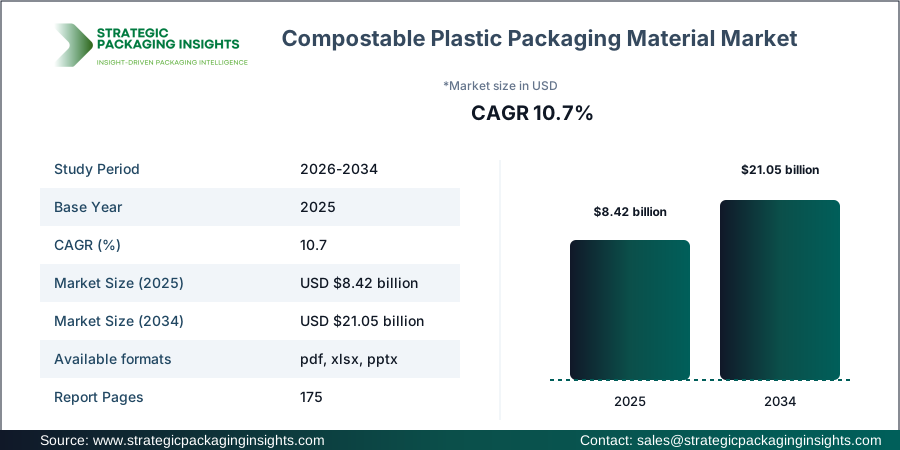
Despite the promising growth trajectory, the compostable plastic packaging material market faces several challenges. High production costs and limited availability of raw materials are significant restraints that could hinder market growth. Additionally, the lack of widespread industrial composting facilities poses a challenge for the effective disposal of compostable plastics. However, ongoing research and development efforts are expected to address these issues by improving the scalability and affordability of compostable materials. The market also presents substantial growth potential, particularly in emerging economies where the demand for sustainable packaging is on the rise. As awareness about environmental sustainability continues to grow, the market is likely to witness increased investments and innovations.
Report Scope
| Attributes | Details |
| Report Title | Compostable Plastic Packaging Material Market Size, Future Growth and Forecast 2034 |
| By Material Type | PLA, PHA, Starch Blends, PBS |
| By Packaging Type | Films, Bags, Trays, Pouches |
| By Application | Food Packaging, Retail Bags, Personal Care, Agriculture Packaging |
| By End Use | Food & Beverage, Retail, FMCG, Agriculture |
| Region | Asia Pacific, North America, Latin America, Europe, Middle East & Africa |
| Base Year | 2025 |
| Historic Period | 2018-2024 |
| Forecast Period | 2026-2034 |
| Number of Pages | 175 |
| Customization Available | Yes* |
Opportunities & Threats
The compostable plastic packaging material market offers numerous opportunities for growth, primarily driven by the increasing consumer demand for sustainable and eco-friendly packaging solutions. As awareness about the environmental impact of traditional plastics grows, consumers are actively seeking alternatives that minimize ecological footprints. This shift in consumer behavior is encouraging manufacturers to innovate and expand their product offerings in the compostable packaging segment. Additionally, government regulations and policies promoting the use of biodegradable materials are creating a favorable environment for market expansion. These regulations are particularly stringent in regions like Europe and North America, where governments are actively supporting the transition to sustainable packaging solutions.
Another significant opportunity lies in the technological advancements in biopolymer production. Innovations in this field are enhancing the properties of compostable plastics, making them more competitive with conventional plastics in terms of performance and cost. This is opening up new applications for compostable materials across various industries, including food and beverage, retail, and agriculture. Furthermore, the growing trend of circular economy practices is encouraging companies to adopt compostable packaging as part of their sustainability strategies. This trend is expected to drive the demand for compostable plastics, as businesses seek to reduce their environmental impact and meet consumer expectations for sustainable products.
However, the market also faces threats that could impede its growth. One of the primary challenges is the high cost of production associated with compostable plastics. The raw materials used in their production are often more expensive than those used for conventional plastics, which can limit their adoption, especially in price-sensitive markets. Additionally, the lack of infrastructure for industrial composting poses a significant barrier to the effective disposal of compostable plastics. Without adequate facilities, these materials may not decompose as intended, undermining their environmental benefits. Addressing these challenges will be crucial for the market to realize its full potential.
Drivers & Challenges
The compostable plastic packaging material market is primarily driven by the increasing environmental awareness among consumers and businesses. As the detrimental effects of plastic pollution become more apparent, there is a growing demand for sustainable alternatives that can reduce the environmental impact. This shift in consumer preferences is compelling companies to adopt compostable packaging solutions, thereby driving market growth. Additionally, government regulations aimed at reducing plastic waste are playing a crucial role in promoting the use of compostable materials. These regulations are particularly stringent in developed regions, where governments are actively encouraging the transition to sustainable packaging solutions.
Technological advancements in biopolymer production are another significant driver of the market. Innovations in this field are enhancing the properties of compostable plastics, making them more competitive with conventional plastics in terms of performance and cost. This is opening up new applications for compostable materials across various industries, including food and beverage, retail, and agriculture. Furthermore, the growing trend of circular economy practices is encouraging companies to adopt compostable packaging as part of their sustainability strategies. This trend is expected to drive the demand for compostable plastics, as businesses seek to reduce their environmental impact and meet consumer expectations for sustainable products.
Despite these drivers, the market faces several challenges that could hinder its growth. One of the primary challenges is the high cost of production associated with compostable plastics. The raw materials used in their production are often more expensive than those used for conventional plastics, which can limit their adoption, especially in price-sensitive markets. Additionally, the lack of infrastructure for industrial composting poses a significant barrier to the effective disposal of compostable plastics. Without adequate facilities, these materials may not decompose as intended, undermining their environmental benefits. Addressing these challenges will be crucial for the market to realize its full potential.
Market Share Analysis
The competitive landscape of the compostable plastic packaging material market is characterized by the presence of several key players who are actively engaged in research and development to enhance their product offerings. Companies such as NatureWorks, BASF, and Novamont are leading the market with their innovative solutions and strong distribution networks. These companies are focusing on expanding their production capacities and developing new applications for compostable plastics to cater to the growing demand. Additionally, strategic partnerships and collaborations are common in this market, as companies seek to leverage each other's strengths and expand their market presence.
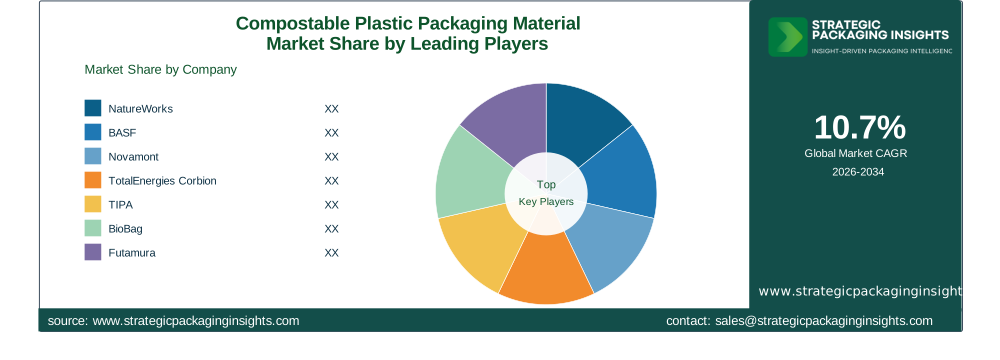
NatureWorks is a prominent player in the market, known for its Ingeo brand of polylactic acid (PLA) biopolymers. The company has a significant market share and is continuously investing in research and development to improve the performance and cost-effectiveness of its products. BASF, another major player, offers a range of biodegradable plastics under its ecovio and ecoflex brands. The company is focused on expanding its product portfolio and strengthening its position in the market through strategic partnerships and collaborations.
Novamont is a leading producer of bioplastics, with its Mater-Bi range of products being widely used in various applications. The company is committed to sustainability and is actively involved in initiatives to promote the use of compostable materials. TotalEnergies Corbion, a joint venture between TotalEnergies and Corbion, is another key player in the market, offering a range of PLA-based solutions. The company is focused on expanding its production capacity and developing new applications for its products.
Other notable companies in the market include TIPA, BioBag, Futamura, Mondi, Amcor, and Huhtamaki. These companies are actively engaged in research and development to enhance their product offerings and expand their market presence. They are also focusing on strategic partnerships and collaborations to leverage each other's strengths and cater to the growing demand for compostable plastic packaging materials. The competitive landscape of the market is expected to remain dynamic, with companies continuously innovating and expanding their product portfolios to meet the evolving needs of consumers and businesses.
Key Highlights
- The compostable plastic packaging material market is projected to grow at a CAGR of 10.7% from 2026 to 2034.
- Increasing environmental awareness and government regulations are driving the demand for compostable packaging solutions.
- Technological advancements in biopolymer production are enhancing the properties of compostable plastics.
- The market is characterized by the presence of several key players, including NatureWorks, BASF, and Novamont.
- High production costs and limited availability of raw materials are significant challenges for the market.
- The lack of infrastructure for industrial composting poses a barrier to the effective disposal of compostable plastics.
- Strategic partnerships and collaborations are common in the market as companies seek to expand their market presence.
Top Countries Insights
In the compostable plastic packaging material market, the United States is a leading country, with a market size of approximately $2.5 billion and a CAGR of 9%. The growth in this region is driven by stringent government regulations aimed at reducing plastic waste and increasing consumer awareness about sustainable packaging solutions. The presence of key players and technological advancements in biopolymer production are also contributing to the market's growth.
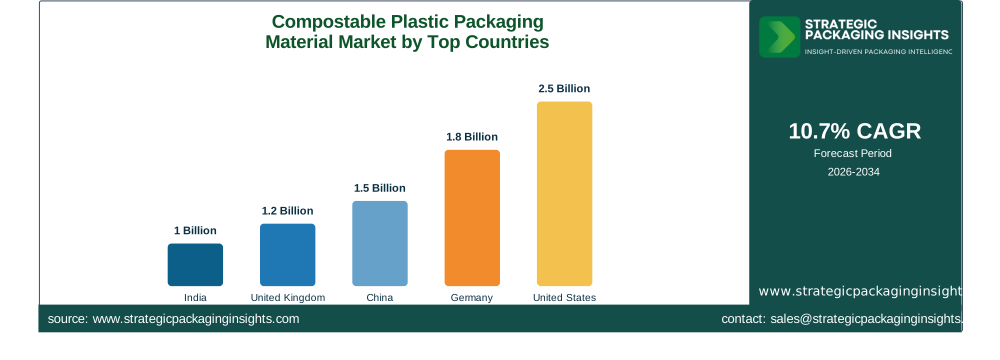
Germany is another significant market, with a market size of around $1.8 billion and a CAGR of 8%. The country's strong focus on environmental sustainability and government initiatives promoting the use of biodegradable materials are driving the demand for compostable plastics. Additionally, the presence of a well-established industrial composting infrastructure supports the effective disposal of these materials.
China is experiencing rapid growth in the compostable plastic packaging material market, with a market size of approximately $1.5 billion and a CAGR of 12%. The country's large population and increasing environmental awareness are driving the demand for sustainable packaging solutions. Government policies promoting the use of biodegradable materials are also contributing to the market's growth.
In the United Kingdom, the market size is estimated at $1.2 billion, with a CAGR of 7%. The country's strong focus on reducing plastic waste and increasing consumer demand for eco-friendly packaging solutions are driving the market's growth. The presence of key players and technological advancements in biopolymer production are also contributing to the market's expansion.
India is emerging as a significant market for compostable plastic packaging materials, with a market size of approximately $1 billion and a CAGR of 11%. The country's growing population and increasing environmental awareness are driving the demand for sustainable packaging solutions. Government initiatives promoting the use of biodegradable materials are also contributing to the market's growth.
Compostable Plastic Packaging Material Market Segments Insights

By Material Type Analysis
The compostable plastic packaging material market is segmented by material type into PLA, PHA, starch blends, and PBS. PLA, or polylactic acid, is one of the most widely used materials in this segment due to its cost-effectiveness and versatility. It is derived from renewable resources such as corn starch and is used in a variety of applications, including food packaging and retail bags. The demand for PLA is driven by its biodegradability and the increasing consumer preference for sustainable packaging solutions. PHA, or polyhydroxyalkanoates, is another significant material in this segment, known for its excellent biodegradability and compatibility with various applications. The demand for PHA is expected to grow as technological advancements improve its cost-effectiveness and performance.
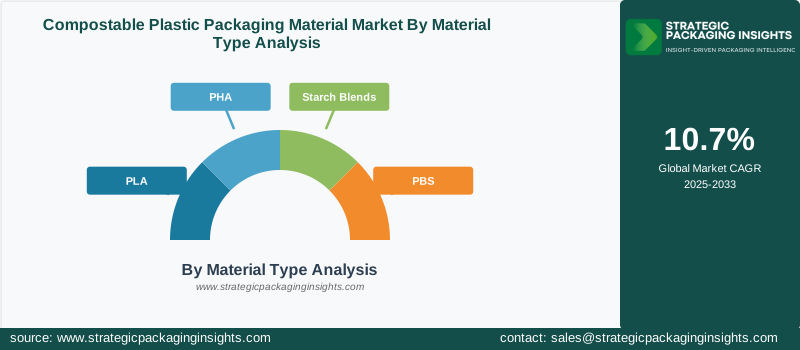
Starch blends are also gaining traction in the compostable plastic packaging material market due to their biodegradability and renewable nature. These materials are derived from natural sources such as corn, potato, and tapioca, making them an attractive option for eco-conscious consumers. The demand for starch blends is driven by their versatility and the increasing focus on reducing plastic waste. PBS, or polybutylene succinate, is another material in this segment, known for its excellent biodegradability and thermal stability. The demand for PBS is expected to grow as industries such as food and beverage and agriculture increasingly adopt compostable packaging solutions.
By Packaging Type Analysis
The compostable plastic packaging material market is segmented by packaging type into films, bags, trays, and pouches. Films are one of the most widely used packaging types in this segment due to their versatility and cost-effectiveness. They are used in a variety of applications, including food packaging and retail bags, and are favored for their ability to provide a barrier against moisture and oxygen. The demand for films is driven by the increasing consumer preference for sustainable packaging solutions and the growing focus on reducing plastic waste. Bags are another significant packaging type in this segment, known for their convenience and biodegradability. The demand for bags is expected to grow as industries such as retail and agriculture increasingly adopt compostable packaging solutions.
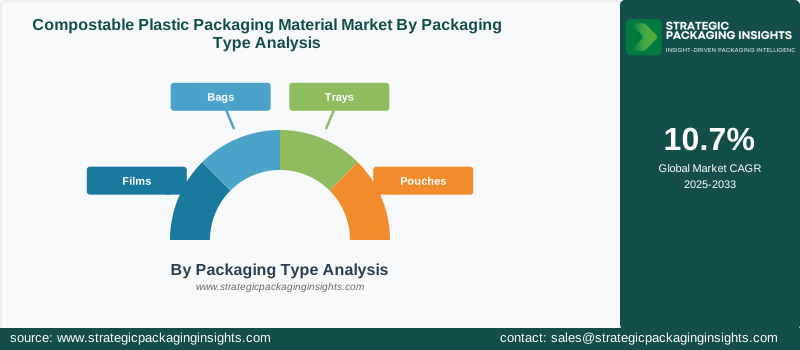
Trays are also gaining traction in the compostable plastic packaging material market due to their versatility and eco-friendly nature. They are used in a variety of applications, including food packaging and personal care, and are favored for their ability to provide a barrier against moisture and oxygen. The demand for trays is driven by the increasing consumer preference for sustainable packaging solutions and the growing focus on reducing plastic waste. Pouches are another packaging type in this segment, known for their convenience and biodegradability. The demand for pouches is expected to grow as industries such as food and beverage and personal care increasingly adopt compostable packaging solutions.
By Application Analysis
The compostable plastic packaging material market is segmented by application into food packaging, retail bags, personal care, and agriculture packaging. Food packaging is one of the most significant applications in this segment due to the increasing consumer demand for sustainable and eco-friendly packaging solutions. The demand for food packaging is driven by the growing focus on reducing plastic waste and the increasing awareness about the environmental impact of traditional plastics. Retail bags are another significant application in this segment, known for their convenience and biodegradability. The demand for retail bags is expected to grow as consumers increasingly seek sustainable alternatives to conventional plastic bags.
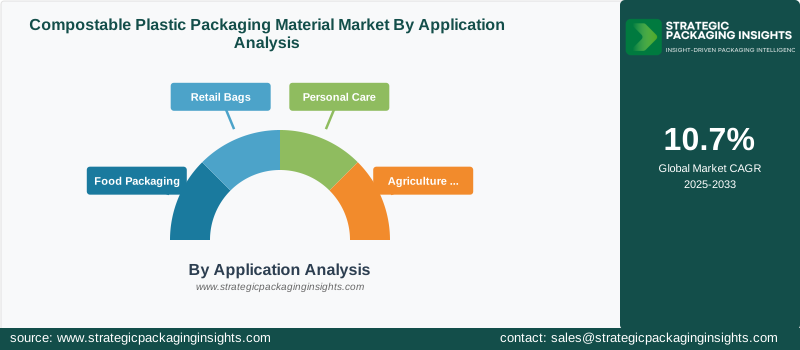
Personal care is also gaining traction in the compostable plastic packaging material market due to the increasing consumer preference for eco-friendly packaging solutions. The demand for personal care packaging is driven by the growing focus on reducing plastic waste and the increasing awareness about the environmental impact of traditional plastics. Agriculture packaging is another application in this segment, known for its versatility and biodegradability. The demand for agriculture packaging is expected to grow as industries such as agriculture increasingly adopt compostable packaging solutions to reduce their environmental impact.
By End Use Analysis
The compostable plastic packaging material market is segmented by end use into food & beverage, retail, FMCG, and agriculture. The food & beverage industry is one of the most significant end users in this segment due to the increasing consumer demand for sustainable and eco-friendly packaging solutions. The demand for food & beverage packaging is driven by the growing focus on reducing plastic waste and the increasing awareness about the environmental impact of traditional plastics. Retail is another significant end user in this segment, known for its convenience and biodegradability. The demand for retail packaging is expected to grow as consumers increasingly seek sustainable alternatives to conventional plastic packaging.
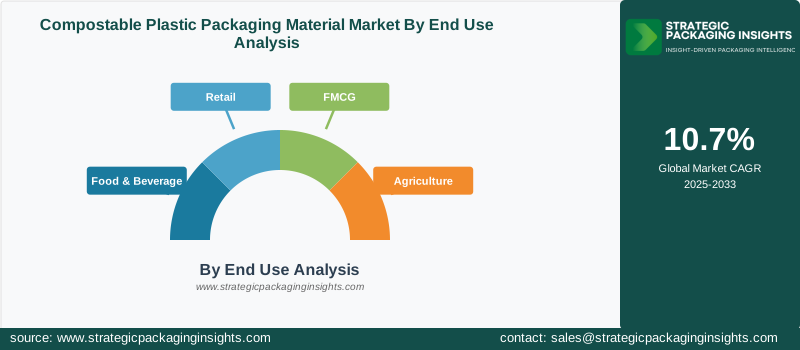
FMCG, or fast-moving consumer goods, is also gaining traction in the compostable plastic packaging material market due to the increasing consumer preference for eco-friendly packaging solutions. The demand for FMCG packaging is driven by the growing focus on reducing plastic waste and the increasing awareness about the environmental impact of traditional plastics. Agriculture is another end user in this segment, known for its versatility and biodegradability. The demand for agriculture packaging is expected to grow as industries such as agriculture increasingly adopt compostable packaging solutions to reduce their environmental impact.
Compostable Plastic Packaging Material Market Segments
The Compostable Plastic Packaging Material market has been segmented on the basis ofBy Material Type
- PLA
- PHA
- Starch Blends
- PBS
By Packaging Type
- Films
- Bags
- Trays
- Pouches
By Application
- Food Packaging
- Retail Bags
- Personal Care
- Agriculture Packaging
By End Use
- Food & Beverage
- Retail
- FMCG
- Agriculture
Region
- Asia Pacific
- North America
- Latin America
- Europe
- Middle East & Africa




