


Compostable PHA Film Packaging Materials Market Outlook
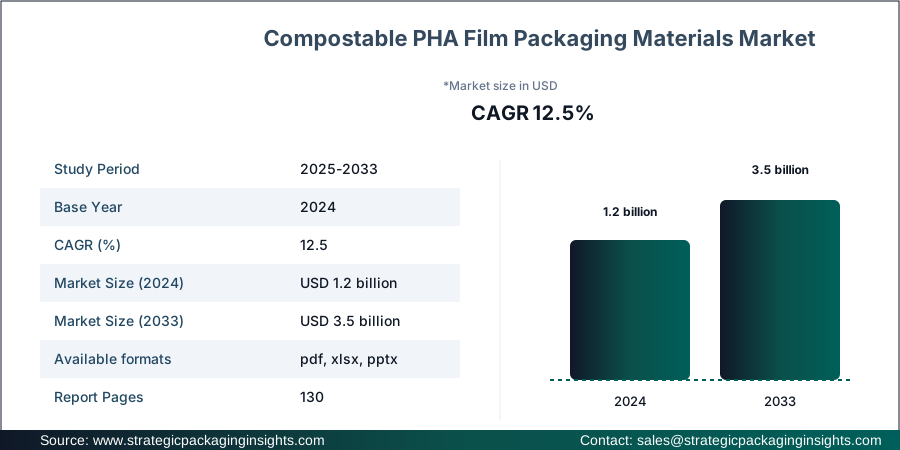
The Compostable PHA Film Packaging Materials market was valued at $1.2 billion in 2024 and is projected to reach $3.5 billion by 2033, growing at a CAGR of 12.5% during the forecast period 2025-2033. This market is witnessing significant growth due to the increasing demand for sustainable packaging solutions driven by environmental concerns and stringent regulations against plastic waste. The adoption of compostable PHA films is gaining traction across various industries, including food and beverage, healthcare, and personal care, as companies strive to reduce their carbon footprint and meet consumer demand for eco-friendly products. The market's expansion is further supported by technological advancements in PHA production, which have improved the cost-effectiveness and performance of these materials, making them a viable alternative to traditional plastics.
Report Scope
| Attributes | Details |
| Report Title | Compostable PHA Film Packaging Materials Market Size, Future Growth and Forecast 2033 |
| Material Type | PHA Blends, Pure PHA |
| Application | Food Packaging, Healthcare Packaging |
| End-User | Food & Beverage, Healthcare |
| Region | Asia Pacific, North America |
| Base Year | 2024 |
| Historic Period | 2017-2023 |
| Forecast Period | 2025-2033 |
| Number of Pages | 130 |
| Customization Available | Yes* |
Opportunities & Threats
The Compostable PHA Film Packaging Materials market presents numerous opportunities for growth, particularly in the food and beverage industry, where there is a strong push towards sustainable packaging solutions. As consumers become more environmentally conscious, there is a growing demand for packaging materials that are not only biodegradable but also compostable, ensuring minimal environmental impact. This shift in consumer preferences is encouraging manufacturers to innovate and develop new PHA film formulations that offer enhanced barrier properties and durability, making them suitable for a wider range of applications. Additionally, the increasing adoption of circular economy principles by businesses is driving the demand for compostable packaging solutions, as companies seek to minimize waste and promote resource efficiency.
Another significant opportunity lies in the healthcare sector, where the use of compostable PHA films is gaining momentum due to their biocompatibility and non-toxic nature. These materials are ideal for medical packaging applications, such as drug delivery systems and wound care products, where safety and environmental considerations are paramount. The growing emphasis on sustainable healthcare practices and the need to reduce medical waste are further propelling the demand for compostable PHA films in this sector. Moreover, government initiatives and subsidies aimed at promoting the use of biodegradable materials are expected to provide a significant boost to the market, encouraging more companies to invest in the development and production of PHA-based packaging solutions.
Despite the promising opportunities, the Compostable PHA Film Packaging Materials market faces several challenges that could hinder its growth. One of the primary restrainers is the high production cost of PHA films compared to conventional plastics, which can limit their adoption, particularly among small and medium-sized enterprises with limited budgets. Additionally, the lack of widespread composting infrastructure poses a significant challenge, as the effectiveness of compostable packaging materials relies heavily on the availability of facilities capable of processing them. This infrastructure gap can lead to compostable materials ending up in landfills, negating their environmental benefits. Furthermore, the market is subject to stringent regulatory requirements, which can pose compliance challenges for manufacturers and potentially slow down the introduction of new products.
Drivers & Challenges
The Compostable PHA Film Packaging Materials market is primarily driven by the increasing environmental awareness among consumers and businesses, which is leading to a shift towards sustainable packaging solutions. The growing concerns over plastic pollution and its impact on marine life and ecosystems have prompted governments and organizations worldwide to implement stringent regulations aimed at reducing plastic waste. This regulatory push is encouraging companies to adopt compostable PHA films as a viable alternative to traditional plastics, as they offer a sustainable solution that aligns with environmental goals. Additionally, advancements in PHA production technologies have improved the scalability and cost-effectiveness of these materials, making them more accessible to a broader range of industries.
Another key driver of the market is the rising demand for eco-friendly packaging solutions in the food and beverage industry. As consumers become more health-conscious and environmentally aware, there is a growing preference for products that are packaged in sustainable materials. Compostable PHA films offer several advantages over conventional plastics, including biodegradability, compostability, and the ability to maintain product freshness and quality. These attributes make them an attractive option for food and beverage manufacturers looking to enhance their brand image and meet consumer expectations. Furthermore, the increasing adoption of circular economy principles by businesses is driving the demand for compostable packaging solutions, as companies seek to minimize waste and promote resource efficiency.
However, the market faces several challenges that could impede its growth. One of the primary challenges is the high production cost of PHA films compared to traditional plastics, which can limit their adoption, particularly among small and medium-sized enterprises with limited budgets. Additionally, the lack of widespread composting infrastructure poses a significant challenge, as the effectiveness of compostable packaging materials relies heavily on the availability of facilities capable of processing them. This infrastructure gap can lead to compostable materials ending up in landfills, negating their environmental benefits. Furthermore, the market is subject to stringent regulatory requirements, which can pose compliance challenges for manufacturers and potentially slow down the introduction of new products.
Compostable PHA Film Packaging Materials Strategic Outlook
| Trend | Market Driver | Technological/Material Shift | Business Impact |
|---|---|---|---|
| Sustainability | Environmental Regulations | Advancements in PHA Production | Increased Adoption of Compostable Films |
| Smart Tech | Consumer Demand for Transparency | Integration of IoT in Packaging | Enhanced Consumer Engagement |
| Consumer Behavior | Shift Towards Eco-Friendly Products | Development of New PHA Formulations | Expansion of Product Offerings |
| Logistics | Need for Efficient Waste Management | Improved Composting Infrastructure | Reduced Environmental Impact |
In the current market landscape, valued at $1.5 billion in 2026, the Compostable PHA Film Packaging Materials sector is poised for transformative growth. The primary disruptor in this niche is the stringent environmental regulations that are pushing companies to adopt sustainable packaging solutions. As the market evolves, brands must pivot towards integrating advanced technologies such as AI-driven design and mono-material transitions to maintain their competitive edge. By 2033, companies that embrace these strategic shifts will not only enhance their market share but also align with the global sustainability agenda, ensuring long-term success in an increasingly eco-conscious marketplace.
Market Share Analysis
The competitive landscape of the Compostable PHA Film Packaging Materials market is characterized by a mix of established players and emerging companies, all vying for a share of this rapidly growing market. The market is dominated by a few key players who have established themselves as leaders through extensive research and development, strategic partnerships, and a strong focus on sustainability. These companies are leveraging their expertise in biopolymer production and packaging solutions to offer innovative products that meet the evolving needs of consumers and businesses alike. The competitive dynamics are further intensified by the entry of new players who are bringing fresh perspectives and innovative solutions to the market, challenging the incumbents and driving further innovation.
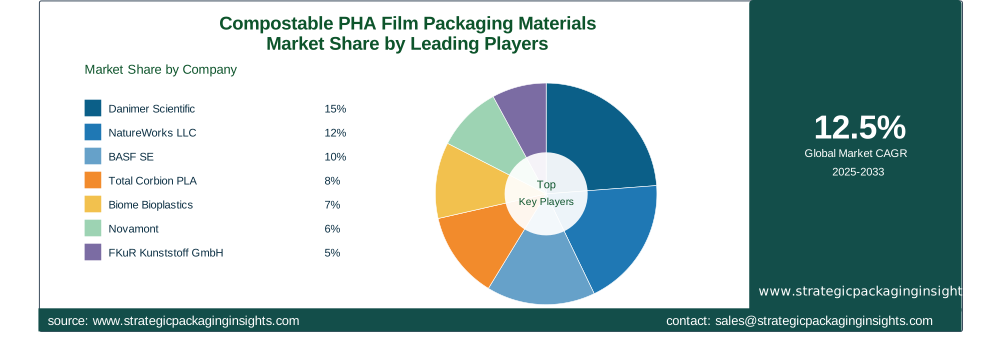
Among the major companies in this market, Danimer Scientific stands out as a leader in the development and production of biodegradable and compostable polymers. The company's focus on sustainability and innovation has enabled it to establish a strong presence in the market, with a diverse portfolio of PHA-based products catering to various industries. Similarly, NatureWorks LLC is a key player known for its Ingeo biopolymer, which is widely used in compostable packaging applications. The company's commitment to sustainability and its extensive research and development efforts have positioned it as a leader in the bioplastics industry.
Another significant player is BASF SE, which has made substantial investments in the development of biodegradable polymers, including PHA. The company's strong global presence and extensive distribution network have enabled it to capture a significant share of the market. Additionally, Total Corbion PLA, a joint venture between Total and Corbion, is a prominent player in the bioplastics market, offering a range of PLA and PHA-based products for various applications. The company's focus on innovation and sustainability has helped it establish a strong foothold in the market.
Other notable companies in the market include Biome Bioplastics, which is known for its high-performance bioplastics, and Novamont, a leader in the development of biodegradable and compostable materials. These companies, along with several others, are driving the growth of the Compostable PHA Film Packaging Materials market through continuous innovation, strategic partnerships, and a strong commitment to sustainability. As the market continues to evolve, these players are expected to play a crucial role in shaping the future of sustainable packaging solutions.
Key Highlights
- The Compostable PHA Film Packaging Materials market is projected to grow at a CAGR of 12.5% from 2025 to 2033.
- Increasing environmental awareness and stringent regulations are driving the demand for compostable packaging solutions.
- Technological advancements in PHA production are improving the cost-effectiveness and performance of these materials.
- The food and beverage industry is a major driver of market growth, with a strong demand for sustainable packaging solutions.
- The healthcare sector is increasingly adopting compostable PHA films due to their biocompatibility and non-toxic nature.
- The lack of widespread composting infrastructure poses a significant challenge to market growth.
- Key players in the market include Danimer Scientific, NatureWorks LLC, BASF SE, and Total Corbion PLA.
- Government initiatives and subsidies are expected to boost the adoption of compostable packaging solutions.
- The market is characterized by a mix of established players and emerging companies driving innovation.
- Strategic partnerships and collaborations are crucial for companies to expand their market presence.
Top Countries Insights
In the Compostable PHA Film Packaging Materials market, the United States stands out as a leading country, with a market size of $500 million and a CAGR of 10%. The country's strong regulatory framework and consumer demand for sustainable packaging solutions are key growth drivers. The presence of major players and a well-established composting infrastructure further support market expansion. However, challenges such as high production costs and limited consumer awareness about compostable materials persist.
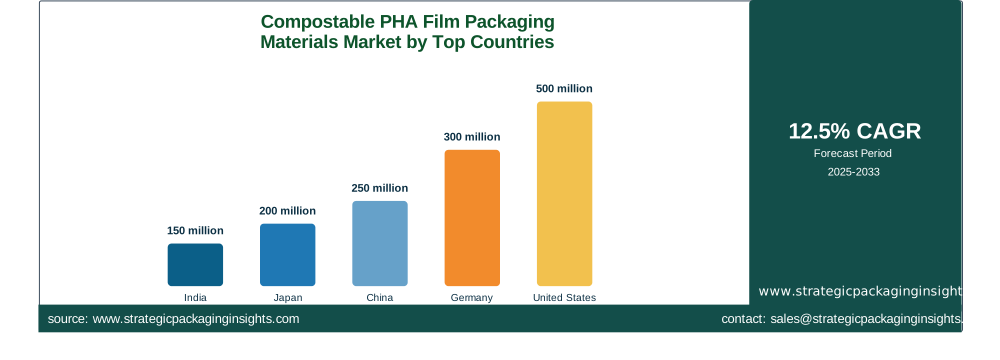
Germany is another significant market, with a size of $300 million and a CAGR of 9%. The country's commitment to environmental sustainability and stringent regulations on plastic waste are driving the adoption of compostable PHA films. Innovation in biopolymer production and strong government support are additional growth factors. However, the market faces challenges related to the high cost of raw materials and limited availability of composting facilities.
China, with a market size of $250 million and a CAGR of 12%, is rapidly emerging as a key player in the Compostable PHA Film Packaging Materials market. The country's large consumer base and increasing environmental awareness are driving demand for sustainable packaging solutions. Government initiatives to reduce plastic waste and promote biodegradable materials are further boosting market growth. However, the lack of a robust composting infrastructure remains a significant challenge.
In Japan, the market is valued at $200 million, with a CAGR of 8%. The country's focus on sustainability and innovation in packaging solutions is driving the adoption of compostable PHA films. Strong government support and consumer demand for eco-friendly products are key growth drivers. However, challenges such as high production costs and limited consumer awareness about compostable materials persist.
India, with a market size of $150 million and a CAGR of 15%, is experiencing rapid growth in the Compostable PHA Film Packaging Materials market. The country's large population and increasing environmental awareness are driving demand for sustainable packaging solutions. Government initiatives to reduce plastic waste and promote biodegradable materials are further boosting market growth. However, the lack of a robust composting infrastructure remains a significant challenge.
Compostable PHA Film Packaging Materials Market Segments Insights

Material Type Analysis
The Compostable PHA Film Packaging Materials market is segmented by material type into PHA blends and pure PHA. PHA blends are gaining popularity due to their enhanced performance characteristics, such as improved flexibility and strength, which make them suitable for a wide range of applications. These blends often incorporate other biodegradable polymers to optimize the properties of PHA films, making them more competitive with traditional plastics. The demand for PHA blends is driven by the need for cost-effective and high-performance compostable packaging solutions that can meet the stringent requirements of various industries, including food and beverage, healthcare, and personal care.
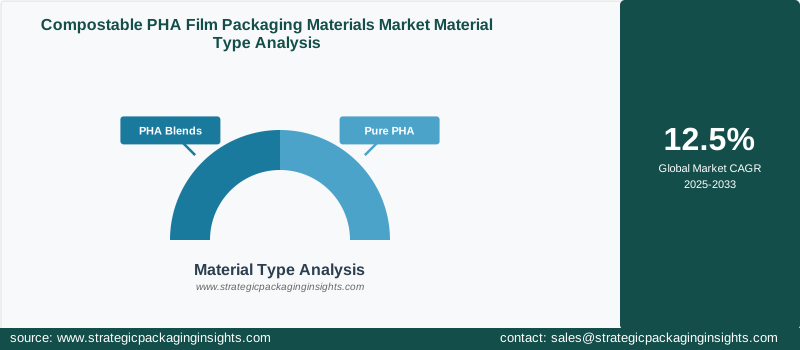
Pure PHA, on the other hand, is valued for its biodegradability and compostability, making it an ideal choice for applications where environmental impact is a primary concern. The market for pure PHA is driven by the increasing demand for sustainable packaging solutions that align with the global push towards reducing plastic waste. However, the high production cost of pure PHA compared to PHA blends and conventional plastics remains a significant challenge, limiting its widespread adoption. Despite this, advancements in PHA production technologies are expected to improve the cost-effectiveness of pure PHA, making it a more viable option for a broader range of applications in the future.
Application Analysis
The application segment of the Compostable PHA Film Packaging Materials market includes food packaging, healthcare packaging, personal care, and industrial packaging. Food packaging is the largest application segment, driven by the increasing demand for sustainable packaging solutions in the food and beverage industry. Compostable PHA films offer several advantages over conventional plastics, including biodegradability, compostability, and the ability to maintain product freshness and quality. These attributes make them an attractive option for food and beverage manufacturers looking to enhance their brand image and meet consumer expectations for eco-friendly products.
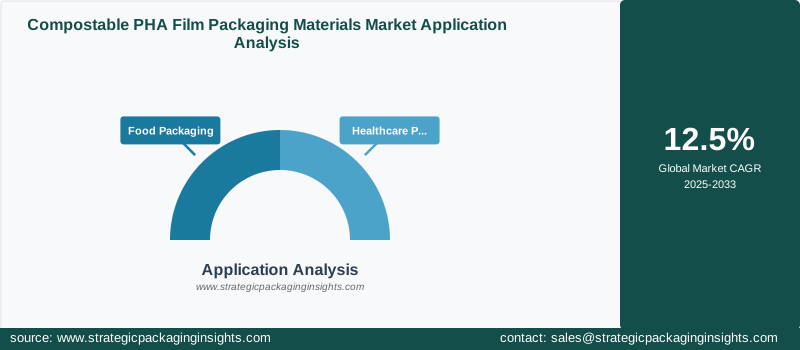
Healthcare packaging is another significant application segment, where the use of compostable PHA films is gaining momentum due to their biocompatibility and non-toxic nature. These materials are ideal for medical packaging applications, such as drug delivery systems and wound care products, where safety and environmental considerations are paramount. The growing emphasis on sustainable healthcare practices and the need to reduce medical waste are further propelling the demand for compostable PHA films in this sector. Personal care and industrial packaging are also important application segments, with increasing demand for sustainable packaging solutions driving growth in these areas.
End-User Analysis
The end-user segment of the Compostable PHA Film Packaging Materials market includes food and beverage, healthcare, personal care, and industrial sectors. The food and beverage industry is the largest end-user segment, driven by the increasing demand for sustainable packaging solutions that align with consumer preferences for eco-friendly products. Compostable PHA films offer several advantages over conventional plastics, including biodegradability, compostability, and the ability to maintain product freshness and quality. These attributes make them an attractive option for food and beverage manufacturers looking to enhance their brand image and meet consumer expectations.
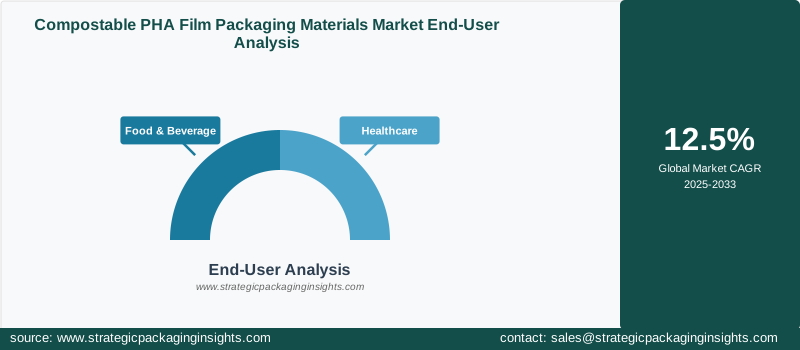
The healthcare sector is another significant end-user segment, where the use of compostable PHA films is gaining momentum due to their biocompatibility and non-toxic nature. These materials are ideal for medical packaging applications, such as drug delivery systems and wound care products, where safety and environmental considerations are paramount. The growing emphasis on sustainable healthcare practices and the need to reduce medical waste are further propelling the demand for compostable PHA films in this sector. Personal care and industrial sectors are also important end-user segments, with increasing demand for sustainable packaging solutions driving growth in these areas.
Region Analysis
The Compostable PHA Film Packaging Materials market is segmented by region into Asia Pacific, North America, Latin America, Europe, and Middle East & Africa. Asia Pacific is the largest regional market, driven by the increasing demand for sustainable packaging solutions in countries such as China, Japan, and India. The region's large consumer base and growing environmental awareness are key growth drivers, along with government initiatives to reduce plastic waste and promote biodegradable materials. However, the lack of a robust composting infrastructure remains a significant challenge in the region.
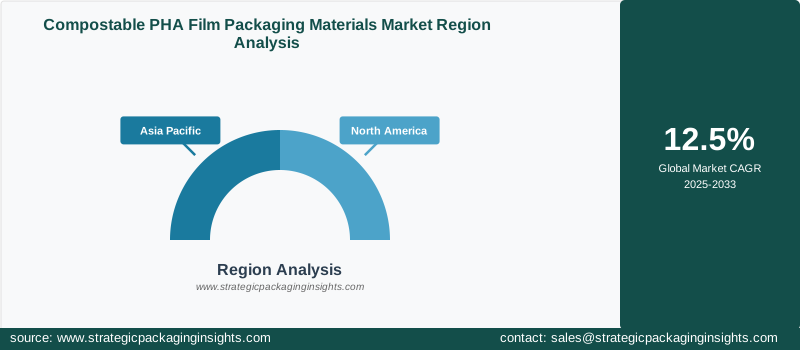
North America is another significant regional market, with strong regulatory frameworks and consumer demand for sustainable packaging solutions driving growth. The presence of major players and a well-established composting infrastructure further support market expansion. Europe is also a key regional market, with a strong commitment to environmental sustainability and stringent regulations on plastic waste driving the adoption of compostable PHA films. Innovation in biopolymer production and strong government support are additional growth factors in the region. Latin America and Middle East & Africa are emerging markets, with increasing demand for sustainable packaging solutions and government initiatives to reduce plastic waste driving growth in these regions.
Compostable PHA Film Packaging Materials Market Segments
The Compostable PHA Film Packaging Materials market has been segmented on the basis ofMaterial Type
- PHA Blends
- Pure PHA
Application
- Food Packaging
- Healthcare Packaging
End-User
- Food & Beverage
- Healthcare
Region
- Asia Pacific
- North America




