


Composite Paper Cans Market Outlook
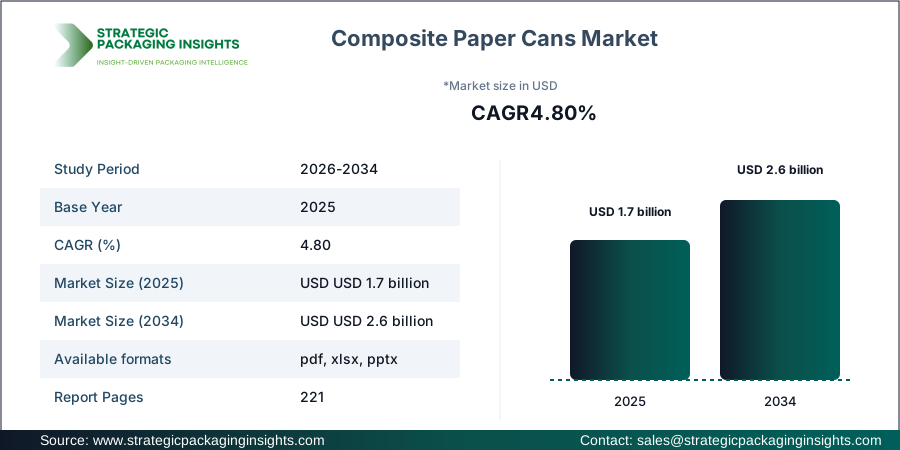
The Composite Paper Cans market size was valued at USD 1.7 billion in 2025 and is anticipated to reach USD 2.6 billion by 2034, growing at a CAGR of 4.80% during the forecast period according to Strategic Packaging Insights. The market is witnessing significant growth due to the increasing demand for sustainable packaging solutions. Companies like Sonoco and Smurfit Westrock are leading the charge by innovating in eco-friendly packaging materials that cater to the growing consumer preference for sustainable products. The versatility and recyclability of composite paper cans make them an attractive option for various industries, including food and beverage, cosmetics, and pet care, further driving market expansion.
One of the most impactful drivers of the Composite Paper Cans market is the rising consumer awareness and demand for environmentally friendly packaging. Governments worldwide are implementing stringent regulations to reduce plastic waste, which is propelling the shift towards sustainable packaging solutions. For instance, the European Union's directive on single-use plastics is encouraging manufacturers to adopt alternative packaging materials like composite paper cans. This regulatory push, combined with consumer demand for eco-friendly products, is expected to significantly boost the market growth of companies like Mondi and Irwin Packaging, who are at the forefront of sustainable packaging innovation.
Report Scope
| Attributes | Details |
| Report Title | Composite Paper Cans Market Size, Future Growth and Forecast 2034 |
| By Type | Spiral-Wound Cans, Convolute Cans, All-Paper Barrier Cans |
| By Closure | Metal Ends, Paper Ends, Plastic Lids & Membranes |
| By Diameter | Below 73 mm, 73-99 mm, Above 99 mm |
| By End Use | Snacks & Chips, Powdered Beverages & Infant Formula, Refrigerated Dough, Spices & Dry Foods, Pet Treats, Cosmetics |
| By Region | North America (U.S., Canada, Mexico), Europe (Germany, UK, France, Italy, Spain, Rest of Europe), Asia Pacific (China, India, Japan, South Korea, Australia, Rest of Asia Pacific), Latin America (Brazil, Argentina, Rest of Latin America), Middle East & Africa (GCC Countries, South Africa, Rest of MEA) |
| Base Year | 2025 |
| Historic Period | 2018-2024 |
| Forecast Period | 2026-2034 |
| Number of Pages | 221 |
| Customization Available | Yes* |
Sustainability & Circular Economy Analysis
Sustainability initiatives and circular economy practices are profoundly influencing the packaging market, particularly in the realm of composite paper cans. The shift towards recyclable materials is a key trend, with companies like Sonoco and Mondi investing heavily in developing packaging solutions that minimize environmental impact. The use of lightweight and eco-friendly materials not only reduces the carbon footprint but also aligns with consumer preferences for sustainable products. This trend is driving innovation in packaging design, as manufacturers strive to create products that are both functional and environmentally responsible.
Extended Producer Responsibility (EPR) regulations are further shaping the market landscape by holding manufacturers accountable for the entire lifecycle of their products. This has led to increased investment in waste reduction strategies and the development of reusable packaging solutions. Companies are also focusing on reducing their carbon footprint through energy-efficient manufacturing processes and sustainable supply chain practices. These efforts are crucial for maintaining regulatory compliance and ensuring long-term market competitiveness in an increasingly eco-conscious world.
The emphasis on sustainability is also influencing investment decisions and supply chain strategies. Packaging manufacturers are prioritizing partnerships with suppliers who share their commitment to environmental stewardship. This collaborative approach is essential for achieving sustainability goals and enhancing brand reputation. As a result, companies that embrace circular economy principles are better positioned to capitalize on emerging market opportunities and meet the evolving demands of consumers and regulators alike.
Packaging Value Chain & Supply Chain Analysis
The packaging value chain for composite paper cans is a complex ecosystem that involves multiple stakeholders, from raw material suppliers to end consumers. Raw material sourcing is a critical component, with manufacturers relying on sustainable and high-quality paper and adhesives to produce durable and eco-friendly cans. Packaging converters play a vital role in transforming these materials into finished products, utilizing advanced machinery and technology to ensure efficiency and quality.
Logistics and distribution channels are equally important in the supply chain, as they determine the speed and cost-effectiveness of delivering products to market. Efficient transportation and inventory management strategies are essential for maintaining supply chain resilience and meeting customer demands. Companies like Smurfit Westrock and Canfab are investing in strategic partnerships and localized production facilities to enhance their supply chain capabilities and reduce lead times.
Recycling networks are becoming increasingly integrated into the packaging value chain, as manufacturers seek to close the loop and promote circular economy practices. By collaborating with recycling partners, companies can ensure that their products are responsibly disposed of and repurposed, reducing waste and environmental impact. This holistic approach to the supply chain not only enhances business competitiveness but also aligns with consumer expectations for sustainable and ethical business practices.
Opportunities & Threats
The Composite Paper Cans market presents numerous opportunities for growth, driven by the increasing demand for sustainable packaging solutions. As consumers become more environmentally conscious, there is a growing preference for packaging that is recyclable and made from renewable materials. This trend is creating opportunities for companies to innovate and develop new products that meet these demands. Additionally, the expansion of e-commerce and online retail is driving the need for durable and lightweight packaging solutions, further boosting the demand for composite paper cans.
Emerging markets in Asia Pacific and Latin America offer significant growth potential for the Composite Paper Cans market. As these regions experience economic growth and urbanization, there is an increasing demand for packaged goods, particularly in the food and beverage sector. This presents an opportunity for companies to expand their presence in these markets and capitalize on the growing consumer base. Furthermore, advancements in packaging technology and materials are enabling manufacturers to create more efficient and cost-effective solutions, enhancing their competitive advantage.
However, the market also faces several threats, including the volatility of raw material prices and the availability of alternative packaging solutions. The cost of paper and adhesives can fluctuate due to changes in supply and demand, impacting the profitability of manufacturers. Additionally, the presence of alternative packaging materials, such as plastic and metal, poses a threat to the growth of composite paper cans. Companies must continuously innovate and differentiate their products to remain competitive in the market.
Drivers & Challenges
One of the primary drivers of the Composite Paper Cans market is the increasing consumer demand for sustainable and eco-friendly packaging solutions. As awareness of environmental issues grows, consumers are seeking products that align with their values and reduce their carbon footprint. This trend is encouraging manufacturers to invest in research and development to create innovative packaging solutions that meet these demands. Companies like Sonoco and Mondi are leading the way by developing recyclable and biodegradable packaging materials that cater to this growing market segment.
Another significant driver is the regulatory push towards reducing plastic waste and promoting sustainable packaging solutions. Governments worldwide are implementing policies and regulations to encourage the use of eco-friendly materials and reduce the environmental impact of packaging. This regulatory environment is creating opportunities for companies to innovate and develop new products that comply with these standards. Additionally, the increasing focus on corporate social responsibility and sustainability is driving companies to adopt environmentally friendly practices and enhance their brand reputation.
Despite these drivers, the Composite Paper Cans market faces several challenges, including the high cost of raw materials and the complexity of the supply chain. The price of paper and adhesives can fluctuate due to changes in supply and demand, impacting the profitability of manufacturers. Additionally, the need for specialized machinery and technology to produce composite paper cans can be a barrier to entry for new players in the market. Companies must navigate these challenges by investing in efficient production processes and strategic partnerships to maintain their competitive edge.
Market Share Analysis
The Composite Paper Cans market is characterized by a competitive landscape with several key players vying for market share. Companies like Sonoco, Smurfit Westrock, and Mondi are leading the market with their innovative and sustainable packaging solutions. These companies have established themselves as industry leaders by investing in research and development and expanding their product portfolios to meet the evolving demands of consumers. Their strong market presence and commitment to sustainability have enabled them to capture a significant share of the market.
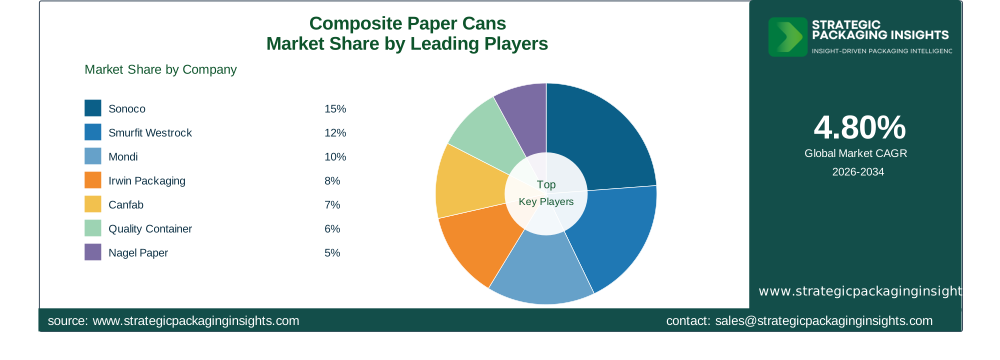
Sonoco is a major player in the Composite Paper Cans market, known for its extensive range of packaging solutions and commitment to sustainability. The company has a strong global presence and is continuously investing in research and development to enhance its product offerings. Smurfit Westrock is another key player, recognized for its innovative packaging solutions and focus on sustainability. The company has a robust supply chain and strategic partnerships that enable it to deliver high-quality products to its customers.
Mondi is a leading provider of paper-based packaging solutions, with a strong focus on sustainability and innovation. The company has a diverse product portfolio and is committed to reducing its environmental impact through sustainable practices. Irwin Packaging is also a notable player in the market, known for its high-quality packaging solutions and customer-centric approach. The company has a strong presence in the Asia Pacific region and is expanding its operations to meet the growing demand for sustainable packaging solutions.
Other significant players in the market include Canfab, Quality Container, Nagel Paper, and Ace Paper Tube. These companies are known for their innovative packaging solutions and commitment to sustainability. They are continuously investing in research and development to enhance their product offerings and maintain their competitive edge in the market. The competitive landscape of the Composite Paper Cans market is dynamic, with companies striving to differentiate themselves through innovation and sustainability.
Key Highlights
- Market Size: USD 1.7 billion in 2025, projected to reach USD 2.6 billion by 2034.
- Growth Rate: CAGR of 4.80% during the forecast period.
- Leading Companies: Sonoco, Smurfit Westrock, Mondi, Irwin Packaging.
- Key Segments: Spiral-Wound Cans, Metal Ends, Snacks & Chips.
- Regional Growth: Significant growth potential in Asia Pacific and Latin America.
- Sustainability Focus: Increasing demand for eco-friendly packaging solutions.
- Regulatory Impact: Stringent regulations driving the shift towards sustainable packaging.
Composite Paper Cans Market Segments Insights

By Type Analysis
The Composite Paper Cans market is segmented by type into Spiral-Wound Cans, Convolute Cans, and All-Paper Barrier Cans. Spiral-Wound Cans are the most popular due to their versatility and cost-effectiveness. They are widely used in the food and beverage industry for packaging snacks, chips, and powdered beverages. The demand for Convolute Cans is also growing, particularly in the cosmetics and personal care sectors, where they are valued for their aesthetic appeal and durability. All-Paper Barrier Cans are gaining traction as an eco-friendly alternative, offering excellent barrier properties without the use of plastic or metal components.
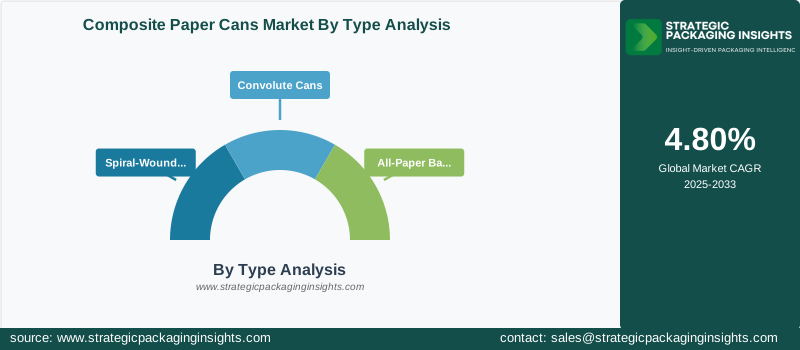
Manufacturers are focusing on innovation and product development to meet the diverse needs of consumers. The increasing demand for sustainable packaging solutions is driving the adoption of All-Paper Barrier Cans, which are fully recyclable and biodegradable. Companies like Sonoco and Mondi are investing in research and development to enhance the performance and functionality of these products. The growing popularity of e-commerce and online retail is also boosting the demand for durable and lightweight packaging solutions, further driving the growth of the Spiral-Wound Cans segment.
By Closure Analysis
The Composite Paper Cans market is segmented by closure into Metal Ends, Paper Ends, and Plastic Lids & Membranes. Metal Ends are the most commonly used closure type, offering excellent sealing properties and durability. They are widely used in the food and beverage industry for packaging products like snacks, chips, and powdered beverages. Paper Ends are gaining popularity as a sustainable alternative, offering a fully recyclable solution that aligns with consumer preferences for eco-friendly packaging.
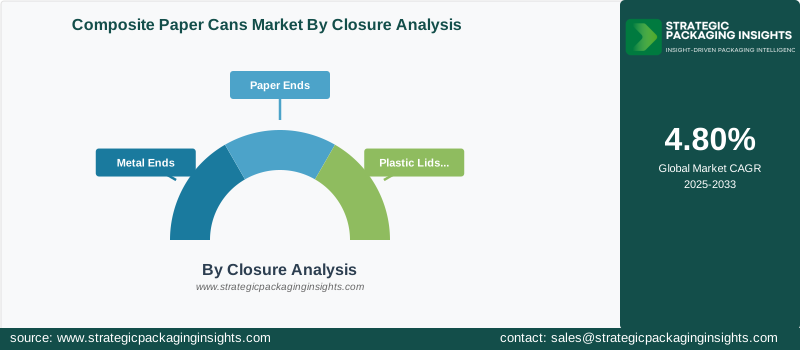
Plastic Lids & Membranes are also used in the Composite Paper Cans market, particularly for products that require a resealable closure. These closures are popular in the cosmetics and personal care sectors, where they provide convenience and functionality. Manufacturers are focusing on developing innovative closure solutions that enhance the performance and sustainability of their products. The increasing demand for sustainable packaging solutions is driving the adoption of Paper Ends, which offer a cost-effective and environmentally friendly alternative to traditional metal closures.
By Diameter Analysis
The Composite Paper Cans market is segmented by diameter into Below 73 mm, 73-99 mm, and Above 99 mm. The Below 73 mm segment is the most popular, offering a compact and convenient packaging solution for a wide range of products. These cans are widely used in the food and beverage industry for packaging snacks, chips, and powdered beverages. The 73-99 mm segment is also growing, particularly in the cosmetics and personal care sectors, where they are valued for their aesthetic appeal and functionality.
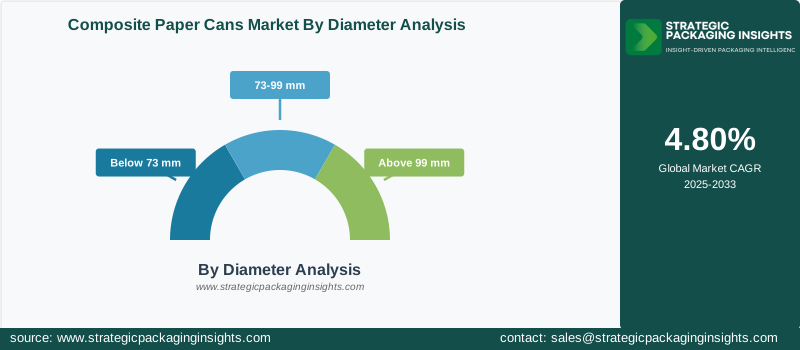
The Above 99 mm segment is gaining traction as manufacturers develop larger packaging solutions to meet the needs of consumers. These cans are used for packaging products like pet treats and refrigerated dough, where a larger capacity is required. Manufacturers are focusing on developing innovative packaging solutions that meet the diverse needs of consumers. The increasing demand for sustainable packaging solutions is driving the adoption of larger diameter cans, which offer a cost-effective and environmentally friendly alternative to traditional packaging solutions.
By End Use Analysis
The Composite Paper Cans market is segmented by end use into Snacks & Chips, Powdered Beverages & Infant Formula, Refrigerated Dough, Spices & Dry Foods, Pet Treats, and Cosmetics. The Snacks & Chips segment is the largest, driven by the increasing demand for convenient and portable packaging solutions. These cans are widely used in the food and beverage industry for packaging a wide range of products, including chips, popcorn, and nuts.
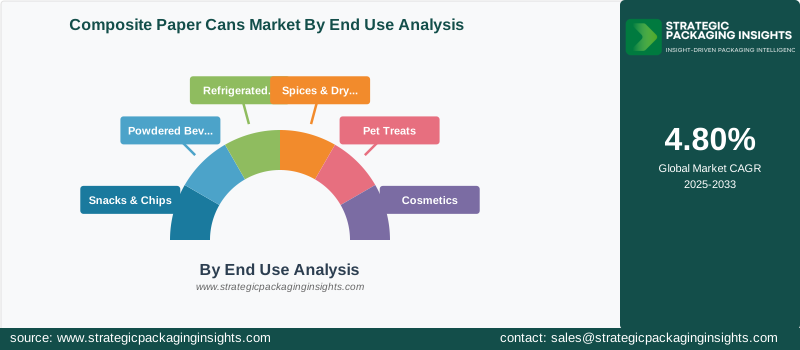
The Powdered Beverages & Infant Formula segment is also growing, driven by the increasing demand for convenient and portable packaging solutions. These cans are widely used in the food and beverage industry for packaging products like coffee, tea, and infant formula. The Cosmetics segment is gaining traction as manufacturers develop innovative packaging solutions that meet the needs of consumers. These cans are used for packaging products like creams, lotions, and powders, where a durable and aesthetically pleasing packaging solution is required.
Composite Paper Cans Market Segments
The Composite Paper Cans market has been segmented on the basis ofBy Type
- Spiral-Wound Cans
- Convolute Cans
- All-Paper Barrier Cans
By Closure
- Metal Ends
- Paper Ends
- Plastic Lids & Membranes
By Diameter
- Below 73 mm
- 73-99 mm
- Above 99 mm
By End Use
- Snacks & Chips
- Powdered Beverages & Infant Formula
- Refrigerated Dough
- Spices & Dry Foods
- Pet Treats
- Cosmetics
By Region
- North America (U.S., Canada, Mexico)
- Europe (Germany, UK, France, Italy, Spain, Rest of Europe)
- Asia Pacific (China, India, Japan, South Korea, Australia, Rest of Asia Pacific)
- Latin America (Brazil, Argentina, Rest of Latin America)
- Middle East & Africa (GCC Countries, South Africa, Rest of MEA)




