


Composite Cardboard Tube Packaging Market Outlook
The Composite Cardboard Tube Packaging market was valued at $3.58 billion in 2025 and is projected to reach $5.33 billion by 2034, growing at a CAGR of 4.5% during the forecast period 2026-2034. This market is witnessing significant growth due to the increasing demand for sustainable and eco-friendly packaging solutions. The shift towards reducing plastic usage and the rising awareness about environmental conservation are key drivers propelling the market forward. Composite cardboard tubes are gaining popularity across various industries, including food and beverage, cosmetics, and industrial goods, due to their recyclability and biodegradability. The market is also benefiting from advancements in manufacturing technologies that enhance the durability and aesthetic appeal of these packaging solutions.
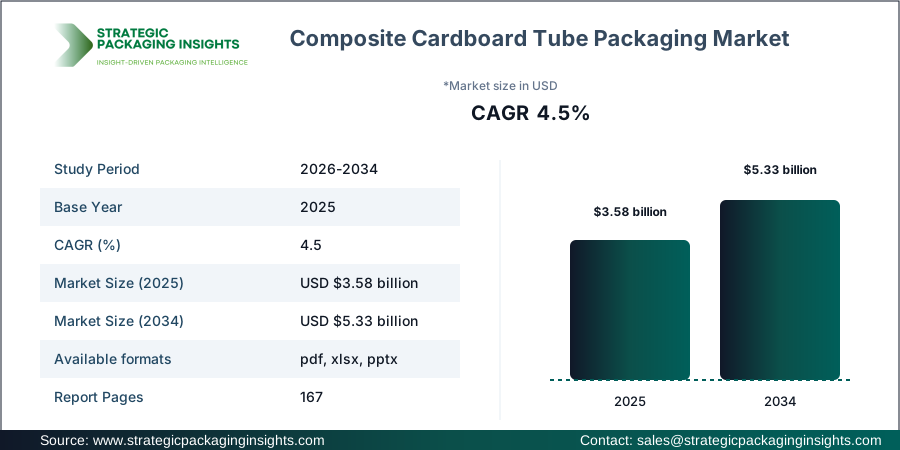
Despite the promising growth prospects, the Composite Cardboard Tube Packaging market faces certain challenges. Regulatory restrictions on packaging materials and the high cost of raw materials can hinder market expansion. However, the potential for growth remains substantial, driven by the increasing adoption of composite cardboard tubes in emerging markets. The market is also poised to benefit from innovations in design and functionality, which are expected to open new avenues for application in various sectors. As companies continue to invest in research and development, the market is likely to witness the introduction of more advanced and cost-effective packaging solutions, further driving its growth.
Report Scope
| Attributes | Details |
| Report Title | Composite Cardboard Tube Packaging Market Size, Future Growth and Forecast 2034 |
| Product Type | Spiral-Wound Tubes, Convolute Tubes, Paper Cans, Composite Canisters |
| Application | Snacks, Powders, Cosmetics, Spirits, Industrial Goods |
| Material Type | Paperboard, Foil-Lined Paperboard, Plastic-Lined Board |
| End Use | Food Brands, Personal Care, Beverage, Industrial Packaging |
| Region | Asia Pacific, North America, Latin America, Europe, Middle East & Africa |
| Base Year | 2025 |
| Historic Period | 2018-2024 |
| Forecast Period | 2026-2034 |
| Number of Pages | 167 |
| Customization Available | Yes* |
Opportunities & Threats
The Composite Cardboard Tube Packaging market presents numerous opportunities for growth, particularly in the realm of sustainability. As consumers become more environmentally conscious, there is a growing demand for packaging solutions that minimize environmental impact. Composite cardboard tubes, being recyclable and biodegradable, align perfectly with this trend. Companies that can innovate and offer eco-friendly packaging solutions stand to gain a competitive edge in the market. Additionally, the increasing use of composite cardboard tubes in the food and beverage industry, driven by the need for safe and sustainable packaging, presents significant growth opportunities. The market is also likely to benefit from the expansion of e-commerce, which is driving demand for durable and lightweight packaging solutions.
Another opportunity lies in the customization of composite cardboard tubes. As brands seek to differentiate themselves in a crowded marketplace, there is a growing demand for unique and personalized packaging solutions. Composite cardboard tubes offer versatility in design, allowing brands to create distinctive packaging that enhances their product's appeal. This trend is particularly evident in the cosmetics and personal care industries, where packaging plays a crucial role in brand identity. Companies that can offer customizable solutions are likely to attract a broader customer base and drive market growth.
However, the market is not without its threats. One of the primary challenges is the competition from alternative packaging materials, such as plastic and metal, which offer durability and cost advantages. Additionally, fluctuations in raw material prices can impact the profitability of manufacturers, posing a threat to market stability. Companies must navigate these challenges by focusing on innovation and cost management to maintain their competitive position in the market.
Drivers & Challenges
The Composite Cardboard Tube Packaging market is driven by several key factors. One of the primary drivers is the increasing demand for sustainable packaging solutions. As environmental concerns continue to rise, consumers and businesses alike are seeking packaging options that reduce their carbon footprint. Composite cardboard tubes, being recyclable and biodegradable, are gaining traction as a preferred choice for eco-conscious consumers. Additionally, the growing popularity of composite cardboard tubes in the food and beverage industry is driving market growth. These tubes offer excellent protection for products, ensuring freshness and extending shelf life, which is crucial for perishable goods.
Another significant driver is the advancement in manufacturing technologies. Innovations in production processes have enhanced the quality and functionality of composite cardboard tubes, making them more appealing to a broader range of industries. The ability to produce tubes with varying thicknesses, diameters, and designs has expanded their application across different sectors, including cosmetics, personal care, and industrial goods. Furthermore, the rise of e-commerce has increased the demand for lightweight and durable packaging solutions, further boosting the market for composite cardboard tubes.
Despite these drivers, the market faces several challenges. One of the primary challenges is the competition from alternative packaging materials, such as plastic and metal, which offer durability and cost advantages. Additionally, fluctuations in raw material prices can impact the profitability of manufacturers, posing a threat to market stability. Companies must navigate these challenges by focusing on innovation and cost management to maintain their competitive position in the market. Moreover, regulatory restrictions on packaging materials can also pose challenges, requiring companies to adapt to changing regulations and standards.
Market Share Analysis
The Composite Cardboard Tube Packaging market is characterized by a competitive landscape with several key players vying for market share. Companies such as Sonoco Products Company, Smurfit Kappa, and Mondi are leading the market with their extensive product portfolios and strong distribution networks. These companies have established themselves as leaders in the industry by consistently delivering high-quality and innovative packaging solutions. Their focus on sustainability and eco-friendly practices has further strengthened their market position, as consumers increasingly prioritize environmentally responsible products.
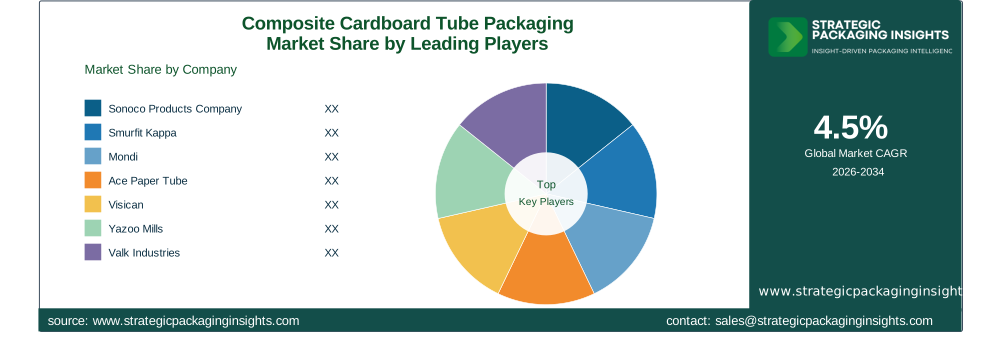
Sonoco Products Company holds a significant share of the market, leveraging its extensive experience and expertise in packaging solutions. The company's commitment to sustainability and innovation has enabled it to maintain a competitive edge in the market. Smurfit Kappa, another major player, is known for its comprehensive range of packaging solutions and strong focus on customer satisfaction. The company's emphasis on research and development has resulted in the introduction of advanced and cost-effective packaging solutions, further enhancing its market position.
Mondi, a global leader in packaging and paper, is also a prominent player in the Composite Cardboard Tube Packaging market. The company's focus on sustainability and innovation has driven its growth, with a strong emphasis on developing eco-friendly packaging solutions. Other notable companies in the market include Ace Paper Tube, Visican, and Yazoo Mills, each contributing to the market's competitive landscape with their unique offerings and strategic initiatives.
Valk Industries and Greif are also key players in the market, known for their high-quality and durable packaging solutions. These companies have established a strong presence in the market by focusing on customer needs and delivering innovative products. Chicago Mailing Tube and CBT Packaging are also significant contributors to the market, offering a wide range of composite cardboard tube packaging solutions to meet diverse customer requirements. The competitive landscape of the market is characterized by continuous innovation and strategic partnerships, as companies strive to enhance their market position and expand their customer base.
Key Highlights
- The Composite Cardboard Tube Packaging market is projected to grow at a CAGR of 4.5% from 2026 to 2034.
- Increasing demand for sustainable and eco-friendly packaging solutions is driving market growth.
- Advancements in manufacturing technologies are enhancing the quality and functionality of composite cardboard tubes.
- The food and beverage industry is a major driver of market demand, with a focus on safe and sustainable packaging.
- Customization of composite cardboard tubes is a growing trend, particularly in the cosmetics and personal care industries.
- Competition from alternative packaging materials poses a challenge to market growth.
- Key players in the market include Sonoco Products Company, Smurfit Kappa, and Mondi.
- The market is characterized by continuous innovation and strategic partnerships among key players.
- Regulatory restrictions on packaging materials can impact market dynamics.
- The rise of e-commerce is increasing demand for lightweight and durable packaging solutions.
Top Countries Insights
The United States is a leading market for Composite Cardboard Tube Packaging, with a market size of approximately $1.2 billion and a CAGR of 5%. The country's focus on sustainability and environmental conservation is driving demand for eco-friendly packaging solutions. Government regulations promoting the use of recyclable materials further support market growth. Additionally, the expansion of the e-commerce sector is boosting demand for durable and lightweight packaging solutions.

China is another significant market, with a market size of around $900 million and a CAGR of 6%. The country's rapid industrialization and growing consumer awareness about environmental issues are key drivers of market growth. The Chinese government's initiatives to reduce plastic usage and promote sustainable packaging solutions are also contributing to the market's expansion. The increasing demand for packaged food and beverages is further fueling market growth.
Germany, with a market size of approximately $750 million and a CAGR of 4%, is a prominent player in the European market. The country's strong focus on sustainability and innovation in packaging solutions is driving market growth. The German government's stringent regulations on packaging materials are encouraging the adoption of eco-friendly solutions, further supporting market expansion.
India, with a market size of around $600 million and a CAGR of 7%, is an emerging market for Composite Cardboard Tube Packaging. The country's growing middle class and increasing consumer awareness about environmental issues are driving demand for sustainable packaging solutions. The Indian government's initiatives to promote eco-friendly packaging are also contributing to market growth.
The United Kingdom, with a market size of approximately $500 million and a CAGR of 3%, is a key market in Europe. The country's focus on reducing plastic waste and promoting sustainable packaging solutions is driving market growth. The UK's strong emphasis on innovation and customization in packaging solutions is also contributing to the market's expansion.
Composite Cardboard Tube Packaging Market Segments Insights

Product Type Analysis
The Composite Cardboard Tube Packaging market is segmented by product type into spiral-wound tubes, convolute tubes, paper cans, and composite canisters. Spiral-wound tubes are the most commonly used type, owing to their versatility and durability. These tubes are widely used in the food and beverage industry for packaging snacks and powders, as they provide excellent protection and extend shelf life. Convolute tubes, on the other hand, are preferred for their aesthetic appeal and are commonly used in the cosmetics and personal care industries. Paper cans and composite canisters are gaining popularity due to their eco-friendly nature and are increasingly being used for packaging spirits and industrial goods.
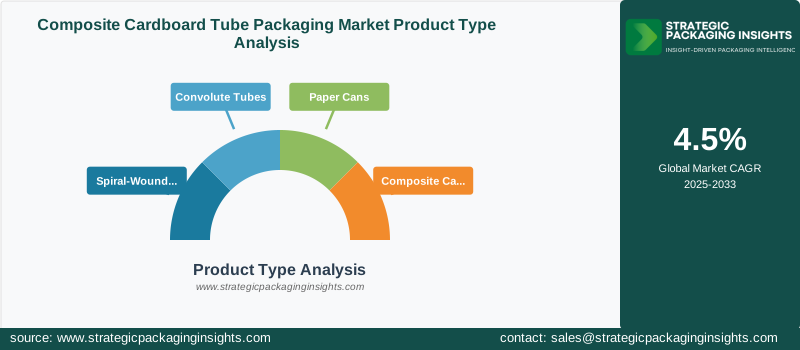
The demand for spiral-wound tubes is driven by their cost-effectiveness and ease of customization. These tubes can be produced in various sizes and designs, making them suitable for a wide range of applications. The growing trend of personalization in packaging is further boosting the demand for spiral-wound tubes, as brands seek to create unique and eye-catching packaging solutions. Convolute tubes, with their smooth finish and premium appearance, are gaining traction in the luxury packaging segment, particularly for cosmetics and personal care products.
Application Analysis
The application segment of the Composite Cardboard Tube Packaging market includes snacks, powders, cosmetics, spirits, and industrial goods. The food and beverage industry is the largest application segment, driven by the increasing demand for safe and sustainable packaging solutions. Composite cardboard tubes are widely used for packaging snacks and powders, as they provide excellent protection and extend shelf life. The cosmetics industry is another significant application segment, with composite cardboard tubes being used for packaging creams, lotions, and other personal care products.
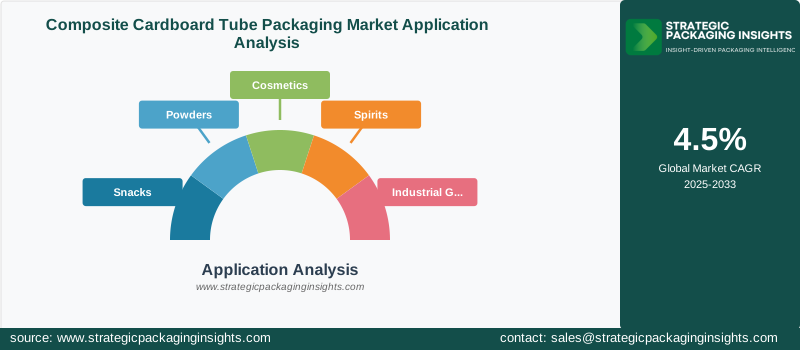
The demand for composite cardboard tubes in the spirits industry is also on the rise, as brands seek to differentiate themselves with unique and eco-friendly packaging solutions. The industrial goods segment is witnessing growth due to the increasing use of composite cardboard tubes for packaging various products, including adhesives, sealants, and lubricants. The versatility and durability of composite cardboard tubes make them an ideal choice for a wide range of applications, driving their demand across different industries.
Material Type Analysis
The Composite Cardboard Tube Packaging market is segmented by material type into paperboard, foil-lined paperboard, and plastic-lined board. Paperboard is the most commonly used material, owing to its recyclability and cost-effectiveness. The demand for paperboard is driven by the increasing focus on sustainability and the need for eco-friendly packaging solutions. Foil-lined paperboard is gaining popularity in the food and beverage industry, as it provides excellent barrier properties and extends the shelf life of products.
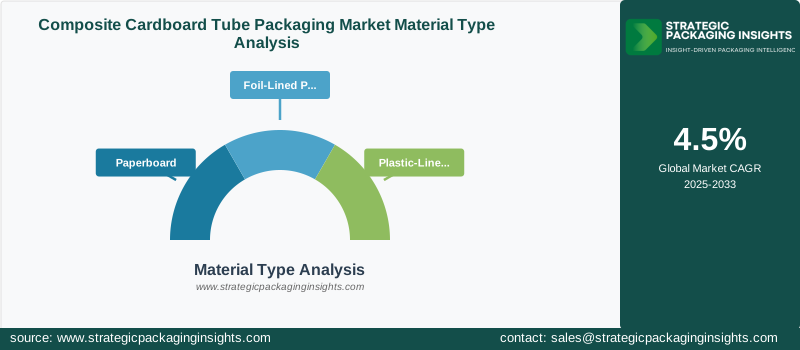
Plastic-lined board is used for applications that require additional protection and durability, such as industrial goods and certain food products. The demand for plastic-lined board is driven by its ability to provide a moisture barrier and enhance the strength of the packaging. However, the increasing focus on reducing plastic usage is encouraging manufacturers to explore alternative materials and develop more sustainable solutions. The material type segment is characterized by continuous innovation, as companies strive to enhance the performance and sustainability of composite cardboard tubes.
End Use Analysis
The end-use segment of the Composite Cardboard Tube Packaging market includes food brands, personal care, beverage, and industrial packaging. The food and beverage industry is the largest end-use segment, driven by the increasing demand for safe and sustainable packaging solutions. Composite cardboard tubes are widely used for packaging snacks, powders, and beverages, as they provide excellent protection and extend shelf life. The personal care industry is another significant end-use segment, with composite cardboard tubes being used for packaging creams, lotions, and other personal care products.
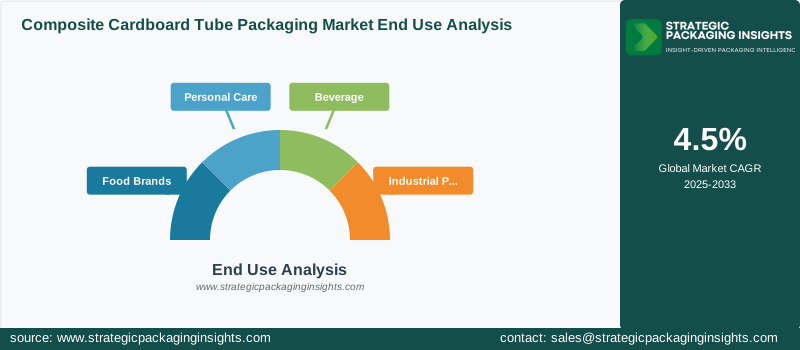
The demand for composite cardboard tubes in the industrial packaging segment is also on the rise, as companies seek durable and eco-friendly packaging solutions for various products, including adhesives, sealants, and lubricants. The versatility and durability of composite cardboard tubes make them an ideal choice for a wide range of applications, driving their demand across different industries. The end-use segment is characterized by continuous innovation, as companies strive to enhance the performance and sustainability of composite cardboard tubes.
Composite Cardboard Tube Packaging Market Segments
The Composite Cardboard Tube Packaging market has been segmented on the basis ofProduct Type
- Spiral-Wound Tubes
- Convolute Tubes
- Paper Cans
- Composite Canisters
Application
- Snacks
- Powders
- Cosmetics
- Spirits
- Industrial Goods
Material Type
- Paperboard
- Foil-Lined Paperboard
- Plastic-Lined Board
End Use
- Food Brands
- Personal Care
- Beverage
- Industrial Packaging
Region
- Asia Pacific
- North America
- Latin America
- Europe
- Middle East & Africa




