


Cold-Chain Sensor Encapsulators Market Outlook
The Cold-Chain Sensor Encapsulators market was valued at $1.44 billion in 2025 and is projected to reach $2.75 billion by 2034, growing at a CAGR of 7.4% during the forecast period 2026-2034. This market is witnessing significant growth due to the increasing demand for efficient cold-chain logistics solutions, driven by the rising need for temperature-sensitive pharmaceuticals and food products. The integration of advanced technologies such as IoT and RFID in sensor encapsulators is enhancing the accuracy and reliability of temperature monitoring, further propelling market growth. Additionally, the growing emphasis on reducing food wastage and ensuring the safety of biologics and vaccines is boosting the adoption of cold-chain sensor encapsulators across various industries.
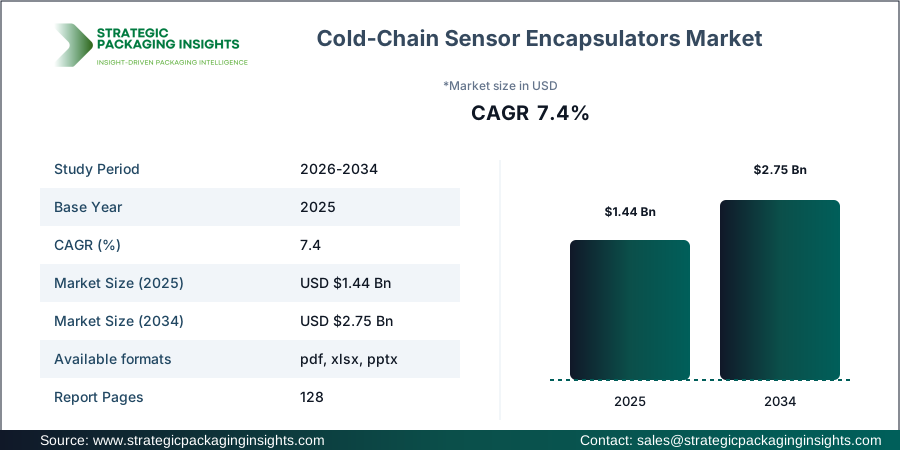
However, the market faces challenges such as high initial costs and the complexity of integrating these systems into existing supply chains. Regulatory constraints and the need for standardization in sensor encapsulation technologies also pose significant hurdles. Despite these challenges, the market holds immense potential for growth, driven by technological advancements and the increasing adoption of smart logistics solutions. The expansion of the pharmaceutical and food industries, particularly in emerging markets, is expected to create lucrative opportunities for market players. As companies focus on enhancing their supply chain efficiency and reducing operational costs, the demand for cold-chain sensor encapsulators is anticipated to rise steadily over the forecast period.
Report Scope
| Attributes | Details |
| Report Title | Cold-Chain Sensor Encapsulators Market Size, Future Growth and Forecast 2034 |
| By Product Type | sensor pouches, embedded sensor capsules, smart label encapsulators |
| By Technology | RFID, NFC, temperature sensors, IoT sensors |
| By Application | vaccines, biologics, food cold chain |
| By End Use | pharma, logistics, healthcare, food |
| Region | Asia Pacific, North America, Latin America, Europe, Middle East & Africa |
| Base Year | 2025 |
| Historic Period | 2018-2024 |
| Forecast Period | 2026-2034 |
| Number of Pages | 128 |
| Customization Available | Yes* |
Opportunities & Threats
The Cold-Chain Sensor Encapsulators market presents numerous opportunities, particularly with the increasing demand for temperature-sensitive pharmaceuticals and biologics. As the global pharmaceutical industry continues to expand, the need for reliable cold-chain logistics solutions becomes more critical. This creates a significant opportunity for sensor encapsulator manufacturers to develop innovative products that ensure the safe transportation and storage of temperature-sensitive goods. Additionally, the growing focus on reducing food wastage and ensuring food safety is driving the adoption of cold-chain sensor encapsulators in the food industry. With the rise of e-commerce and online grocery shopping, the demand for efficient cold-chain logistics solutions is expected to increase, providing further growth opportunities for market players.
Another opportunity lies in the integration of advanced technologies such as IoT and RFID in sensor encapsulators. These technologies enhance the accuracy and reliability of temperature monitoring, enabling real-time tracking and data analysis. This not only improves supply chain efficiency but also helps companies comply with stringent regulatory requirements. As the adoption of smart logistics solutions continues to grow, the demand for advanced cold-chain sensor encapsulators is expected to rise. Furthermore, the expansion of the pharmaceutical and food industries in emerging markets presents significant growth opportunities for market players. As these industries continue to grow, the need for efficient cold-chain logistics solutions will increase, driving the demand for sensor encapsulators.
Despite the numerous opportunities, the Cold-Chain Sensor Encapsulators market faces several threats. One of the primary challenges is the high initial cost of implementing these systems, which can be a significant barrier for small and medium-sized enterprises. Additionally, the complexity of integrating sensor encapsulators into existing supply chains can pose challenges for companies. Regulatory constraints and the need for standardization in sensor encapsulation technologies also present significant hurdles. As the market continues to evolve, companies will need to address these challenges to remain competitive and capitalize on the growth opportunities.
Drivers & Challenges
The Cold-Chain Sensor Encapsulators market is driven by several key factors, including the increasing demand for temperature-sensitive pharmaceuticals and biologics. As the global pharmaceutical industry continues to expand, the need for reliable cold-chain logistics solutions becomes more critical. This drives the demand for sensor encapsulators that ensure the safe transportation and storage of temperature-sensitive goods. Additionally, the growing focus on reducing food wastage and ensuring food safety is driving the adoption of cold-chain sensor encapsulators in the food industry. With the rise of e-commerce and online grocery shopping, the demand for efficient cold-chain logistics solutions is expected to increase, further propelling market growth.
Another significant driver is the integration of advanced technologies such as IoT and RFID in sensor encapsulators. These technologies enhance the accuracy and reliability of temperature monitoring, enabling real-time tracking and data analysis. This not only improves supply chain efficiency but also helps companies comply with stringent regulatory requirements. As the adoption of smart logistics solutions continues to grow, the demand for advanced cold-chain sensor encapsulators is expected to rise. Furthermore, the expansion of the pharmaceutical and food industries in emerging markets presents significant growth opportunities for market players. As these industries continue to grow, the need for efficient cold-chain logistics solutions will increase, driving the demand for sensor encapsulators.
Despite the numerous drivers, the Cold-Chain Sensor Encapsulators market faces several challenges. One of the primary challenges is the high initial cost of implementing these systems, which can be a significant barrier for small and medium-sized enterprises. Additionally, the complexity of integrating sensor encapsulators into existing supply chains can pose challenges for companies. Regulatory constraints and the need for standardization in sensor encapsulation technologies also present significant hurdles. As the market continues to evolve, companies will need to address these challenges to remain competitive and capitalize on the growth opportunities.
Market Share Analysis
The Cold-Chain Sensor Encapsulators market is characterized by a competitive landscape with several key players vying for market share. Companies such as Zebra Technologies, Avery Dennison, Sensitech, Controlant, Tive, Roambee, Timestrip, TempTime, SpotSee, and Elpro are some of the prominent players in this market. These companies are focusing on developing innovative products and expanding their market presence through strategic partnerships and collaborations. The competitive landscape is further intensified by the presence of several regional players who are leveraging their local expertise to gain a competitive edge.
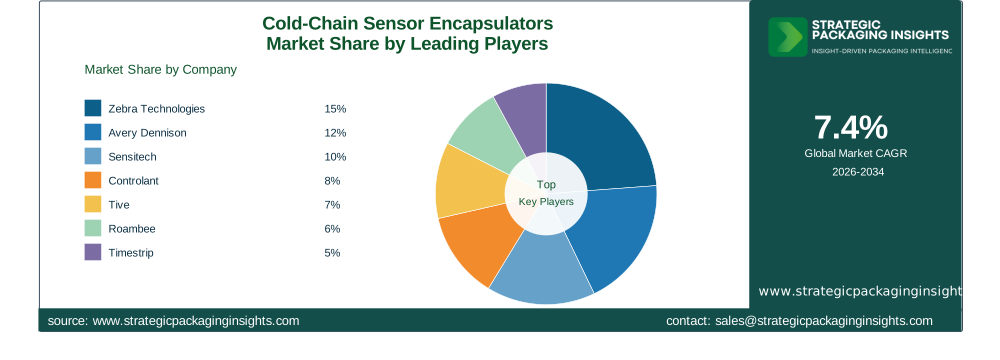
Zebra Technologies is a leading player in the Cold-Chain Sensor Encapsulators market, known for its advanced sensor solutions and strong market presence. The company is focusing on expanding its product portfolio and enhancing its technological capabilities to cater to the growing demand for cold-chain logistics solutions. Avery Dennison, another key player, is leveraging its expertise in RFID technology to develop innovative sensor encapsulators that offer enhanced accuracy and reliability. The company is also focusing on expanding its market presence through strategic partnerships and collaborations.
Sensitech, a subsidiary of Carrier Global Corporation, is a prominent player in the Cold-Chain Sensor Encapsulators market, known for its comprehensive range of temperature monitoring solutions. The company is focusing on expanding its product portfolio and enhancing its technological capabilities to cater to the growing demand for cold-chain logistics solutions. Controlant, a leading provider of real-time supply chain monitoring solutions, is leveraging its expertise in IoT technology to develop advanced sensor encapsulators that offer real-time tracking and data analysis.
Tive, Roambee, Timestrip, TempTime, SpotSee, and Elpro are other key players in the Cold-Chain Sensor Encapsulators market, each offering unique solutions to cater to the diverse needs of their customers. These companies are focusing on developing innovative products and expanding their market presence through strategic partnerships and collaborations. As the market continues to evolve, these companies are expected to play a significant role in shaping the future of the Cold-Chain Sensor Encapsulators market.
Key Highlights
- The Cold-Chain Sensor Encapsulators market is projected to grow at a CAGR of 7.4% from 2026 to 2034.
- Increasing demand for temperature-sensitive pharmaceuticals and biologics is driving market growth.
- Integration of advanced technologies such as IoT and RFID is enhancing the accuracy and reliability of temperature monitoring.
- The expansion of the pharmaceutical and food industries in emerging markets presents significant growth opportunities.
- High initial costs and regulatory constraints are some of the key challenges faced by market players.
- Companies are focusing on developing innovative products and expanding their market presence through strategic partnerships.
- The rise of e-commerce and online grocery shopping is driving the demand for efficient cold-chain logistics solutions.
Top Countries Insights
In the Cold-Chain Sensor Encapsulators market, the United States holds a significant share, driven by the presence of a well-established pharmaceutical industry and stringent regulatory requirements for temperature-sensitive goods. The market in the U.S. is expected to grow at a CAGR of 6%, with increasing investments in advanced cold-chain logistics solutions. The demand for sensor encapsulators is further fueled by the growing focus on reducing food wastage and ensuring food safety.
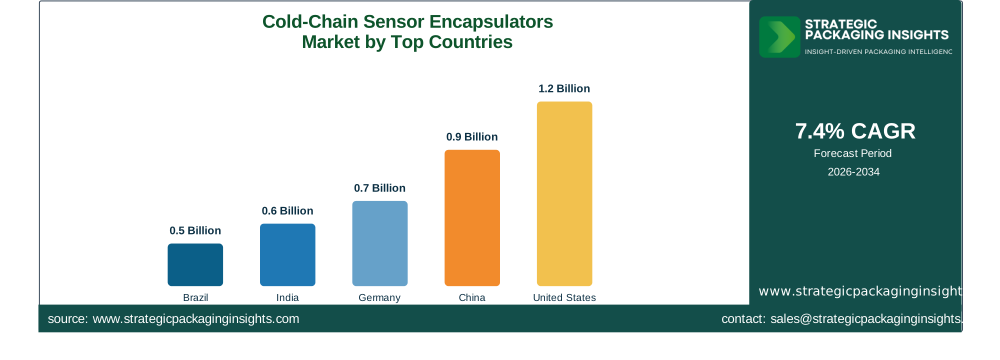
China is another key market for Cold-Chain Sensor Encapsulators, with a CAGR of 9%. The rapid expansion of the pharmaceutical and food industries, coupled with increasing investments in cold-chain infrastructure, is driving market growth. The Chinese government's focus on improving food safety and reducing wastage is also contributing to the demand for sensor encapsulators.
Germany, with its strong presence in the pharmaceutical and logistics sectors, is witnessing significant growth in the Cold-Chain Sensor Encapsulators market. The market is expected to grow at a CAGR of 7%, driven by the increasing demand for temperature-sensitive pharmaceuticals and biologics. The integration of advanced technologies such as IoT and RFID is further enhancing the efficiency of cold-chain logistics solutions in the country.
India is emerging as a lucrative market for Cold-Chain Sensor Encapsulators, with a CAGR of 10%. The rapid growth of the pharmaceutical and food industries, coupled with increasing investments in cold-chain infrastructure, is driving market growth. The Indian government's focus on improving food safety and reducing wastage is also contributing to the demand for sensor encapsulators.
Brazil is another key market for Cold-Chain Sensor Encapsulators, with a CAGR of 8%. The expansion of the pharmaceutical and food industries, coupled with increasing investments in cold-chain infrastructure, is driving market growth. The Brazilian government's focus on improving food safety and reducing wastage is also contributing to the demand for sensor encapsulators.
Cold-Chain Sensor Encapsulators Market Segments Insights

Product Type Analysis
The Cold-Chain Sensor Encapsulators market is segmented by product type into sensor pouches, embedded sensor capsules, and smart label encapsulators. Sensor pouches are gaining popularity due to their flexibility and ease of use, making them ideal for a wide range of applications. Embedded sensor capsules, on the other hand, offer enhanced accuracy and reliability, making them suitable for critical applications such as pharmaceuticals and biologics. Smart label encapsulators are also witnessing significant demand, driven by their ability to provide real-time temperature monitoring and data analysis.
The demand for sensor pouches is expected to grow steadily, driven by their cost-effectiveness and versatility. These pouches are widely used in the food industry, where they help ensure the safety and quality of perishable goods. Embedded sensor capsules are gaining traction in the pharmaceutical industry, where they are used to monitor the temperature of sensitive drugs and vaccines. Smart label encapsulators are also gaining popularity, particularly in the logistics sector, where they help improve supply chain efficiency and reduce operational costs.
Technology Analysis
The Cold-Chain Sensor Encapsulators market is segmented by technology into RFID, NFC, temperature sensors, and IoT sensors. RFID technology is widely used in sensor encapsulators due to its ability to provide accurate and reliable temperature monitoring. NFC technology is also gaining popularity, driven by its ease of use and compatibility with smartphones and other mobile devices. Temperature sensors are a critical component of cold-chain sensor encapsulators, providing real-time temperature monitoring and data analysis.
IoT sensors are witnessing significant demand, driven by their ability to provide real-time tracking and data analysis. These sensors are widely used in the logistics sector, where they help improve supply chain efficiency and reduce operational costs. The integration of advanced technologies such as IoT and RFID is enhancing the accuracy and reliability of temperature monitoring, further propelling market growth. As the adoption of smart logistics solutions continues to grow, the demand for advanced cold-chain sensor encapsulators is expected to rise.
Application Analysis
The Cold-Chain Sensor Encapsulators market is segmented by application into vaccines, biologics, and food cold chain. The demand for sensor encapsulators in the vaccine segment is driven by the increasing need for reliable cold-chain logistics solutions to ensure the safe transportation and storage of temperature-sensitive vaccines. The biologics segment is also witnessing significant demand, driven by the growing focus on ensuring the safety and efficacy of biologic drugs.
The food cold chain segment is expected to grow steadily, driven by the increasing demand for temperature-sensitive food products and the growing focus on reducing food wastage. The rise of e-commerce and online grocery shopping is also driving the demand for efficient cold-chain logistics solutions, further propelling market growth. As the demand for temperature-sensitive pharmaceuticals and food products continues to grow, the need for reliable cold-chain sensor encapsulators is expected to increase.
End Use Analysis
The Cold-Chain Sensor Encapsulators market is segmented by end use into pharma, logistics, healthcare, and food. The pharma segment is witnessing significant demand, driven by the increasing need for reliable cold-chain logistics solutions to ensure the safe transportation and storage of temperature-sensitive pharmaceuticals. The logistics segment is also witnessing significant demand, driven by the growing focus on improving supply chain efficiency and reducing operational costs.
The healthcare segment is expected to grow steadily, driven by the increasing demand for temperature-sensitive medical products and the growing focus on ensuring patient safety. The food segment is also witnessing significant demand, driven by the increasing demand for temperature-sensitive food products and the growing focus on reducing food wastage. As the demand for temperature-sensitive pharmaceuticals and food products continues to grow, the need for reliable cold-chain sensor encapsulators is expected to increase.
Cold-Chain Sensor Encapsulators Market Segments
The Cold-Chain Sensor Encapsulators market has been segmented on the basis ofBy Product Type
- sensor pouches
- embedded sensor capsules
- smart label encapsulators
By Technology
- RFID
- NFC
- temperature sensors
- IoT sensors
By Application
- vaccines
- biologics
- food cold chain
By End Use
- pharma
- logistics
- healthcare
- food
Region
- Asia Pacific
- North America
- Latin America
- Europe
- Middle East & Africa




