


Cold Chain Pharmaceutical Insulated Shipper Market Outlook
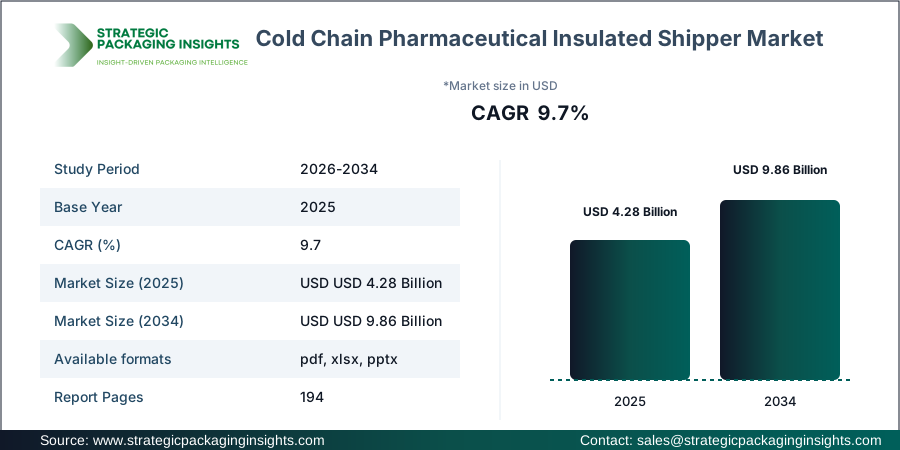
The Cold Chain Pharmaceutical Insulated Shipper market size was valued at USD 4.28 Billion in 2025 and is anticipated to reach USD 9.86 Billion by 2034, growing at a CAGR of 9.7% during the forecast period according to Strategic Packaging Insights. This growth is driven by the increasing demand for temperature-sensitive pharmaceutical products, which necessitates reliable and efficient cold chain solutions. Companies like Sonoco ThermoSafe and Cold Chain Technologies are at the forefront, innovating to meet the stringent requirements of pharmaceutical logistics. The market's expansion is further fueled by advancements in insulation materials and the growing adoption of reusable shippers, which offer both economic and environmental benefits.
One of the most impactful drivers of this market is the stringent regulatory landscape governing pharmaceutical logistics. Governments worldwide are implementing rigorous standards to ensure the safe transport of temperature-sensitive drugs, which in turn drives demand for advanced insulated shipping solutions. For instance, the U.S. Food and Drug Administration (FDA) and the European Medicines Agency (EMA) have set forth guidelines that necessitate the use of reliable cold chain solutions to maintain drug efficacy. This regulatory pressure compels pharmaceutical companies to invest in high-quality insulated shippers, thereby boosting market growth. Companies like CSafe and Softbox Systems are leveraging these regulations to enhance their product offerings and capture a larger market share.
Report Scope
| Attributes | Details |
| Report Title | Cold Chain Pharmaceutical Insulated Shipper Market Size, Future Growth and Forecast 2034 |
| By Product Type | Passive Insulated Shippers, Active Temperature-Controlled Shippers, Single-Use Insulated Shippers, Reusable Insulated Shippers |
| By Insulation Material | Expanded Polystyrene (EPS), Vacuum Insulated Panels (VIP), Polyurethane Foam, Phase Change Materials (PCM), Molded Fibre Insulation, Bio-Based Insulation |
| By Temperature Range | 2°C to 8°C, -20°C, -80°C, Cryogenic |
| By End User | Pharmaceutical Manufacturers, Biotechnology Companies, Clinical Research Organizations, Hospitals, Specialty Logistics Providers |
| Region | Asia Pacific, North America, Latin America, Europe, Middle East & Africa |
| Base Year | 2025 |
| Historic Period | 2018-2024 |
| Forecast Period | 2026-2034 |
| Number of Pages | 194 |
| Customization Available | Yes* |
Sustainability & Circular Economy Analysis
Sustainability initiatives are significantly reshaping the Cold Chain Pharmaceutical Insulated Shipper market. Companies are increasingly adopting recyclable materials and reusable packaging solutions to minimize environmental impact. For instance, the use of bio-based insulation materials is gaining traction as they offer a sustainable alternative to traditional options. This shift towards eco-friendly materials not only aligns with consumer preferences for sustainable products but also helps companies comply with stringent environmental regulations. As a result, packaging design and manufacturing processes are evolving to incorporate these sustainable practices, enhancing the market's long-term competitiveness.
The circular economy model is also influencing investment decisions within the market. Companies are investing in lightweight packaging solutions that reduce carbon footprints and transportation costs. This trend is driven by the growing emphasis on waste reduction strategies and extended producer responsibility (EPR) initiatives. By adopting circular economy practices, companies like va-Q-tec and Pelican BioThermal are not only reducing their environmental impact but also achieving cost efficiencies, thereby strengthening their market position.
Furthermore, regulatory compliance is becoming a critical factor in the market's sustainability journey. Governments are implementing stricter packaging regulations to curb environmental degradation, prompting companies to innovate and adopt sustainable packaging solutions. This regulatory push is encouraging companies to explore new materials and technologies that enhance the sustainability of their products. As a result, the market is witnessing increased collaboration between packaging manufacturers, brand owners, and policymakers to develop solutions that meet both regulatory and consumer demands.
Packaging Value Chain & Supply Chain Analysis
The packaging value chain for Cold Chain Pharmaceutical Insulated Shippers is complex, involving multiple stakeholders from raw material suppliers to end-users. Raw material sourcing is a critical component, with companies relying on high-quality insulation materials like Expanded Polystyrene (EPS) and Vacuum Insulated Panels (VIP) to ensure product efficacy. Packaging converters and manufacturers play a pivotal role in transforming these materials into insulated shippers that meet industry standards. Companies like Sofrigam and Tempack Packaging Solutions are leading the charge in developing innovative packaging solutions that cater to the specific needs of pharmaceutical logistics.
Supply chain efficiency is paramount in this market, as it directly impacts the timely delivery of temperature-sensitive pharmaceuticals. Logistics providers and distribution channels are crucial in maintaining the integrity of the cold chain. Strategic partnerships between packaging manufacturers and logistics providers are becoming increasingly common, as they enhance supply chain resilience and ensure seamless operations. Companies like FedEx Custom Critical are leveraging their extensive logistics networks to offer specialized cold chain solutions, thereby enhancing their competitive edge.
Global sourcing and localization strategies are also influencing the market dynamics. While global sourcing offers cost advantages, localization ensures compliance with regional regulations and reduces transportation risks. Companies are adopting a balanced approach, leveraging both strategies to optimize their supply chains. Inventory management and procurement strategies are being refined to enhance supply chain resilience, ensuring that companies can meet the growing demand for insulated shippers without compromising on quality or delivery timelines.
Opportunities & Threats
The Cold Chain Pharmaceutical Insulated Shipper market presents numerous opportunities for growth, driven by the increasing demand for biologics and specialty drugs. These products require stringent temperature control, creating a lucrative market for advanced insulated shipping solutions. Companies that can innovate and offer reliable, cost-effective solutions stand to gain a significant competitive advantage. Additionally, the growing focus on sustainability presents opportunities for companies to differentiate themselves by offering eco-friendly packaging solutions. As consumer preferences shift towards sustainable products, companies that can align their offerings with these trends are likely to capture a larger market share.
Another opportunity lies in the expansion of the pharmaceutical industry in emerging markets. As countries in Asia Pacific and Latin America invest in healthcare infrastructure, the demand for cold chain solutions is expected to rise. Companies that can establish a strong presence in these regions and offer tailored solutions to meet local needs are well-positioned to capitalize on this growth. Furthermore, advancements in technology, such as IoT-enabled temperature monitoring, present opportunities for companies to enhance their product offerings and improve supply chain transparency.
However, the market also faces threats, primarily from regulatory challenges and high operational costs. Compliance with stringent regulations can be costly and time-consuming, posing a barrier to entry for smaller players. Additionally, fluctuations in raw material prices can impact profitability, making it essential for companies to adopt efficient procurement strategies. Companies must navigate these challenges carefully to maintain their competitive edge and ensure long-term success in the market.
Drivers & Challenges
The primary driver of the Cold Chain Pharmaceutical Insulated Shipper market is the increasing demand for temperature-sensitive pharmaceuticals. As the pharmaceutical industry continues to innovate and develop new biologics and specialty drugs, the need for reliable cold chain solutions becomes more critical. Companies like Envirotainer and Cryopak are investing in advanced technologies to meet this demand, offering solutions that ensure product integrity and compliance with regulatory standards. The growing emphasis on patient safety and drug efficacy further underscores the importance of robust cold chain logistics, driving market growth.
Technological advancements are also driving the market forward. Innovations in insulation materials and temperature monitoring technologies are enhancing the performance of insulated shippers, making them more efficient and reliable. Companies are leveraging these advancements to offer differentiated products that cater to the specific needs of pharmaceutical logistics. The integration of IoT and data analytics is further enhancing supply chain transparency, allowing companies to monitor and optimize their operations in real-time.
Despite these drivers, the market faces several challenges. High operational costs and regulatory compliance are significant hurdles that companies must overcome. The cost of developing and maintaining advanced cold chain solutions can be prohibitive, particularly for smaller players. Additionally, navigating the complex regulatory landscape requires significant resources and expertise. Companies must invest in research and development to innovate and stay ahead of regulatory changes, ensuring their solutions remain compliant and competitive in the market.
Market Share Analysis
The Cold Chain Pharmaceutical Insulated Shipper market is characterized by intense competition, with several key players vying for market share. Companies like Sonoco ThermoSafe, Cold Chain Technologies, and CSafe are leading the market, leveraging their extensive product portfolios and global presence to maintain a competitive edge. These companies are investing heavily in research and development to innovate and offer solutions that meet the evolving needs of the pharmaceutical industry. Their focus on sustainability and regulatory compliance further strengthens their market position.
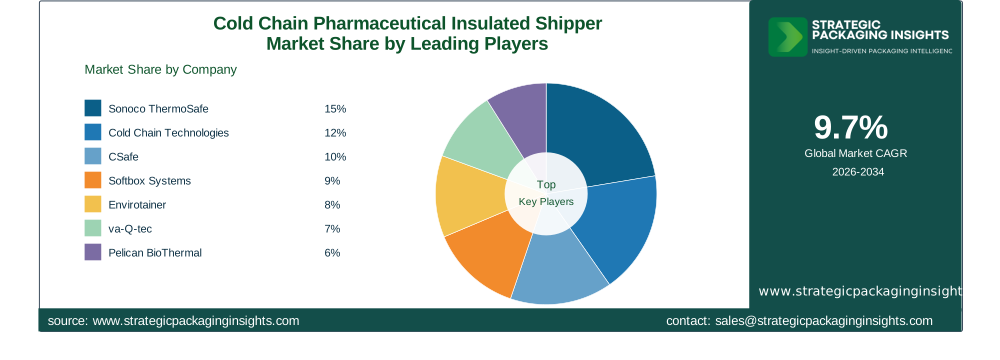
Sonoco ThermoSafe is a prominent player in the market, known for its innovative packaging solutions that cater to the specific needs of pharmaceutical logistics. The company's extensive product portfolio and global reach make it a preferred choice for pharmaceutical manufacturers and logistics providers. Cold Chain Technologies is another key player, offering a range of insulated shipping solutions that ensure product integrity and compliance with industry standards. The company's focus on sustainability and customer-centric solutions has helped it capture a significant market share.
CSafe is renowned for its advanced temperature-controlled shipping solutions, which are widely used in the pharmaceutical industry. The company's commitment to innovation and quality has earned it a strong reputation in the market. Softbox Systems is also a major player, offering a range of insulated shippers that cater to the diverse needs of the pharmaceutical industry. The company's focus on sustainability and customer satisfaction has helped it establish a strong foothold in the market.
Other notable players in the market include Envirotainer, va-Q-tec, and Pelican BioThermal. These companies are known for their innovative solutions and commitment to quality, which have helped them capture a significant share of the market. Their focus on sustainability and regulatory compliance further strengthens their market position, making them key players in the Cold Chain Pharmaceutical Insulated Shipper market.
Key Highlights
- Market Size: USD 4.28 Billion in 2025, expected to reach USD 9.86 Billion by 2034.
- Growth Rate: Projected CAGR of 9.7% during the forecast period.
- Leading Companies: Sonoco ThermoSafe, Cold Chain Technologies, CSafe, Softbox Systems.
- Product Innovation: Advancements in insulation materials and temperature monitoring technologies.
- Sustainability Focus: Increasing adoption of recyclable and reusable packaging solutions.
- Regulatory Compliance: Stringent regulations driving demand for advanced insulated shippers.
- Regional Growth: Significant opportunities in Asia Pacific and Latin America.
Cold Chain Pharmaceutical Insulated Shipper Market Segments Insights

By Product Type Analysis
The Cold Chain Pharmaceutical Insulated Shipper market is segmented by product type into Passive Insulated Shippers, Active Temperature-Controlled Shippers, Single-Use Insulated Shippers, and Reusable Insulated Shippers. Passive Insulated Shippers are widely used due to their cost-effectiveness and reliability in maintaining temperature control. These shippers are ideal for short-duration shipments and are preferred by pharmaceutical manufacturers for their simplicity and ease of use. Active Temperature-Controlled Shippers, on the other hand, offer precise temperature control and are suitable for long-duration shipments. These shippers are equipped with advanced technologies that ensure consistent temperature maintenance, making them a preferred choice for high-value pharmaceuticals.
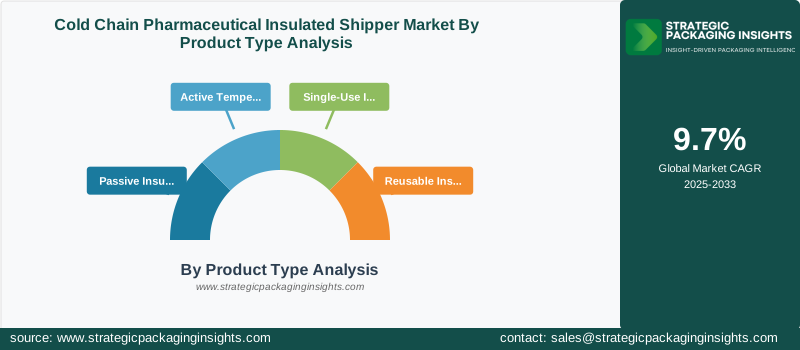
Single-Use Insulated Shippers are gaining popularity due to their convenience and reduced risk of contamination. These shippers are designed for one-time use, ensuring product integrity and compliance with regulatory standards. Reusable Insulated Shippers, however, are becoming increasingly popular due to their sustainability benefits. These shippers can be used multiple times, reducing waste and offering cost savings in the long run. Companies are investing in the development of durable and efficient reusable shippers to cater to the growing demand for sustainable packaging solutions.
By Insulation Material Analysis
The market is also segmented by insulation material, with options including Expanded Polystyrene (EPS), Vacuum Insulated Panels (VIP), Polyurethane Foam, Phase Change Materials (PCM), Molded Fibre Insulation, and Bio-Based Insulation. EPS is widely used due to its excellent insulation properties and cost-effectiveness. It is a preferred choice for many pharmaceutical manufacturers due to its lightweight nature and ease of handling. VIPs, on the other hand, offer superior insulation performance and are used for high-value shipments that require stringent temperature control.
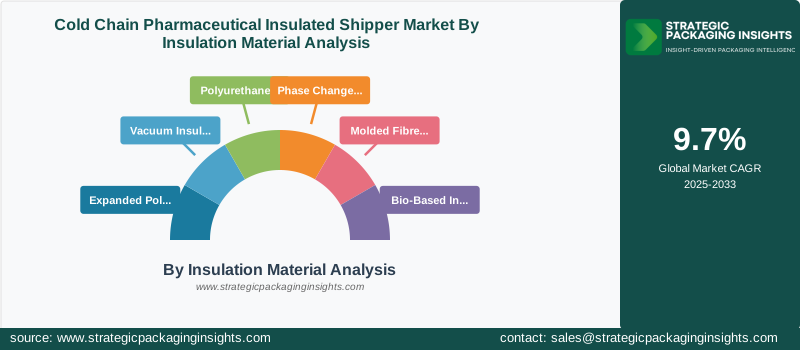
Polyurethane Foam is another popular insulation material, known for its durability and thermal resistance. It is commonly used in reusable shippers due to its long-lasting properties. Phase Change Materials (PCM) are gaining traction due to their ability to maintain a constant temperature over extended periods. These materials are ideal for shipments that require precise temperature control. Molded Fibre Insulation and Bio-Based Insulation are emerging as sustainable alternatives, offering eco-friendly solutions that align with the growing demand for sustainable packaging.
By Temperature Range Analysis
The Cold Chain Pharmaceutical Insulated Shipper market is segmented by temperature range, including 2°C to 8°C, -20°C, -80°C, and Cryogenic. The 2°C to 8°C range is the most common, as it is suitable for a wide range of pharmaceuticals, including vaccines and biologics. This temperature range is critical for maintaining the efficacy of temperature-sensitive drugs, making it a key focus for insulated shipper manufacturers. The -20°C range is used for products that require freezing temperatures, such as certain vaccines and biologics.
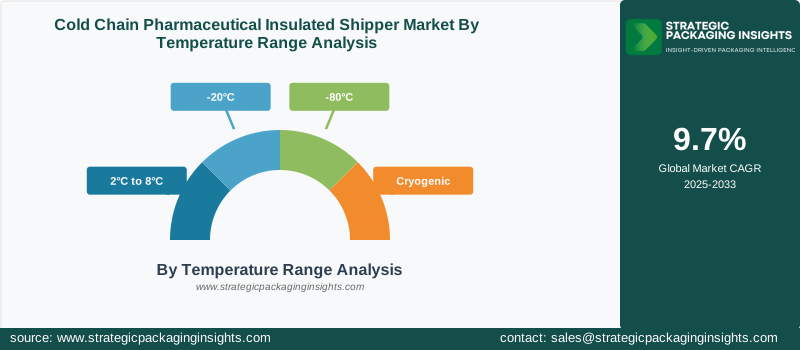
The -80°C range is used for ultra-low temperature shipments, including certain biologics and specialty drugs. This temperature range requires advanced insulation materials and technologies to ensure product integrity. Cryogenic shipments, which require temperatures below -150°C, are used for highly sensitive products, such as certain biologics and cell therapies. These shipments require specialized shippers that can maintain ultra-low temperatures for extended periods, making them a niche but critical segment of the market.
By End User Analysis
The market is segmented by end user, including Pharmaceutical Manufacturers, Biotechnology Companies, Clinical Research Organizations, Hospitals, and Specialty Logistics Providers. Pharmaceutical manufacturers are the largest end users, as they require reliable cold chain solutions to ensure the safe transport of temperature-sensitive drugs. Biotechnology companies are also significant end users, as they develop and manufacture biologics and specialty drugs that require stringent temperature control.
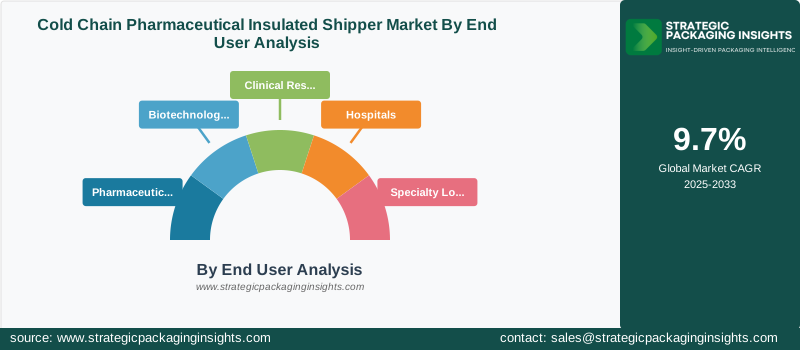
Clinical Research Organizations (CROs) are another key segment, as they conduct clinical trials that require the transport of temperature-sensitive samples and drugs. Hospitals are also important end users, as they require cold chain solutions for the storage and transport of vaccines and other temperature-sensitive pharmaceuticals. Specialty Logistics Providers play a critical role in the market, offering specialized cold chain solutions that ensure the safe and efficient transport of temperature-sensitive products.
Cold Chain Pharmaceutical Insulated Shipper Market Segments
The Cold Chain Pharmaceutical Insulated Shipper market has been segmented on the basis ofBy Product Type
- Passive Insulated Shippers
- Active Temperature-Controlled Shippers
- Single-Use Insulated Shippers
- Reusable Insulated Shippers
By Insulation Material
- Expanded Polystyrene (EPS)
- Vacuum Insulated Panels (VIP)
- Polyurethane Foam
- Phase Change Materials (PCM)
- Molded Fibre Insulation
- Bio-Based Insulation
By Temperature Range
- 2°C to 8°C
- -20°C
- -80°C
- Cryogenic
By End User
- Pharmaceutical Manufacturers
- Biotechnology Companies
- Clinical Research Organizations
- Hospitals
- Specialty Logistics Providers
Region
- Asia Pacific
- North America
- Latin America
- Europe
- Middle East & Africa




