


Circular Cold-Chain Packaging Systems for Fresh & Frozen Food Market Outlook
The Circular Cold-Chain Packaging Systems for Fresh & Frozen Food market was valued at $724.60 million in 2025 and is projected to reach $1.62 billion by 2034, growing at a CAGR of 9.3% during the forecast period 2026-2034. This market is witnessing significant growth due to the increasing demand for sustainable packaging solutions in the food industry. The rise in global food trade, coupled with the need for maintaining food quality and safety, is driving the adoption of circular cold-chain packaging systems. These systems are designed to reduce waste and improve the efficiency of the cold supply chain, making them an attractive option for businesses looking to enhance their sustainability credentials.
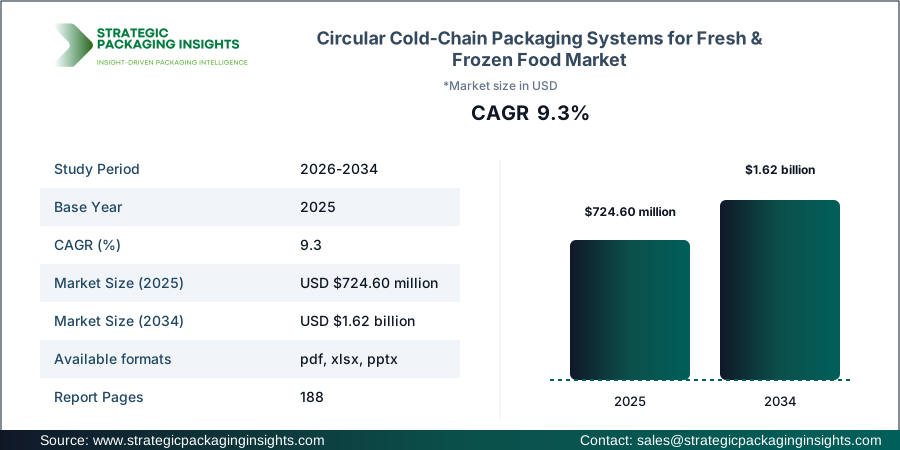
However, the market faces challenges such as high initial costs and the need for specialized infrastructure to support these systems. Regulatory frameworks and standards for food safety and packaging also play a crucial role in shaping the market dynamics. Despite these challenges, the market holds immense potential for growth, driven by technological advancements and increasing consumer awareness about the environmental impact of traditional packaging methods. Companies are investing in research and development to create innovative solutions that meet the evolving needs of the food industry, further propelling market growth.
Report Scope
| Attributes | Details |
| Report Title | Circular Cold-Chain Packaging Systems for Fresh & Frozen Food Market Size, Future Growth and Forecast 2034 |
| By Product Type | Reusable Insulated Shippers, Phase-Change Packs, Returnable Crates |
| By Material Type | Paperboard, Molded Fiber, Reusable Plastics, PCM |
| By Application | Fresh Food, Frozen Food, Seafood, Meal Kits |
| By End Use | Grocery, Food Delivery, Cold-Chain Logistics |
| Region | Asia Pacific, North America, Latin America, Europe, Middle East & Africa |
| Base Year | 2025 |
| Historic Period | 2018-2024 |
| Forecast Period | 2026-2034 |
| Number of Pages | 188 |
| Customization Available | Yes* |
Opportunities & Threats
The Circular Cold-Chain Packaging Systems market presents numerous opportunities, particularly in the realm of sustainability. As consumers become more environmentally conscious, there is a growing demand for packaging solutions that minimize waste and reduce carbon footprints. This trend is encouraging companies to innovate and develop packaging systems that are not only efficient but also eco-friendly. The integration of advanced technologies such as IoT and AI in packaging systems is another opportunity, allowing for better tracking and monitoring of food products throughout the supply chain. This technological integration enhances transparency and ensures the quality and safety of food products, which is a significant concern for consumers and regulatory bodies alike.
Another opportunity lies in the expansion of e-commerce and online food delivery services, which have surged in popularity, especially post-pandemic. This shift in consumer behavior has increased the demand for reliable and efficient cold-chain packaging solutions that can maintain the integrity of food products during transit. Companies that can offer innovative, cost-effective, and sustainable packaging solutions are likely to gain a competitive edge in this rapidly evolving market. Additionally, partnerships and collaborations between packaging companies and food producers can lead to the development of customized solutions that cater to specific industry needs, further driving market growth.
Despite the promising opportunities, the market is not without its threats. One of the primary challenges is the high cost associated with the development and implementation of circular cold-chain packaging systems. These systems require significant investment in terms of technology and infrastructure, which can be a barrier for small and medium-sized enterprises. Moreover, the market is subject to stringent regulations and standards related to food safety and packaging, which can pose compliance challenges for companies. The need for continuous innovation to keep up with changing consumer preferences and regulatory requirements also adds to the competitive pressure in the market.
Drivers & Challenges
The Circular Cold-Chain Packaging Systems market is primarily driven by the increasing demand for sustainable and efficient packaging solutions in the food industry. As consumers become more aware of the environmental impact of packaging waste, there is a growing preference for eco-friendly alternatives. This shift in consumer behavior is encouraging companies to invest in the development of circular packaging systems that minimize waste and reduce carbon emissions. Additionally, the rise in global food trade and the expansion of e-commerce and online food delivery services are further driving the demand for reliable and efficient cold-chain packaging solutions.
Technological advancements are also playing a crucial role in driving market growth. The integration of IoT and AI technologies in packaging systems allows for better tracking and monitoring of food products throughout the supply chain. This technological integration enhances transparency and ensures the quality and safety of food products, which is a significant concern for consumers and regulatory bodies alike. Furthermore, the development of innovative materials and designs that improve the efficiency and sustainability of packaging systems is contributing to the market's expansion.
However, the market faces several challenges that could hinder its growth. One of the primary challenges is the high cost associated with the development and implementation of circular cold-chain packaging systems. These systems require significant investment in terms of technology and infrastructure, which can be a barrier for small and medium-sized enterprises. Additionally, the market is subject to stringent regulations and standards related to food safety and packaging, which can pose compliance challenges for companies. The need for continuous innovation to keep up with changing consumer preferences and regulatory requirements also adds to the competitive pressure in the market.
Market Share Analysis
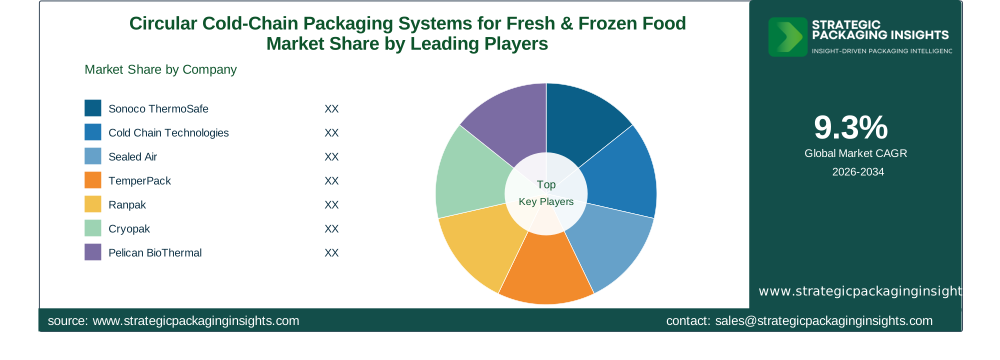
The Circular Cold-Chain Packaging Systems market is characterized by a competitive landscape with several key players vying for market share. Companies such as Sonoco ThermoSafe, Cold Chain Technologies, Sealed Air, and TemperPack are leading the market with their innovative and sustainable packaging solutions. These companies have established a strong presence in the market through strategic partnerships, mergers, and acquisitions, which have enabled them to expand their product offerings and reach a wider customer base. The competitive landscape is further intensified by the presence of regional players who are focusing on developing cost-effective solutions to cater to local market needs.
Sonoco ThermoSafe is a prominent player in the market, known for its advanced temperature-controlled packaging solutions. The company has a significant market share due to its extensive product portfolio and strong distribution network. Cold Chain Technologies is another key player, offering a range of innovative packaging solutions that cater to the specific needs of the food industry. The company's focus on research and development has enabled it to introduce cutting-edge products that enhance the efficiency and sustainability of cold-chain logistics.
Sealed Air is a global leader in packaging solutions, with a strong emphasis on sustainability and innovation. The company's diverse product offerings and strategic partnerships have helped it maintain a competitive edge in the market. TemperPack, known for its eco-friendly packaging solutions, has gained significant traction in the market due to its focus on reducing environmental impact. The company's commitment to sustainability and innovation has positioned it as a key player in the circular cold-chain packaging systems market.
Other notable companies in the market include Ranpak, Cryopak, Pelican BioThermal, Softbox Systems, Nordic Cold Chain Solutions, and Storopack. These companies are investing in research and development to create innovative solutions that meet the evolving needs of the food industry. Their focus on sustainability and efficiency is driving the adoption of circular cold-chain packaging systems, further contributing to the market's growth. The competitive landscape is expected to remain dynamic, with companies continuously striving to enhance their product offerings and expand their market presence.
Key Highlights
- The market is projected to grow from $724.60 million in 2025 to $1.62 billion by 2034, at a CAGR of 9.3%.
- Increasing demand for sustainable packaging solutions is driving market growth.
- Technological advancements such as IoT and AI integration are enhancing packaging efficiency.
- Expansion of e-commerce and online food delivery services is boosting demand for cold-chain packaging.
- High initial costs and regulatory compliance are major challenges for market players.
- Key players include Sonoco ThermoSafe, Cold Chain Technologies, and Sealed Air.
- Partnerships and collaborations are crucial for developing customized solutions.
- Focus on reducing environmental impact is a significant market trend.
- Regional players are developing cost-effective solutions for local markets.
- Continuous innovation is essential to meet changing consumer preferences.
Top Countries Insights
In the Circular Cold-Chain Packaging Systems market, the United States stands out as a leading country, with a market size of approximately $300 million and a CAGR of 8%. The country's robust infrastructure and advanced technological capabilities are key growth drivers. The increasing demand for sustainable packaging solutions and the expansion of e-commerce and online food delivery services are further propelling market growth. However, regulatory compliance and high initial costs remain challenges for market players.
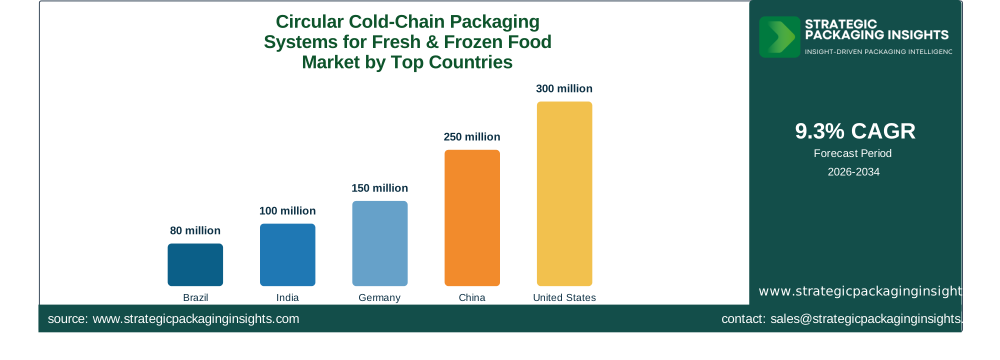
China is another significant player in the market, with a market size of around $250 million and a CAGR of 12%. The country's large population and growing middle class are driving demand for fresh and frozen food products, which in turn is boosting the need for efficient cold-chain packaging systems. Government initiatives to promote sustainable practices and reduce carbon emissions are also contributing to market growth. However, the market faces challenges such as regulatory hurdles and the need for continuous innovation to meet changing consumer preferences.
Germany, with a market size of approximately $150 million and a CAGR of 7%, is a key player in the European market. The country's strong focus on sustainability and innovation is driving the adoption of circular cold-chain packaging systems. The presence of leading packaging companies and a well-established logistics infrastructure are further supporting market growth. However, the market faces challenges such as high costs and stringent regulations related to food safety and packaging.
India, with a market size of around $100 million and a CAGR of 15%, is emerging as a significant player in the market. The country's growing population and increasing demand for fresh and frozen food products are driving the need for efficient cold-chain packaging solutions. Government initiatives to improve cold-chain infrastructure and promote sustainable practices are also contributing to market growth. However, the market faces challenges such as regulatory compliance and the need for continuous innovation to meet changing consumer preferences.
Brazil, with a market size of approximately $80 million and a CAGR of 10%, is a key player in the Latin American market. The country's expanding food industry and growing demand for fresh and frozen food products are driving the adoption of circular cold-chain packaging systems. Government initiatives to promote sustainable practices and reduce carbon emissions are also contributing to market growth. However, the market faces challenges such as regulatory hurdles and the need for continuous innovation to meet changing consumer preferences.
Circular Cold-Chain Packaging Systems for Fresh & Frozen Food Market Segments Insights

Product Type Analysis
The Circular Cold-Chain Packaging Systems market is segmented by product type into reusable insulated shippers, phase-change packs, and returnable crates. Reusable insulated shippers are gaining popularity due to their ability to maintain temperature stability over extended periods, making them ideal for long-distance transportation of fresh and frozen foods. These shippers are designed to be durable and cost-effective, offering a sustainable alternative to single-use packaging solutions. The demand for reusable insulated shippers is driven by the increasing focus on reducing packaging waste and enhancing supply chain efficiency.
Phase-change packs are another key segment, known for their ability to absorb and release thermal energy, thus maintaining a consistent temperature within the packaging. These packs are widely used in the transportation of temperature-sensitive food products, ensuring their quality and safety during transit. The growing demand for fresh and frozen food products, coupled with the need for reliable temperature control solutions, is driving the adoption of phase-change packs in the market. Returnable crates, on the other hand, offer a robust and reusable packaging solution for the transportation of bulk food products. These crates are designed to withstand the rigors of the supply chain, providing a cost-effective and sustainable packaging option for businesses.
Material Type Analysis
The market is also segmented by material type into paperboard, molded fiber, reusable plastics, and phase-change materials (PCM). Paperboard and molded fiber are gaining traction due to their biodegradability and recyclability, making them an eco-friendly choice for packaging solutions. These materials are particularly popular in regions with stringent environmental regulations, where there is a strong emphasis on reducing packaging waste and promoting sustainable practices. The demand for paperboard and molded fiber is further driven by the increasing consumer preference for sustainable packaging options.
Reusable plastics are another significant segment, known for their durability and versatility. These materials are widely used in the production of reusable insulated shippers and returnable crates, offering a cost-effective and sustainable packaging solution for businesses. The growing demand for reusable plastics is driven by the need for durable and long-lasting packaging solutions that can withstand the rigors of the supply chain. Phase-change materials (PCM) are also gaining popularity due to their ability to maintain a consistent temperature within the packaging, ensuring the quality and safety of food products during transit.
Application Analysis
The Circular Cold-Chain Packaging Systems market is segmented by application into fresh food, frozen food, seafood, and meal kits. The fresh food segment is witnessing significant growth due to the increasing demand for fresh produce and perishable food products. The need for reliable and efficient cold-chain packaging solutions that can maintain the quality and safety of fresh food products during transit is driving the adoption of circular cold-chain packaging systems in this segment. The frozen food segment is also experiencing growth, driven by the rising demand for convenience foods and ready-to-eat meals.
Seafood is another key application segment, where the need for temperature-controlled packaging solutions is critical to maintaining the quality and safety of seafood products during transportation. The growing demand for seafood products, coupled with the need for reliable cold-chain logistics, is driving the adoption of circular cold-chain packaging systems in this segment. Meal kits, which have gained popularity due to the convenience they offer, are also driving the demand for efficient and sustainable packaging solutions. The need for reliable temperature control and packaging solutions that can maintain the quality and freshness of meal kits during transit is contributing to the growth of this segment.
End Use Analysis
The market is segmented by end use into grocery, food delivery, and cold-chain logistics. The grocery segment is witnessing significant growth due to the increasing demand for fresh and frozen food products. The need for reliable and efficient cold-chain packaging solutions that can maintain the quality and safety of food products during transit is driving the adoption of circular cold-chain packaging systems in this segment. The food delivery segment is also experiencing growth, driven by the rise in online food delivery services and the need for reliable packaging solutions that can maintain the integrity of food products during transit.
Cold-chain logistics is another key end-use segment, where the need for efficient and sustainable packaging solutions is critical to maintaining the quality and safety of food products during transportation. The growing demand for cold-chain logistics services, coupled with the need for reliable packaging solutions, is driving the adoption of circular cold-chain packaging systems in this segment. The focus on reducing environmental impact and enhancing supply chain efficiency is further contributing to the growth of this segment.
Circular Cold-Chain Packaging Systems for Fresh & Frozen Food Market Segments
The Circular Cold-Chain Packaging Systems for Fresh & Frozen Food market has been segmented on the basis ofBy Product Type
- Reusable Insulated Shippers
- Phase-Change Packs
- Returnable Crates
By Material Type
- Paperboard
- Molded Fiber
- Reusable Plastics
- PCM
By Application
- Fresh Food
- Frozen Food
- Seafood
- Meal Kits
By End Use
- Grocery
- Food Delivery
- Cold-Chain Logistics
Region
- Asia Pacific
- North America
- Latin America
- Europe
- Middle East & Africa




