


Breathable Films Market Outlook
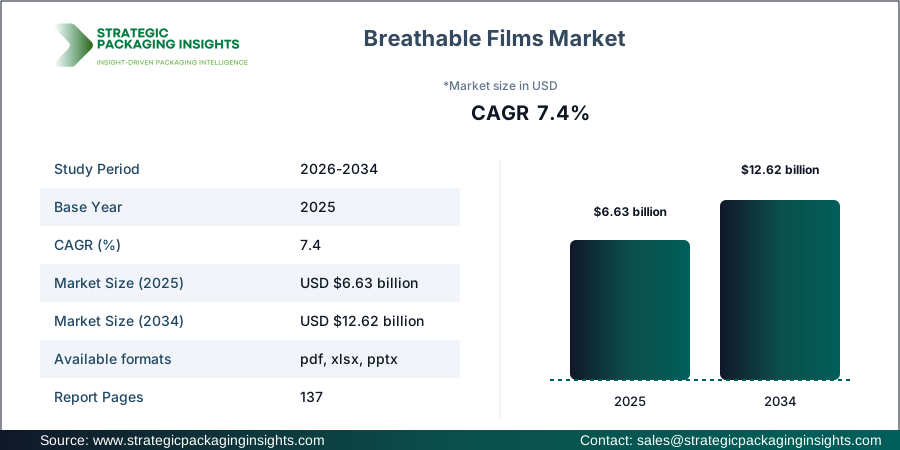
The breathable films market was valued at $6.63 billion in 2025 and is projected to reach $12.62 billion by 2034, growing at a CAGR of 7.4% during the forecast period 2026-2034. This market is experiencing significant growth due to the increasing demand for lightweight and breathable materials across various industries. The rise in hygiene awareness and the growing healthcare sector are major drivers for the market. Additionally, the demand for breathable films in food packaging and apparel is on the rise, further propelling market growth. The Asia Pacific region is expected to dominate the market due to rapid industrialization and urbanization, coupled with increasing disposable incomes.
However, the market faces challenges such as stringent environmental regulations and the high cost of raw materials, which may hinder growth. Despite these challenges, the market holds immense potential due to technological advancements and the development of bio-based films. The increasing focus on sustainability and eco-friendly products is expected to create new opportunities for market players. The market is also witnessing a shift towards the use of breathable films in innovative applications, such as smart textiles and advanced medical products, which is likely to drive future growth.
Report Scope
| Attributes | Details |
| Report Title | Breathable Films Market Size, Future Growth and Forecast 2034 |
| By Material Type | PE, PP, PU, Bio-Based Films |
| By Application | Hygiene Products, Medical, Food Packaging, Apparel |
| By End Use | Healthcare, Hygiene, Food & Beverage, Textiles |
| Region | Asia Pacific, North America, Latin America, Europe, Middle East & Africa |
| Base Year | 2025 |
| Historic Period | 2018-2024 |
| Forecast Period | 2026-2034 |
| Number of Pages | 137 |
| Customization Available | Yes* |
Opportunities & Threats
The breathable films market presents numerous opportunities, particularly in the development of bio-based films. As environmental concerns continue to rise, there is a growing demand for sustainable and eco-friendly products. Bio-based films, made from renewable resources, offer a viable alternative to traditional petroleum-based films. This shift towards sustainability is expected to open new avenues for market players, allowing them to tap into a niche yet rapidly growing segment. Additionally, the increasing application of breathable films in the healthcare sector, particularly in wound care and surgical drapes, presents significant growth opportunities. The aging population and the rise in chronic diseases are driving the demand for advanced medical products, further boosting the market.
Another opportunity lies in the expanding use of breathable films in the apparel industry. With the growing trend of athleisure and performance wear, there is an increasing demand for breathable and moisture-wicking fabrics. Breathable films provide the necessary properties to enhance comfort and performance, making them an ideal choice for sportswear and outdoor apparel. Furthermore, the integration of breathable films in smart textiles, which offer functionalities such as temperature regulation and moisture management, is expected to drive innovation and growth in the market. The development of new applications and the expansion into emerging markets present lucrative opportunities for market players.
Despite the opportunities, the breathable films market faces certain threats that could impact its growth. One of the primary challenges is the stringent environmental regulations imposed by governments worldwide. These regulations aim to reduce the environmental impact of plastic products, which could affect the production and use of traditional breathable films. Additionally, the high cost of raw materials, such as polyethylene and polypropylene, poses a threat to market growth. Fluctuations in raw material prices can impact the profitability of manufacturers, leading to increased product costs. Moreover, the presence of alternative materials, such as nonwoven fabrics and laminates, could pose a threat to the market by offering similar functionalities at a lower cost.
Drivers & Challenges
The breathable films market is primarily driven by the increasing demand for hygiene products and medical applications. The growing awareness of personal hygiene and the rising prevalence of infectious diseases have led to a surge in demand for hygiene products such as diapers, sanitary napkins, and adult incontinence products. Breathable films play a crucial role in these products by providing comfort and preventing leakage, thereby driving market growth. Additionally, the expanding healthcare sector, particularly in emerging economies, is boosting the demand for breathable films in medical applications. The need for advanced wound care products and surgical drapes is further propelling the market.
Another significant driver is the increasing use of breathable films in food packaging. With the growing demand for convenience foods and ready-to-eat meals, there is a need for packaging solutions that can preserve freshness and extend shelf life. Breathable films offer the necessary barrier properties to protect food products while allowing moisture and gases to pass through, preventing spoilage. The rise in e-commerce and online food delivery services is also contributing to the demand for breathable films in packaging. Furthermore, the development of innovative applications, such as breathable films in smart textiles and performance wear, is driving market growth by catering to the evolving consumer preferences.
Despite the positive drivers, the breathable films market faces several challenges that could hinder its growth. One of the primary challenges is the high cost of production, which can impact the affordability of breathable films. The manufacturing process involves the use of advanced technologies and specialized equipment, leading to increased production costs. Additionally, the market is highly competitive, with numerous players vying for market share. This competition can lead to price wars and reduced profit margins for manufacturers. Moreover, the lack of awareness and understanding of the benefits of breathable films among end-users can pose a challenge to market growth. Educating consumers and promoting the advantages of breathable films is essential to overcome this challenge.
Market Share Analysis
The breathable films market is characterized by intense competition, with several key players dominating the landscape. Companies such as Berry Global, RKW Group, Mitsui Chemicals, Arkema, and Toray Industries hold significant market shares due to their extensive product portfolios and strong distribution networks. These companies are continuously investing in research and development to innovate and expand their product offerings, thereby maintaining their competitive edge. The market is also witnessing strategic collaborations and partnerships among key players to enhance their market presence and cater to the growing demand for breathable films.
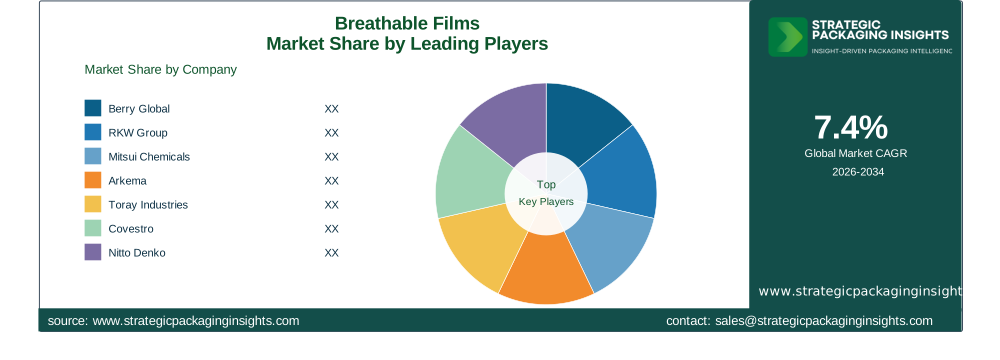
Berry Global is a leading player in the breathable films market, known for its diverse range of products catering to various applications. The company holds a substantial market share due to its strong focus on innovation and sustainability. RKW Group is another prominent player, offering high-quality breathable films for hygiene and medical applications. The company's commitment to quality and customer satisfaction has helped it maintain a strong market position. Mitsui Chemicals, a global leader in chemical manufacturing, is also a key player in the breathable films market, leveraging its expertise in polymer technology to develop advanced products.
Arkema, a leading specialty chemicals company, is actively involved in the breathable films market, offering innovative solutions for various applications. The company's focus on sustainability and eco-friendly products aligns with the growing demand for bio-based films. Toray Industries, a multinational corporation, is known for its advanced materials and technologies, contributing to its significant market share in the breathable films market. Covestro, a leading polymer company, is also a key player, offering high-performance breathable films for diverse applications. The company's emphasis on research and development and its strong global presence have helped it maintain a competitive edge.
Nitto Denko, a Japanese multinational corporation, is a major player in the breathable films market, known for its innovative products and solutions. The company's focus on technological advancements and customer-centric approach has contributed to its market success. Fatra, a leading manufacturer of plastic products, is also a key player, offering a wide range of breathable films for various applications. Schweitzer-Mauduit, a global leader in engineered solutions, is actively involved in the breathable films market, leveraging its expertise in materials science to develop high-quality products. Trioplast, a leading producer of polyethylene films, is known for its sustainable and innovative solutions, contributing to its significant market share.
Key Highlights
- The breathable films market is projected to grow at a CAGR of 7.4% from 2026 to 2034.
- Asia Pacific is expected to dominate the market due to rapid industrialization and urbanization.
- Bio-based films are gaining traction as a sustainable alternative to traditional films.
- The healthcare sector is a major driver for the market, particularly in wound care and surgical applications.
- Breathable films are increasingly used in food packaging to preserve freshness and extend shelf life.
- The apparel industry is witnessing a growing demand for breathable films in performance wear and smart textiles.
- Key players are focusing on innovation and sustainability to maintain their competitive edge.
- Stringent environmental regulations pose a challenge to the market, impacting the production of traditional films.
- The high cost of raw materials is a significant threat to market growth.
Top Countries Insights
In the breathable films market, the United States holds a significant position due to its advanced healthcare infrastructure and high demand for hygiene products. The market size in the U.S. is substantial, with a CAGR of 5%. The country's focus on innovation and technological advancements in medical applications drives market growth. However, stringent environmental regulations and the high cost of raw materials pose challenges to the market.
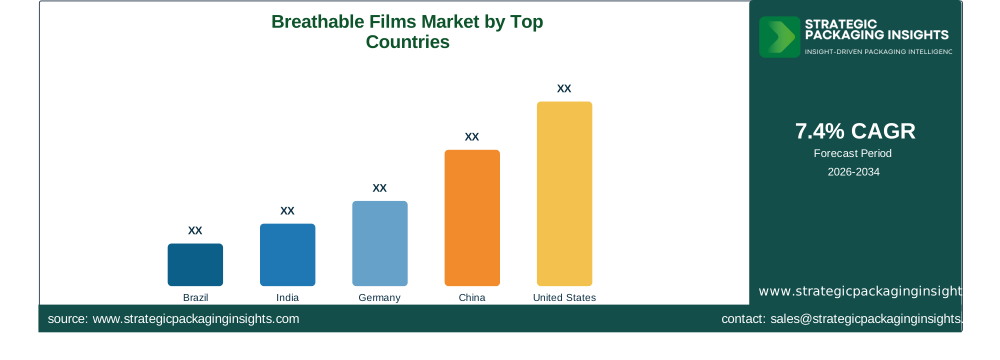
China is a key player in the breathable films market, driven by rapid industrialization and urbanization. The market size in China is growing rapidly, with a CAGR of 10%. The country's increasing disposable income and rising awareness of hygiene products contribute to market growth. However, environmental concerns and regulatory challenges may impact the market's expansion.
Germany is a leading market for breathable films in Europe, with a strong focus on sustainability and eco-friendly products. The market size in Germany is significant, with a CAGR of 6%. The country's emphasis on innovation and technological advancements in the automotive and healthcare sectors drives market growth. However, the high cost of production and stringent regulations pose challenges to the market.
India is an emerging market for breathable films, driven by the growing demand for hygiene products and medical applications. The market size in India is expanding, with a CAGR of 12%. The country's increasing population and rising awareness of personal hygiene contribute to market growth. However, the lack of awareness and understanding of breathable films among end-users poses a challenge to the market.
Brazil is a key market for breathable films in Latin America, driven by the growing demand for food packaging and hygiene products. The market size in Brazil is growing steadily, with a CAGR of 8%. The country's focus on sustainability and eco-friendly products drives market growth. However, economic challenges and regulatory hurdles may impact the market's expansion.
Breathable Films Market Segments Insights

By Material Type Analysis
The breathable films market is segmented by material type into PE, PP, PU, and bio-based films. Polyethylene (PE) films dominate the market due to their excellent breathability and cost-effectiveness. These films are widely used in hygiene products and medical applications, where breathability and moisture control are crucial. Polypropylene (PP) films are also gaining traction due to their superior strength and durability, making them suitable for demanding applications such as food packaging and apparel. Polyurethane (PU) films offer excellent elasticity and are increasingly used in high-performance applications, including sportswear and medical products.
Bio-based films are emerging as a sustainable alternative to traditional films, driven by the growing demand for eco-friendly products. These films are made from renewable resources and offer similar properties to petroleum-based films, making them an attractive option for environmentally conscious consumers. The development of bio-based films is expected to create new opportunities for market players, allowing them to tap into a niche yet rapidly growing segment. The increasing focus on sustainability and the shift towards renewable materials are key drivers for the growth of bio-based films in the breathable films market.
By Application Analysis
The breathable films market is segmented by application into hygiene products, medical, food packaging, and apparel. Hygiene products, including diapers, sanitary napkins, and adult incontinence products, are the largest application segment, driven by the growing awareness of personal hygiene and the rising prevalence of infectious diseases. Breathable films play a crucial role in these products by providing comfort and preventing leakage, thereby driving market growth. The medical segment is also a significant contributor to the market, with breathable films being used in wound care products, surgical drapes, and other medical applications.
Food packaging is another key application segment, driven by the increasing demand for convenience foods and ready-to-eat meals. Breathable films offer the necessary barrier properties to protect food products while allowing moisture and gases to pass through, preventing spoilage. The rise in e-commerce and online food delivery services is also contributing to the demand for breathable films in packaging. The apparel segment is witnessing a growing demand for breathable films in performance wear and smart textiles, driven by the trend of athleisure and the increasing focus on comfort and functionality in clothing.
By End Use Analysis
The breathable films market is segmented by end use into healthcare, hygiene, food & beverage, and textiles. The healthcare sector is a major driver for the market, with breathable films being used in various medical applications, including wound care products, surgical drapes, and other medical devices. The growing healthcare sector, particularly in emerging economies, is boosting the demand for breathable films in medical applications. The hygiene segment is also a significant contributor to the market, driven by the increasing demand for hygiene products such as diapers, sanitary napkins, and adult incontinence products.
The food & beverage segment is witnessing a growing demand for breathable films in packaging applications, driven by the increasing demand for convenience foods and ready-to-eat meals. Breathable films offer the necessary barrier properties to protect food products while allowing moisture and gases to pass through, preventing spoilage. The textiles segment is also experiencing growth, driven by the increasing demand for breathable films in performance wear and smart textiles. The development of innovative applications and the expansion into emerging markets present lucrative opportunities for market players in the breathable films market.
Breathable Films Market Segments
The Breathable Films market has been segmented on the basis ofBy Material Type
- PE
- PP
- PU
- Bio-Based Films
By Application
- Hygiene Products
- Medical
- Food Packaging
- Apparel
By End Use
- Healthcare
- Hygiene
- Food & Beverage
- Textiles
Region
- Asia Pacific
- North America
- Latin America
- Europe
- Middle East & Africa




