


Braille Clothing Tags Market Outlook
The Braille Clothing Tags market was valued at $682.96 million in 2025 and is projected to reach $1.18 billion by 2034, growing at a CAGR of 6.3% during the forecast period 2026-2034. This market is witnessing significant growth due to the increasing demand for inclusive and accessible clothing options. The rise in awareness about the needs of visually impaired individuals is driving the adoption of Braille clothing tags across various sectors, including fashion and retail. The market is also benefiting from technological advancements in printing and labeling, which are making it easier to produce high-quality Braille tags at a lower cost. Additionally, the growing trend of adaptive fashion is further propelling the market, as more brands and retailers are incorporating Braille tags to enhance accessibility and inclusivity in their product offerings.
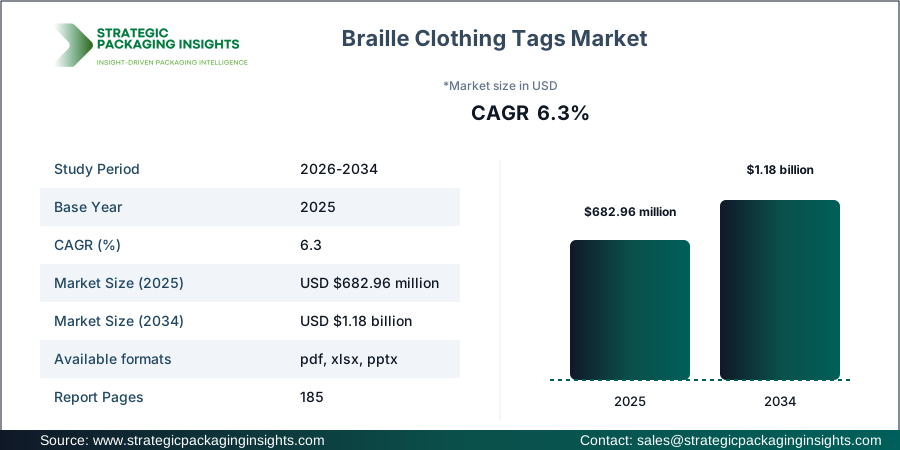
Despite the promising growth prospects, the Braille Clothing Tags market faces certain challenges. Regulatory constraints and the need for standardization in Braille labeling are some of the key hurdles that manufacturers need to overcome. Moreover, the high cost of production and the limited awareness among consumers in certain regions may hinder market growth. However, the increasing focus on corporate social responsibility and the push for more inclusive practices in the fashion industry present significant growth opportunities. As more companies recognize the importance of catering to the needs of visually impaired individuals, the demand for Braille clothing tags is expected to rise, driving market expansion.
Report Scope
| Attributes | Details |
| Report Title | Braille Clothing Tags Market Size, Future Growth and Forecast 2034 |
| Material Type | Paper, Textile, Polyester, Recycled Materials |
| Product Type | Braille Hang Tags, Tactile Labels, Care Tags, Brand Tags |
| Application | Adaptive Clothing, Luxury Apparel, Medical Apparel, Accessibility Labeling |
| End Use | Apparel Brands, Retailers, Adaptive Fashion Companies |
| Region | Asia Pacific, North America, Latin America, Europe, Middle East & Africa |
| Base Year | 2025 |
| Historic Period | 2018-2024 |
| Forecast Period | 2026-2034 |
| Number of Pages | 185 |
| Customization Available | Yes* |
Opportunities & Threats
The Braille Clothing Tags market presents numerous opportunities for growth, driven by the increasing demand for accessible and inclusive clothing options. As awareness about the needs of visually impaired individuals continues to rise, more brands and retailers are incorporating Braille tags into their product offerings. This trend is particularly evident in the adaptive fashion sector, where the demand for clothing that caters to individuals with disabilities is on the rise. Additionally, technological advancements in printing and labeling are making it easier and more cost-effective to produce high-quality Braille tags, further driving market growth. The growing focus on corporate social responsibility and the push for more inclusive practices in the fashion industry also present significant opportunities for market expansion.
Another opportunity lies in the expansion of the market into emerging economies, where the demand for accessible clothing is increasing. As more countries recognize the importance of catering to the needs of visually impaired individuals, the adoption of Braille clothing tags is expected to rise. This presents a significant growth opportunity for manufacturers and retailers looking to expand their presence in these markets. Furthermore, the increasing focus on sustainability and the use of eco-friendly materials in the production of Braille tags is expected to drive market growth, as consumers become more conscious of the environmental impact of their purchases.
However, the market also faces certain threats that could hinder its growth. One of the main challenges is the lack of standardization in Braille labeling, which can lead to inconsistencies in the quality and readability of the tags. This can be a significant barrier to adoption, as consumers may be hesitant to purchase products with unreliable labeling. Additionally, the high cost of production and the limited awareness among consumers in certain regions may pose challenges to market growth. Manufacturers need to address these issues by investing in research and development to improve the quality and affordability of Braille tags, as well as increasing awareness about the benefits of accessible clothing.
Drivers & Challenges
The Braille Clothing Tags market is primarily driven by the increasing demand for accessible and inclusive clothing options. As awareness about the needs of visually impaired individuals continues to rise, more brands and retailers are incorporating Braille tags into their product offerings. This trend is particularly evident in the adaptive fashion sector, where the demand for clothing that caters to individuals with disabilities is on the rise. Additionally, technological advancements in printing and labeling are making it easier and more cost-effective to produce high-quality Braille tags, further driving market growth. The growing focus on corporate social responsibility and the push for more inclusive practices in the fashion industry also present significant opportunities for market expansion.
Another key driver of the market is the increasing focus on sustainability and the use of eco-friendly materials in the production of Braille tags. As consumers become more conscious of the environmental impact of their purchases, there is a growing demand for products that are both accessible and environmentally friendly. This trend is expected to drive market growth, as manufacturers and retailers look to meet the needs of environmentally conscious consumers. Furthermore, the expansion of the market into emerging economies, where the demand for accessible clothing is increasing, presents a significant growth opportunity for manufacturers and retailers looking to expand their presence in these markets.
Despite the promising growth prospects, the Braille Clothing Tags market faces certain challenges. One of the main challenges is the lack of standardization in Braille labeling, which can lead to inconsistencies in the quality and readability of the tags. This can be a significant barrier to adoption, as consumers may be hesitant to purchase products with unreliable labeling. Additionally, the high cost of production and the limited awareness among consumers in certain regions may pose challenges to market growth. Manufacturers need to address these issues by investing in research and development to improve the quality and affordability of Braille tags, as well as increasing awareness about the benefits of accessible clothing.
Market Share Analysis
The competitive landscape of the Braille Clothing Tags market is characterized by the presence of several key players who are actively engaged in product innovation and strategic partnerships to enhance their market position. Companies such as Avery Dennison, CCL Industries, SML Group, Trimco Group, and Checkpoint Systems are some of the leading players in the market, holding significant market shares. These companies are focusing on expanding their product portfolios and investing in research and development to meet the growing demand for accessible and inclusive clothing options. Additionally, they are leveraging technological advancements in printing and labeling to produce high-quality Braille tags at a lower cost, further strengthening their market position.
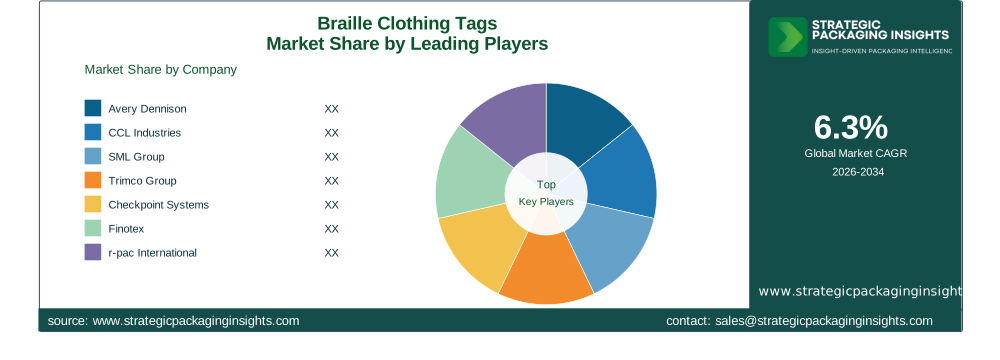
Avery Dennison is a prominent player in the Braille Clothing Tags market, known for its innovative labeling solutions and commitment to sustainability. The company has a strong presence in the market, with a focus on developing eco-friendly Braille tags that cater to the needs of visually impaired individuals. CCL Industries, another key player, is recognized for its extensive product portfolio and global reach. The company is actively engaged in expanding its presence in emerging markets, where the demand for accessible clothing is on the rise. SML Group, Trimco Group, and Checkpoint Systems are also significant players in the market, known for their high-quality Braille tags and commitment to innovation.
Finotex, r-pac International, Nilorn Group, ITL Group, and Labelon are other notable companies in the Braille Clothing Tags market. These companies are focusing on enhancing their product offerings and expanding their market presence through strategic partnerships and collaborations. They are also investing in research and development to improve the quality and affordability of their Braille tags, catering to the growing demand for accessible and inclusive clothing options. The competitive landscape of the market is expected to remain dynamic, with companies continuously striving to enhance their market position through product innovation and strategic initiatives.
Key Highlights
- The Braille Clothing Tags market is projected to grow at a CAGR of 6.3% from 2026 to 2034.
- Technological advancements in printing and labeling are driving market growth.
- Increasing demand for accessible and inclusive clothing options is a key market driver.
- The market is expanding into emerging economies, presenting significant growth opportunities.
- Lack of standardization in Braille labeling is a major challenge for the market.
- Key players in the market include Avery Dennison, CCL Industries, and SML Group.
- The focus on sustainability and eco-friendly materials is driving market growth.
- Adaptive fashion is a growing trend in the market, boosting demand for Braille tags.
- Strategic partnerships and collaborations are key strategies for market players.
- The market is characterized by a dynamic competitive landscape with continuous innovation.
Top Countries Insights
In the Braille Clothing Tags market, the United States stands out as a leading country, with a market size of approximately $250 million and a CAGR of 5%. The growth in the U.S. is driven by the increasing demand for accessible clothing options and the presence of major market players. The country's strong focus on inclusivity and corporate social responsibility further supports market expansion. Additionally, technological advancements in printing and labeling are contributing to the growth of the market in the U.S.
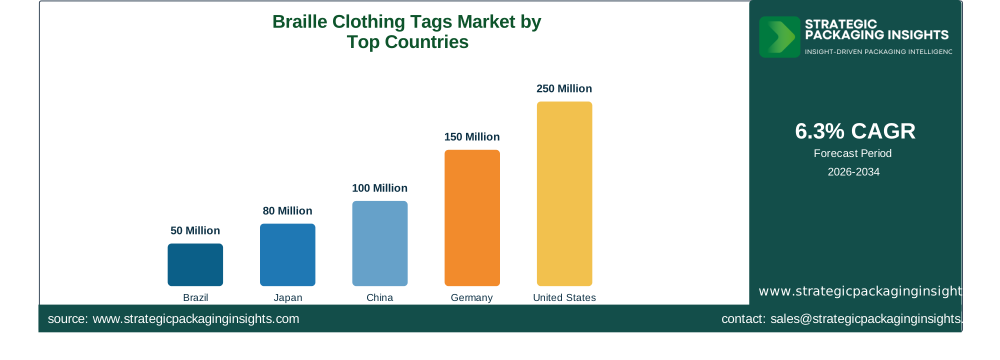
In Europe, Germany is a key market for Braille Clothing Tags, with a market size of around $150 million and a CAGR of 6%. The country's strong emphasis on sustainability and eco-friendly materials is driving the demand for Braille tags. Furthermore, the growing awareness about the needs of visually impaired individuals and the increasing focus on adaptive fashion are contributing to market growth in Germany. The presence of major market players and their strategic initiatives are also supporting the expansion of the market in the region.
China is emerging as a significant market for Braille Clothing Tags, with a market size of approximately $100 million and a CAGR of 8%. The country's rapid economic growth and increasing focus on inclusivity are driving the demand for accessible clothing options. Additionally, the expansion of the market into emerging economies and the growing trend of adaptive fashion are contributing to the growth of the market in China. The government's supportive policies and initiatives to promote inclusivity further enhance market prospects.
In the Asia Pacific region, Japan is a notable market for Braille Clothing Tags, with a market size of around $80 million and a CAGR of 7%. The country's strong focus on innovation and technology is driving the demand for high-quality Braille tags. Additionally, the increasing awareness about the needs of visually impaired individuals and the growing trend of adaptive fashion are contributing to market growth in Japan. The presence of major market players and their strategic initiatives are also supporting the expansion of the market in the region.
In Latin America, Brazil is a key market for Braille Clothing Tags, with a market size of approximately $50 million and a CAGR of 6%. The country's growing focus on inclusivity and accessibility is driving the demand for Braille tags. Additionally, the increasing awareness about the needs of visually impaired individuals and the expansion of the market into emerging economies are contributing to market growth in Brazil. The government's supportive policies and initiatives to promote inclusivity further enhance market prospects.
Braille Clothing Tags Market Segments Insights

Material Type Analysis
The Braille Clothing Tags market is segmented by material type into paper, textile, polyester, and recycled materials. Paper-based Braille tags are popular due to their cost-effectiveness and ease of production. However, they may not be as durable as other materials, which can be a limitation in certain applications. Textile-based Braille tags offer enhanced durability and are often used in high-end and luxury apparel. Polyester Braille tags are known for their strength and resistance to wear and tear, making them suitable for a wide range of applications. Recycled materials are gaining traction in the market due to the growing focus on sustainability and eco-friendly practices. As consumers become more environmentally conscious, the demand for Braille tags made from recycled materials is expected to rise, driving market growth.
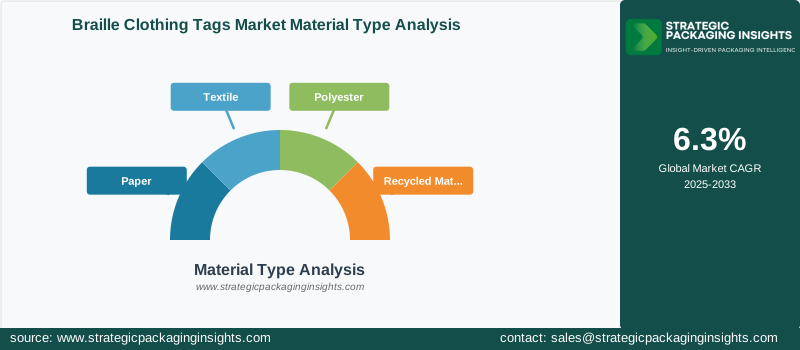
Each material type offers unique advantages and is suited to different applications, depending on the specific needs of the end user. The choice of material is often influenced by factors such as cost, durability, and environmental impact. As the market continues to evolve, manufacturers are investing in research and development to improve the quality and performance of Braille tags made from various materials. This is expected to drive innovation and expand the range of options available to consumers, further supporting market growth.
Product Type Analysis
The Braille Clothing Tags market is segmented by product type into Braille hang tags, tactile labels, care tags, and brand tags. Braille hang tags are commonly used in retail settings to provide product information and pricing details in Braille. Tactile labels are often used in adaptive clothing to provide information about the garment's features and care instructions. Care tags are essential for providing washing and maintenance instructions in Braille, ensuring that visually impaired individuals can properly care for their clothing. Brand tags are used to convey brand information and enhance the overall branding of the product. Each product type serves a specific purpose and is designed to meet the needs of visually impaired individuals, enhancing their shopping and clothing care experience.
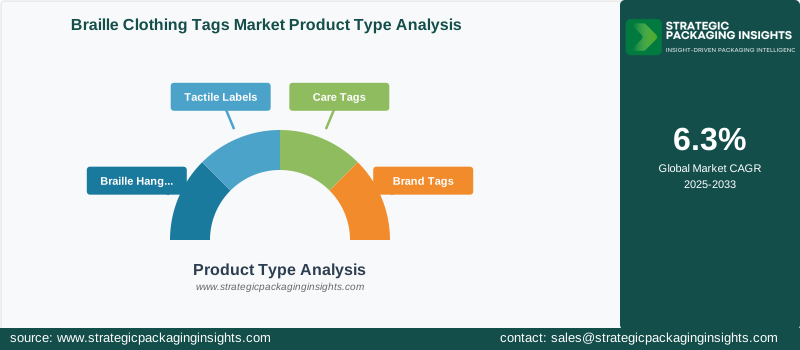
The demand for each product type is influenced by factors such as consumer preferences, regulatory requirements, and the specific needs of the end user. As the market continues to grow, manufacturers are focusing on developing innovative and high-quality products that cater to the diverse needs of consumers. This is expected to drive market growth and expand the range of options available to visually impaired individuals, further supporting the adoption of Braille clothing tags.
Application Analysis
The Braille Clothing Tags market is segmented by application into adaptive clothing, luxury apparel, medical apparel, and accessibility labeling. Adaptive clothing is a key application area for Braille tags, as it caters to individuals with disabilities and enhances their clothing experience. The demand for adaptive clothing is on the rise, driven by the increasing focus on inclusivity and accessibility in the fashion industry. Luxury apparel is another significant application area, where Braille tags are used to enhance the overall branding and accessibility of high-end products. Medical apparel is also a growing application area, as Braille tags provide essential information about the garment's features and care instructions.
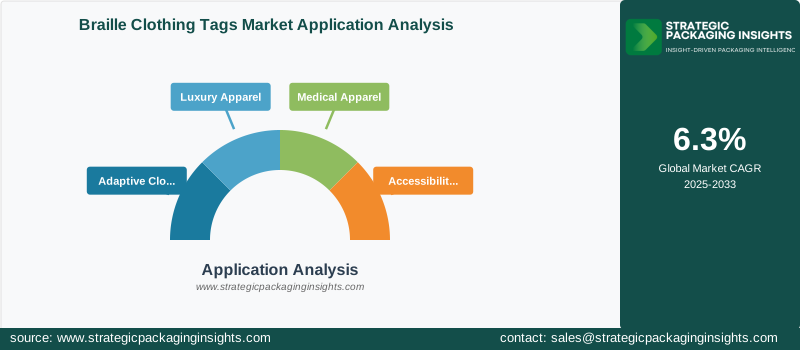
Accessibility labeling is a critical application area for Braille tags, as it ensures that visually impaired individuals have access to important product information. The demand for accessibility labeling is driven by regulatory requirements and the growing awareness about the needs of visually impaired individuals. As the market continues to evolve, manufacturers are focusing on developing innovative and high-quality products that cater to the diverse needs of consumers. This is expected to drive market growth and expand the range of options available to visually impaired individuals, further supporting the adoption of Braille clothing tags.
End Use Analysis
The Braille Clothing Tags market is segmented by end use into apparel brands, retailers, and adaptive fashion companies. Apparel brands are a key end user of Braille tags, as they seek to enhance the accessibility and inclusivity of their products. The demand for Braille tags among apparel brands is driven by the growing focus on corporate social responsibility and the push for more inclusive practices in the fashion industry. Retailers are another significant end user, as they seek to provide accessible and inclusive shopping experiences for visually impaired individuals. The demand for Braille tags among retailers is driven by regulatory requirements and the growing awareness about the needs of visually impaired individuals.
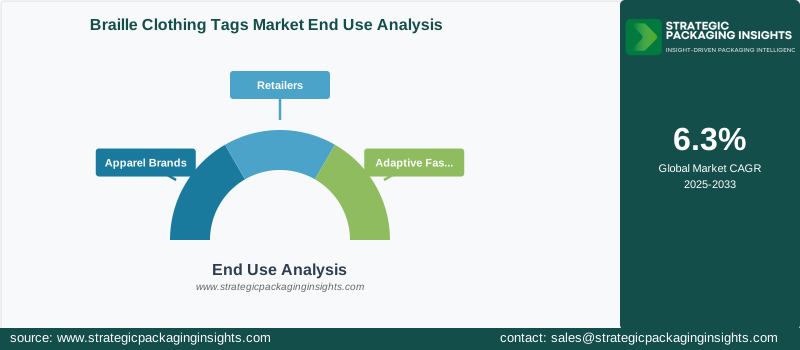
Adaptive fashion companies are a critical end user of Braille tags, as they cater to individuals with disabilities and enhance their clothing experience. The demand for Braille tags among adaptive fashion companies is driven by the increasing focus on inclusivity and accessibility in the fashion industry. As the market continues to evolve, manufacturers are focusing on developing innovative and high-quality products that cater to the diverse needs of consumers. This is expected to drive market growth and expand the range of options available to visually impaired individuals, further supporting the adoption of Braille clothing tags.
Braille Clothing Tags Market Segments
The Braille Clothing Tags market has been segmented on the basis ofMaterial Type
- Paper
- Textile
- Polyester
- Recycled Materials
Product Type
- Braille Hang Tags
- Tactile Labels
- Care Tags
- Brand Tags
Application
- Adaptive Clothing
- Luxury Apparel
- Medical Apparel
- Accessibility Labeling
End Use
- Apparel Brands
- Retailers
- Adaptive Fashion Companies
Region
- Asia Pacific
- North America
- Latin America
- Europe
- Middle East & Africa




