


Boston Round Glass Bottle Market Outlook
The Boston Round Glass Bottle market size was valued at USD 550 million in 2025 and is anticipated to reach USD 817 million by 2034, growing at a CAGR of 4.50% during the forecast period according to Strategic Packaging Insights. This market is characterized by its versatility and wide application across various industries, including pharmaceuticals, personal care, and beverages. Companies like O-I Glass and Gerresheimer are leading the charge in innovation and production, ensuring that the demand for these bottles continues to rise. The increasing preference for sustainable and recyclable packaging solutions is a significant driver, as consumers and businesses alike seek eco-friendly alternatives to plastic.
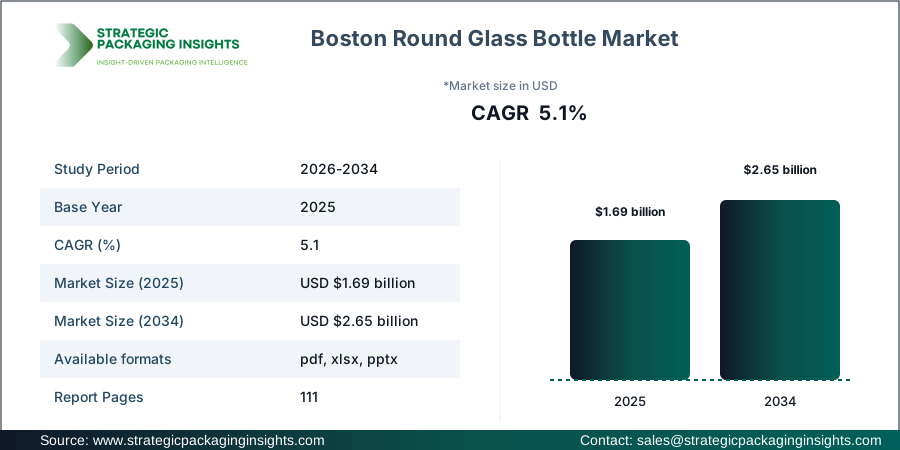
One of the most impactful drivers of the Boston Round Glass Bottle market is the growing demand for sustainable packaging solutions. According to recent environmental studies, glass is one of the most recyclable materials, with a recycling rate of over 80% in many regions. This high recyclability factor, coupled with the increasing consumer awareness about environmental issues, is pushing brands to adopt glass packaging. Companies like Piramal Glass (PGP) and Berlin Packaging are investing heavily in sustainable practices, further propelling market growth. Additionally, regulatory pressures and government initiatives promoting the use of eco-friendly materials are expected to bolster the market's expansion over the coming years.
Report Scope
| Attributes | Details |
| Report Title | Boston Round Glass Bottle Market Size, Future Growth and Forecast 2034 |
| By Capacity | Below 30 ml, 30-100 ml, 100-250 ml, 250-500 ml, Above 500 ml |
| By Color | Amber, Clear / Flint, Cobalt Blue, Green |
| By Neck Finish | 20-400, 24-400, 28-400, Dropper-Compatible |
| By End Use | Pharmaceuticals & Tinctures, Essential Oils & Aromatherapy, Personal Care (Serums), Laboratory Reagents, Beverages (Syrups, Kombucha) |
| By Region | North America (U.S., Canada, Mexico), Europe (Germany, UK, France, Italy, Spain, Rest of Europe), Asia Pacific (China, India, Japan, South Korea, Australia, Rest of Asia Pacific), Latin America (Brazil, Argentina, Rest of Latin America), Middle East & Africa (GCC Countries, South Africa, Rest of MEA) |
| Base Year | 2025 |
| Historic Period | 2018-2024 |
| Forecast Period | 2026-2034 |
| Number of Pages | 242 |
| Customization Available | Yes* |
Sustainability & Circular Economy Analysis
Sustainability initiatives and circular economy practices are significantly influencing the Boston Round Glass Bottle market. The shift towards recyclable materials is evident as manufacturers prioritize glass due to its infinite recyclability without loss of quality. This trend is driving innovation in eco-friendly material development, with companies like SGD Pharma and Ardagh leading the way in creating lightweight, durable glass bottles that reduce carbon footprints. The emphasis on waste reduction strategies is also notable, as extended producer responsibility (EPR) policies encourage manufacturers to take accountability for the entire lifecycle of their products.
These sustainability trends are reshaping packaging design and manufacturing processes. The demand for lightweight packaging is prompting companies to invest in advanced technologies that minimize material usage while maintaining product integrity. This not only reduces transportation costs but also aligns with consumer preferences for environmentally responsible products. As a result, brand owners and converters are increasingly considering ESG initiatives in their investment decisions, ensuring long-term market competitiveness and regulatory compliance.
Moreover, the influence of sustainability on supply chain strategies cannot be overstated. Companies are adopting localized sourcing and production to minimize transportation emissions and enhance supply chain resilience. This shift is supported by consumer preferences for locally produced goods, which are perceived as more sustainable. As packaging regulations become more stringent, businesses are compelled to innovate and adapt, ensuring their products meet evolving standards and consumer expectations. This focus on sustainability is not just a trend but a fundamental shift that will continue to shape the Boston Round Glass Bottle market in the years to come.
Packaging Value Chain & Supply Chain Analysis
The packaging value chain for Boston Round Glass Bottles is a complex ecosystem involving multiple stakeholders, from raw material suppliers to end consumers. Raw material sourcing is a critical component, with manufacturers relying on high-quality glass to produce durable and aesthetically pleasing bottles. Packaging converters and manufacturers like Stoelzle and Roetell play a pivotal role in transforming these raw materials into finished products, utilizing advanced machinery and technology to ensure efficiency and quality.
Logistics and distribution channels are equally important in the supply chain, as they determine the market reach and availability of Boston Round Glass Bottles. Efficient transportation and inventory management strategies are essential to meet the growing demand across various regions. Companies are increasingly focusing on supply chain resilience, adopting strategies like localization and global sourcing to mitigate risks associated with geopolitical tensions and supply chain disruptions. Strategic partnerships with logistics providers and retailers further enhance market performance and competitiveness.
Recycling networks are an integral part of the supply chain, especially given the emphasis on sustainability. Companies are investing in recycling infrastructure and collaborating with local governments to promote glass recycling initiatives. This not only supports environmental goals but also ensures a steady supply of recycled glass, reducing reliance on virgin materials. Procurement strategies are evolving to prioritize sustainable sourcing, with businesses seeking suppliers that align with their ESG objectives. Overall, the packaging value chain is becoming more integrated and sustainable, driven by consumer demand and regulatory pressures.
Opportunities & Threats
The Boston Round Glass Bottle market presents numerous opportunities for growth and innovation. One significant opportunity lies in the expanding demand for eco-friendly packaging solutions. As consumers become more environmentally conscious, there is a growing preference for glass bottles over plastic alternatives. This trend is particularly evident in the personal care and beverage industries, where brands are leveraging the premium appeal of glass to enhance product perception. Additionally, the rise of e-commerce and direct-to-consumer sales channels offers new avenues for market expansion, as brands seek distinctive packaging to differentiate their products online.
Another opportunity is the increasing adoption of glass bottles in the pharmaceutical and healthcare sectors. The inherent properties of glass, such as its chemical inertness and impermeability, make it an ideal choice for packaging sensitive formulations. This is driving demand for Boston Round Glass Bottles in applications like tinctures, essential oils, and laboratory reagents. Furthermore, advancements in glass manufacturing technology are enabling the production of lightweight, durable bottles that reduce transportation costs and carbon emissions, aligning with sustainability goals.
However, the market also faces certain threats that could hinder growth. One of the primary challenges is the high cost of glass production compared to alternative materials like plastic. This cost factor can be a deterrent for price-sensitive consumers and small businesses. Additionally, the fragility of glass poses logistical challenges, as it requires careful handling and specialized packaging to prevent breakage during transportation. Regulatory pressures and environmental concerns related to energy-intensive glass manufacturing processes also pose potential threats, necessitating continuous innovation and investment in sustainable practices.
Drivers & Challenges
The Boston Round Glass Bottle market is driven by several key factors, including the increasing demand for sustainable packaging solutions. As environmental awareness grows, consumers and businesses are seeking alternatives to plastic, with glass emerging as a preferred choice due to its recyclability and premium appeal. This shift is particularly pronounced in the personal care and beverage industries, where brands are leveraging glass packaging to enhance product differentiation and appeal. Additionally, the rise of e-commerce and direct-to-consumer sales channels is driving demand for distinctive packaging solutions that stand out in a crowded online marketplace.
Another significant driver is the growing adoption of glass bottles in the pharmaceutical and healthcare sectors. Glass's chemical inertness and impermeability make it an ideal choice for packaging sensitive formulations, driving demand for Boston Round Glass Bottles in applications like tinctures, essential oils, and laboratory reagents. Furthermore, advancements in glass manufacturing technology are enabling the production of lightweight, durable bottles that reduce transportation costs and carbon emissions, aligning with sustainability goals. These factors are expected to continue driving market growth in the coming years.
Despite these drivers, the market faces several challenges that could impact growth. One of the primary challenges is the high cost of glass production compared to alternative materials like plastic. This cost factor can be a deterrent for price-sensitive consumers and small businesses. Additionally, the fragility of glass poses logistical challenges, as it requires careful handling and specialized packaging to prevent breakage during transportation. Regulatory pressures and environmental concerns related to energy-intensive glass manufacturing processes also pose potential threats, necessitating continuous innovation and investment in sustainable practices.
Market Share Analysis
The competitive landscape of the Boston Round Glass Bottle market is characterized by the presence of several key players, each striving to capture a significant share of the market. Companies like O-I Glass, Gerresheimer, and Piramal Glass (PGP) are at the forefront, leveraging their extensive experience and technological capabilities to offer innovative and high-quality glass packaging solutions. These companies are investing heavily in research and development to enhance their product offerings and meet the evolving demands of consumers and businesses.
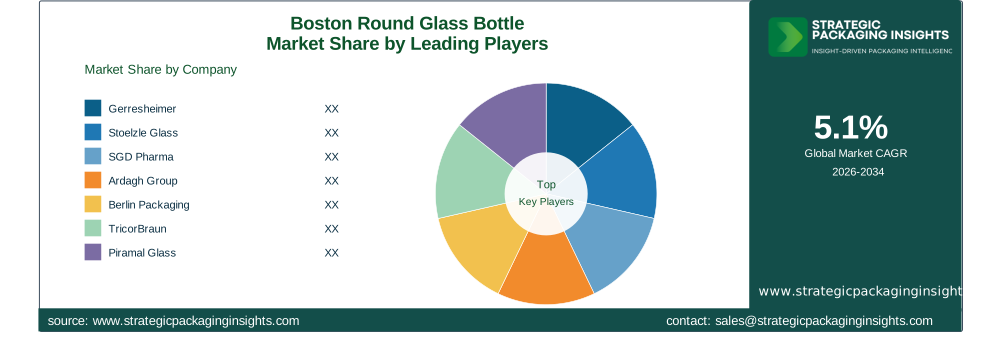
O-I Glass is a leading player in the market, known for its commitment to sustainability and innovation. The company has a strong global presence, with manufacturing facilities and distribution networks spanning multiple regions. Gerresheimer, another major player, is renowned for its expertise in pharmaceutical packaging, offering a wide range of glass bottles for various applications. The company's focus on quality and customer satisfaction has helped it maintain a competitive edge in the market.
Piramal Glass (PGP) is a prominent player in the Boston Round Glass Bottle market, known for its diverse product portfolio and commitment to sustainability. The company has a strong presence in the Asia Pacific region, with manufacturing facilities in India and Sri Lanka. Berlin Packaging is another key player, offering a comprehensive range of glass packaging solutions for various industries. The company's focus on innovation and customer-centric approach has helped it establish a strong foothold in the market.
SGD Pharma, Ardagh, and Stoelzle are also significant players in the market, each with its unique strengths and capabilities. SGD Pharma is known for its expertise in pharmaceutical packaging, while Ardagh is renowned for its innovative glass packaging solutions. Stoelzle, on the other hand, is recognized for its high-quality glass bottles and commitment to sustainability. These companies, along with others like Roetell and Kaufman Container, are driving the growth and development of the Boston Round Glass Bottle market.
Key Highlights
- Market Size: Valued at USD 550 million in 2025, projected to reach USD 817 million by 2034.
- Growth Rate: Expected CAGR of 4.50% during the forecast period.
- Leading Companies: O-I Glass, Gerresheimer, Piramal Glass (PGP), Berlin Packaging.
- Key Segments: By Capacity, By Color, By Neck Finish, By End Use.
- Regional Insights: Strong growth expected in Asia Pacific and North America.
- Sustainability Focus: High recyclability and eco-friendly packaging driving demand.
- Technological Advancements: Innovations in lightweight and durable glass bottles.
Boston Round Glass Bottle Market Segments Insights

By Capacity Analysis
The Boston Round Glass Bottle market is segmented by capacity, catering to diverse consumer needs and applications. The segment includes bottles with capacities below 30 ml, 30-100 ml, 100-250 ml, 250-500 ml, and above 500 ml. The demand for smaller bottles, particularly those below 30 ml and 30-100 ml, is driven by the growing popularity of travel-sized products in the personal care and essential oils sectors. These smaller bottles offer convenience and portability, making them ideal for on-the-go consumers. On the other hand, larger bottles, such as those above 500 ml, are gaining traction in the beverage industry, particularly for products like syrups and kombucha, where larger volumes are preferred.
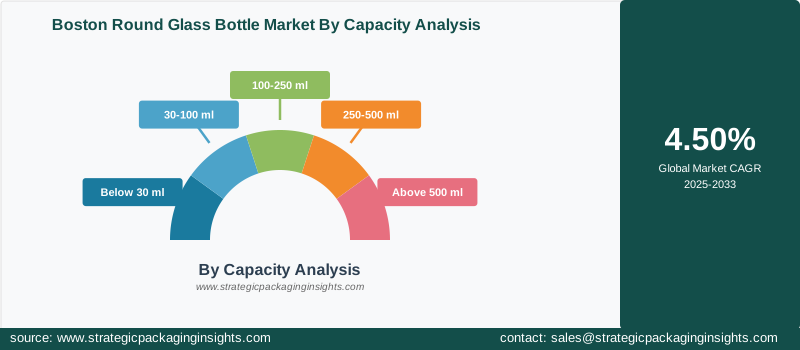
The 100-250 ml and 250-500 ml segments are witnessing significant growth, driven by their versatility and wide range of applications. These bottles are commonly used in the pharmaceutical and laboratory sectors for packaging tinctures, reagents, and other liquid formulations. The increasing demand for sustainable packaging solutions is also influencing consumer preferences, with glass bottles being favored for their recyclability and premium appeal. As a result, manufacturers are focusing on expanding their product offerings across different capacity segments to cater to the diverse needs of consumers and businesses.
By Color Analysis
The color of Boston Round Glass Bottles plays a crucial role in consumer perception and product differentiation. The market is segmented into amber, clear/flint, cobalt blue, and green bottles, each offering unique benefits and applications. Amber bottles are particularly popular in the pharmaceutical and essential oils sectors due to their ability to protect contents from UV light, preserving the integrity and efficacy of sensitive formulations. Clear/flint bottles, on the other hand, are favored for their transparency, allowing consumers to view the product inside, making them ideal for personal care and beverage applications.
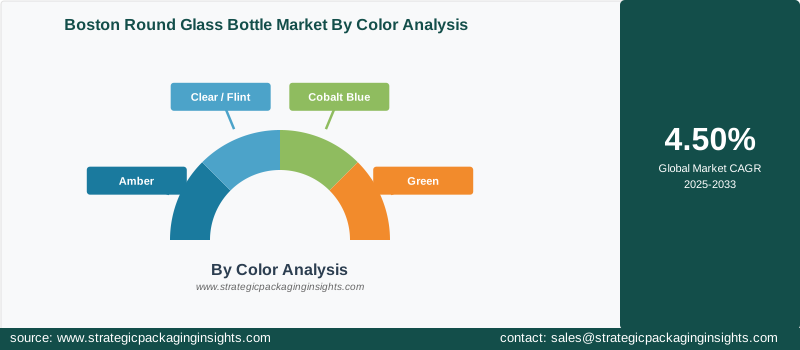
Cobalt blue and green bottles are gaining popularity for their aesthetic appeal and ability to enhance brand differentiation. These colored bottles are often used in premium product lines, where visual appeal is a key factor in consumer purchasing decisions. The growing emphasis on sustainability is also influencing color preferences, with manufacturers exploring eco-friendly coloring techniques and materials. As consumer preferences continue to evolve, companies are investing in innovative design and color options to meet the diverse needs of the market.
By Neck Finish Analysis
The neck finish of Boston Round Glass Bottles is an important consideration for manufacturers and consumers alike, as it determines compatibility with various closures and dispensing systems. The market is segmented into 20-400, 24-400, 28-400, and dropper-compatible neck finishes, each catering to specific applications and consumer preferences. The 20-400 and 24-400 neck finishes are widely used in the personal care and pharmaceutical sectors, where secure closures are essential to prevent leakage and contamination.
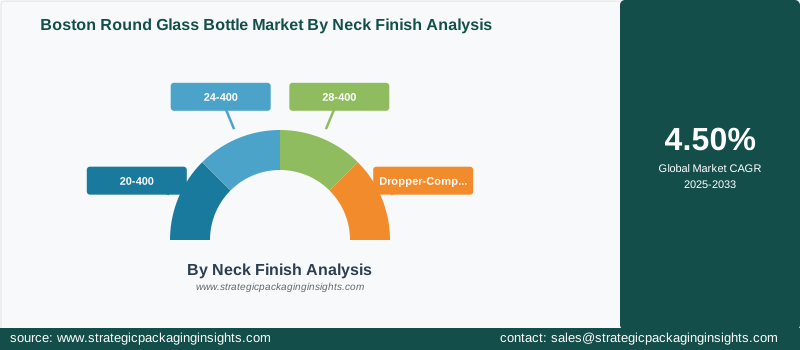
The 28-400 neck finish is gaining traction in the beverage industry, particularly for products like syrups and kombucha, where larger openings are preferred for easy pouring and dispensing. Dropper-compatible neck finishes are popular in the essential oils and aromatherapy sectors, where precise dispensing is crucial for product efficacy. As consumer preferences continue to evolve, manufacturers are focusing on developing innovative neck finish options that enhance functionality and user experience, while also aligning with sustainability goals.
By End Use Analysis
The Boston Round Glass Bottle market is segmented by end use, catering to a wide range of industries and applications. The key segments include pharmaceuticals & tinctures, essential oils & aromatherapy, personal care (serums), laboratory reagents, and beverages (syrups, kombucha). The pharmaceutical and tinctures segment is a major driver of market growth, as glass bottles are favored for their chemical inertness and ability to preserve the integrity of sensitive formulations. This segment is expected to witness significant growth, driven by the increasing demand for safe and reliable packaging solutions in the healthcare sector.
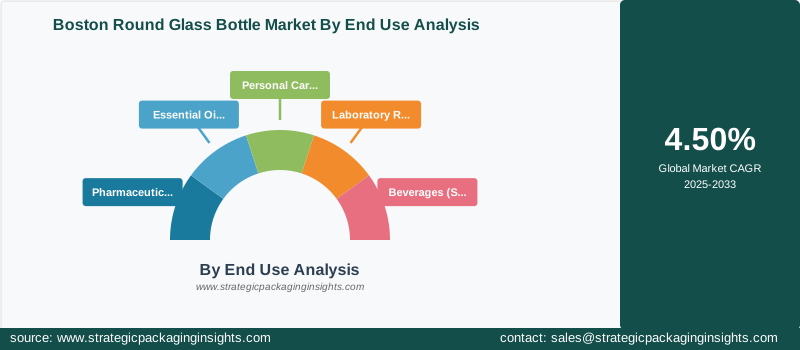
The essential oils and aromatherapy segment is also experiencing robust growth, as consumers seek natural and holistic wellness solutions. Glass bottles are preferred for their ability to protect the volatile compounds in essential oils, ensuring product efficacy and longevity. The personal care segment, particularly serums, is witnessing increased demand for glass packaging, as brands leverage the premium appeal of glass to enhance product perception. The laboratory reagents and beverages segments are also contributing to market growth, as glass bottles offer a safe and reliable packaging solution for a wide range of applications.
Boston Round Glass Bottle Market Segments
The Boston Round Glass Bottle market has been segmented on the basis ofBy Capacity
- Below 30 ml
- 30-100 ml
- 100-250 ml
- 250-500 ml
- Above 500 ml
By Color
- Amber
- Clear / Flint
- Cobalt Blue
- Green
By Neck Finish
- 20-400
- 24-400
- 28-400
- Dropper-Compatible
By End Use
- Pharmaceuticals & Tinctures
- Essential Oils & Aromatherapy
- Personal Care (Serums)
- Laboratory Reagents
- Beverages (Syrups, Kombucha)
By Region
- North America (U.S., Canada, Mexico)
- Europe (Germany, UK, France, Italy, Spain, Rest of Europe)
- Asia Pacific (China, India, Japan, South Korea, Australia, Rest of Asia Pacific)
- Latin America (Brazil, Argentina, Rest of Latin America)
- Middle East & Africa (GCC Countries, South Africa, Rest of MEA)




