


BOPA Film Market Outlook
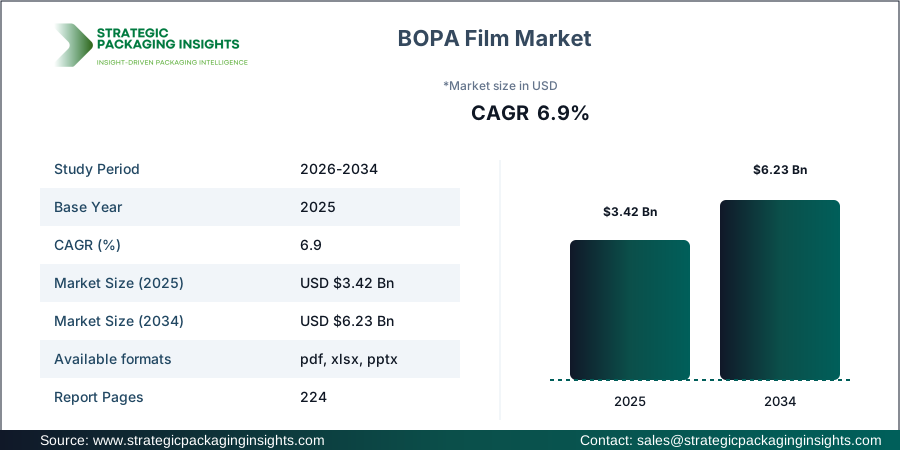
The BOPA Film market size was valued at USD 3.42 billion in 2025 and is anticipated to reach USD 6.23 billion by 2034, growing at a CAGR of 6.9% during the forecast period according to Strategic Packaging Insights. The market is witnessing robust growth due to the increasing demand for flexible packaging solutions across various industries. BOPA films, known for their excellent mechanical properties, barrier resistance, and transparency, are becoming a preferred choice in the packaging industry. Companies like Unitika and Mitsubishi Chemical are leading the charge in innovation, focusing on enhancing the performance characteristics of BOPA films to cater to the evolving needs of end-users. The demand is particularly strong in the food and beverage sector, where the need for extended shelf life and product safety is paramount.
One of the most impactful drivers of the BOPA Film market is the growing emphasis on sustainable packaging solutions. Governments worldwide are implementing stringent regulations to reduce plastic waste, which is pushing manufacturers to adopt eco-friendly materials. According to recent environmental policies, there is a significant push towards reducing carbon footprints, which is encouraging the use of recyclable and biodegradable materials. Companies like Toray Industries are investing heavily in research and development to create BOPA films that not only meet these regulatory requirements but also offer superior performance. This trend is expected to continue, driving the market growth significantly over the forecast period.
Report Scope
| Attributes | Details |
| Report Title | BOPA Film Market Size, Future Growth and Forecast 2034 |
| By Product Type | Sequential BOPA Film, Simultaneous BOPA Film, Blown BOPA Film |
| By Thickness | Below 15 Micron, 15–25 Micron, Above 25 Micron |
| By Application | Food Packaging, Pharma Packaging, Industrial Packaging, Retort Packaging |
| By End Use | Food & Beverage, Healthcare, Industrial, Consumer Goods |
| Region | Asia Pacific, North America, Latin America, Europe, Middle East & Africa |
| Base Year | 2025 |
| Historic Period | 2018-2024 |
| Forecast Period | 2026-2034 |
| Number of Pages | 224 |
| Customization Available | Yes* |
Opportunities & Threats
The BOPA Film market presents numerous opportunities, particularly in the realm of technological advancements. The development of advanced manufacturing techniques, such as simultaneous stretching technology, is enabling the production of high-quality BOPA films with enhanced properties. This technological leap is opening new avenues for applications in high-end packaging solutions, particularly in the pharmaceutical and healthcare sectors. Companies like Oben Group and A.J. Plast are at the forefront of this innovation, focusing on creating films that offer superior barrier properties and durability, which are crucial for maintaining the integrity of pharmaceutical products.
Another significant opportunity lies in the expanding applications of BOPA films in emerging markets. As economies in regions like Asia Pacific and Latin America continue to grow, there is an increasing demand for packaged goods, which in turn drives the need for efficient packaging solutions. The rising middle-class population and urbanization are leading to a surge in demand for consumer goods, thereby boosting the BOPA Film market. Companies are strategically expanding their operations in these regions to capitalize on the growing demand. For instance, Green Seal Holding and Thaipolyamide are enhancing their production capacities to cater to the increasing needs of these burgeoning markets.
However, the market is not without its challenges. One of the primary restrainers is the volatility in raw material prices, which can significantly impact the production costs of BOPA films. The prices of key raw materials, such as nylon and polyamide resins, are subject to fluctuations due to various factors, including geopolitical tensions and supply chain disruptions. This volatility poses a challenge for manufacturers in maintaining competitive pricing while ensuring profitability. Additionally, the stringent environmental regulations regarding plastic usage and disposal are compelling companies to invest in sustainable practices, which can increase operational costs.
Drivers & Challenges
The BOPA Film market is primarily driven by the increasing demand for flexible packaging solutions across various industries. The food and beverage industry, in particular, is a major driver due to the need for packaging materials that offer excellent barrier properties to preserve the freshness and quality of products. BOPA films are known for their superior mechanical strength, transparency, and resistance to oils and greases, making them ideal for food packaging applications. Companies like Kolon Industries and Hyosung Chemical are leveraging these properties to develop innovative packaging solutions that cater to the specific needs of the food industry.
Another significant driver is the growing awareness and demand for sustainable packaging solutions. With increasing environmental concerns and regulatory pressures, there is a shift towards using recyclable and biodegradable materials in packaging. BOPA films, being recyclable, are gaining traction as an eco-friendly alternative to traditional packaging materials. This trend is further supported by advancements in recycling technologies, which are making it easier to recycle BOPA films without compromising their quality. As a result, manufacturers are focusing on developing BOPA films that not only meet the sustainability criteria but also offer enhanced performance characteristics.
Despite the positive growth drivers, the BOPA Film market faces several challenges. One of the key challenges is the intense competition from alternative packaging materials, such as polyethylene and polypropylene films, which are often cheaper and more readily available. These alternatives pose a threat to the market share of BOPA films, especially in price-sensitive markets. Additionally, the complex manufacturing process of BOPA films, which involves multiple stages of stretching and orientation, can lead to higher production costs. This complexity requires significant investment in advanced machinery and skilled labor, which can be a barrier for new entrants in the market.
Market Growth Factors
- The EU Packaging and Packaging Waste Regulation (PPWR) entered into force on February 11, 2025 and applies generally from August 12, 2026, setting requirements for packaging manufacturing, composition, recyclability, and waste management. This is pushing packaging value chains toward compliant high-performance film structures, including barrier films used in flexible packaging. [European Commission ]
- In Japan, plastic resource-circulation policy is increasing demand for film products that reduce plastic use and improve recyclability. Toyobo states that this policy environment is raising demand for film-based packaging solutions designed for lighter structures and better recycling compatibility.
- Food-loss reduction is a direct demand driver for barrier nylon films. Unitika’s climate-risk assessment identifies increasing demand for products that reduce food loss and waste, including gas-barrier films, and specifically links this to expansion of higher-functionality barrier nylon film products.
- The expansion of ready-to-eat foods and consumer demand for convenience packaging are supporting development of easy-open and straight-cut film formats. Unitika’s 2025 report identifies this trend as a current market driver for differentiated packaging films, which is relevant to BOPA use in retort, frozen, and refill packaging structures. [UNITIKA LTD. ]
- Circular-feedstock adoption is improving the commercial case for sustainable BOPA films. Unitika’s ISCC PLUS certification supports mass-balance allocation of recycled and renewable raw materials across its film and plastics operations, enabling certified circular content pathways for nylon-based packaging materials.
- Brand-owner and converter demand for product-level carbon-footprint data is rising alongside compliance needs under European packaging rules. Jindal Nylon Films states that its ISO 14067 certification provides quantified carbon-footprint data for BOPA films and supports customer sustainability reporting and PPWR-related compliance work.
- India’s first domestic BOPA manufacturing base at Nashik, with production starting on January 1, 2025, reduces sole dependence on imports and improves regional supply security. The subsequent June 2026 anti-dumping case also indicates that policymakers are actively addressing market conditions around the new domestic industry.
Recent Developments
- In February 2025, Unitika announced that three sites, including operations linked with its Film Division and plastics recycling chain, obtained ISCC PLUS certification, strengthening its circular raw-material and mass-balance framework for nylon film-related production.
- In July 2025, Thailand’s Department of Foreign Trade opened anti-dumping case AD1052 covering biaxially oriented polyamide (BOPA) packaging film from Indonesia, China, and Taiwan, marking a major trade-policy development for the regional BOPA market.
- In April 2026, Taiwan’s Ministry of Finance initiated an anti-dumping investigation on certain polyamide film from Korea and China, adding a significant regulatory action in the Asian polyamide film trade environment. [Customs Administration, Ministry of Finance, Taiwan ]
- In June 2026, India’s Directorate General of Trade Remedies initiated an anti-dumping investigation into BOPA film imports from China and Thailand; the same filing stated that JPFL Films had established India’s first domestic BOPA film manufacturing facility at Nashik and started production on January 1, 2025. [Directorate General of Trade Remedies, Government of India ]
Market Share Analysis
The competitive landscape of the BOPA Film market is characterized by the presence of several key players who are actively engaged in product innovation and strategic collaborations to strengthen their market position. Companies like Unitika, Mitsubishi Chemical, and Toray Industries hold a significant share of the market, driven by their extensive product portfolios and strong distribution networks. These companies are focusing on expanding their production capacities and enhancing their product offerings to cater to the growing demand for BOPA films across various applications.
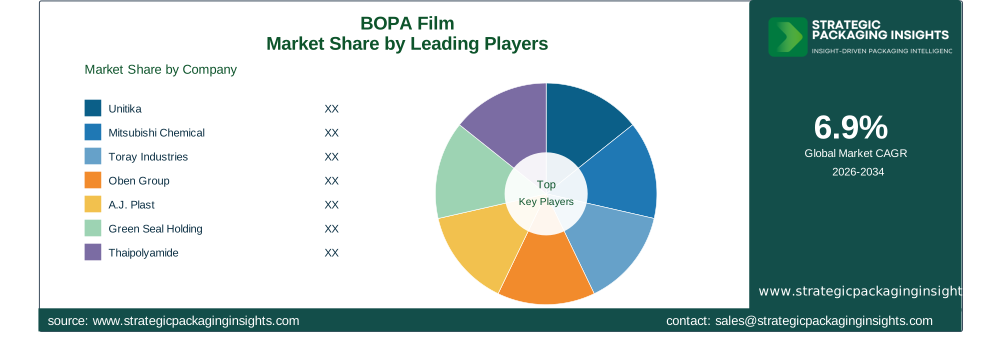
Unitika, a leading player in the BOPA Film market, is known for its high-quality products and innovative solutions. The company has a strong presence in the Asia Pacific region, where it caters to the increasing demand for flexible packaging solutions. Mitsubishi Chemical, another major player, is focusing on developing eco-friendly BOPA films that align with the global sustainability trends. The company's commitment to research and development has enabled it to introduce advanced products that offer superior performance and environmental benefits.
Toray Industries, a prominent name in the BOPA Film market, is leveraging its technological expertise to develop high-performance films that meet the specific needs of various industries. The company's strategic partnerships and collaborations with other industry players have further strengthened its market position. Oben Group and A.J. Plast are also key players in the market, known for their innovative product offerings and strong customer base. These companies are focusing on expanding their operations in emerging markets to capitalize on the growing demand for BOPA films.
Other notable players in the market include Green Seal Holding, Thaipolyamide, FSPG Hi-Tech, Kolon Industries, and Hyosung Chemical. These companies are actively investing in research and development to enhance their product offerings and gain a competitive edge in the market. The focus on sustainability and innovation is driving these companies to develop advanced BOPA films that cater to the evolving needs of end-users. The competitive landscape is expected to remain dynamic, with companies continuously striving to enhance their market share through strategic initiatives and product innovations.
Key Highlights
- The BOPA Film market is projected to grow from USD 3.42 billion in 2025 to USD 6.23 billion by 2034, at a CAGR of 6.9%.
- Increasing demand for flexible packaging solutions is a major driver of market growth.
- Technological advancements in manufacturing processes are enhancing the quality and performance of BOPA films.
- Growing emphasis on sustainable packaging solutions is driving the demand for recyclable BOPA films.
- Volatility in raw material prices poses a challenge for manufacturers in maintaining competitive pricing.
- Asia Pacific and Latin America are emerging as key markets due to rising demand for packaged goods.
- Key players are focusing on product innovation and strategic collaborations to strengthen their market position.
Top Countries Insights
In the BOPA Film market, China stands out as a leading player with a market size of approximately USD 1.2 billion and a CAGR of 8%. The country's robust manufacturing sector and increasing demand for packaged goods are driving the market growth. Government initiatives promoting sustainable packaging solutions are further boosting the demand for BOPA films in China.
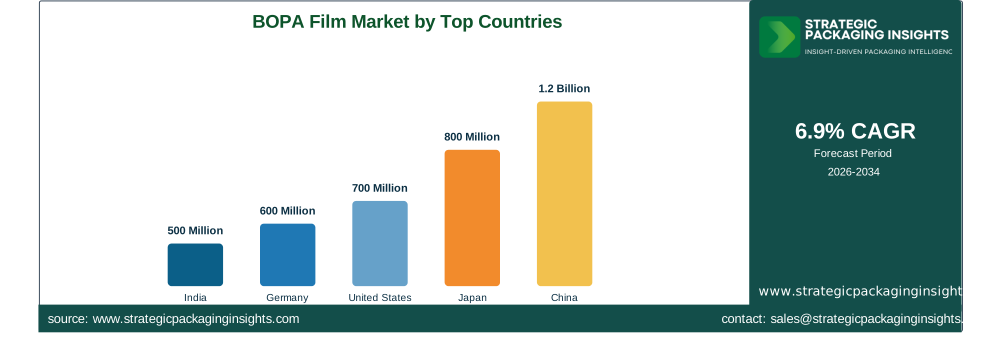
Japan, with a market size of USD 800 million and a CAGR of 6%, is another significant player in the BOPA Film market. The country's advanced technological capabilities and focus on innovation are key growth drivers. The demand for high-quality packaging solutions in the food and pharmaceutical sectors is contributing to the market expansion.
The United States, with a market size of USD 700 million and a CAGR of 5%, is a major market for BOPA films. The growing demand for flexible packaging solutions in the food and beverage industry is a primary driver. Additionally, the focus on sustainability and eco-friendly packaging materials is boosting the market growth.
Germany, with a market size of USD 600 million and a CAGR of 4%, is a key player in the European BOPA Film market. The country's strong industrial base and emphasis on sustainable packaging solutions are driving the demand for BOPA films. The automotive and electronics industries are also significant contributors to the market growth.
India, with a market size of USD 500 million and a CAGR of 7%, is an emerging market for BOPA films. The rapid urbanization and increasing disposable income are driving the demand for packaged goods, thereby boosting the market growth. The government's focus on promoting sustainable packaging solutions is further enhancing the market prospects.
BOPA Film Market Segments Insights

Product Type Analysis
The BOPA Film market is segmented by product type into Sequential BOPA Film, Simultaneous BOPA Film, and Blown BOPA Film. Sequential BOPA Film is the most widely used type due to its cost-effectiveness and superior mechanical properties. It is extensively used in food packaging applications where durability and barrier properties are crucial. Companies like Unitika and Mitsubishi Chemical are focusing on enhancing the performance characteristics of sequential BOPA films to cater to the growing demand in the food and beverage industry.
Simultaneous BOPA Film, on the other hand, is gaining traction due to its superior optical properties and uniform thickness. This type of film is preferred in high-end packaging applications where clarity and aesthetics are important. The development of advanced manufacturing techniques is enabling the production of high-quality simultaneous BOPA films, which is expected to drive the market growth. Blown BOPA Film, although less common, is used in specific applications where flexibility and toughness are required.
Thickness Analysis
The BOPA Film market is also segmented by thickness into Below 15 Micron, 15-25 Micron, and Above 25 Micron. Films with a thickness of 15-25 Micron are the most popular due to their versatility and balance between strength and flexibility. These films are widely used in food and pharmaceutical packaging applications where barrier properties and durability are essential. Companies like Toray Industries and Oben Group are focusing on developing films in this thickness range to meet the diverse needs of end-users.
Films with a thickness below 15 Micron are used in applications where lightweight and cost-effectiveness are important. These films are gaining popularity in emerging markets where price sensitivity is a key consideration. On the other hand, films with a thickness above 25 Micron are used in industrial applications where enhanced strength and durability are required. The demand for these films is driven by the need for robust packaging solutions in the industrial sector.
Application Analysis
The BOPA Film market is segmented by application into Food Packaging, Pharma Packaging, Industrial Packaging, and Retort Packaging. Food Packaging is the largest application segment, driven by the increasing demand for packaged food products. BOPA films are preferred in this segment due to their excellent barrier properties and ability to preserve the freshness and quality of food products. Companies like Kolon Industries and Hyosung Chemical are focusing on developing innovative packaging solutions to cater to the growing demand in the food industry.
Pharma Packaging is another significant application segment, where the demand for high-quality packaging materials is driven by the need to maintain the integrity and safety of pharmaceutical products. BOPA films are used in this segment due to their superior barrier properties and resistance to moisture and gases. Industrial Packaging and Retort Packaging are also important application segments, where the demand for durable and high-performance packaging solutions is driving the market growth.
End Use Analysis
The BOPA Film market is segmented by end use into Food & Beverage, Healthcare, Industrial, and Consumer Goods. The Food & Beverage sector is the largest end-use segment, driven by the increasing demand for packaged food and beverages. BOPA films are preferred in this sector due to their excellent barrier properties and ability to extend the shelf life of products. Companies like Green Seal Holding and Thaipolyamide are focusing on developing innovative packaging solutions to cater to the growing demand in this sector.
The Healthcare sector is another significant end-use segment, where the demand for high-quality packaging materials is driven by the need to maintain the integrity and safety of pharmaceutical products. BOPA films are used in this sector due to their superior barrier properties and resistance to moisture and gases. The Industrial and Consumer Goods sectors are also important end-use segments, where the demand for durable and high-performance packaging solutions is driving the market growth.
BOPA Film Market Segments
The BOPA Film market has been segmented on the basis ofBy Product Type
- Sequential BOPA Film
- Simultaneous BOPA Film
- Blown BOPA Film
By Thickness
- Below 15 Micron
- 15–25 Micron
- Above 25 Micron
By Application
- Food Packaging
- Pharma Packaging
- Industrial Packaging
- Retort Packaging
By End Use
- Food & Beverage
- Healthcare
- Industrial
- Consumer Goods
Region
- Asia Pacific
- North America
- Latin America
- Europe
- Middle East & Africa




