


Blackout Fabric Laminate Market Outlook
The Blackout Fabric Laminate market was valued at $3.60 billion in 2025 and is projected to reach $4.96 billion by 2034, growing at a CAGR of 3.6% during the forecast period 2026-2034. This market is driven by the increasing demand for energy-efficient solutions in both residential and commercial spaces. The growing awareness about the benefits of blackout fabrics, such as enhanced privacy, light control, and thermal insulation, is further propelling the market growth. Additionally, the rise in urbanization and the subsequent increase in construction activities are expected to boost the demand for blackout fabric laminates, particularly in the construction and interiors segments.
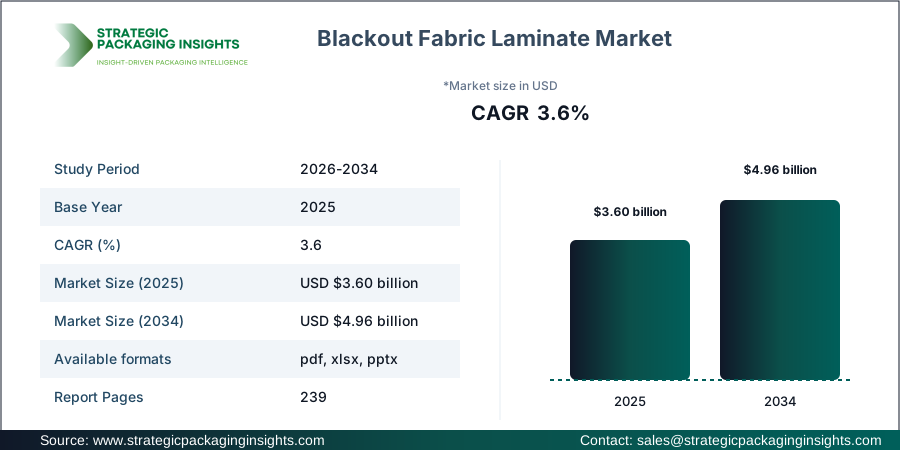
However, the market faces certain challenges, including the high cost of raw materials and the environmental concerns associated with the production and disposal of synthetic materials used in blackout laminates. Despite these challenges, the market holds significant growth potential due to technological advancements in fabric manufacturing and the development of eco-friendly blackout laminates. The increasing adoption of smart home technologies and the integration of blackout fabrics with automated systems are also expected to create new opportunities for market players.
Report Scope
| Attributes | Details |
| Report Title | Blackout Fabric Laminate Market Size, Future Growth and Forecast 2034 |
| By Product Type | PVC Blackout Laminates, Acrylic Blackout Laminates, Coated Fabric Laminates |
| By Application | Window Coverings, Tents, Signage, Protective Covers |
| By Material Type | Polyester, Fiberglass, Cotton Blends |
| By End Use | Construction, Interiors, Outdoor Products, Commercial Spaces |
| Region | Asia Pacific, North America, Latin America, Europe, Middle East & Africa |
| Base Year | 2025 |
| Historic Period | 2018-2024 |
| Forecast Period | 2026-2034 |
| Number of Pages | 239 |
| Customization Available | Yes* |
Opportunities & Threats
The Blackout Fabric Laminate market presents numerous opportunities, particularly in the realm of sustainable and eco-friendly products. As consumers become more environmentally conscious, there is a growing demand for blackout laminates made from recycled or biodegradable materials. Companies that can innovate and offer sustainable solutions are likely to gain a competitive edge. Additionally, the expansion of the construction industry in emerging economies presents a significant opportunity for market growth. As urbanization continues to rise, the demand for energy-efficient building materials, including blackout fabric laminates, is expected to increase.
Another opportunity lies in the integration of blackout fabrics with smart home technologies. As the smart home market expands, there is a growing interest in automated window coverings that can be controlled remotely. Blackout fabric laminates that can be integrated with smart home systems offer convenience and energy savings, making them an attractive option for consumers. This trend is expected to drive the demand for blackout laminates in the residential sector.
Despite these opportunities, the market faces threats from the volatility of raw material prices and the stringent environmental regulations governing the production of synthetic materials. The high cost of raw materials can impact the profitability of manufacturers, while environmental regulations may require companies to invest in cleaner production technologies, increasing operational costs. Additionally, the presence of alternative products, such as traditional curtains and blinds, poses a threat to the market growth of blackout fabric laminates.
Drivers & Challenges
The primary drivers of the Blackout Fabric Laminate market include the increasing demand for energy-efficient solutions and the growing awareness of the benefits of blackout fabrics. As energy costs continue to rise, consumers and businesses are seeking ways to reduce energy consumption. Blackout fabric laminates offer excellent thermal insulation properties, helping to maintain indoor temperatures and reduce the need for heating and cooling. This energy-saving benefit is a significant driver of market growth, particularly in regions with extreme weather conditions.
Another key driver is the rise in construction activities, particularly in emerging economies. As urbanization accelerates, there is a growing demand for modern building materials that offer both functionality and aesthetic appeal. Blackout fabric laminates are increasingly being used in construction and interior design projects to enhance privacy, control light, and improve energy efficiency. The versatility of these laminates, which can be used in a variety of applications, from window coverings to signage, further drives their adoption.
However, the market faces challenges such as the high cost of raw materials and the environmental impact of synthetic materials used in blackout laminates. The production of these materials often involves the use of chemicals and processes that can be harmful to the environment. As a result, manufacturers are under pressure to develop more sustainable production methods and materials. Additionally, the market is highly competitive, with numerous players offering similar products, making it challenging for companies to differentiate themselves and maintain market share.
Market Share Analysis
The competitive landscape of the Blackout Fabric Laminate market is characterized by the presence of several key players, each striving to capture a significant share of the market. Companies such as Serge Ferrari, Sioen Industries, Mehler Texnologies, Heytex, and Hiraoka are among the leading players in the market. These companies have established themselves through a combination of product innovation, strategic partnerships, and a strong distribution network. They focus on offering a wide range of blackout fabric laminates that cater to various applications and end-use industries.
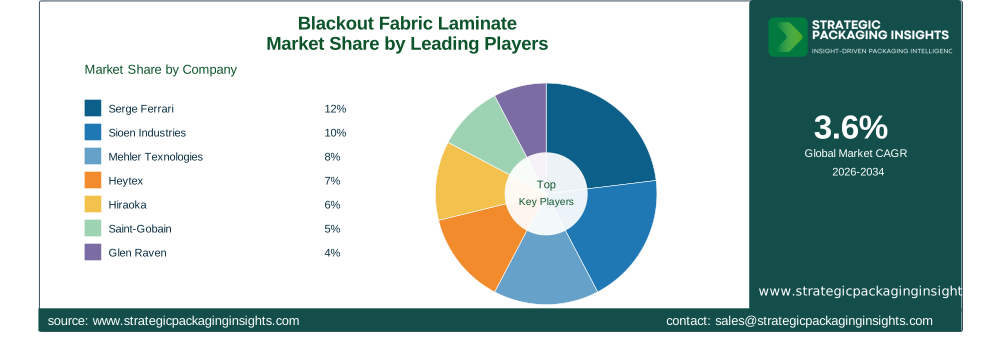
Serge Ferrari is a prominent player known for its high-performance composite materials. The company has a strong presence in the global market and offers a diverse range of blackout fabric laminates for applications such as window coverings and signage. Sioen Industries, another key player, is recognized for its innovative technical textiles and coatings. The company has a robust product portfolio and a strong focus on research and development to meet the evolving needs of its customers.
Mehler Texnologies and Heytex are also significant players in the market, offering a wide range of coated fabrics and technical textiles. These companies have a strong focus on quality and sustainability, which has helped them maintain a competitive edge. Hiraoka, a Japanese company, is known for its advanced fabric technologies and has a strong presence in the Asian market. The company offers a variety of blackout fabric laminates that are used in construction, interiors, and outdoor applications.
Other notable players in the market include Saint-Gobain, Glen Raven, Cooley Group, Dickson Constant, and Verseidag-Indutex. These companies have a strong global presence and offer a wide range of products to cater to different customer needs. They focus on expanding their product offerings and enhancing their distribution networks to capture a larger share of the market. The competitive landscape is dynamic, with companies continuously innovating and adapting to changing market trends and consumer preferences.
Key Highlights
- The Blackout Fabric Laminate market is projected to grow from $3.60 billion in 2025 to $4.96 billion by 2034, at a CAGR of 3.6%.
- Increasing demand for energy-efficient solutions is a major driver of market growth.
- Technological advancements in fabric manufacturing are creating new opportunities for market players.
- The market faces challenges from the high cost of raw materials and environmental concerns.
- Integration with smart home technologies is a growing trend in the market.
- Emerging economies present significant growth opportunities due to rising construction activities.
- Key players in the market include Serge Ferrari, Sioen Industries, and Mehler Texnologies.
- The market is highly competitive, with companies focusing on product innovation and sustainability.
- Environmental regulations and alternative products pose threats to market growth.
- The versatility of blackout fabric laminates drives their adoption across various applications.
Top Countries Insights
In the Blackout Fabric Laminate market, the United States holds a significant share due to the high demand for energy-efficient building materials. The market size in the U.S. is driven by the increasing adoption of smart home technologies and the growing construction industry. The CAGR for the U.S. market is projected to be around 4%, supported by government initiatives promoting energy efficiency and sustainable building practices.
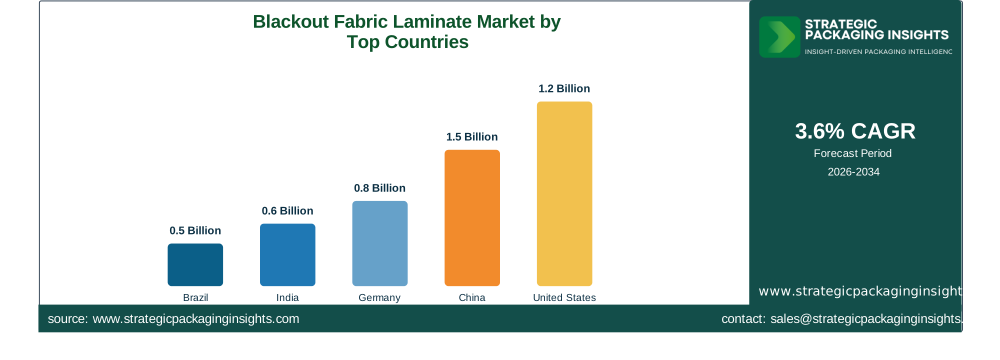
China is another key market for blackout fabric laminates, with a strong growth trajectory driven by rapid urbanization and industrialization. The market in China is expected to grow at a CAGR of 5%, fueled by the expansion of the construction sector and increasing consumer awareness about energy conservation. Government policies supporting green building materials further boost the market growth in the region.
Germany is a leading market in Europe, with a focus on sustainable and eco-friendly products. The market size in Germany is supported by stringent environmental regulations and a strong emphasis on energy efficiency. The CAGR for the German market is projected to be 3%, driven by the demand for high-quality blackout laminates in both residential and commercial applications.
In the Asia Pacific region, India is emerging as a significant market for blackout fabric laminates. The market growth in India is driven by the booming construction industry and increasing consumer awareness about the benefits of energy-efficient materials. The CAGR for the Indian market is expected to be 6%, supported by government initiatives promoting sustainable building practices.
Brazil represents a growing market in Latin America, with a focus on modernizing infrastructure and enhancing energy efficiency. The market size in Brazil is driven by the increasing demand for blackout laminates in commercial spaces and residential buildings. The CAGR for the Brazilian market is projected to be 4%, supported by economic growth and rising urbanization.
Blackout Fabric Laminate Market Segments Insights

By Product Type Analysis
The Blackout Fabric Laminate market is segmented by product type into PVC blackout laminates, acrylic blackout laminates, and coated fabric laminates. PVC blackout laminates dominate the market due to their durability, cost-effectiveness, and wide range of applications. These laminates are particularly popular in commercial spaces and outdoor products, where durability and weather resistance are crucial. Acrylic blackout laminates, on the other hand, are gaining traction due to their superior aesthetic appeal and lightweight properties. They are increasingly used in interiors and window coverings, where design and ease of installation are important considerations. Coated fabric laminates offer a balance between performance and cost, making them a popular choice for signage and protective covers.
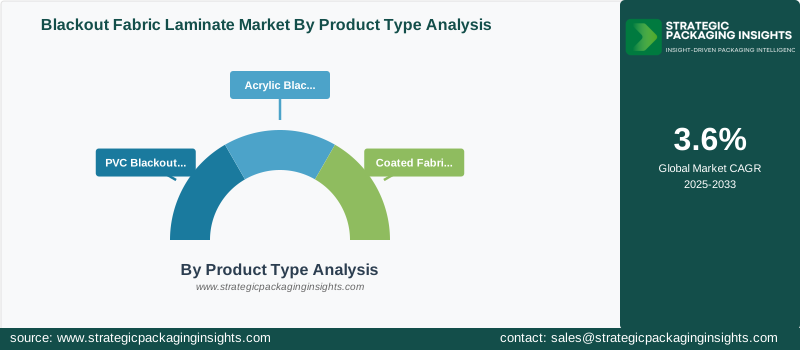
The demand for PVC blackout laminates is driven by their versatility and ability to provide complete light blockage, making them ideal for applications requiring high levels of privacy and light control. Acrylic blackout laminates are preferred in applications where aesthetics and weight are critical, such as in high-end residential interiors. Coated fabric laminates are favored for their ability to withstand harsh environmental conditions, making them suitable for outdoor applications. The competition in this segment is intense, with manufacturers focusing on product innovation and expanding their product portfolios to cater to diverse customer needs.
By Application Analysis
The application segment of the Blackout Fabric Laminate market includes window coverings, tents, signage, and protective covers. Window coverings represent the largest application segment, driven by the increasing demand for energy-efficient solutions in residential and commercial buildings. Blackout fabric laminates are widely used in window coverings to enhance privacy, control light, and improve thermal insulation. The growing trend of smart homes and automated window coverings further boosts the demand for blackout laminates in this segment.
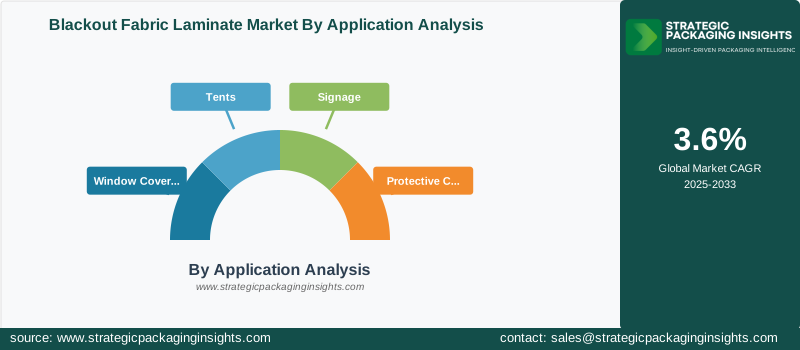
Tents and signage are other significant application segments, with blackout fabric laminates being used to provide durability and weather resistance. In the tents segment, these laminates are favored for their ability to block light and provide thermal insulation, making them ideal for outdoor events and camping. In the signage segment, blackout laminates are used to enhance the visibility and durability of signs, particularly in outdoor environments. Protective covers represent a smaller but growing application segment, driven by the need for durable and weather-resistant materials in various industries.
By Material Type Analysis
The Blackout Fabric Laminate market is segmented by material type into polyester, fiberglass, and cotton blends. Polyester is the most widely used material due to its excellent durability, cost-effectiveness, and versatility. Polyester blackout laminates are favored in a wide range of applications, from window coverings to outdoor products, due to their ability to withstand harsh environmental conditions and provide effective light blockage.
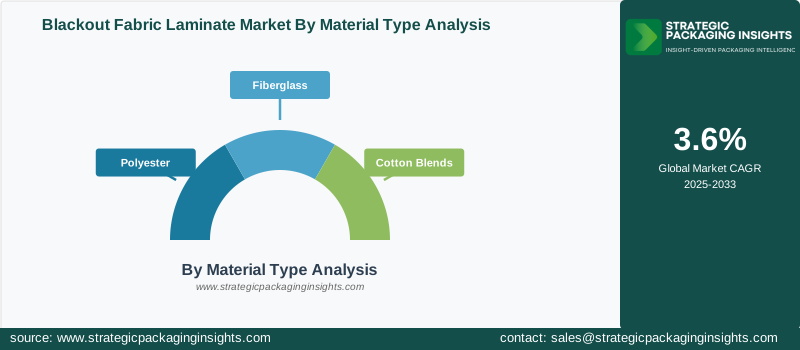
Fiberglass is another popular material, known for its superior strength and thermal insulation properties. Fiberglass blackout laminates are commonly used in applications requiring high levels of durability and thermal performance, such as in construction and commercial spaces. Cotton blends, while less common, are gaining popularity due to their natural appearance and eco-friendly properties. These laminates are increasingly used in interiors and residential applications, where aesthetics and sustainability are important considerations.
By End Use Analysis
The end-use segment of the Blackout Fabric Laminate market includes construction, interiors, outdoor products, and commercial spaces. The construction segment is the largest end-use segment, driven by the increasing demand for energy-efficient building materials. Blackout fabric laminates are widely used in construction projects to enhance privacy, control light, and improve thermal insulation. The growing trend of green building practices further boosts the demand for blackout laminates in this segment.
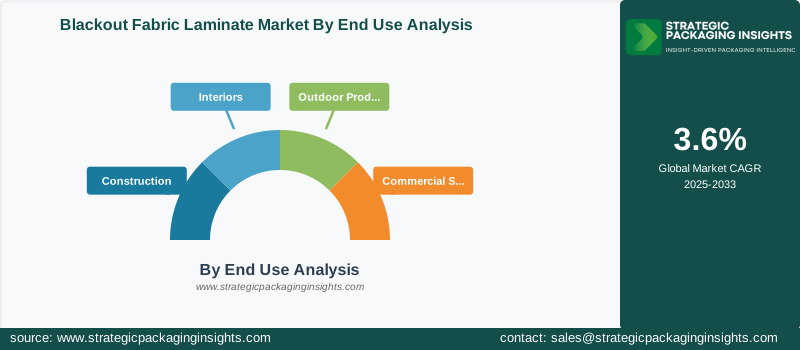
Interiors represent another significant end-use segment, with blackout fabric laminates being used to enhance the aesthetic appeal and functionality of interior spaces. These laminates are commonly used in window coverings, wall coverings, and furniture, where design and performance are critical considerations. Outdoor products and commercial spaces are smaller but growing end-use segments, driven by the need for durable and weather-resistant materials in various applications.
Blackout Fabric Laminate Market Segments
The Blackout Fabric Laminate market has been segmented on the basis ofBy Product Type
- PVC Blackout Laminates
- Acrylic Blackout Laminates
- Coated Fabric Laminates
By Application
- Window Coverings
- Tents
- Signage
- Protective Covers
By Material Type
- Polyester
- Fiberglass
- Cotton Blends
By End Use
- Construction
- Interiors
- Outdoor Products
- Commercial Spaces
Region
- Asia Pacific
- North America
- Latin America
- Europe
- Middle East & Africa




