


Biodegradable Flexible Films Market Outlook
The biodegradable flexible films market was valued at $1.2 billion in 2024 and is projected to reach $3.5 billion by 2033, growing at a CAGR of 12.5% during the forecast period 2025-2033. This market is experiencing significant growth due to increasing environmental concerns and stringent regulations against the use of non-degradable plastics. The demand for sustainable packaging solutions is driving the adoption of biodegradable flexible films across various industries, including food packaging, agriculture, and healthcare. The market is also benefiting from technological advancements in biodegradable materials, which are enhancing the performance and cost-effectiveness of these films. As consumers become more environmentally conscious, the demand for eco-friendly packaging solutions is expected to rise, further propelling market growth.
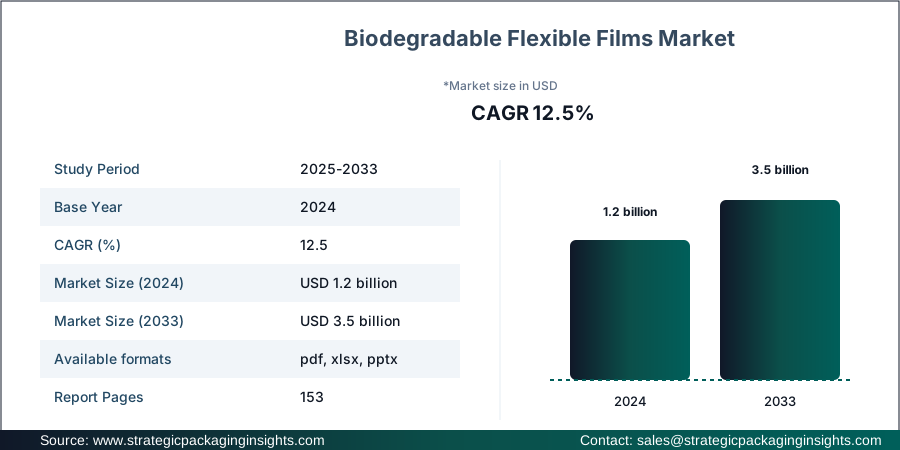
However, the market faces challenges such as high production costs and limited availability of raw materials. Regulatory frameworks in different regions also pose challenges, as they vary significantly, affecting the global market dynamics. Despite these challenges, the market holds immense growth potential due to increasing investments in research and development aimed at improving the properties of biodegradable films. Companies are focusing on developing innovative products that offer superior performance and meet the evolving needs of end-users. The growing trend of sustainable packaging is expected to create lucrative opportunities for market players in the coming years.
Report Scope
| Attributes | Details |
| Report Title | Biodegradable Flexible Films Market Size, Future Growth and Forecast 2033 |
| Material Type | Starch-based, PLA, PHA, Others |
| Application | Food Packaging, Agriculture, Healthcare, Others |
| End-User | Retail, Industrial, Institutional, Others |
| Region | North America, Europe, Asia Pacific, Latin America, Middle East & Africa |
| Base Year | 2024 |
| Historic Period | 2017-2023 |
| Forecast Period | 2025-2033 |
| Number of Pages | 153 |
| Customization Available | Yes* |
Opportunities & Threats
The biodegradable flexible films market presents numerous opportunities, primarily driven by the increasing demand for sustainable packaging solutions. As consumers and businesses become more environmentally conscious, there is a growing preference for packaging materials that minimize environmental impact. This shift in consumer behavior is encouraging manufacturers to invest in the development of biodegradable films that offer similar performance characteristics to traditional plastics but with reduced ecological footprints. Additionally, government initiatives and regulations aimed at reducing plastic waste are creating a favorable environment for the adoption of biodegradable films. These factors are expected to drive market growth and open new avenues for innovation and product development.
Another significant opportunity lies in the expanding applications of biodegradable flexible films across various industries. The food packaging industry, in particular, is witnessing a surge in demand for biodegradable films due to their ability to preserve food quality while being environmentally friendly. Similarly, the agriculture sector is adopting these films for mulching and crop protection, as they offer benefits such as improved soil health and reduced plastic waste. The healthcare industry is also exploring the use of biodegradable films for medical packaging, driven by the need for sustainable and safe packaging solutions. These diverse applications are expected to fuel market growth and create opportunities for market players to expand their product portfolios.
Despite the promising opportunities, the biodegradable flexible films market faces certain threats that could hinder its growth. One of the primary challenges is the high cost of production, which makes biodegradable films more expensive than conventional plastics. This cost disparity can deter price-sensitive consumers and businesses from adopting biodegradable solutions. Additionally, the limited availability of raw materials, such as biopolymers, poses a challenge to the scalability of production. The market also faces competition from other sustainable packaging solutions, such as recyclable and compostable materials, which could impact the demand for biodegradable films. Addressing these challenges will be crucial for market players to capitalize on the growth opportunities in this sector.
Market Share Analysis
The biodegradable flexible films market is characterized by a competitive landscape with several key players striving to gain a significant share. The market is dominated by a mix of established companies and emerging players, each contributing to the market dynamics through innovation and strategic partnerships. The competitive environment is driven by the need to develop cost-effective and high-performance biodegradable films that meet the diverse requirements of end-users. Companies are focusing on expanding their product portfolios and enhancing their production capabilities to cater to the growing demand for sustainable packaging solutions.
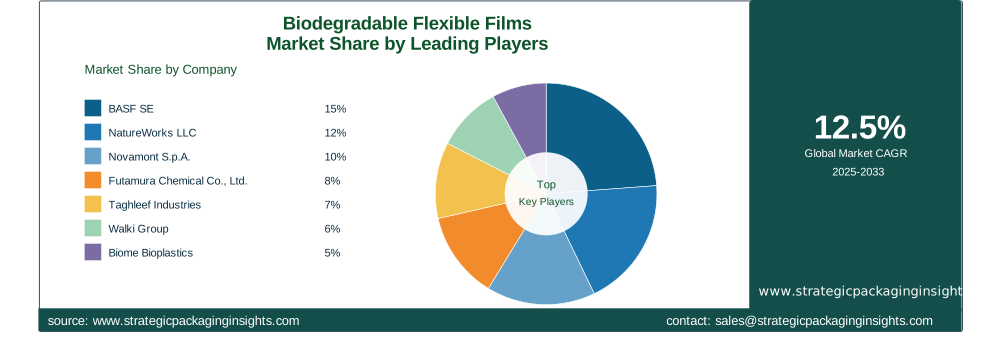
Among the major players in the market, BASF SE holds a significant share due to its extensive range of biodegradable polymers and strong global presence. The company is actively involved in research and development to enhance the properties of its biodegradable films and expand its applications across various industries. Similarly, NatureWorks LLC is a key player known for its innovative Ingeo biopolymer, which is widely used in the production of biodegradable films. The company's focus on sustainability and collaboration with industry partners has strengthened its position in the market.
Another prominent player, Novamont S.p.A., is recognized for its Mater-Bi range of biodegradable and compostable films. The company's commitment to sustainability and continuous innovation has enabled it to capture a significant market share. Additionally, Futamura Chemical Co., Ltd. is a leading manufacturer of cellulose-based films, offering a range of biodegradable solutions for packaging applications. The company's focus on quality and environmental responsibility has contributed to its strong market presence.
Other notable companies in the market include Taghleef Industries, Walki Group, and Biome Bioplastics. These companies are actively investing in research and development to enhance the performance and cost-effectiveness of their biodegradable films. They are also exploring strategic partnerships and collaborations to expand their market reach and strengthen their competitive position. The market is expected to witness increased competition as more players enter the space, driven by the growing demand for sustainable packaging solutions.
Key Highlights
- The biodegradable flexible films market is projected to grow at a CAGR of 12.5% from 2025 to 2033.
- Increasing environmental concerns and regulatory pressures are driving the demand for biodegradable films.
- The food packaging industry is a major end-user of biodegradable flexible films.
- Technological advancements are enhancing the performance and cost-effectiveness of biodegradable films.
- High production costs and limited raw material availability are key challenges for the market.
- Government initiatives to reduce plastic waste are creating a favorable environment for market growth.
- Key players are focusing on innovation and strategic partnerships to strengthen their market position.
Top Countries Insights
In the biodegradable flexible films market, the United States is a leading country with a market size of $400 million and a CAGR of 10%. The country's growth is driven by stringent regulations on plastic waste and a strong consumer preference for sustainable packaging solutions. The presence of major market players and continuous innovation in biodegradable materials further contribute to the market's expansion.
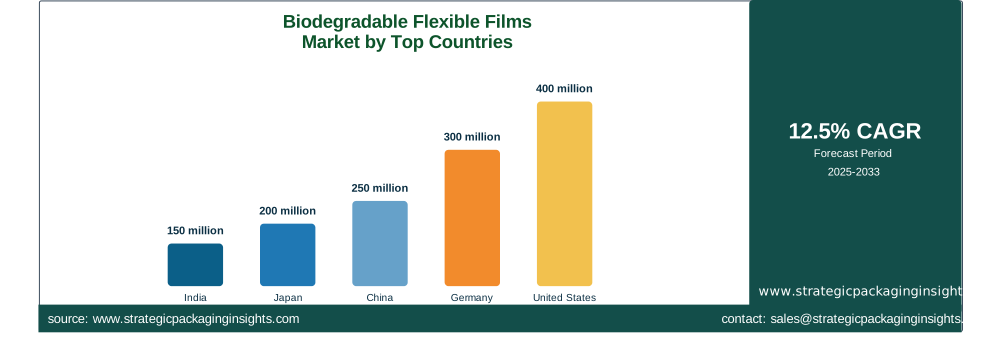
Germany is another key market, valued at $300 million with a CAGR of 9%. The country's robust manufacturing sector and commitment to environmental sustainability are driving the demand for biodegradable films. Government policies promoting the use of eco-friendly materials in packaging are also supporting market growth.
China, with a market size of $250 million and a CAGR of 15%, is experiencing rapid growth due to increasing environmental awareness and government initiatives to reduce plastic waste. The country's large consumer base and expanding food packaging industry are significant growth drivers.
In Japan, the market is valued at $200 million with a CAGR of 8%. The country's focus on technological innovation and sustainable development is fostering the adoption of biodegradable films. The healthcare and food packaging industries are key contributors to market growth.
India, with a market size of $150 million and a CAGR of 12%, is witnessing growth driven by rising environmental consciousness and government efforts to promote sustainable packaging. The country's growing retail and agriculture sectors are also contributing to the demand for biodegradable films.
Evolving Market Dynamics (2018-2024) and Strategic Foresight (2025-2033)
| Metrics | 2018-2024 | 2025-2033 |
|---|---|---|
| CAGR | 8.5% | 12.5% |
| Market Size Evolution | $800 million to $1.2 billion | $1.2 billion to $3.5 billion |
| Segment Distribution Shifts | Food Packaging Dominance | Diversification into Healthcare and Agriculture |
| Regional Contribution Changes | North America and Europe Lead | Asia Pacific Gains Prominence |
| Technological Impact Factors | Initial Biopolymer Development | Advanced Material Innovations |
| Client Demand Transformations | Eco-Friendly Focus | Cost-Effectiveness and Performance |
Biodegradable Flexible Films Market Segments Insights

Material Type Analysis
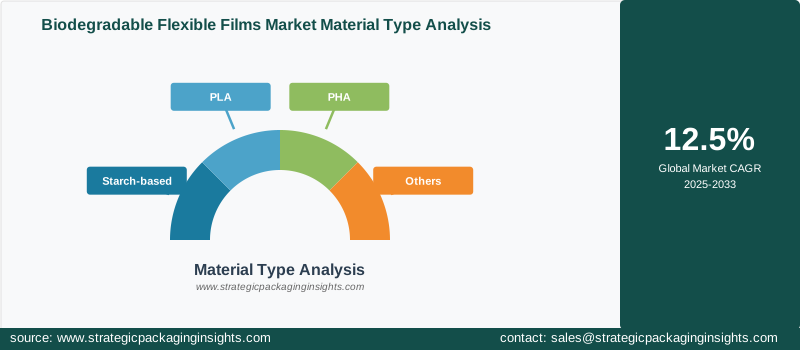
The biodegradable flexible films market is segmented by material type, including starch-based, PLA, PHA, and others. Starch-based films are gaining popularity due to their biodegradability and cost-effectiveness. These films are derived from renewable resources and offer excellent mechanical properties, making them suitable for various applications. The demand for PLA (polylactic acid) films is also rising, driven by their high transparency and strength. PLA films are widely used in food packaging and agricultural applications, where they provide an eco-friendly alternative to conventional plastics. PHA (polyhydroxyalkanoates) films are gaining traction due to their biodegradability and versatility. These films are used in a range of applications, including packaging and agriculture, where they offer benefits such as reduced environmental impact and improved soil health.
Technological advancements in material science are driving the development of innovative biodegradable films with enhanced properties. Companies are investing in research and development to improve the performance and cost-effectiveness of these films, making them more competitive with traditional plastics. The growing demand for sustainable packaging solutions is encouraging manufacturers to explore new materials and formulations that meet the evolving needs of end-users. As a result, the material type segment is expected to witness significant growth during the forecast period, driven by the increasing adoption of biodegradable films across various industries.
Application Analysis
The application segment of the biodegradable flexible films market includes food packaging, agriculture, healthcare, and others. The food packaging industry is a major end-user of biodegradable films, driven by the need for sustainable and safe packaging solutions. Biodegradable films offer excellent barrier properties and are suitable for a wide range of food products, including fresh produce, snacks, and ready-to-eat meals. The agriculture sector is also adopting biodegradable films for applications such as mulching and crop protection. These films help improve soil health and reduce plastic waste, making them an attractive option for farmers and agricultural businesses.
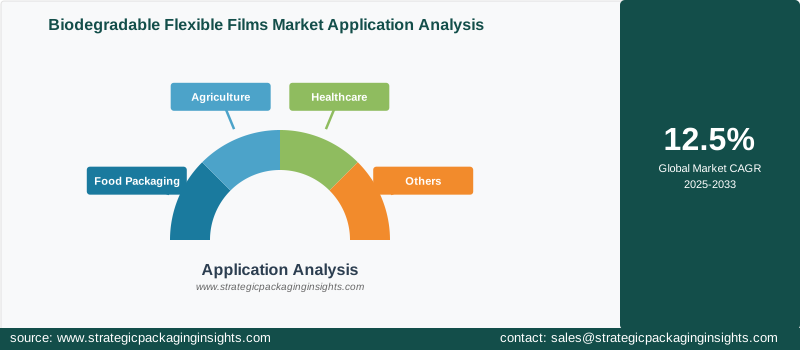
In the healthcare industry, biodegradable films are used for medical packaging applications, where they offer benefits such as safety and environmental sustainability. The demand for biodegradable films in this sector is driven by the need for eco-friendly packaging solutions that meet regulatory requirements. Other applications of biodegradable films include retail and industrial packaging, where they provide an environmentally friendly alternative to conventional plastics. The diverse applications of biodegradable films are expected to drive market growth and create opportunities for manufacturers to expand their product offerings.
End-User Analysis
The end-user segment of the biodegradable flexible films market includes retail, industrial, institutional, and others. The retail sector is a significant end-user of biodegradable films, driven by the growing demand for sustainable packaging solutions. Retailers are increasingly adopting biodegradable films for packaging applications, as they offer benefits such as reduced environmental impact and improved brand image. The industrial sector is also a key end-user, where biodegradable films are used for packaging and protective applications. These films provide an eco-friendly alternative to traditional plastics, helping businesses reduce their carbon footprint and meet sustainability goals.
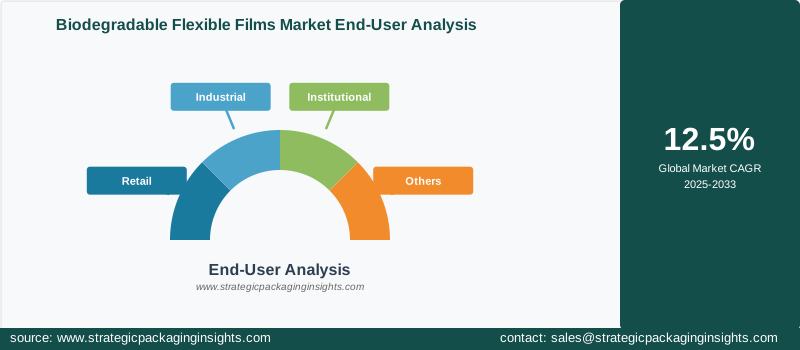
Institutional end-users, such as hospitals and educational institutions, are adopting biodegradable films for various applications, including food service and waste management. The demand for biodegradable films in this sector is driven by the need for sustainable and safe packaging solutions that align with institutional sustainability initiatives. Other end-users of biodegradable films include agriculture and healthcare, where they offer benefits such as improved soil health and safe medical packaging. The diverse end-user base of biodegradable films is expected to drive market growth and create opportunities for manufacturers to expand their market reach.
Region Analysis
The biodegradable flexible films market is segmented by region, including North America, Europe, Asia Pacific, Latin America, and the Middle East & Africa. North America and Europe are leading markets for biodegradable films, driven by stringent regulations on plastic waste and a strong consumer preference for sustainable packaging solutions. The presence of major market players and continuous innovation in biodegradable materials further contribute to the market's expansion in these regions. Asia Pacific is emerging as a significant market for biodegradable films, driven by increasing environmental awareness and government initiatives to reduce plastic waste. The region's large consumer base and expanding food packaging industry are significant growth drivers.
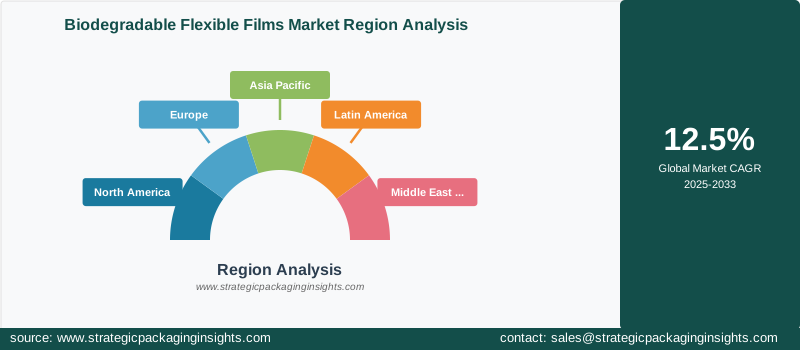
Latin America and the Middle East & Africa are also witnessing growth in the biodegradable films market, driven by rising environmental consciousness and government efforts to promote sustainable packaging. The growing retail and agriculture sectors in these regions are contributing to the demand for biodegradable films. The regional analysis of the biodegradable films market highlights the diverse growth opportunities and challenges faced by market players in different regions. Companies are focusing on expanding their presence in emerging markets to capitalize on the growing demand for sustainable packaging solutions.
Biodegradable Flexible Films Market Segments
The Biodegradable Flexible Films market has been segmented on the basis ofMaterial Type
- Starch-based
- PLA
- PHA
- Others
Application
- Food Packaging
- Agriculture
- Healthcare
- Others
End-User
- Retail
- Industrial
- Institutional
- Others
Region
- North America
- Europe
- Asia Pacific
- Latin America
- Middle East & Africa




