


Beverage Cups Market Outlook
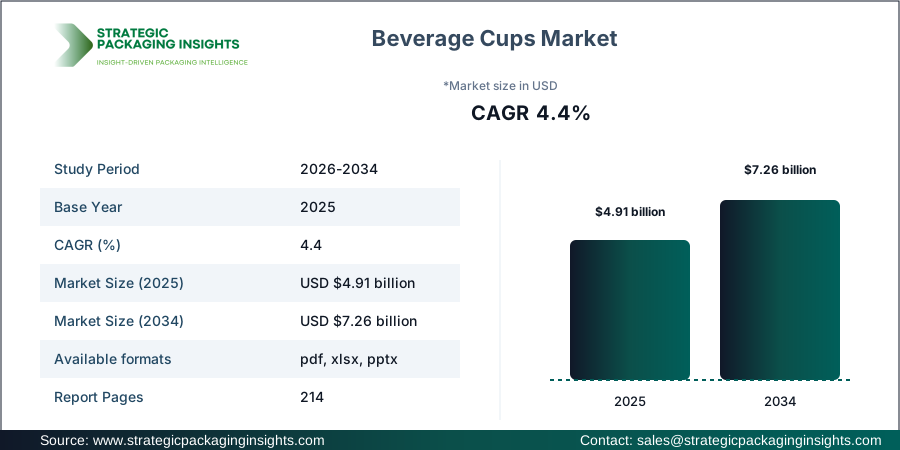
The Beverage Cups market was valued at $4.91 billion in 2025 and is projected to reach $7.26 billion by 2034, growing at a CAGR of 4.4% during the forecast period 2026-2034. This market is experiencing significant growth due to the increasing demand for convenient and sustainable beverage packaging solutions. The rise in on-the-go consumption patterns, particularly in urban areas, is driving the demand for beverage cups. Additionally, the growing trend of coffee culture and the expansion of quick-service restaurants (QSRs) are further propelling the market. The shift towards eco-friendly and biodegradable materials is also a key factor contributing to the market's expansion, as consumers and businesses alike are becoming more environmentally conscious.
Despite the promising growth prospects, the Beverage Cups market faces certain challenges. Regulatory restrictions on single-use plastics are pushing manufacturers to innovate and develop sustainable alternatives, which can be cost-intensive. Moreover, fluctuations in raw material prices, particularly for paper and biodegradable materials, can impact profit margins. However, the market holds substantial growth potential, driven by technological advancements in manufacturing processes and the increasing adoption of recyclable and compostable materials. The ongoing efforts by companies to enhance product design and functionality, such as improved insulation and spill-proof features, are expected to create new opportunities for market players.
Report Scope
| Attributes | Details |
| Report Title | Beverage Cups Market Size, Future Growth and Forecast 2034 |
| By Material Type | Paper, Plastic, Foam, Biodegradable Materials |
| By Product Type | Hot Cups, Cold Cups, Insulated Cups, Lidded Cups |
| By Application | Coffee, Soft Drinks, Juices, Dairy Beverages |
| By End Use | QSRs, Cafés, Restaurants, Retail |
| Region | Asia Pacific, North America, Latin America, Europe, Middle East & Africa |
| Base Year | 2025 |
| Historic Period | 2018-2024 |
| Forecast Period | 2026-2034 |
| Number of Pages | 214 |
| Customization Available | Yes* |
Opportunities & Threats
The Beverage Cups market presents numerous opportunities, particularly in the realm of sustainable packaging solutions. As environmental concerns continue to rise, there is a growing demand for biodegradable and compostable beverage cups. This shift towards eco-friendly products is driven by both consumer preferences and regulatory mandates aimed at reducing plastic waste. Companies that invest in the development of innovative, sustainable materials stand to gain a competitive edge in the market. Additionally, the expansion of the food and beverage industry, particularly in emerging economies, offers significant growth opportunities. The increasing number of coffee shops, QSRs, and retail outlets in these regions is expected to drive the demand for beverage cups, providing a lucrative market for manufacturers.
Another opportunity lies in the customization and branding of beverage cups. As businesses seek to enhance their brand visibility and customer engagement, there is a growing trend towards personalized and branded cups. This trend is particularly prominent in the coffee and QSR sectors, where companies use customized cups as a marketing tool to differentiate themselves from competitors. The ability to offer unique designs and branding options can attract more customers and increase brand loyalty, thereby boosting sales. Furthermore, advancements in printing technology have made it easier and more cost-effective for manufacturers to produce customized cups, opening up new avenues for growth.
However, the market also faces certain threats, primarily from regulatory challenges. The increasing restrictions on single-use plastics and the push for sustainable alternatives can pose a threat to manufacturers who rely heavily on plastic materials. Compliance with these regulations requires significant investment in research and development to create viable alternatives, which can be a financial burden for smaller companies. Additionally, the volatility in raw material prices, particularly for paper and biodegradable materials, can impact production costs and profit margins. Companies need to navigate these challenges carefully to maintain their competitive position in the market.
Drivers & Challenges
One of the primary drivers of the Beverage Cups market is the growing consumer preference for convenience and on-the-go consumption. The fast-paced lifestyle of modern consumers has led to an increased demand for ready-to-drink beverages, which in turn drives the need for convenient packaging solutions like beverage cups. The rise of coffee culture, particularly among millennials, has further fueled this demand, with coffee shops and QSRs being major consumers of beverage cups. Additionally, the expansion of the food and beverage industry, coupled with the increasing number of retail outlets and cafés, is contributing to the market's growth. The trend towards eco-friendly and sustainable packaging solutions is also a significant driver, as consumers and businesses alike seek to reduce their environmental footprint.
Technological advancements in manufacturing processes are another key driver of the market. Innovations in material science have led to the development of new, sustainable materials that offer improved functionality and performance. For instance, the introduction of biodegradable and compostable materials has addressed the environmental concerns associated with traditional plastic cups. Moreover, advancements in printing technology have enabled manufacturers to offer customized and branded cups, enhancing their appeal to businesses looking to differentiate themselves in a competitive market. These technological advancements are expected to drive the market's growth by enabling manufacturers to offer innovative and sustainable solutions that meet the evolving needs of consumers and businesses.
Despite the positive growth drivers, the Beverage Cups market faces several challenges. One of the primary challenges is the regulatory landscape, particularly the increasing restrictions on single-use plastics. Compliance with these regulations requires significant investment in research and development to create sustainable alternatives, which can be a financial burden for manufacturers. Additionally, the volatility in raw material prices, particularly for paper and biodegradable materials, can impact production costs and profit margins. The competitive nature of the market also poses a challenge, as manufacturers need to continuously innovate and differentiate their products to maintain their market position. Companies that fail to adapt to these challenges risk losing their competitive edge in the market.
Market Share Analysis
The Beverage Cups market is characterized by a competitive landscape with several key players vying for market share. Companies such as Huhtamaki, Dart Container, and Graphic Packaging are among the leading players in the market, each holding a significant share. Huhtamaki, known for its innovative and sustainable packaging solutions, has a strong presence in the market, leveraging its extensive product portfolio and global reach. Dart Container, a major player in the disposable packaging industry, offers a wide range of beverage cups, including foam, paper, and plastic options. The company's focus on product innovation and sustainability has helped it maintain a competitive edge in the market.
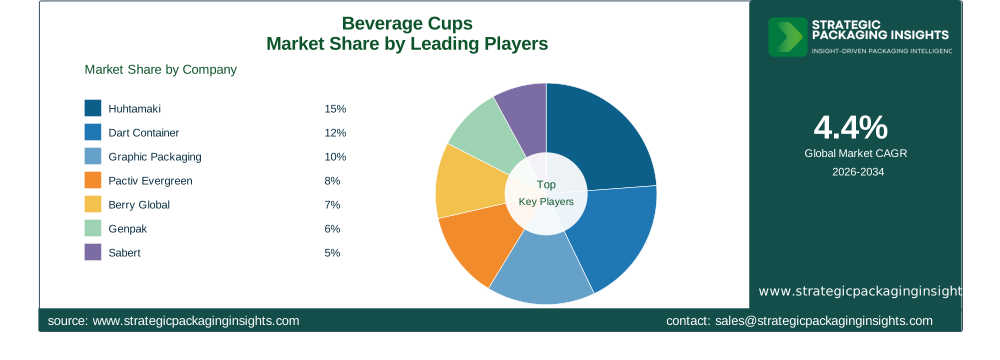
Graphic Packaging, another key player, is renowned for its comprehensive range of packaging solutions, including beverage cups. The company's commitment to sustainability and innovation has positioned it as a leader in the market. Pactiv Evergreen, a prominent name in the foodservice packaging industry, offers a diverse range of beverage cups, catering to various consumer needs. The company's focus on eco-friendly solutions and its extensive distribution network have contributed to its strong market presence. Berry Global, known for its innovative packaging solutions, offers a wide range of beverage cups, including biodegradable options, further strengthening its position in the market.
Other notable players in the market include Genpak, Sabert, Detpak, BioPak, and Georgia-Pacific. Genpak, with its focus on quality and innovation, offers a diverse range of beverage cups, catering to different consumer preferences. Sabert, known for its sustainable packaging solutions, has a strong presence in the market, offering a wide range of eco-friendly beverage cups. Detpak, a leader in paper and board packaging, offers a comprehensive range of beverage cups, including customized options. BioPak, renowned for its commitment to sustainability, offers a range of biodegradable and compostable beverage cups, catering to the growing demand for eco-friendly solutions. Georgia-Pacific, a major player in the paper and packaging industry, offers a wide range of beverage cups, leveraging its extensive manufacturing capabilities and distribution network.
Key Highlights
- The Beverage Cups market is projected to grow from $4.91 billion in 2025 to $7.26 billion by 2034, at a CAGR of 4.4%.
- Increasing demand for sustainable and eco-friendly packaging solutions is driving market growth.
- Technological advancements in manufacturing processes are enabling the development of innovative and sustainable beverage cups.
- The rise of coffee culture and on-the-go consumption patterns are significant drivers of the market.
- Regulatory restrictions on single-use plastics are pushing manufacturers to develop sustainable alternatives.
- Customization and branding of beverage cups are emerging trends in the market.
- Key players in the market include Huhtamaki, Dart Container, Graphic Packaging, and Pactiv Evergreen.
- The market faces challenges from regulatory restrictions and raw material price volatility.
- Emerging economies offer significant growth opportunities for market players.
- Advancements in printing technology are facilitating the production of customized and branded cups.
Top Countries Insights
In the Beverage Cups market, the United States holds a significant share, driven by the high consumption of coffee and other beverages. The market in the U.S. is expected to grow at a CAGR of 3%, with the increasing demand for sustainable packaging solutions being a key growth driver. The presence of major coffee chains and QSRs further boosts the demand for beverage cups. However, regulatory restrictions on single-use plastics pose a challenge for manufacturers, necessitating the development of eco-friendly alternatives.
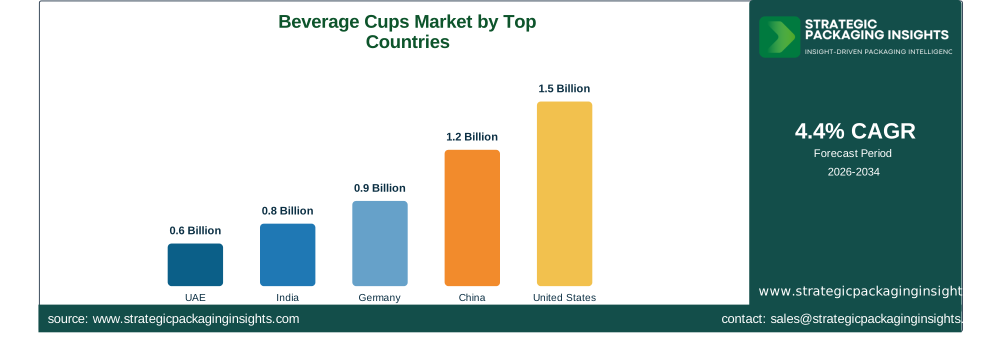
China is another major market for beverage cups, with a projected CAGR of 6%. The rapid urbanization and growing middle class in China are driving the demand for convenient and on-the-go beverage solutions. The expansion of the food and beverage industry, coupled with the increasing number of coffee shops and retail outlets, is contributing to the market's growth. However, the market faces challenges from regulatory restrictions on plastic usage and the need for sustainable alternatives.
In Europe, Germany is a key market for beverage cups, with a CAGR of 4%. The growing trend of coffee culture and the increasing number of cafés and QSRs are driving the demand for beverage cups. The market is also influenced by the stringent regulations on single-use plastics, pushing manufacturers to develop sustainable solutions. The focus on eco-friendly and biodegradable materials is a significant growth driver in the German market.
India is emerging as a lucrative market for beverage cups, with a projected CAGR of 7%. The increasing urbanization and changing consumer preferences towards on-the-go consumption are driving the demand for beverage cups. The expansion of the food and beverage industry, particularly in urban areas, is contributing to the market's growth. However, the market faces challenges from regulatory restrictions on plastic usage and the need for sustainable alternatives.
In the Middle East, the UAE is a growing market for beverage cups, with a CAGR of 5%. The increasing number of coffee shops and QSRs, coupled with the growing trend of on-the-go consumption, is driving the demand for beverage cups. The market is also influenced by the focus on sustainable and eco-friendly packaging solutions, as consumers and businesses alike seek to reduce their environmental footprint.
Beverage Cups Market Segments Insights

By Material Type Analysis
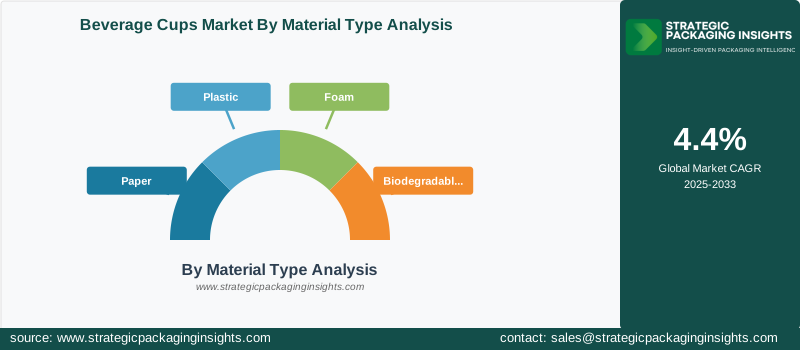
The Beverage Cups market is segmented by material type into paper, plastic, foam, and biodegradable materials. Paper cups are gaining popularity due to their recyclability and biodegradability, aligning with the growing demand for sustainable packaging solutions. The shift towards eco-friendly materials is driven by both consumer preferences and regulatory mandates aimed at reducing plastic waste. Plastic cups, while still widely used, face challenges from regulatory restrictions on single-use plastics. Manufacturers are investing in the development of biodegradable and compostable plastic alternatives to address these challenges. Foam cups, known for their insulation properties, are popular in the hot beverage segment, but face scrutiny due to environmental concerns. Biodegradable materials are emerging as a key segment, driven by the increasing focus on sustainability and the development of innovative materials that offer similar functionality to traditional options.
In terms of competition, companies are focusing on product innovation and sustainability to gain a competitive edge. The development of new materials and manufacturing processes that enhance the functionality and environmental performance of beverage cups is a key trend in the market. Additionally, the ability to offer customized and branded cups is becoming increasingly important, as businesses seek to differentiate themselves in a competitive market. The demand for eco-friendly and sustainable solutions is expected to drive the growth of the biodegradable materials segment, as consumers and businesses alike seek to reduce their environmental footprint.
By Product Type Analysis
The Beverage Cups market is segmented by product type into hot cups, cold cups, insulated cups, and lidded cups. Hot cups are a significant segment, driven by the increasing consumption of coffee and other hot beverages. The demand for insulated cups, which offer enhanced temperature retention, is also on the rise, particularly in the coffee and QSR sectors. Cold cups, used for soft drinks and other cold beverages, are popular in the fast-food and retail sectors. Lidded cups, which offer spill-proof functionality, are gaining traction in the on-the-go consumption segment, as consumers seek convenient and mess-free solutions.
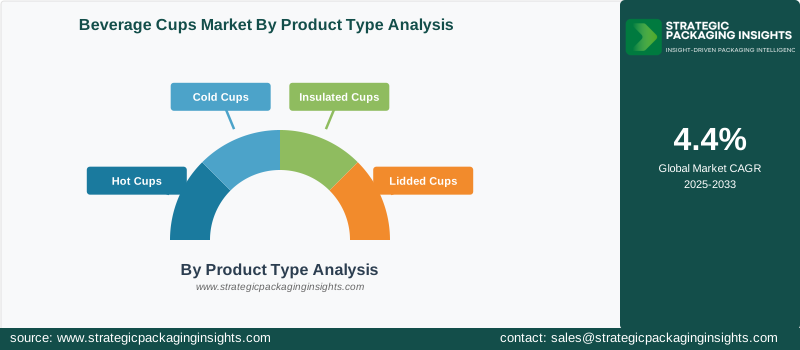
Trends in the product type segment include the development of innovative designs and features that enhance the functionality and consumer experience of beverage cups. Manufacturers are focusing on improving insulation properties, spill-proof features, and overall product design to meet the evolving needs of consumers. The ability to offer customized and branded cups is also a key trend, as businesses seek to enhance their brand visibility and customer engagement. The demand for sustainable and eco-friendly solutions is driving the development of new materials and manufacturing processes that align with these trends.
By Application Analysis
The Beverage Cups market is segmented by application into coffee, soft drinks, juices, and dairy beverages. The coffee segment is a major driver of the market, fueled by the growing coffee culture and the increasing number of coffee shops and QSRs. The demand for beverage cups in the soft drinks segment is driven by the fast-food and retail sectors, where on-the-go consumption is prevalent. The juices segment is also experiencing growth, driven by the increasing demand for healthy and natural beverage options. The dairy beverages segment, while smaller, is gaining traction as consumers seek convenient and portable packaging solutions for milk and other dairy products.
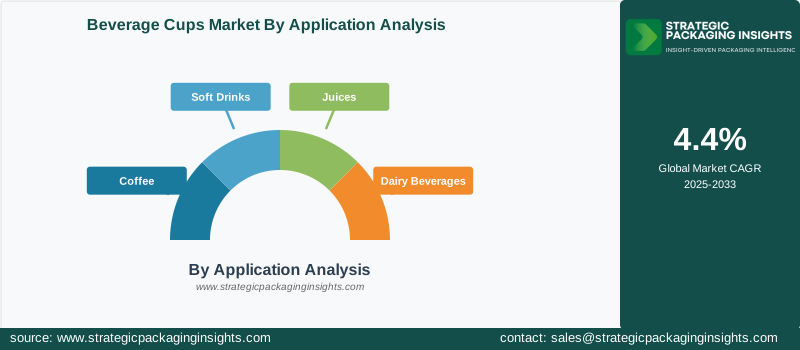
Trends in the application segment include the increasing focus on sustainability and the development of eco-friendly packaging solutions. Manufacturers are investing in the development of biodegradable and compostable materials that offer similar functionality to traditional options. The ability to offer customized and branded cups is also a key trend, as businesses seek to differentiate themselves in a competitive market. The demand for innovative designs and features that enhance the consumer experience is driving the development of new materials and manufacturing processes in the application segment.
By End Use Analysis
The Beverage Cups market is segmented by end use into QSRs, cafés, restaurants, and retail. QSRs are a major consumer of beverage cups, driven by the increasing demand for on-the-go consumption and the expansion of the fast-food industry. Cafés, particularly coffee shops, are also significant consumers of beverage cups, fueled by the growing coffee culture and the increasing number of coffee outlets. The restaurant segment, while smaller, is experiencing growth as consumers seek convenient and portable packaging solutions for beverages. The retail segment is also gaining traction, driven by the increasing demand for ready-to-drink beverages and the expansion of retail outlets.
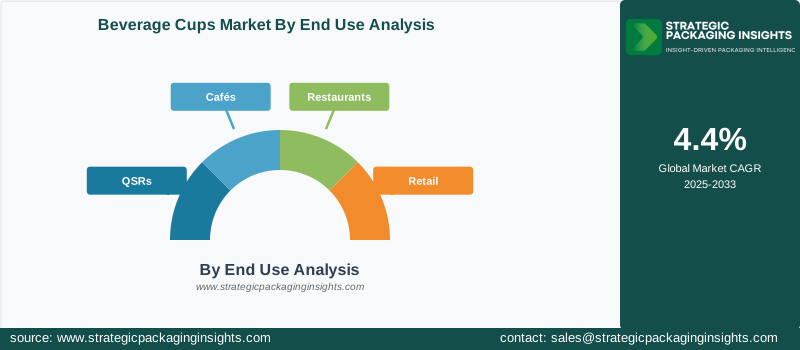
Trends in the end use segment include the increasing focus on sustainability and the development of eco-friendly packaging solutions. Manufacturers are investing in the development of biodegradable and compostable materials that offer similar functionality to traditional options. The ability to offer customized and branded cups is also a key trend, as businesses seek to enhance their brand visibility and customer engagement. The demand for innovative designs and features that enhance the consumer experience is driving the development of new materials and manufacturing processes in the end use segment.
Beverage Cups Market Segments
The Beverage Cups market has been segmented on the basis ofBy Material Type
- Paper
- Plastic
- Foam
- Biodegradable Materials
By Product Type
- Hot Cups
- Cold Cups
- Insulated Cups
- Lidded Cups
By Application
- Coffee
- Soft Drinks
- Juices
- Dairy Beverages
By End Use
- QSRs
- Cafés
- Restaurants
- Retail
Region
- Asia Pacific
- North America
- Latin America
- Europe
- Middle East & Africa




