


Beverage Aluminum Cans Market Outlook
The Beverage Aluminum Cans market was valued at $52.12 billion in 2025 and is projected to reach $82.43 billion by 2034, growing at a CAGR of 5.2% during the forecast period 2026-2034. This growth is driven by increasing consumer preference for sustainable and recyclable packaging solutions, as aluminum cans are highly recyclable and have a lower environmental impact compared to other packaging materials. The demand for aluminum cans is further fueled by the rising consumption of beverages such as soft drinks, beer, and energy drinks, which are commonly packaged in aluminum cans due to their ability to preserve the taste and quality of the beverage. Additionally, the lightweight nature of aluminum cans reduces transportation costs, making them an attractive option for beverage manufacturers.
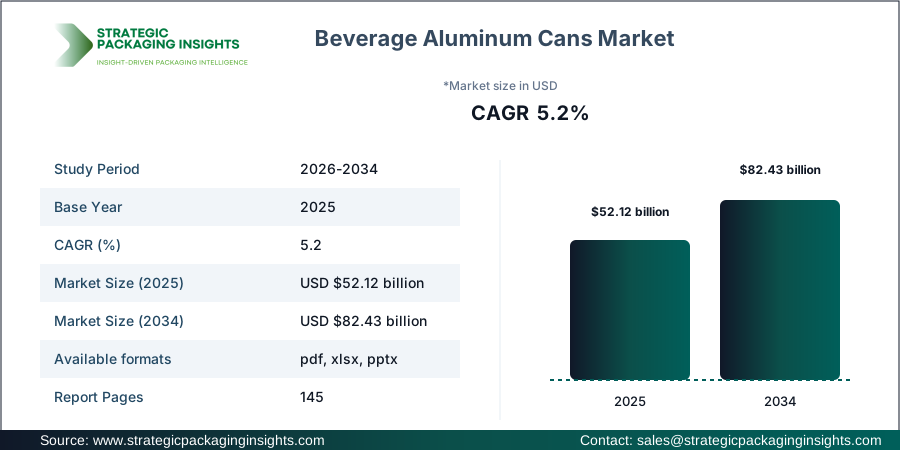
Despite the positive growth outlook, the Beverage Aluminum Cans market faces certain challenges. Regulatory restrictions on the use of aluminum due to environmental concerns and the fluctuating prices of raw materials can pose significant restraints on market growth. However, advancements in can manufacturing technologies and the development of innovative can designs are expected to create new growth opportunities. The market also benefits from the increasing trend of premiumization in the beverage industry, where brands are opting for sleek and aesthetically pleasing packaging to attract consumers. Overall, the Beverage Aluminum Cans market holds significant potential for growth, driven by the demand for sustainable packaging solutions and the continuous innovation in can designs.
Report Scope
| Attributes | Details |
| Report Title | Beverage Aluminum Cans Market Size, Future Growth and Forecast 2034 |
| Product Type | 2-Piece Cans, Slim Cans, Sleek Cans, Standard Cans |
| Capacity | Below 250 ml, 250–500 ml, Above 500 ml |
| Application | Soft Drinks, Beer, Energy Drinks, Water |
| End Use | Beverage Brands, Breweries, Contract Fillers |
| Region | Asia Pacific, North America, Latin America, Europe, Middle East & Africa |
| Base Year | 2025 |
| Historic Period | 2018-2024 |
| Forecast Period | 2026-2034 |
| Number of Pages | 145 |
| Customization Available | Yes* |
Opportunities & Threats
The Beverage Aluminum Cans market presents numerous opportunities for growth, primarily driven by the increasing consumer awareness and demand for eco-friendly packaging solutions. As consumers become more environmentally conscious, there is a growing preference for recyclable materials, and aluminum cans fit this requirement perfectly. The recyclability of aluminum cans not only reduces waste but also conserves energy, making them a sustainable choice for beverage packaging. Additionally, the rising trend of on-the-go consumption and the popularity of ready-to-drink beverages are expected to boost the demand for aluminum cans, as they are lightweight, portable, and easy to handle.
Another significant opportunity lies in the expansion of the beverage industry in emerging markets. As disposable incomes rise and urbanization increases, there is a growing demand for packaged beverages in countries such as India, China, and Brazil. This presents a lucrative opportunity for aluminum can manufacturers to expand their presence in these regions and cater to the increasing demand for beverages. Furthermore, the trend of premiumization in the beverage industry is driving the demand for aesthetically pleasing and innovative packaging solutions, providing an opportunity for manufacturers to differentiate their products through unique can designs and features.
However, the market also faces certain threats that could hinder its growth. One of the primary challenges is the volatility in the prices of raw materials, particularly aluminum, which can impact the profitability of manufacturers. Additionally, stringent regulations regarding the use of aluminum and concerns over its environmental impact could pose challenges for the market. The competition from alternative packaging materials, such as plastic and glass, also presents a threat, as these materials offer certain advantages in terms of cost and versatility. To mitigate these threats, manufacturers need to focus on innovation, cost optimization, and sustainability initiatives to maintain their competitive edge in the market.
Drivers & Challenges
The Beverage Aluminum Cans market is primarily driven by the increasing demand for sustainable and recyclable packaging solutions. As environmental concerns continue to rise, consumers and manufacturers alike are seeking packaging options that minimize environmental impact. Aluminum cans are highly recyclable, with a recycling rate significantly higher than that of other packaging materials, making them an attractive choice for environmentally conscious consumers. Additionally, the lightweight nature of aluminum cans reduces transportation costs and carbon emissions, further enhancing their appeal as a sustainable packaging solution.
Another key driver of the market is the growing consumption of beverages such as soft drinks, beer, and energy drinks, which are commonly packaged in aluminum cans. The ability of aluminum cans to preserve the taste and quality of beverages, along with their convenience and portability, makes them a preferred choice for both consumers and manufacturers. The trend of on-the-go consumption and the increasing popularity of ready-to-drink beverages are also contributing to the demand for aluminum cans, as they offer convenience and ease of use for consumers.
Despite the positive drivers, the market faces several challenges that could impact its growth. One of the primary challenges is the volatility in the prices of raw materials, particularly aluminum, which can affect the profitability of manufacturers. Additionally, regulatory restrictions on the use of aluminum due to environmental concerns could pose challenges for the market. The competition from alternative packaging materials, such as plastic and glass, also presents a challenge, as these materials offer certain advantages in terms of cost and versatility. To overcome these challenges, manufacturers need to focus on innovation, cost optimization, and sustainability initiatives to maintain their competitive edge in the market.
Market Share Analysis
The Beverage Aluminum Cans market is characterized by a competitive landscape with several key players dominating the market. Companies such as Ball Corporation, Crown Holdings, Ardagh Metal Packaging, and Canpack hold significant market shares due to their extensive product portfolios, strong distribution networks, and focus on innovation. These companies are continuously investing in research and development to introduce new and innovative can designs that cater to the evolving needs of consumers and beverage manufacturers.
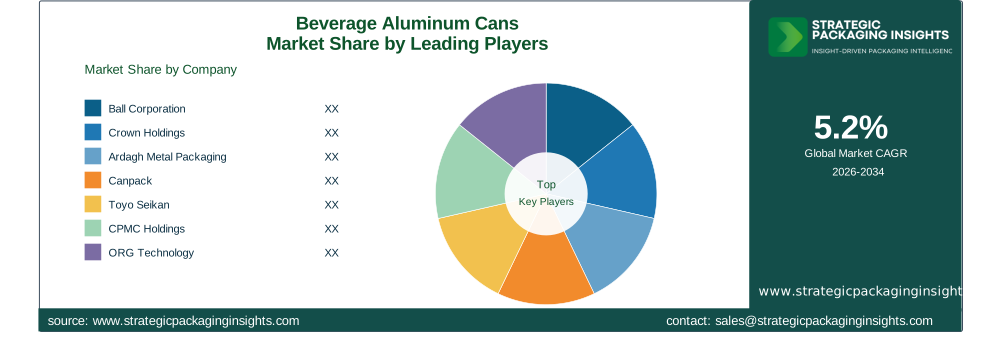
Ball Corporation is one of the leading players in the market, known for its wide range of aluminum can products and strong focus on sustainability. The company has a significant market share and is continuously expanding its production capacity to meet the growing demand for aluminum cans. Crown Holdings is another major player, offering a diverse range of can sizes and designs to cater to different beverage segments. The company's strong distribution network and focus on customer satisfaction have helped it maintain a competitive edge in the market.
Ardagh Metal Packaging is known for its innovative can designs and focus on sustainability. The company has a strong presence in the market and is continuously investing in research and development to introduce new and innovative products. Canpack is another key player, offering a wide range of aluminum can products and focusing on expanding its presence in emerging markets. The company's strong focus on sustainability and innovation has helped it gain a significant market share.
Other notable players in the market include Toyo Seikan, CPMC Holdings, ORG Technology, Envases Group, Daiwa Can, and Trivium Packaging. These companies are focusing on expanding their product portfolios, enhancing their production capacities, and investing in research and development to maintain their competitive positions in the market. The competitive landscape of the Beverage Aluminum Cans market is characterized by continuous innovation, strategic partnerships, and a strong focus on sustainability, as companies strive to meet the evolving needs of consumers and beverage manufacturers.
Key Highlights
- The Beverage Aluminum Cans market is projected to grow at a CAGR of 5.2% from 2026 to 2034.
- Increasing consumer preference for sustainable and recyclable packaging solutions is driving market growth.
- The market is characterized by a competitive landscape with key players such as Ball Corporation, Crown Holdings, and Ardagh Metal Packaging.
- Advancements in can manufacturing technologies and innovative can designs are creating new growth opportunities.
- The trend of premiumization in the beverage industry is driving the demand for aesthetically pleasing packaging solutions.
- Emerging markets such as India, China, and Brazil present lucrative opportunities for market expansion.
- Volatility in raw material prices and regulatory restrictions pose challenges to market growth.
Top Countries Insights
In the Beverage Aluminum Cans market, the United States holds a significant market share, driven by the high consumption of beverages such as soft drinks and beer. The market in the U.S. is characterized by a strong focus on sustainability and innovation, with manufacturers investing in advanced can designs and production technologies. The market is expected to grow at a CAGR of 4%, supported by the increasing demand for eco-friendly packaging solutions and the trend of on-the-go consumption.
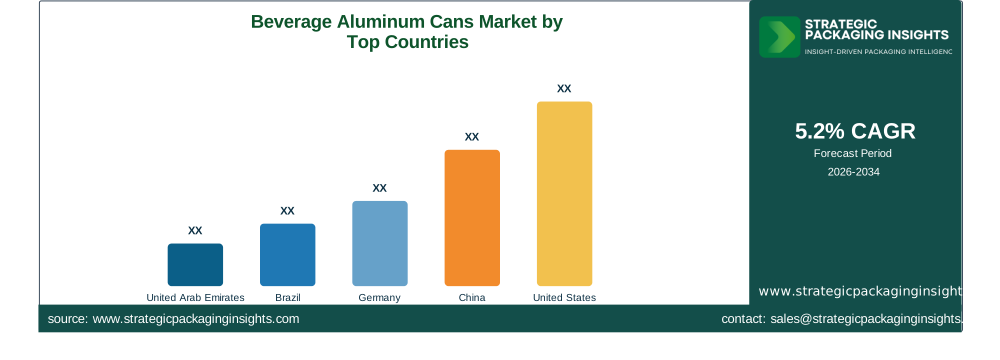
China is another key market for beverage aluminum cans, with a growing demand for packaged beverages driven by rising disposable incomes and urbanization. The market in China is expected to grow at a CAGR of 6%, supported by government initiatives to promote sustainable packaging solutions and the increasing popularity of ready-to-drink beverages. The presence of a large number of beverage manufacturers and the expanding middle class are also contributing to market growth.
In Europe, Germany is a leading market for beverage aluminum cans, driven by the high consumption of beer and soft drinks. The market in Germany is characterized by a strong focus on sustainability and recycling, with manufacturers investing in advanced can designs and production technologies. The market is expected to grow at a CAGR of 5%, supported by the increasing demand for eco-friendly packaging solutions and the trend of premiumization in the beverage industry.
Brazil is a key market in Latin America, with a growing demand for aluminum cans driven by the increasing consumption of beverages such as beer and soft drinks. The market in Brazil is expected to grow at a CAGR of 5%, supported by the rising disposable incomes and the expanding middle class. The presence of a large number of beverage manufacturers and the increasing popularity of ready-to-drink beverages are also contributing to market growth.
In the Middle East & Africa, the United Arab Emirates is a leading market for beverage aluminum cans, driven by the high consumption of beverages such as energy drinks and soft drinks. The market in the UAE is characterized by a strong focus on sustainability and innovation, with manufacturers investing in advanced can designs and production technologies. The market is expected to grow at a CAGR of 4%, supported by the increasing demand for eco-friendly packaging solutions and the trend of on-the-go consumption.
Beverage Aluminum Cans Market Segments Insights

Product Type Analysis
The Beverage Aluminum Cans market is segmented by product type into 2-Piece Cans, Slim Cans, Sleek Cans, and Standard Cans. Each of these product types caters to different consumer preferences and beverage requirements. 2-Piece Cans are widely used due to their cost-effectiveness and ease of manufacturing, making them a popular choice for mass-produced beverages. Slim Cans and Sleek Cans, on the other hand, are gaining popularity due to their aesthetic appeal and convenience, particularly in the premium beverage segment. These cans are often used for energy drinks and premium soft drinks, where the packaging plays a crucial role in attracting consumers. Standard Cans remain a staple in the market, offering a balance between cost and functionality, and are commonly used for a wide range of beverages, including beer and soft drinks.
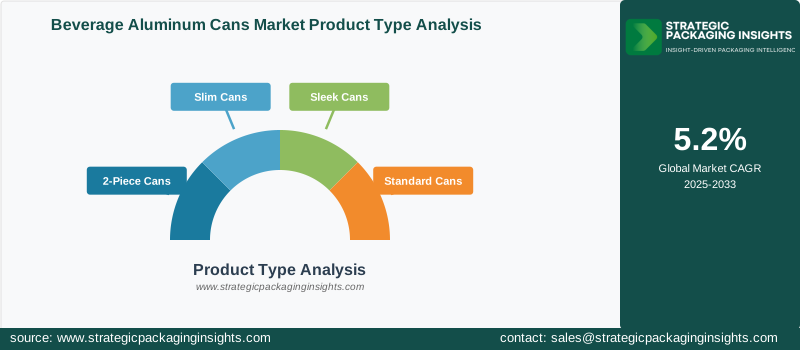
The demand for different product types is influenced by consumer preferences, beverage trends, and marketing strategies of beverage manufacturers. The trend of premiumization in the beverage industry is driving the demand for Slim and Sleek Cans, as brands seek to differentiate their products through unique and attractive packaging. Additionally, the increasing focus on sustainability is encouraging manufacturers to innovate in can designs, leading to the development of lightweight and recyclable can options. The competition among manufacturers to offer diverse and innovative can designs is expected to drive the growth of the product type segment in the Beverage Aluminum Cans market.
Capacity Analysis
The Beverage Aluminum Cans market is segmented by capacity into Below 250 ml, 250-500 ml, and Above 500 ml. Each capacity segment caters to different beverage types and consumer preferences. Cans with a capacity of Below 250 ml are commonly used for energy drinks and premium beverages, where smaller serving sizes are preferred. The 250-500 ml segment is the most popular, catering to a wide range of beverages, including soft drinks, beer, and water. This segment offers a balance between convenience and serving size, making it a preferred choice for both consumers and manufacturers. Cans with a capacity of Above 500 ml are typically used for larger servings of beverages such as beer and soft drinks, where consumers prefer larger quantities.
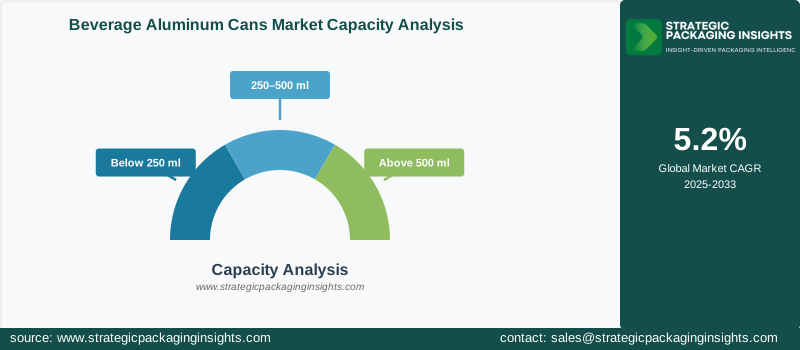
The demand for different capacity segments is influenced by consumer preferences, beverage trends, and marketing strategies of beverage manufacturers. The trend of on-the-go consumption and the increasing popularity of ready-to-drink beverages are driving the demand for smaller capacity cans, as they offer convenience and ease of use for consumers. Additionally, the increasing focus on health and wellness is encouraging consumers to opt for smaller serving sizes, further driving the demand for cans with a capacity of Below 250 ml. The competition among manufacturers to offer diverse and innovative can designs is expected to drive the growth of the capacity segment in the Beverage Aluminum Cans market.
Application Analysis
The Beverage Aluminum Cans market is segmented by application into Soft Drinks, Beer, Energy Drinks, and Water. Each application segment caters to different consumer preferences and beverage requirements. Soft Drinks are the largest application segment, driven by the high consumption of carbonated beverages and the increasing demand for ready-to-drink options. Beer is another significant application segment, with aluminum cans being a popular choice for packaging due to their ability to preserve the taste and quality of the beverage. Energy Drinks are gaining popularity, particularly among younger consumers, and are commonly packaged in sleek and aesthetically pleasing aluminum cans to attract consumers. Water is a growing application segment, driven by the increasing demand for portable and convenient packaging options.
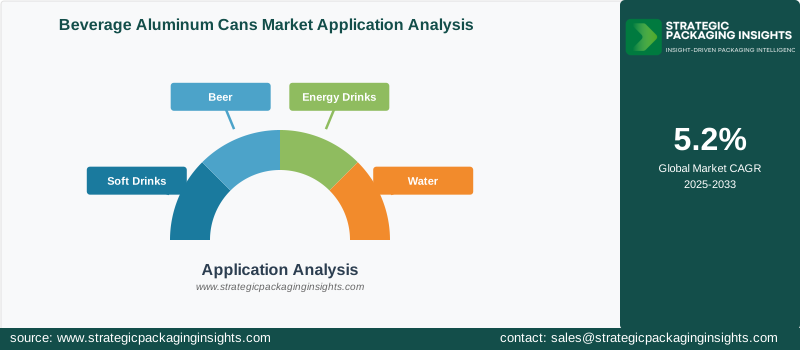
The demand for different application segments is influenced by consumer preferences, beverage trends, and marketing strategies of beverage manufacturers. The trend of on-the-go consumption and the increasing popularity of ready-to-drink beverages are driving the demand for aluminum cans in the Soft Drinks and Energy Drinks segments. Additionally, the increasing focus on sustainability is encouraging manufacturers to opt for aluminum cans over other packaging materials, further driving the growth of the application segment in the Beverage Aluminum Cans market. The competition among manufacturers to offer diverse and innovative can designs is expected to drive the growth of the application segment in the Beverage Aluminum Cans market.
End Use Analysis
The Beverage Aluminum Cans market is segmented by end use into Beverage Brands, Breweries, and Contract Fillers. Each end-use segment caters to different consumer preferences and beverage requirements. Beverage Brands are the largest end-use segment, driven by the high demand for branded and premium beverages. Breweries are another significant end-use segment, with aluminum cans being a popular choice for packaging due to their ability to preserve the taste and quality of the beverage. Contract Fillers are gaining popularity, particularly among smaller beverage manufacturers, as they offer cost-effective and flexible packaging solutions.
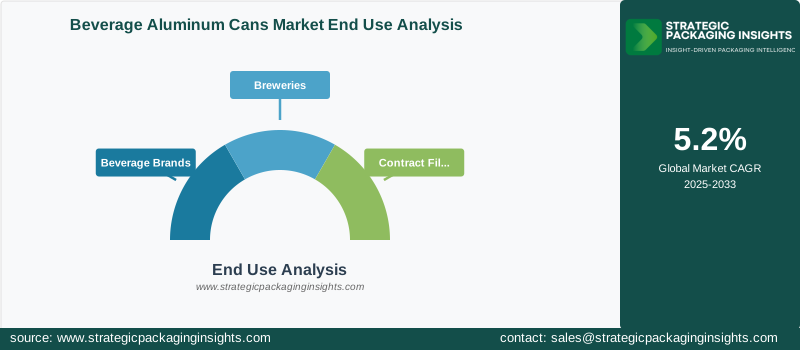
The demand for different end-use segments is influenced by consumer preferences, beverage trends, and marketing strategies of beverage manufacturers. The trend of premiumization in the beverage industry is driving the demand for aluminum cans in the Beverage Brands segment, as brands seek to differentiate their products through unique and attractive packaging. Additionally, the increasing focus on sustainability is encouraging manufacturers to opt for aluminum cans over other packaging materials, further driving the growth of the end-use segment in the Beverage Aluminum Cans market. The competition among manufacturers to offer diverse and innovative can designs is expected to drive the growth of the end-use segment in the Beverage Aluminum Cans market.
Beverage Aluminum Cans Market Segments
The Beverage Aluminum Cans market has been segmented on the basis ofProduct Type
- 2-Piece Cans
- Slim Cans
- Sleek Cans
- Standard Cans
Capacity
- Below 250 ml
- 250–500 ml
- Above 500 ml
Application
- Soft Drinks
- Beer
- Energy Drinks
- Water
End Use
- Beverage Brands
- Breweries
- Contract Fillers
Region
- Asia Pacific
- North America
- Latin America
- Europe
- Middle East & Africa




