


Barrier-Coated Paper for Frozen Food Packaging Market Outlook
The Barrier-Coated Paper for Frozen Food Packaging market size was valued at USD 1.16 Billion in 2025 and is anticipated to reach USD 2.81 Billion by 2034, growing at a CAGR of 10.4% during the forecast period according to Strategic Packaging Insights. This growth is driven by the increasing demand for sustainable packaging solutions in the frozen food sector, as consumers and manufacturers alike seek to reduce environmental impact. Companies like Stora Enso and UPM Specialty Papers are at the forefront of this trend, offering innovative barrier-coated paper products that meet the stringent requirements of frozen food packaging while also addressing sustainability concerns.
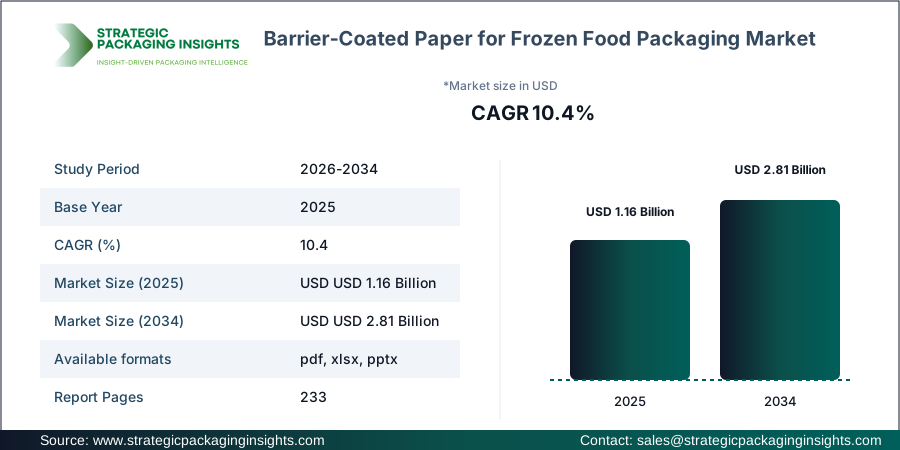
The most impactful market driver is the growing consumer preference for eco-friendly packaging solutions, which is supported by government regulations aimed at reducing plastic waste. For instance, many countries are implementing policies to encourage the use of biodegradable and recyclable materials in packaging, which is boosting the demand for barrier-coated paper. This shift is further accelerated by the increasing awareness among consumers about the environmental impact of traditional packaging materials, leading to a surge in demand for products from companies like Mondi plc and Billerud AB, which are known for their commitment to sustainability and innovation in packaging solutions.
Report Scope
| Attributes | Details |
| Report Title | Barrier-Coated Paper for Frozen Food Packaging Market Size, Future Growth and Forecast 2034 |
| By Coating Type | Water-Based Barrier Coatings, Bio-Based Barrier Coatings, Dispersion Barrier Coatings, Mineral-Based Barrier Coatings, Polymer Barrier Coatings |
| By Packaging Type | Frozen Food Boxes, Wrapping Paper, Pouches, Cartons, Liners, Tray Sleeves |
| By Application | Frozen Ready Meals, Frozen Meat & Poultry, Frozen Seafood, Frozen Fruits & Vegetables, Frozen Bakery Products, Frozen Desserts |
| By End User | Food Manufacturers, Frozen Food Brands, Retail & Supermarkets, Foodservice Companies, Packaging Converters |
| Region | Asia Pacific, North America, Latin America, Europe, Middle East & Africa |
| Base Year | 2025 |
| Historic Period | 2018-2024 |
| Forecast Period | 2026-2034 |
| Number of Pages | 233 |
| Customization Available | Yes* |
Sustainability & Circular Economy Analysis
Sustainability initiatives and circular economy practices are significantly influencing the barrier-coated paper market for frozen food packaging. The adoption of recyclable materials and reusable packaging solutions is becoming a standard practice, driven by consumer demand for eco-friendly products. Companies are investing in lightweight packaging and eco-friendly material innovations to reduce their carbon footprint and align with environmental, social, and governance (ESG) initiatives. This trend is reshaping packaging design and manufacturing processes, as businesses strive to meet regulatory compliance and enhance their long-term market competitiveness.
Packaging regulations and extended producer responsibility (EPR) are also playing a crucial role in shaping the market landscape. These regulations are pushing manufacturers to adopt waste reduction strategies and improve their supply chain strategies to minimize environmental impact. As a result, companies are focusing on developing sustainable packaging solutions that not only meet regulatory requirements but also appeal to environmentally conscious consumers. This shift is leading to increased investment in research and development to create innovative packaging solutions that are both functional and sustainable.
The influence of sustainability trends extends beyond packaging design and manufacturing to impact investment decisions and supply chain strategies. Companies are increasingly prioritizing sustainability in their procurement strategies, opting for suppliers that adhere to eco-friendly practices. This focus on sustainability is also driving collaborations and partnerships within the industry, as companies seek to enhance their supply chain resilience and ensure a steady supply of sustainable materials. Overall, the emphasis on sustainability is fostering a competitive market environment, where companies that prioritize eco-friendly practices are more likely to succeed.
Packaging Value Chain & Supply Chain Analysis
The packaging value chain for barrier-coated paper in frozen food packaging is complex, involving multiple stakeholders from raw material sourcing to end-user delivery. Raw material availability is a critical factor, as it influences the production capabilities and cost-effectiveness of packaging solutions. Packaging converters and manufacturers play a pivotal role in transforming raw materials into finished products, utilizing advanced packaging machinery to ensure efficiency and quality. Companies like Graphic Packaging International and Koehler Paper are key players in this segment, leveraging their expertise to deliver high-quality packaging solutions.
Logistics and distribution channels are essential components of the supply chain, ensuring that packaging products reach brand owners and retailers efficiently. Supply chain efficiency is crucial for maintaining competitiveness in the market, as delays or disruptions can impact the overall performance of businesses. Strategic partnerships and collaborations are becoming increasingly important, as companies seek to enhance their supply chain resilience and optimize their procurement strategies. This focus on supply chain optimization is driving companies to invest in advanced technologies and innovative solutions to streamline their operations.
Recycling networks and inventory management are also integral to the packaging value chain, as companies strive to minimize waste and improve sustainability. The emphasis on recycling and waste reduction is leading to the development of closed-loop systems, where packaging materials are reused and recycled to create new products. This approach not only reduces environmental impact but also enhances the overall sustainability of the supply chain. As a result, companies that prioritize sustainability and supply chain efficiency are better positioned to succeed in the competitive barrier-coated paper market for frozen food packaging.
Opportunities & Threats
The barrier-coated paper market for frozen food packaging presents numerous opportunities for growth and innovation. One significant opportunity lies in the development of bio-based barrier coatings, which offer an eco-friendly alternative to traditional coatings. These coatings are derived from renewable resources and provide excellent barrier properties, making them ideal for frozen food packaging. Companies that invest in research and development to create innovative bio-based coatings can gain a competitive edge in the market, as consumers increasingly seek sustainable packaging solutions.
Another opportunity is the expansion of the market in emerging economies, where the demand for frozen food products is on the rise. As disposable incomes increase and consumer preferences shift towards convenience foods, the demand for frozen food packaging is expected to grow. This presents an opportunity for companies to expand their operations and tap into new markets, leveraging their expertise in barrier-coated paper solutions to meet the needs of consumers in these regions. Additionally, the growing trend of online grocery shopping is driving demand for durable and sustainable packaging solutions, further boosting market growth.
Despite these opportunities, the market also faces several threats that could impact its growth. One significant threat is the volatility of raw material prices, which can affect the cost-effectiveness of barrier-coated paper solutions. Fluctuations in the prices of raw materials such as pulp and paper can lead to increased production costs, impacting the profitability of companies in the market. Additionally, stringent regulations and compliance requirements can pose challenges for companies, as they must invest in new technologies and processes to meet these standards. Companies that fail to adapt to these changes may struggle to maintain their competitiveness in the market.
Drivers & Challenges
The primary driver of the barrier-coated paper market for frozen food packaging is the increasing demand for sustainable packaging solutions. As consumers become more environmentally conscious, they are seeking packaging options that minimize environmental impact. This shift in consumer preferences is driving companies to develop innovative barrier-coated paper solutions that offer excellent barrier properties while being eco-friendly. Companies like Sappi Limited and Huhtamaki Oyj are leading the way in this regard, investing in research and development to create sustainable packaging solutions that meet the needs of consumers and regulatory requirements.
Another key driver is the growing demand for convenience foods, which is boosting the demand for frozen food packaging. As lifestyles become busier, consumers are increasingly turning to frozen foods as a convenient meal option. This trend is driving the demand for packaging solutions that can preserve the quality and freshness of frozen foods while being easy to use and store. Companies that can offer innovative packaging solutions that meet these requirements are well-positioned to capitalize on this growing demand and expand their market share.
However, the market also faces several challenges that could impact its growth. One significant challenge is the need for continuous innovation to meet changing consumer preferences and regulatory requirements. Companies must invest in research and development to create new and improved packaging solutions that offer enhanced barrier properties and sustainability. Additionally, the market is highly competitive, with numerous players vying for market share. Companies must differentiate themselves through innovation and quality to succeed in this competitive landscape. Those that fail to do so may struggle to maintain their market position and profitability.
Market Share Analysis
The barrier-coated paper market for frozen food packaging is characterized by a competitive landscape, with several key players dominating the market. Companies like Stora Enso, UPM Specialty Papers, and Mondi plc hold significant market shares, leveraging their expertise and innovation to deliver high-quality packaging solutions. These companies are known for their commitment to sustainability and have invested heavily in research and development to create eco-friendly packaging solutions that meet the needs of consumers and regulatory requirements.
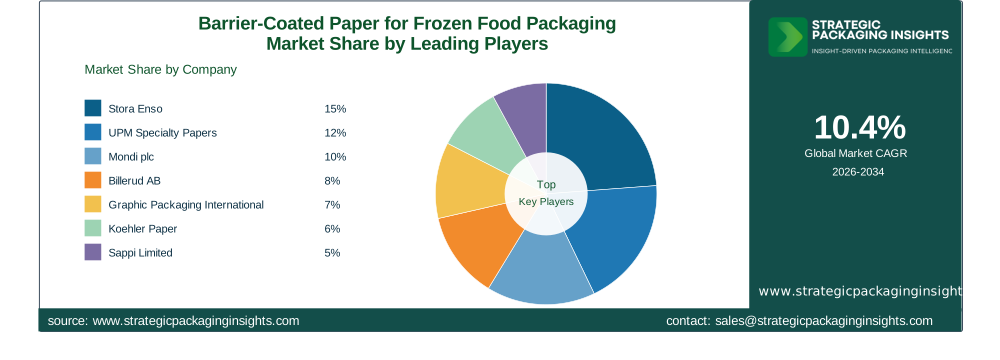
Stora Enso, for example, is a leading provider of renewable solutions in packaging, biomaterials, wooden constructions, and paper. The company has a strong focus on sustainability and innovation, offering a range of barrier-coated paper products that are designed to meet the needs of the frozen food industry. Similarly, UPM Specialty Papers is known for its high-quality paper products and commitment to sustainability, offering a range of barrier-coated paper solutions that are both functional and environmentally friendly.
Mondi plc is another key player in the market, known for its innovative packaging solutions and commitment to sustainability. The company offers a range of barrier-coated paper products that are designed to meet the needs of the frozen food industry, providing excellent barrier properties and sustainability. Billerud AB is also a significant player in the market, offering a range of sustainable packaging solutions that are designed to meet the needs of consumers and regulatory requirements.
Other notable companies in the market include Graphic Packaging International, Koehler Paper, Sappi Limited, Huhtamaki Oyj, WestRock, DS Smith, Metsä Board, Lecta, Michelman, Solenis, and BASF SE. These companies are known for their commitment to sustainability and innovation, offering a range of barrier-coated paper solutions that meet the needs of the frozen food industry. Overall, the market is characterized by a high level of competition, with companies vying for market share through innovation and quality.
Key Highlights
- Market Size: USD 1.16 Billion in 2025, projected to reach USD 2.81 Billion by 2034.
- Growth Rate: Expected CAGR of 10.4% during the forecast period.
- Leading Companies: Stora Enso, UPM Specialty Papers, Mondi plc, Billerud AB.
- Key Segments: Water-Based and Bio-Based Barrier Coatings.
- Emerging Markets: Asia Pacific and Latin America showing significant growth potential.
- Consumer Trends: Increasing demand for sustainable and eco-friendly packaging solutions.
- Regulatory Impact: Stringent regulations driving innovation in sustainable packaging.
Barrier-Coated Paper for Frozen Food Packaging Market Segments Insights

By Coating Type Analysis
The barrier-coated paper market for frozen food packaging is segmented by coating type, with water-based barrier coatings leading the segment due to their eco-friendly properties and excellent barrier performance. These coatings are gaining popularity as they offer a sustainable alternative to traditional coatings, aligning with the growing consumer demand for environmentally friendly packaging solutions. Bio-based barrier coatings are also gaining traction, driven by the increasing focus on renewable resources and sustainability. Companies are investing in research and development to create innovative bio-based coatings that offer superior barrier properties and meet regulatory requirements.
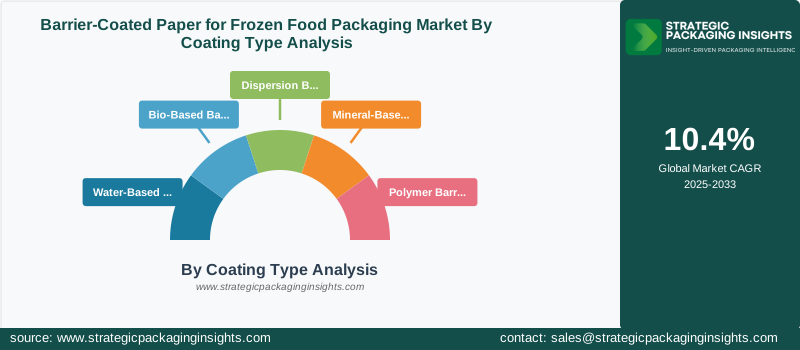
Dispersion barrier coatings are another key segment, offering excellent moisture and grease resistance, making them ideal for frozen food packaging. These coatings are widely used in the industry due to their versatility and performance, providing a reliable solution for preserving the quality and freshness of frozen foods. Mineral-based barrier coatings are also gaining attention, offering a sustainable alternative to traditional coatings with their natural composition and excellent barrier properties. Polymer barrier coatings, while less environmentally friendly, continue to be used in applications where superior barrier performance is required.
By Packaging Type Analysis
The market is also segmented by packaging type, with frozen food boxes and wrapping paper being the most commonly used packaging solutions. These packaging types offer excellent protection and preservation of frozen foods, making them a popular choice among manufacturers and consumers alike. Pouches and cartons are also widely used, offering convenience and ease of use for consumers. These packaging types are designed to provide excellent barrier properties, ensuring the quality and freshness of frozen foods during storage and transportation.
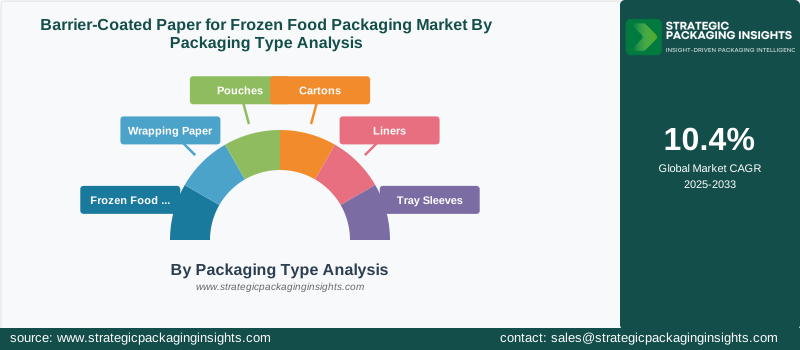
Liners and tray sleeves are gaining popularity as they offer additional protection and insulation for frozen foods. These packaging solutions are designed to provide a reliable barrier against moisture and grease, ensuring the quality and freshness of frozen foods. As consumer preferences shift towards convenience and sustainability, companies are investing in innovative packaging solutions that offer superior performance and environmental benefits. This trend is driving the demand for advanced packaging solutions that meet the needs of consumers and regulatory requirements.
By Application Analysis
The barrier-coated paper market for frozen food packaging is segmented by application, with frozen ready meals and frozen meat & poultry being the largest segments. These applications require packaging solutions that offer excellent barrier properties to preserve the quality and freshness of the products. Frozen seafood and frozen fruits & vegetables are also significant segments, with the demand for sustainable packaging solutions driving innovation in these areas. Companies are investing in research and development to create packaging solutions that meet the specific needs of these applications, offering superior barrier performance and sustainability.
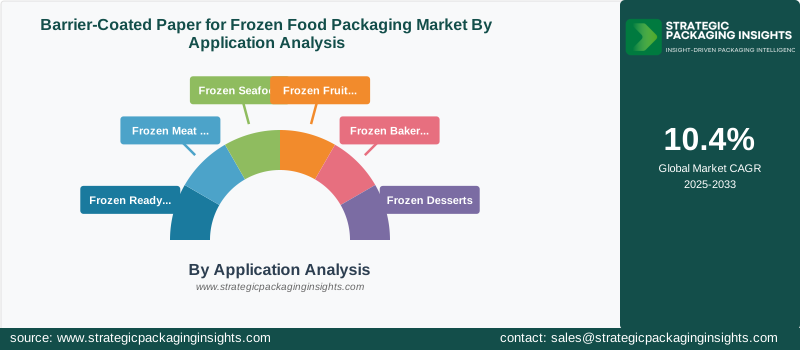
Frozen bakery products and frozen desserts are also key segments, with the demand for convenient and sustainable packaging solutions driving growth in these areas. As consumer preferences shift towards convenience and sustainability, companies are focusing on developing innovative packaging solutions that offer superior performance and environmental benefits. This trend is driving the demand for advanced packaging solutions that meet the needs of consumers and regulatory requirements, ensuring the quality and freshness of frozen foods.
By End User Analysis
The market is segmented by end user, with food manufacturers and frozen food brands being the largest segments. These end users require packaging solutions that offer excellent barrier properties to preserve the quality and freshness of their products. Retail & supermarkets and foodservice companies are also significant segments, with the demand for sustainable packaging solutions driving innovation in these areas. Companies are investing in research and development to create packaging solutions that meet the specific needs of these end users, offering superior barrier performance and sustainability.
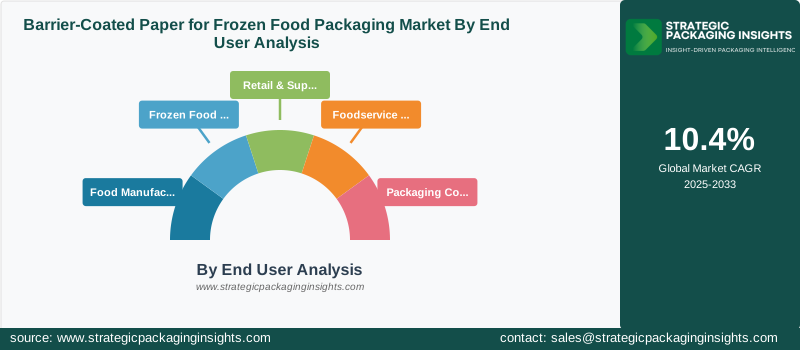
Packaging converters are also a key segment, playing a crucial role in the production and distribution of barrier-coated paper solutions. These companies are responsible for transforming raw materials into finished products, utilizing advanced packaging machinery to ensure efficiency and quality. As the demand for sustainable packaging solutions continues to grow, packaging converters are focusing on developing innovative solutions that meet the needs of consumers and regulatory requirements, ensuring the quality and freshness of frozen foods.
Barrier-Coated Paper for Frozen Food Packaging Market Segments
The Barrier-Coated Paper for Frozen Food Packaging market has been segmented on the basis ofBy Coating Type
- Water-Based Barrier Coatings
- Bio-Based Barrier Coatings
- Dispersion Barrier Coatings
- Mineral-Based Barrier Coatings
- Polymer Barrier Coatings
By Packaging Type
- Frozen Food Boxes
- Wrapping Paper
- Pouches
- Cartons
- Liners
- Tray Sleeves
By Application
- Frozen Ready Meals
- Frozen Meat & Poultry
- Frozen Seafood
- Frozen Fruits & Vegetables
- Frozen Bakery Products
- Frozen Desserts
By End User
- Food Manufacturers
- Frozen Food Brands
- Retail & Supermarkets
- Foodservice Companies
- Packaging Converters
Region
- Asia Pacific
- North America
- Latin America
- Europe
- Middle East & Africa




