


Bagasse Bowls Market Outlook
The Bagasse Bowls market was valued at $1.94 billion in 2025 and is projected to reach $3.73 billion by 2034, growing at a CAGR of 7.5% during the forecast period 2026-2034. This growth is driven by increasing consumer awareness regarding sustainable and eco-friendly products. Bagasse, a byproduct of sugarcane processing, is gaining traction as a biodegradable alternative to plastic and Styrofoam, which are increasingly being regulated due to environmental concerns. The demand for bagasse bowls is particularly strong in the foodservice industry, where there is a significant push towards reducing single-use plastics. Additionally, the rise in takeout and delivery services, accelerated by the COVID-19 pandemic, has further fueled the demand for sustainable packaging solutions like bagasse bowls.
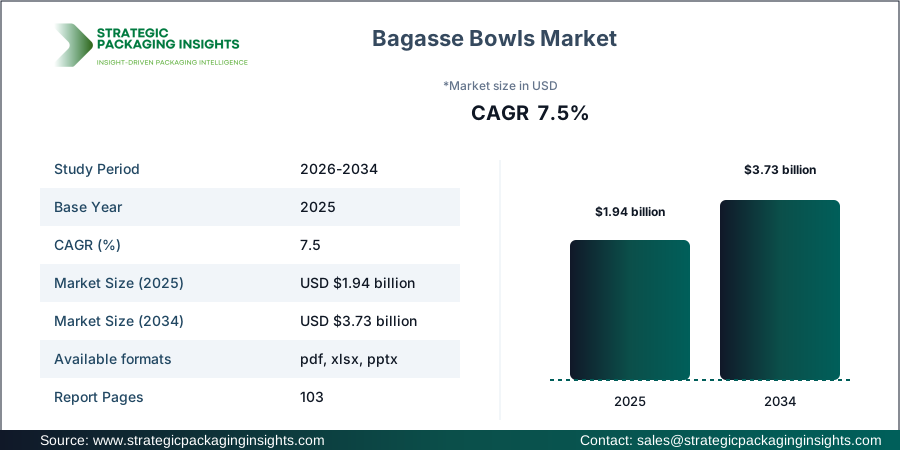
Despite the promising growth prospects, the Bagasse Bowls market faces certain challenges. The cost of production for bagasse products is relatively higher compared to traditional plastic products, which can be a deterrent for price-sensitive consumers and businesses. Moreover, the availability of raw materials can be inconsistent, as it is dependent on the sugarcane harvest. However, the market is expected to overcome these challenges through technological advancements in production processes and increasing investments in sustainable packaging solutions. Regulatory support in the form of bans on single-use plastics and incentives for eco-friendly products is also anticipated to bolster market growth.
Report Scope
| Attributes | Details |
| Report Title | Bagasse Bowls Market Size, Future Growth and Forecast 2034 |
| Product Type | Round Bowls, Square Bowls, Compartment Bowls |
| Capacity | Below 12 oz, 12–24 oz, Above 24 oz |
| Application | Foodservice, Takeaway, Catering, Institutional Dining |
| Distribution Channel | Foodservice Distributors, Online, Retail, Direct Sales |
| Region | Asia Pacific, North America, Latin America, Europe, Middle East & Africa |
| Base Year | 2025 |
| Historic Period | 2018-2024 |
| Forecast Period | 2026-2034 |
| Number of Pages | 103 |
| Customization Available | Yes* |
Opportunities & Threats
The Bagasse Bowls market presents numerous opportunities, particularly in the realm of environmental sustainability. As global awareness of environmental issues continues to rise, consumers and businesses alike are seeking out eco-friendly alternatives to traditional packaging. This shift in consumer preference is creating a significant opportunity for manufacturers of bagasse bowls to expand their market presence. Additionally, the increasing number of regulations aimed at reducing plastic waste is driving demand for biodegradable packaging solutions. Companies that can effectively market their products as sustainable and environmentally friendly are likely to gain a competitive edge in this growing market.
Another opportunity lies in the expansion of the foodservice industry, particularly in emerging markets. As disposable incomes rise and urbanization increases, there is a growing demand for convenient and sustainable food packaging solutions. Bagasse bowls, with their biodegradable properties and versatility, are well-positioned to meet this demand. Furthermore, advancements in manufacturing technologies are expected to reduce production costs, making bagasse bowls more competitive with traditional plastic products. This could open up new markets and increase adoption rates across various sectors.
However, the market is not without its threats. One of the primary challenges is the higher cost of bagasse bowls compared to conventional plastic products. This price difference can be a significant barrier to adoption, particularly in price-sensitive markets. Additionally, the availability of raw materials can be inconsistent, as it is dependent on the sugarcane harvest. This can lead to supply chain disruptions and impact the overall production capacity. Companies must also navigate the complexities of regulatory compliance, as different regions have varying standards and requirements for biodegradable products.
Drivers & Challenges
The primary drivers of the Bagasse Bowls market include increasing environmental awareness and stringent regulations on plastic usage. As consumers become more conscious of their environmental impact, there is a growing demand for sustainable packaging solutions. Bagasse bowls, being biodegradable and compostable, are an attractive alternative to traditional plastic products. Additionally, governments around the world are implementing regulations to reduce plastic waste, further driving the demand for eco-friendly packaging options. The foodservice industry, in particular, is a major driver of this market, as businesses seek to align with consumer preferences and regulatory requirements.
Technological advancements in manufacturing processes are also driving the growth of the Bagasse Bowls market. Innovations in production techniques are enabling manufacturers to produce high-quality bagasse products at a lower cost, making them more competitive with traditional plastic products. This is expected to increase the adoption of bagasse bowls across various sectors, including foodservice, catering, and institutional dining. Furthermore, the rise of e-commerce and online food delivery services is creating new opportunities for bagasse bowl manufacturers to expand their distribution channels and reach a wider customer base.
Despite these drivers, the market faces several challenges. One of the primary challenges is the higher cost of production for bagasse products compared to traditional plastic products. This can be a significant barrier to adoption, particularly in price-sensitive markets. Additionally, the availability of raw materials can be inconsistent, as it is dependent on the sugarcane harvest. This can lead to supply chain disruptions and impact the overall production capacity. Companies must also navigate the complexities of regulatory compliance, as different regions have varying standards and requirements for biodegradable products.
Market Share Analysis
The competitive landscape of the Bagasse Bowls market is characterized by the presence of several key players who are actively engaged in product innovation and strategic partnerships to enhance their market position. Huhtamaki, a leading global provider of sustainable packaging solutions, holds a significant share of the market due to its extensive product portfolio and strong distribution network. Eco-Products, known for its commitment to environmental sustainability, is another major player in the market, offering a wide range of compostable packaging solutions, including bagasse bowls.
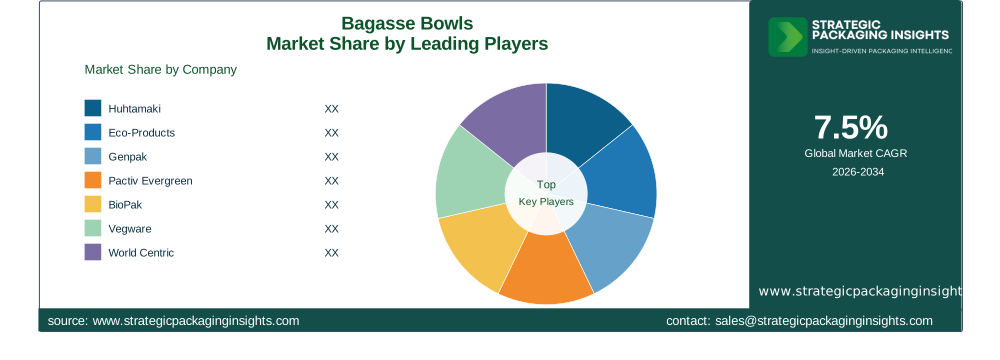
Genpak and Pactiv Evergreen are also prominent players in the Bagasse Bowls market, leveraging their expertise in foodservice packaging to expand their product offerings and capture a larger market share. BioPak, a company dedicated to providing sustainable packaging solutions, has gained a strong foothold in the market through its innovative product designs and focus on environmental responsibility. Vegware, World Centric, and Dart Container are other notable companies in the market, each offering unique product lines and catering to different customer segments.
Duni Group and Sabert are also key players in the Bagasse Bowls market, with a focus on providing high-quality, eco-friendly packaging solutions to the foodservice industry. These companies are investing in research and development to enhance their product offerings and meet the evolving needs of consumers and businesses. The competitive landscape is further intensified by the presence of several regional players who are capitalizing on the growing demand for sustainable packaging solutions in their respective markets.
Overall, the Bagasse Bowls market is characterized by intense competition, with companies striving to differentiate themselves through product innovation, quality, and sustainability. The market is expected to witness further consolidation as companies seek to strengthen their market position through mergers and acquisitions. As the demand for eco-friendly packaging solutions continues to rise, companies that can effectively meet the needs of consumers and businesses are likely to gain a competitive edge in this dynamic market.
Key Highlights
- The Bagasse Bowls market is projected to grow at a CAGR of 7.5% from 2026 to 2034.
- Increasing consumer awareness of environmental sustainability is driving demand for bagasse bowls.
- Regulatory support for reducing plastic waste is bolstering market growth.
- Technological advancements are reducing production costs and increasing competitiveness.
- The foodservice industry is a major driver of the Bagasse Bowls market.
- Price sensitivity and raw material availability are key challenges for the market.
- Key players include Huhtamaki, Eco-Products, Genpak, and Pactiv Evergreen.
- Emerging markets present significant growth opportunities for bagasse bowl manufacturers.
- Product innovation and strategic partnerships are key strategies for market players.
- The market is characterized by intense competition and ongoing consolidation.
Top Countries Insights
In the Bagasse Bowls market, the United States stands out as a leading country, with a market size of approximately $500 million and a CAGR of 6%. The growth in the U.S. is driven by strong consumer demand for sustainable packaging solutions and stringent regulations on plastic usage. The presence of major market players and a well-established foodservice industry further contribute to the market's expansion. However, challenges such as price sensitivity and raw material availability persist, requiring companies to innovate and optimize their supply chains.
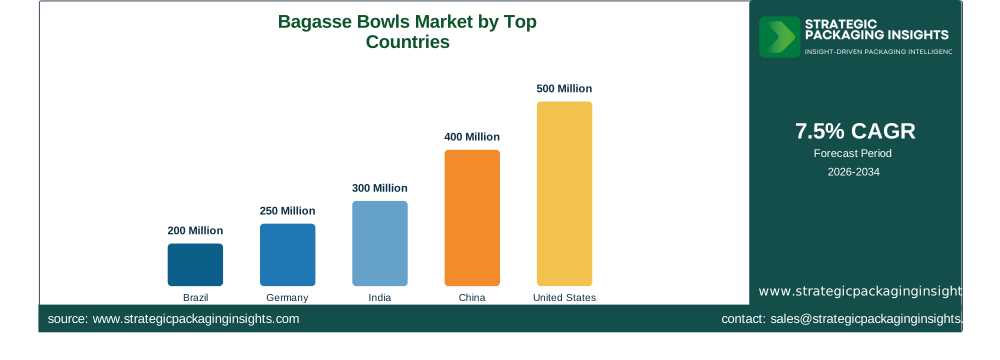
China is another significant player in the Bagasse Bowls market, with a market size of around $400 million and a CAGR of 8%. The country's rapid urbanization and growing middle class are driving demand for convenient and eco-friendly food packaging solutions. Government initiatives to reduce plastic waste and promote sustainable practices are also supporting market growth. However, the market faces challenges related to production costs and competition from traditional plastic products.
India, with a market size of approximately $300 million and a CAGR of 9%, is experiencing robust growth in the Bagasse Bowls market. The country's large population and increasing awareness of environmental issues are driving demand for sustainable packaging solutions. Government policies aimed at reducing plastic waste and promoting biodegradable products are further boosting market growth. However, challenges such as supply chain inefficiencies and price sensitivity remain.
In Europe, Germany is a key market for bagasse bowls, with a market size of about $250 million and a CAGR of 7%. The country's strong environmental regulations and consumer preference for sustainable products are driving demand for bagasse bowls. The presence of major market players and a well-established foodservice industry further contribute to market growth. However, challenges such as high production costs and competition from alternative packaging solutions persist.
Brazil, with a market size of approximately $200 million and a CAGR of 5%, is also a significant player in the Bagasse Bowls market. The country's growing foodservice industry and increasing awareness of environmental sustainability are driving demand for eco-friendly packaging solutions. However, challenges such as economic instability and supply chain disruptions remain, requiring companies to adapt and innovate to maintain their market position.
Bagasse Bowls Market Segments Insights

Product Type Analysis
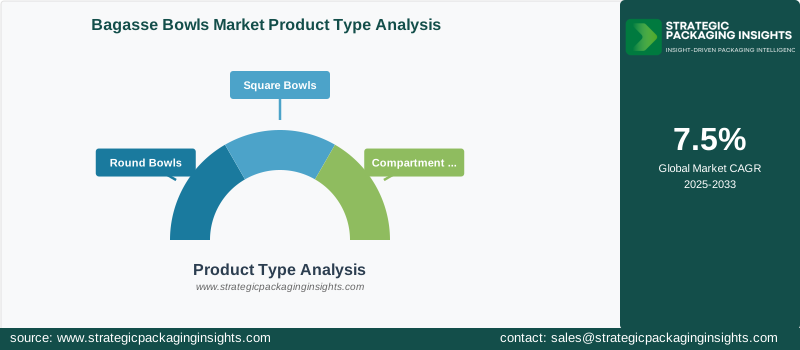
The Bagasse Bowls market is segmented by product type into round bowls, square bowls, and compartment bowls. Round bowls are the most popular segment, driven by their versatility and wide range of applications in the foodservice industry. These bowls are favored for their ease of use and ability to accommodate various food items, making them a staple in takeout and delivery services. Square bowls, while less common, are gaining traction due to their modern aesthetic and efficient use of space, appealing to both consumers and businesses looking for unique packaging solutions. Compartment bowls, designed to separate different food items, are particularly popular in catering and institutional dining settings, where presentation and portion control are important considerations.
Trends in the product type segment are influenced by consumer preferences for convenience and sustainability. As consumers become more environmentally conscious, there is a growing demand for biodegradable and compostable packaging solutions. This trend is driving innovation in product design and materials, with manufacturers exploring new ways to enhance the functionality and appeal of bagasse bowls. Competition in this segment is intense, with companies striving to differentiate themselves through product innovation and quality. Customer demand for eco-friendly packaging solutions is expected to continue driving growth in this segment, with round bowls likely to remain the dominant product type.
Capacity Analysis
The Bagasse Bowls market is also segmented by capacity into below 12 oz, 12-24 oz, and above 24 oz. The 12-24 oz segment is the largest, driven by its suitability for a wide range of food items and applications. These bowls are commonly used in takeout and delivery services, where portion control and convenience are key considerations. The below 12 oz segment, while smaller, is gaining popularity for its use in serving side dishes, desserts, and small portions, particularly in catering and institutional dining settings. The above 24 oz segment, designed for larger meals and family-sized portions, is also experiencing growth, driven by the increasing demand for convenient and sustainable packaging solutions.
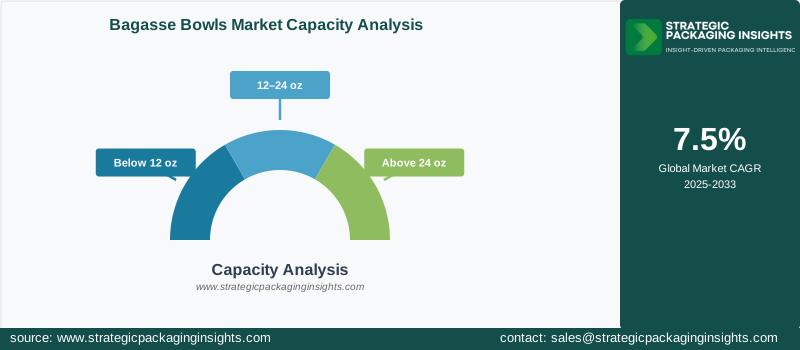
Trends in the capacity segment are influenced by consumer preferences for convenience and portion control. As consumers seek out packaging solutions that align with their lifestyle and dietary needs, manufacturers are responding by offering a diverse range of sizes and capacities. Competition in this segment is driven by the need to balance functionality and sustainability, with companies exploring new materials and designs to enhance the appeal of their products. Customer demand for eco-friendly packaging solutions is expected to continue driving growth in this segment, with the 12-24 oz segment likely to remain the dominant capacity.
Application Analysis
The Bagasse Bowls market is segmented by application into foodservice, takeaway, catering, and institutional dining. The foodservice segment is the largest, driven by the increasing demand for sustainable packaging solutions in restaurants, cafes, and other foodservice establishments. Takeaway and delivery services, accelerated by the COVID-19 pandemic, are also significant drivers of this segment, as businesses seek to align with consumer preferences for eco-friendly packaging. The catering segment, while smaller, is experiencing growth due to the increasing demand for convenient and sustainable packaging solutions in event and corporate catering settings. Institutional dining, including schools, hospitals, and other facilities, is also a key application segment, driven by the need for portion control and presentation.
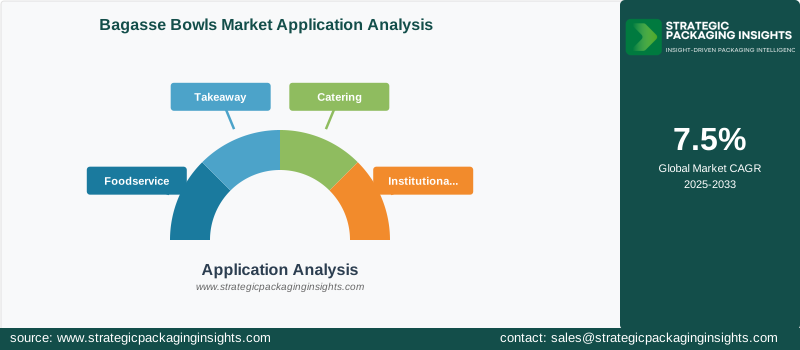
Trends in the application segment are influenced by consumer preferences for convenience and sustainability. As consumers become more environmentally conscious, there is a growing demand for biodegradable and compostable packaging solutions. This trend is driving innovation in product design and materials, with manufacturers exploring new ways to enhance the functionality and appeal of bagasse bowls. Competition in this segment is intense, with companies striving to differentiate themselves through product innovation and quality. Customer demand for eco-friendly packaging solutions is expected to continue driving growth in this segment, with the foodservice segment likely to remain the dominant application.
Distribution Channel Analysis
The Bagasse Bowls market is segmented by distribution channel into foodservice distributors, online, retail, and direct sales. Foodservice distributors are the largest segment, driven by their ability to provide a wide range of products and services to the foodservice industry. Online sales, while smaller, are gaining traction due to the increasing popularity of e-commerce and the convenience of online shopping. Retail sales, including supermarkets and specialty stores, are also a significant distribution channel, driven by the growing demand for eco-friendly packaging solutions among consumers. Direct sales, while less common, are used by some manufacturers to reach specific customer segments and build brand loyalty.
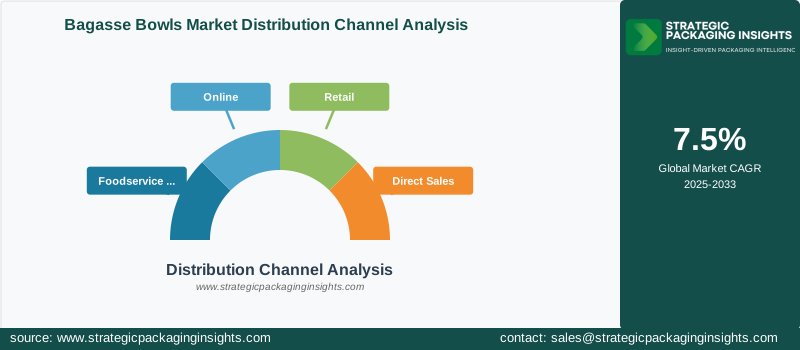
Trends in the distribution channel segment are influenced by consumer preferences for convenience and accessibility. As consumers seek out packaging solutions that align with their lifestyle and dietary needs, manufacturers are responding by offering a diverse range of distribution channels. Competition in this segment is driven by the need to balance functionality and sustainability, with companies exploring new ways to enhance the appeal of their products. Customer demand for eco-friendly packaging solutions is expected to continue driving growth in this segment, with foodservice distributors likely to remain the dominant distribution channel.
Bagasse Bowls Market Segments
The Bagasse Bowls market has been segmented on the basis ofProduct Type
- Round Bowls
- Square Bowls
- Compartment Bowls
Capacity
- Below 12 oz
- 12–24 oz
- Above 24 oz
Application
- Foodservice
- Takeaway
- Catering
- Institutional Dining
Distribution Channel
- Foodservice Distributors
- Online
- Retail
- Direct Sales
Region
- Asia Pacific
- North America
- Latin America
- Europe
- Middle East & Africa




