


Automated Poly Bagging Machines Market Outlook
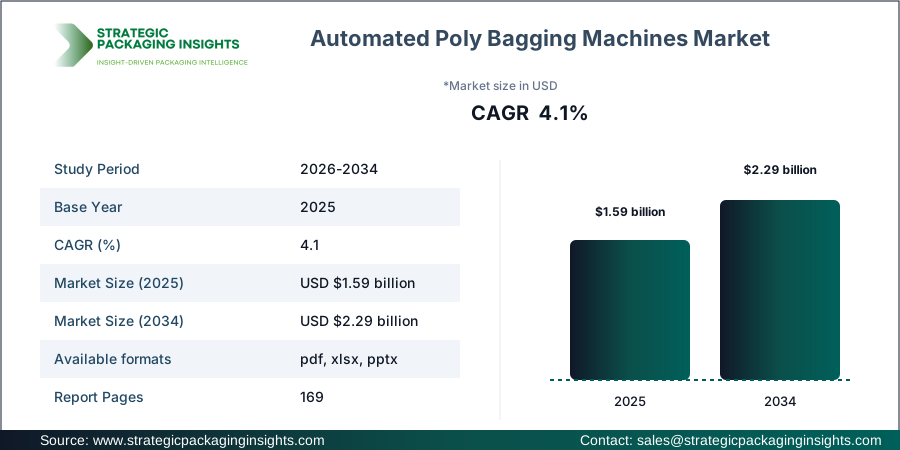
The Automated Poly Bagging Machines market was valued at $1.59 billion in 2025 and is projected to reach $2.29 billion by 2034, growing at a CAGR of 4.1% during the forecast period 2026-2034. This market is witnessing significant growth due to the increasing demand for efficient packaging solutions across various industries. The rise in e-commerce and the need for faster packaging processes are driving the adoption of automated poly bagging machines. These machines offer enhanced speed, accuracy, and efficiency, which are crucial for meeting the high-volume demands of modern logistics and retail sectors. Additionally, advancements in technology have led to the development of more sophisticated machines that can handle a variety of packaging materials and sizes, further boosting market growth.
Despite the promising growth prospects, the market faces certain challenges that could hinder its expansion. Regulatory constraints related to packaging waste and environmental concerns are significant restraining factors. Governments across the globe are implementing stringent regulations to reduce plastic waste, which could impact the demand for poly bagging machines. However, the market also presents substantial growth potential, especially with the increasing focus on sustainable packaging solutions. Companies are investing in research and development to create eco-friendly machines that align with environmental regulations, thereby opening new avenues for growth. The integration of smart technologies, such as IoT and AI, into these machines is also expected to enhance their functionality and appeal to a broader customer base.
Report Scope
| Attributes | Details |
| Report Title | Automated Poly Bagging Machines Market Size, Future Growth and Forecast 2034 |
| By Machine Type | Horizontal Baggers, Vertical Baggers, Mailer Baggers, Autobagging Machines |
| By Automation Level | Semi-Automatic, Automatic |
| By Application | E-commerce, Industrial Parts, Apparel, Food Packaging |
| By End Use | Logistics, Retail, Manufacturing, Food |
| Region | Asia Pacific, North America, Latin America, Europe, Middle East & Africa |
| Base Year | 2025 |
| Historic Period | 2018-2024 |
| Forecast Period | 2026-2034 |
| Number of Pages | 169 |
| Customization Available | Yes* |
Opportunities & Threats
The Automated Poly Bagging Machines market is ripe with opportunities, particularly in the realm of technological advancements. The integration of IoT and AI into packaging machines is revolutionizing the industry by enabling real-time monitoring and predictive maintenance. This not only enhances operational efficiency but also reduces downtime, thereby increasing productivity. Furthermore, the growing trend of customization in packaging is driving demand for machines that can handle diverse packaging requirements. Companies are increasingly seeking machines that offer flexibility in terms of bag sizes and materials, which presents a significant opportunity for manufacturers to innovate and capture a larger market share.
Another opportunity lies in the expansion of e-commerce and online retail. As more consumers turn to online shopping, the demand for efficient and reliable packaging solutions is on the rise. Automated poly bagging machines are well-suited to meet this demand, as they offer speed and precision in packaging, which are critical for maintaining customer satisfaction in the fast-paced e-commerce environment. Additionally, the increasing focus on sustainability is pushing companies to adopt eco-friendly packaging solutions. This trend is expected to drive the development of machines that can handle biodegradable and recyclable materials, opening new growth avenues for the market.
However, the market is not without its threats. One of the primary challenges is the high initial cost of automated poly bagging machines, which can be a barrier for small and medium-sized enterprises. These businesses may find it difficult to justify the investment, especially if they have limited packaging needs. Moreover, the rapid pace of technological change means that machines can quickly become obsolete, necessitating frequent upgrades and replacements. This can be a significant financial burden for companies, particularly in a competitive market where cost efficiency is crucial. Additionally, the ongoing trade tensions and economic uncertainties in various regions could impact the supply chain and affect market growth.
Drivers & Challenges
The primary drivers of the Automated Poly Bagging Machines market include the increasing demand for efficient packaging solutions and the rapid growth of the e-commerce sector. As online shopping continues to gain popularity, the need for fast and accurate packaging solutions has become more critical than ever. Automated poly bagging machines offer the speed and precision required to meet these demands, making them an essential component of modern packaging operations. Furthermore, advancements in technology have led to the development of more sophisticated machines that can handle a wide range of packaging materials and sizes, further driving market growth.
Another significant driver is the growing focus on sustainability in packaging. With increasing awareness of environmental issues, companies are seeking eco-friendly packaging solutions that align with regulatory requirements. Automated poly bagging machines that can handle biodegradable and recyclable materials are in high demand, as they help companies reduce their environmental footprint while maintaining efficiency. Additionally, the integration of smart technologies, such as IoT and AI, into these machines is enhancing their functionality and appeal, providing a competitive edge to manufacturers in the market.
Despite these drivers, the market faces several challenges that could hinder its growth. One of the primary challenges is the high initial cost of automated poly bagging machines, which can be a barrier for small and medium-sized enterprises. These businesses may find it difficult to justify the investment, especially if they have limited packaging needs. Moreover, the rapid pace of technological change means that machines can quickly become obsolete, necessitating frequent upgrades and replacements. This can be a significant financial burden for companies, particularly in a competitive market where cost efficiency is crucial. Additionally, the ongoing trade tensions and economic uncertainties in various regions could impact the supply chain and affect market growth.
Market Share Analysis
The competitive landscape of the Automated Poly Bagging Machines market is characterized by the presence of several key players who are driving innovation and growth in the industry. Companies such as Pregis, Sharp Packaging Systems, PAC Machinery, and Automated Packaging Systems are leading the market with their advanced product offerings and strong distribution networks. These companies are focusing on expanding their product portfolios and enhancing their technological capabilities to maintain a competitive edge. The market is also witnessing increased collaboration and partnerships among key players to leverage each other's strengths and expand their market presence.
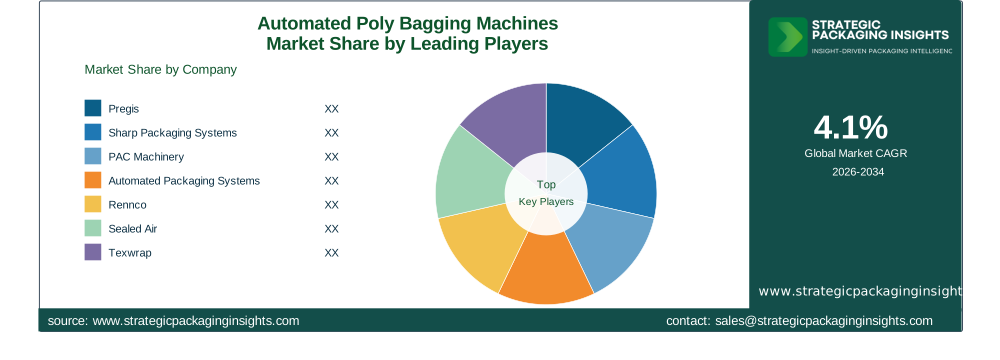
PAC Machinery, for instance, is known for its comprehensive range of packaging solutions that cater to various industries, including e-commerce, food, and retail. The company is continuously investing in research and development to introduce innovative products that meet the evolving needs of its customers. Similarly, Automated Packaging Systems is a prominent player in the market, offering a wide range of automated bagging solutions that are designed to enhance efficiency and productivity. The company's focus on sustainability and eco-friendly packaging solutions has further strengthened its position in the market.
Sealed Air is another major player in the Automated Poly Bagging Machines market, known for its innovative packaging solutions that prioritize sustainability and efficiency. The company has a strong global presence and is committed to reducing its environmental impact through the development of eco-friendly packaging materials and technologies. Texwrap and Syntegon are also key players in the market, offering a range of automated packaging solutions that cater to various industries. These companies are focusing on expanding their product offerings and enhancing their technological capabilities to meet the growing demand for efficient and sustainable packaging solutions.
Rennco and Thiele Technologies are also significant contributors to the market, known for their advanced packaging solutions that cater to a wide range of industries. These companies are focusing on expanding their product portfolios and enhancing their technological capabilities to maintain a competitive edge. Audion Elektro, with its innovative packaging solutions and strong distribution network, is also a key player in the market. The company's focus on sustainability and eco-friendly packaging solutions has further strengthened its position in the market. Overall, the competitive landscape of the Automated Poly Bagging Machines market is dynamic, with key players continuously striving to innovate and expand their market presence.
Key Highlights
- The Automated Poly Bagging Machines market is projected to grow from $1.59 billion in 2025 to $2.29 billion by 2034, at a CAGR of 4.1%.
- Technological advancements, including IoT and AI integration, are driving market growth by enhancing machine efficiency and functionality.
- The e-commerce sector is a significant driver of demand for automated poly bagging machines, due to the need for fast and accurate packaging solutions.
- Environmental regulations are pushing companies to adopt eco-friendly packaging solutions, creating opportunities for sustainable machine development.
- High initial costs and rapid technological changes pose challenges for small and medium-sized enterprises in adopting automated poly bagging machines.
- Key players in the market include Pregis, Sharp Packaging Systems, PAC Machinery, and Automated Packaging Systems, among others.
- Collaborations and partnerships among key players are increasing, aimed at leveraging strengths and expanding market presence.
- The market is witnessing a growing trend of customization in packaging, driving demand for flexible machines that can handle diverse requirements.
- Trade tensions and economic uncertainties could impact the supply chain and affect market growth.
Top Countries Insights
In the Automated Poly Bagging Machines market, the United States stands out as a leading country, with a market size of approximately $500 million and a CAGR of 5%. The growth in the U.S. is driven by the robust e-commerce sector and the increasing demand for efficient packaging solutions. The country's focus on technological innovation and sustainability is also contributing to market growth, as companies invest in advanced machines that align with environmental regulations. However, challenges such as high initial costs and regulatory constraints related to packaging waste remain significant.
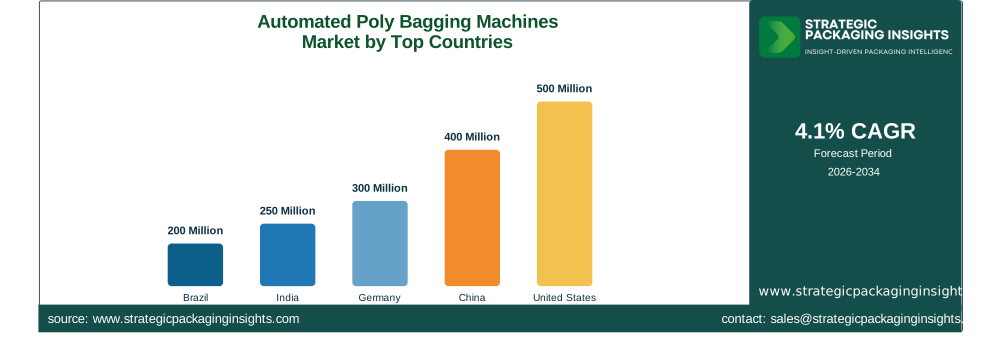
China is another key player in the market, with a market size of around $400 million and a CAGR of 6%. The rapid expansion of the e-commerce sector and the increasing focus on automation in manufacturing are driving demand for automated poly bagging machines in the country. Additionally, government initiatives to promote sustainable packaging solutions are encouraging companies to adopt eco-friendly machines. However, the market faces challenges related to economic uncertainties and trade tensions, which could impact growth.
Germany, with a market size of approximately $300 million and a CAGR of 4%, is a significant contributor to the Automated Poly Bagging Machines market in Europe. The country's strong manufacturing sector and focus on technological innovation are driving demand for advanced packaging solutions. Additionally, the increasing emphasis on sustainability and environmental regulations is pushing companies to adopt eco-friendly machines. However, the market faces challenges related to high initial costs and the rapid pace of technological change.
India, with a market size of around $250 million and a CAGR of 7%, is emerging as a key market for automated poly bagging machines. The growth in India is driven by the expanding e-commerce sector and the increasing focus on automation in manufacturing. Additionally, government initiatives to promote sustainable packaging solutions are encouraging companies to adopt eco-friendly machines. However, challenges such as high initial costs and regulatory constraints related to packaging waste remain significant.
Brazil, with a market size of approximately $200 million and a CAGR of 5%, is a significant contributor to the Automated Poly Bagging Machines market in Latin America. The country's growing e-commerce sector and focus on technological innovation are driving demand for advanced packaging solutions. Additionally, the increasing emphasis on sustainability and environmental regulations is pushing companies to adopt eco-friendly machines. However, the market faces challenges related to economic uncertainties and trade tensions, which could impact growth.
Automated Poly Bagging Machines Market Segments Insights

Machine Type Analysis
The Automated Poly Bagging Machines market is segmented by machine type into horizontal baggers, vertical baggers, mailer baggers, and autobagging machines. Horizontal baggers are widely used in industries that require high-speed packaging, such as food and retail. These machines offer the advantage of handling a variety of bag sizes and materials, making them a popular choice among manufacturers. Vertical baggers, on the other hand, are preferred in industries where space is a constraint, as they offer a compact design without compromising on efficiency. Mailer baggers are gaining traction in the e-commerce sector, where the demand for efficient and reliable packaging solutions is high. Autobagging machines, known for their versatility and ease of use, are increasingly being adopted across various industries to enhance productivity and reduce labor costs.
The demand for these machines is driven by the need for efficient and reliable packaging solutions across various industries. The e-commerce sector, in particular, is a significant driver of demand for automated poly bagging machines, as companies seek to enhance their packaging operations to meet the growing demand for online shopping. Additionally, advancements in technology have led to the development of more sophisticated machines that can handle a wide range of packaging materials and sizes, further driving market growth. However, the market faces challenges related to high initial costs and the rapid pace of technological change, which could impact the adoption of these machines.
Automation Level Analysis
The market is also segmented by automation level into semi-automatic and automatic machines. Semi-automatic machines are preferred by small and medium-sized enterprises that have limited packaging needs and are looking for cost-effective solutions. These machines offer the advantage of being easy to operate and maintain, making them a popular choice among businesses with limited resources. Automatic machines, on the other hand, are widely used in industries that require high-speed and high-volume packaging, such as e-commerce and manufacturing. These machines offer the advantage of enhanced efficiency and productivity, making them an essential component of modern packaging operations.
The demand for automatic machines is driven by the need for fast and accurate packaging solutions in industries such as e-commerce and manufacturing. The increasing focus on automation in these industries is driving demand for machines that offer enhanced efficiency and productivity. Additionally, advancements in technology have led to the development of more sophisticated machines that can handle a wide range of packaging materials and sizes, further driving market growth. However, the market faces challenges related to high initial costs and the rapid pace of technological change, which could impact the adoption of these machines.
Application Analysis
The Automated Poly Bagging Machines market is segmented by application into e-commerce, industrial parts, apparel, and food packaging. The e-commerce sector is a significant driver of demand for automated poly bagging machines, as companies seek to enhance their packaging operations to meet the growing demand for online shopping. The need for fast and accurate packaging solutions in this sector is driving demand for machines that offer enhanced efficiency and productivity. Industrial parts and apparel are also significant contributors to the market, as companies in these industries seek to enhance their packaging operations to meet the growing demand for their products.
The food packaging sector is another significant contributor to the market, as companies seek to enhance their packaging operations to meet the growing demand for packaged food products. The need for efficient and reliable packaging solutions in this sector is driving demand for machines that offer enhanced efficiency and productivity. Additionally, advancements in technology have led to the development of more sophisticated machines that can handle a wide range of packaging materials and sizes, further driving market growth. However, the market faces challenges related to high initial costs and the rapid pace of technological change, which could impact the adoption of these machines.
End Use Analysis
The market is also segmented by end use into logistics, retail, manufacturing, and food. The logistics sector is a significant driver of demand for automated poly bagging machines, as companies seek to enhance their packaging operations to meet the growing demand for efficient and reliable packaging solutions. The need for fast and accurate packaging solutions in this sector is driving demand for machines that offer enhanced efficiency and productivity. The retail sector is another significant contributor to the market, as companies seek to enhance their packaging operations to meet the growing demand for their products.
The manufacturing sector is also a significant contributor to the market, as companies seek to enhance their packaging operations to meet the growing demand for their products. The need for efficient and reliable packaging solutions in this sector is driving demand for machines that offer enhanced efficiency and productivity. The food sector is another significant contributor to the market, as companies seek to enhance their packaging operations to meet the growing demand for packaged food products. However, the market faces challenges related to high initial costs and the rapid pace of technological change, which could impact the adoption of these machines.
Automated Poly Bagging Machines Market Segments
The Automated Poly Bagging Machines market has been segmented on the basis ofBy Machine Type
- Horizontal Baggers
- Vertical Baggers
- Mailer Baggers
- Autobagging Machines
By Automation Level
- Semi-Automatic
- Automatic
By Application
- E-commerce
- Industrial Parts
- Apparel
- Food Packaging
By End Use
- Logistics
- Retail
- Manufacturing
- Food
Region
- Asia Pacific
- North America
- Latin America
- Europe
- Middle East & Africa




